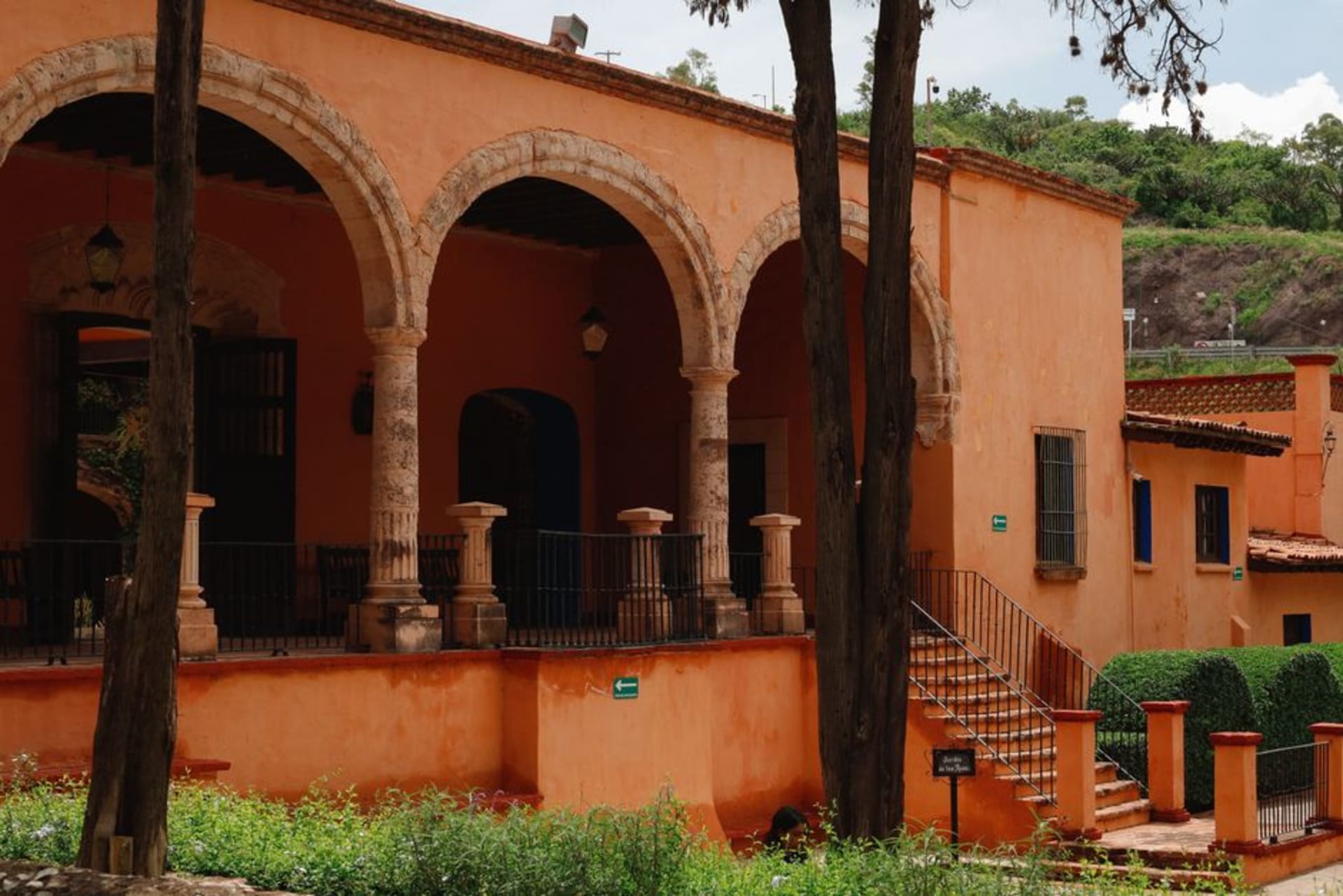
San Gabriel
"Standing in Rulfo's plaza I kept expecting the dead to start talking, which felt appropriate."
A small town in the southern Jalisco sierra where Juan Rulfo was born — the man who wrote Pedro Páramo and gave Mexico its literary soul. The silence here is the same silence he put on the page, and standing in the plaza, that feels less like a coincidence than a proof.

I came to San Gabriel on a Tuesday in late November, arriving from Zapotlán el Grande on a combi that dropped me at the edge of the market. The town smelled of copal and damp stone. It was maybe eleven in the morning and almost no one was moving. I had a copy of Pedro Páramo in my bag — I’d been rereading it on the road — and I remember thinking that the light coming through the jacarandas over the jardín was exactly the light Rulfo seemed to be describing whenever he wasn’t describing darkness. Which is to say, not often, but precisely.
The Archive Is the Town Itself
The Casa Museo Juan Rulfo sits just off the central plaza, modest in the way places are when they know what they contain. A few original manuscripts behind glass, photographs of Rulfo at various ages looking like a man carrying something heavy, and a small collection of the editions that made him famous in the sixty-odd countries that eventually translated him. The woman who showed me around spoke about him the way people in small towns speak about their extraordinary dead — with a kind of proprietary tenderness, like he’d borrowed something and never quite given it back. I spent longer there than I’d planned, reading the wall panels, trying to locate the exact hillside visible from Rulfo’s childhood window. The museum is the container, but what it’s gesturing at is outside: the cerros, the silence, the quality of an afternoon when the sun drops behind the sierra and the temperature falls fast.

The Market and the Afternoon
San Gabriel’s mercado municipal is small enough to walk in four minutes but dense enough that I spent an hour. There’s a woman who sells tamales de rajas at a folding table near the entrance — I don’t know her name, I never asked — and she wraps them in banana leaf, the masa darker and denser than what you get on the coast. I ate two standing up and then found a comedor at the back where they were ladling caldo de res from a pot that had clearly been on the stove since before I was born. The broth was the color of strong tea and tasted like it had opinions. I went back the next morning for the same thing.

The Plaza at Six in the Evening
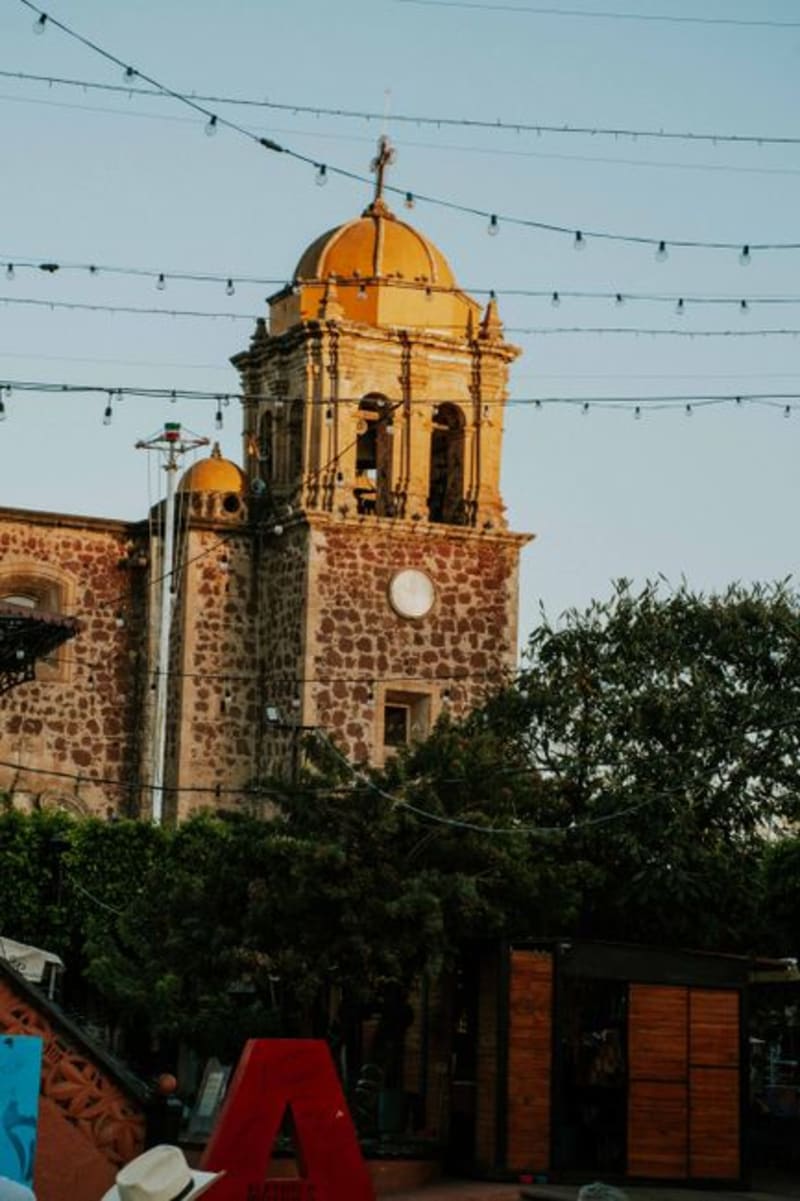
The thing nobody tells you about San Gabriel is what happens at dusk. The families come out, the ice cream cart appears near the kiosk, and someone usually has a radio on somewhere. It is completely unremarkable in the best sense — a Mexican plaza doing exactly what a Mexican plaza is for. I sat on a bench for a while with the Rulfo still in my bag, not reading it, just watching the light flatten out over the church façade. The dead, for the record, did not start talking. But I thought I understood, a little better than before, why Rulfo had set his novel in a place very much like this one.

Getting There
From Guadalajara, take a bus south to Ciudad Guzmán (Zapotlán el Grande), roughly two and a half hours. From there, combis and shared taxis run to San Gabriel in about forty minutes. The last return to Ciudad Guzmán leaves San Gabriel around six in the evening — confirm locally, schedules shift seasonally.
Keep exploring
More of Jalisco
Keep exploring
More from Jalisco
 mexico
 Sayula
A quietly preserved colonial town in southern Jalisco where the market serves forty-year-old birria recipes and the dry lake bed turns the horizon white. Sayula minds its own business, which is exactly why it stays this good.
Explore mexico
 Tapalpa
A Jalisco highland pine forest town at 2,000 meters where the weekend escape from Guadalajara has created a village of white buildings and red rooftiles, wool rugs woven in a tradition brought by the Spanish, and a landscape of volcanic rock formations called the Piedrotas that appear to have been arranged by someone with too much time.
Explore mexico
 Ciudad Guzmán
Juan Rulfo was born here, and the literary world has never quite stopped passing through — but Ciudad Guzmán keeps its own rhythms regardless, a Jalisco market town with a volcano on the horizon and no particular interest in being discovered.
Explore mexico
 Autlán de Navarro
Autlán de Navarro is a sierra town in southern Jalisco that most visitors encounter by accident — if they encounter it at all. It happens to be Carlos Santana's birthplace, the colonial center is quietly handsome, and the surrounding hills produce a raicilla that tastes like somewhere very specific.
Explore mexico
 Tamazula de Gordiano
Tamazula sits in a lush valley in southern Jalisco, ringed by sugarcane fields and the first slopes of the Sierra del Tigre. Its colonial centro has stayed intact, its thermal springs have stayed quiet, and the Río Tamazula gives you a reason to be out before the heat arrives.
Explore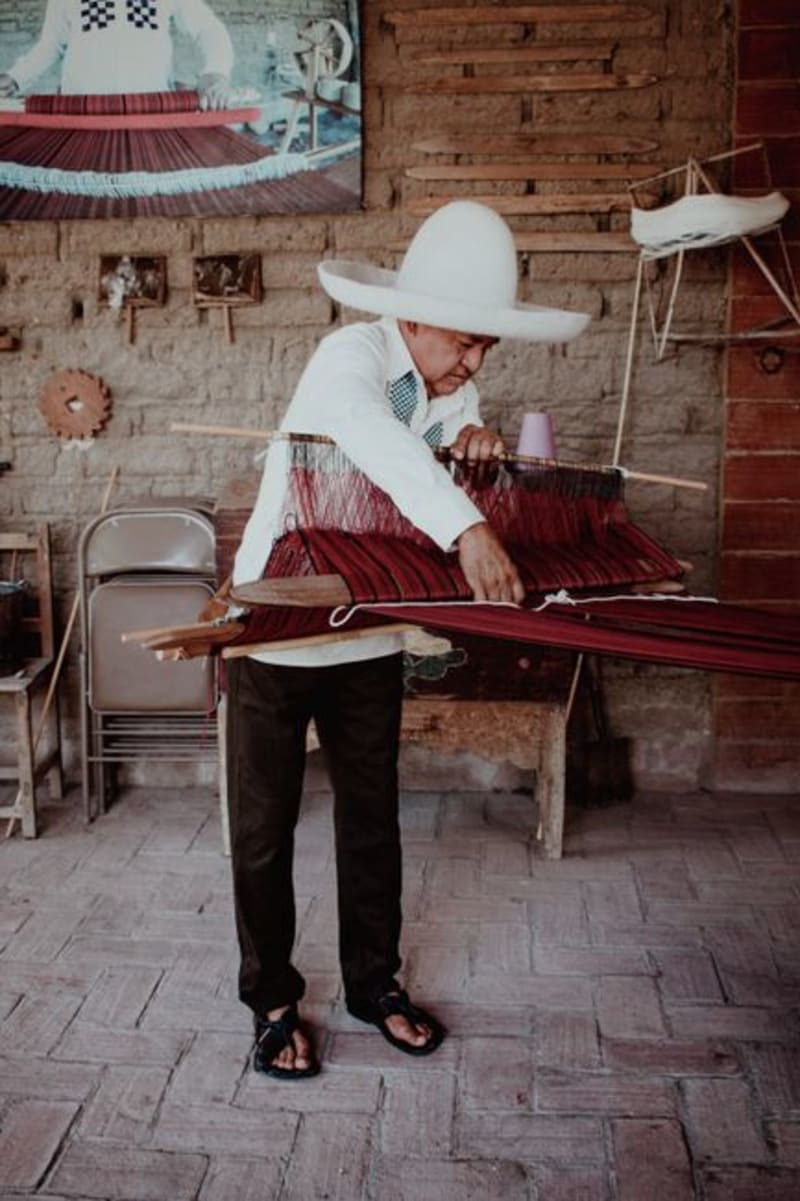 mexico
 Jocotepec
At the western end of Lake Chapala — Mexico's largest lake — Jocotepec has none of Ajijic's expat polish and twice its authenticity: a real market, hand-loomed sarapes that have been made here for generations, and a malecón where the fishermen outnumber the tourists on most mornings.
Explore