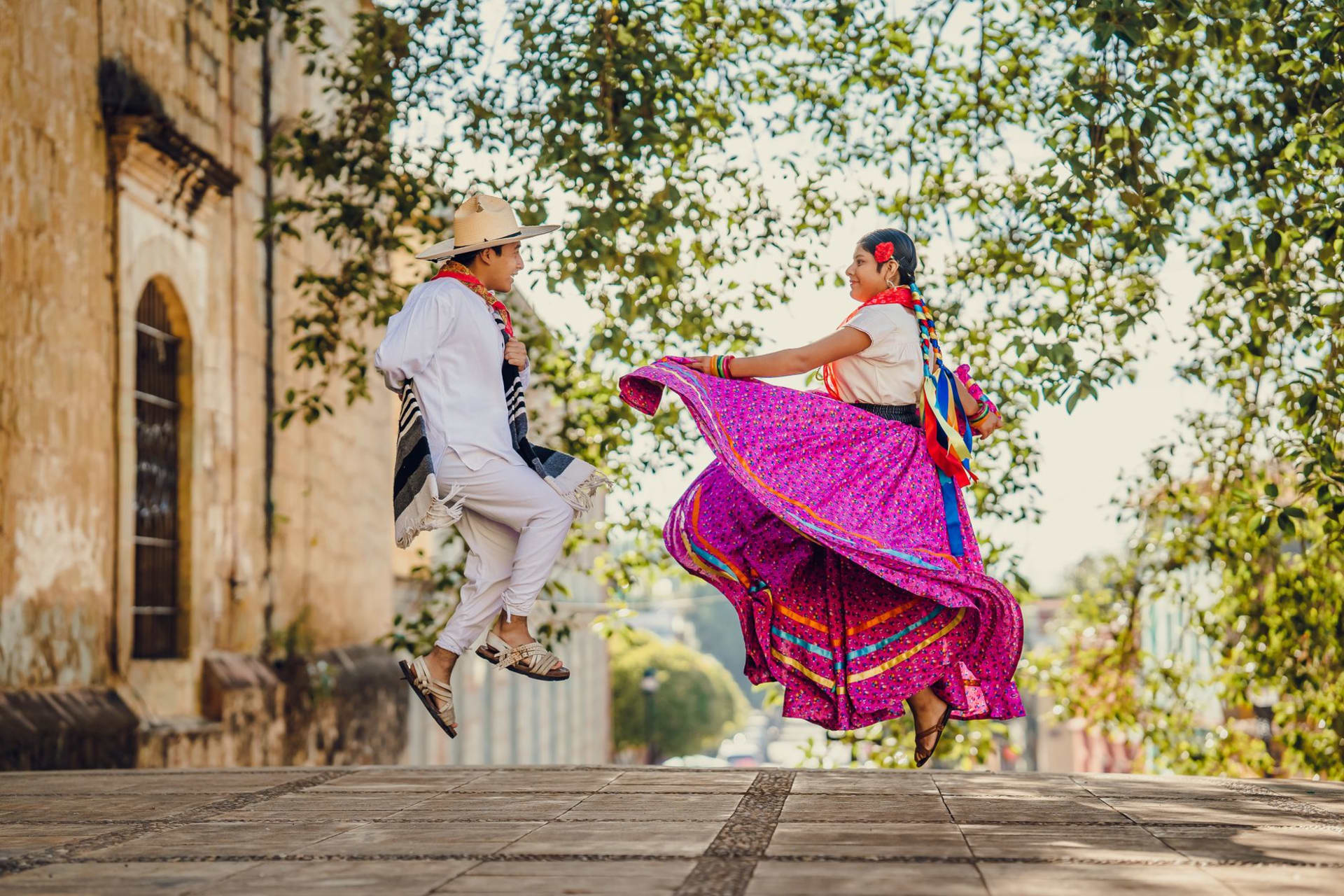
Ocosingo
"Buying a ball of fresh Ocosingo cheese from a rancher at five in the morning, the mountains still dark — that is breakfast in a place that has not been smoothed down for visitors."
A Tzeltal Maya market town in the Chiapas highlands with a raw frontier energy that the polished tourist circuit lacks. Ocosingo is the base for Toniná, one of the tallest pyramids in Mexico, and the source of a famous double-cream cheese that ranchers haul down from the surrounding hills before dawn.

I got to Ocosingo on a colectivo from San Cristóbal that took longer than it should have because the driver stopped twice to let a man with a crate of chickens rearrange his cargo. The town greeted me with wood smoke, a street dog sleeping across the doorway of my posada, and a rancher across the road already selling cheese at an hour when most of Mexico is still horizontal. I decided immediately that I liked it. There is nothing performed about Ocosingo — no cobblestone makeover, no artisanal coffee shop with Edison bulbs. It is just a working town that happens to sit beside one of the most extraordinary Maya ruins in the country.
Toniná and Its Pyramid That Keeps Going Up
The drive to Toniná takes about fifteen minutes from the town center, through cattle pasture and low hills. I hired a mototaxi for sixty pesos and arrived before the tour groups. What nobody prepares you for is the scale. Toniná’s main pyramid rises across seven terraces to roughly seventy-five meters — taller than Teotihuacán’s Pyramid of the Sun — and it is largely unrestored, which means climbing it feels like genuine exploration rather than a managed experience. The Temple of the Smoking Mirror sits at the top, and from there the Ocosingo valley spreads out in every direction, green and vast and quiet. The site museum holds a remarkable stucco mural of the underworld — one of the best-preserved in Mesoamerica — that most visitors walk past too quickly. I sat in front of it for twenty minutes. Admission is around ninety pesos and the site opens at nine.

The Cheese Market and the Five O’Clock Hour
Ocosingo queso is a double-cream variety, made in small ranches across the Lacandón lowlands — soft, slightly tangy, shaped into balls wrapped in banana leaf. The Mercado Municipal is the place to buy it, but the serious transaction happens between four and six in the morning, when ranchers arrive by pickup and horse with fresh product still cool from the night. I bought two balls from a woman named Doña Carmela whose family has been making queso in Abasolo for three generations. She was not interested in telling me about the cheese’s history; she was interested in whether I wanted the smaller ball or the larger one. I took both. Eat it with tortillas from the comal near the market entrance — the ones made with Chiapas black beans folded in — and a cup of café de olla from the stall in the corner where the same man appears to have been sitting since 1987.

January 1994 and What Remains
Ocosingo was the first town seized by the EZLN on January 1, 1994, the morning NAFTA came into force. The fighting here was the bloodiest of the Zapatista uprising. The municipal market still has bullet holes in the concrete pillars — not preserved as a monument, just there, because nobody filled them in. There are murals on the road out toward the ejidos, painted in the flat Zapatista style: corn, machetes, masked figures. The town does not trade on this history for tourism. It simply carries it, the way places carry things that happened to them.

Getting There
Colectivos to Ocosingo leave from the Na Bolom terminal area in San Cristóbal de las Casas throughout the morning — roughly two hours for around eighty pesos. OCC buses also connect from Palenque, a three-hour ride through spectacular highland scenery. There is no need for a car if you are staying in town, though a mototaxi makes Toniná easy.
Keep exploring
More of Chiapas
Keep exploring
More from Chiapas
 mexico
 Laguna Miramar
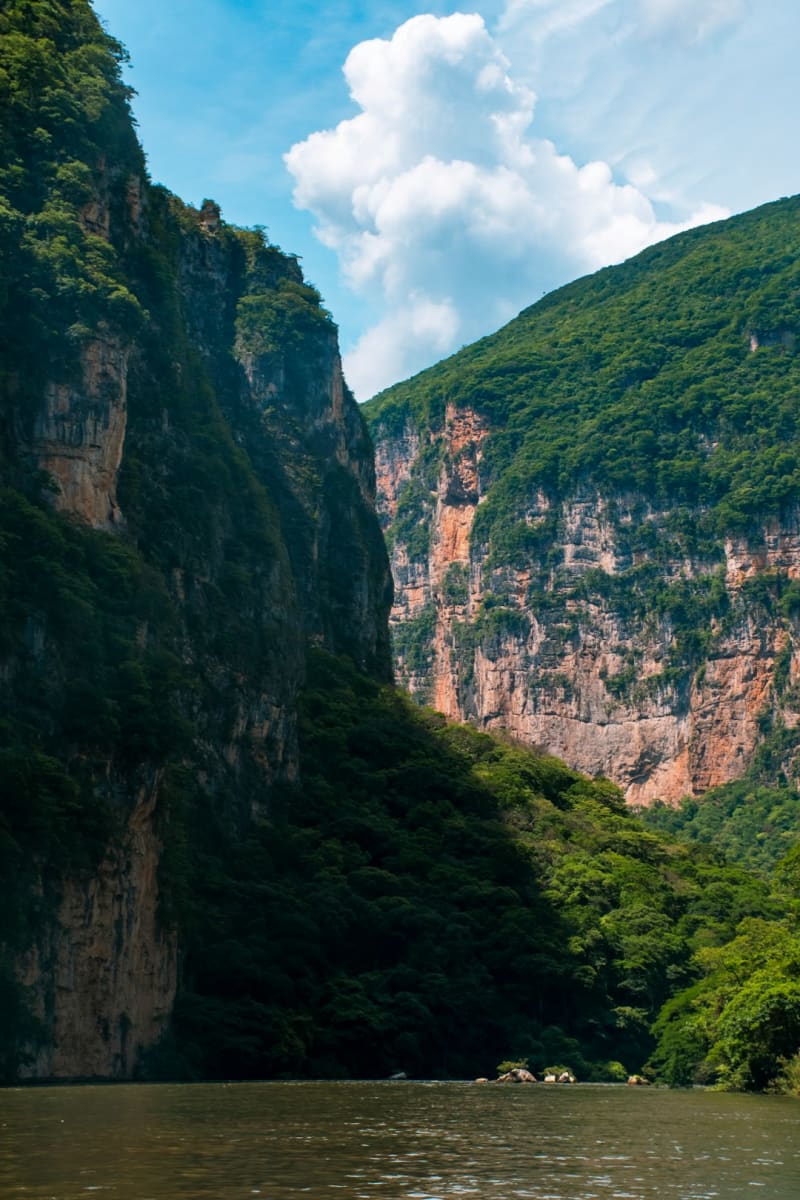
Laguna Miramar sits at the edge of the Selva Lacandona, reachable only by a two-day jungle hike or a long river passage through primary forest. Sixteen square kilometers of water so clear it looks engineered, surrounded by trees that have never been cut, tended by a Lacandón community that has quietly kept the place intact for a thousand years.
Explore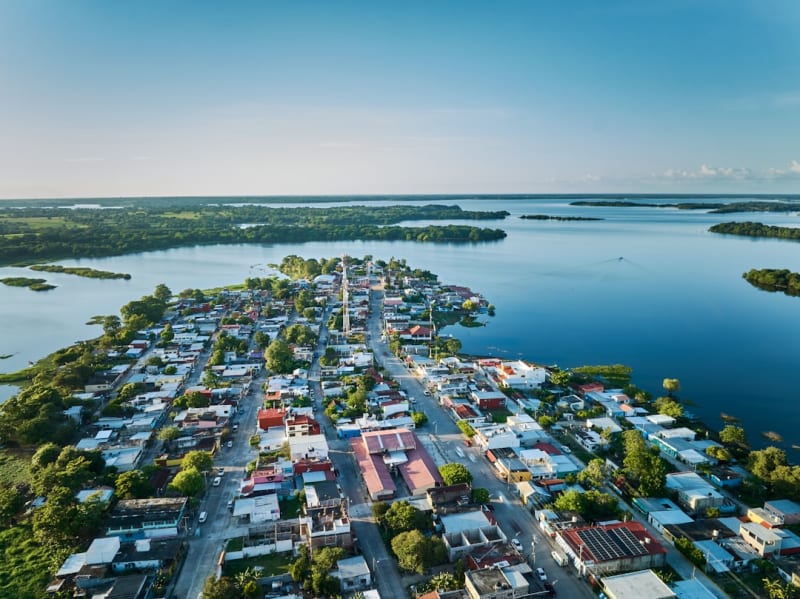 mexico
 Lagos de Montebello
Fifty-nine lakes on the Chiapas-Guatemala border, each a different color — emerald, cobalt, turquoise, mint, mauve — the result of different mineral concentrations, different depths, different forest cover, and different angles of light.
Explore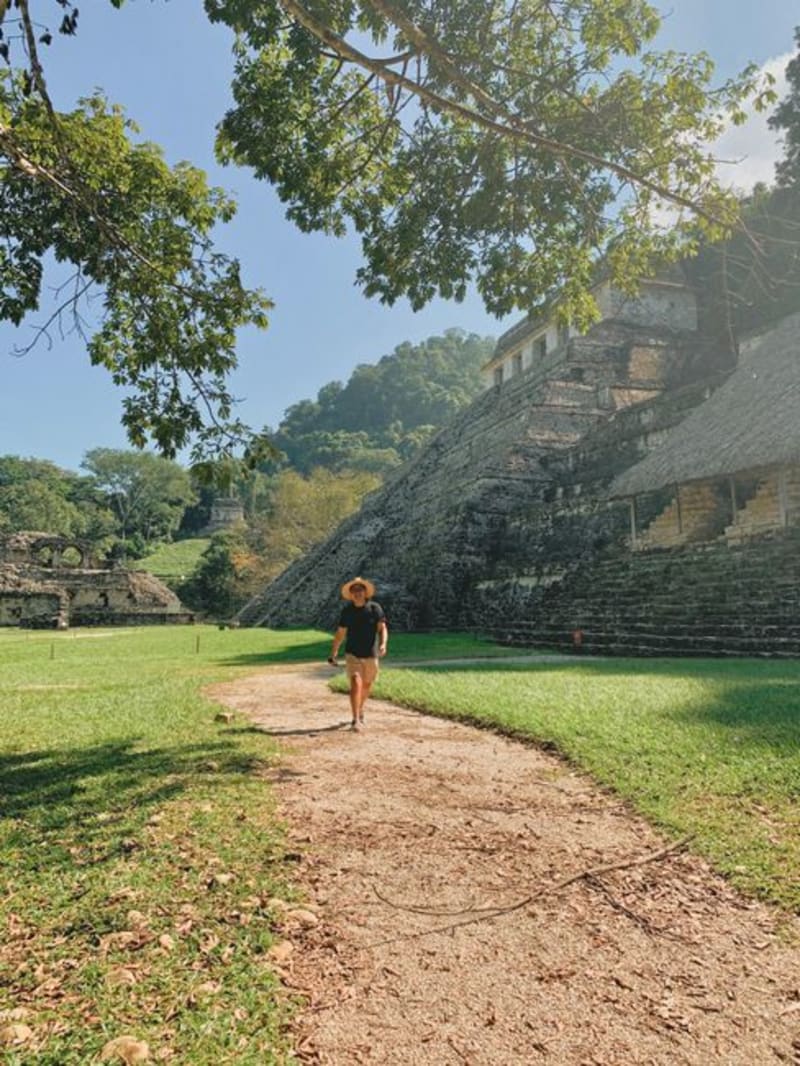 mexico
 Chinkultic
A Maya archaeological site set among the pine forests and lagoons of the Chiapas highlands, Chinkultic is so lightly visited that the silence from the summit pyramid feels almost conspiratorial. Still partly unexcavated, it pairs naturally with the Lagunas de Montebello a few kilometers away.
Explore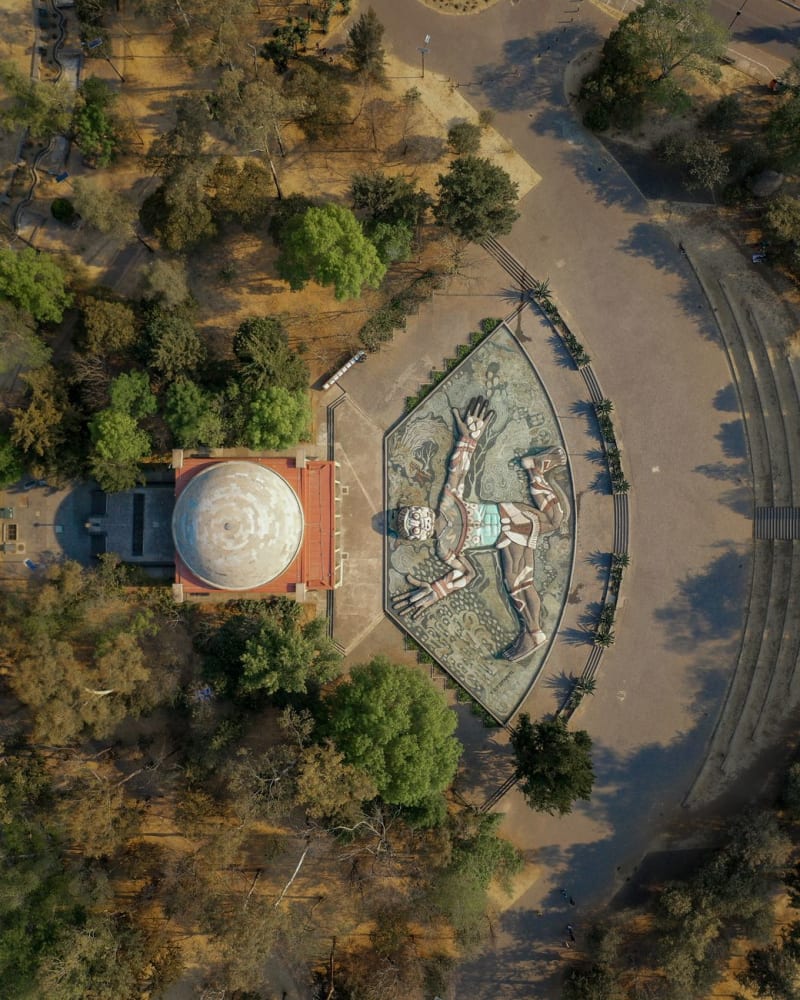 mexico
 Tonina
A Maya acropolis of seven terraced platforms rising above the Ocosingo valley, Toniná was one of the most militarily aggressive powers of the Classic period — and its architecture still radiates that intent. Fewer visitors make it here than to Palenque, which means you can stand at the summit and actually feel what the scale is asking of you. The site museum holds some of the finest Maya stucco in Mexico.
Explore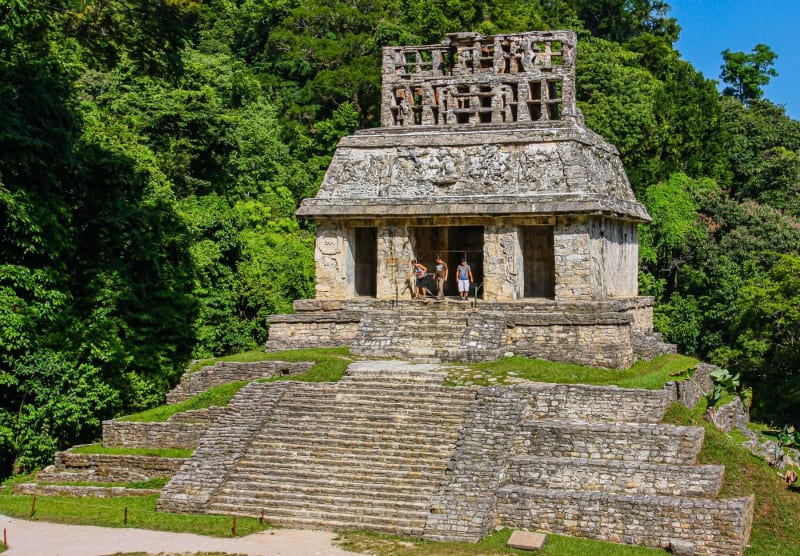 mexico
 Palenque
Mayan temples rising from dense jungle fog in Chiapas, where howler monkeys provide the soundtrack at dawn.
Explore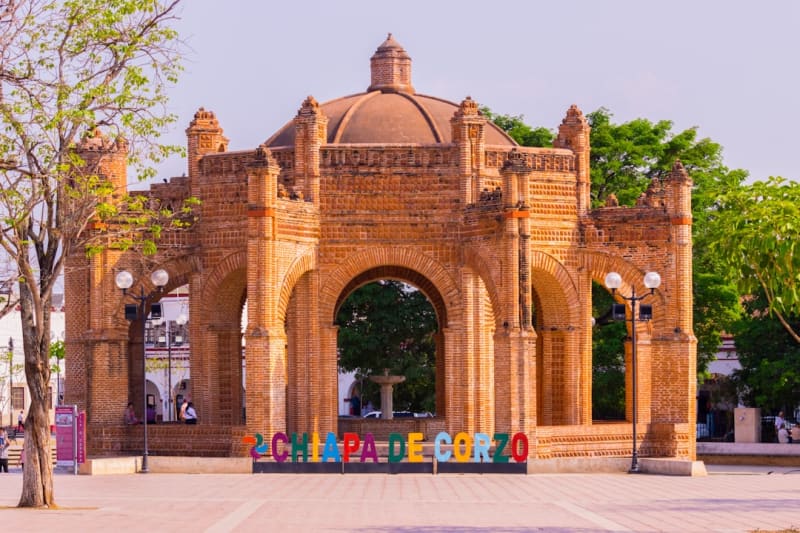 mexico
 Comitán de Domínguez
A Chiapas colonial city at 1,635 meters on the plateau above the Guatemalan border, the closest major town to the Lagos de Montebello lakes, the place where Mexico's independence from Spain was declared for the first time — four days before the rest of the country.
Explore