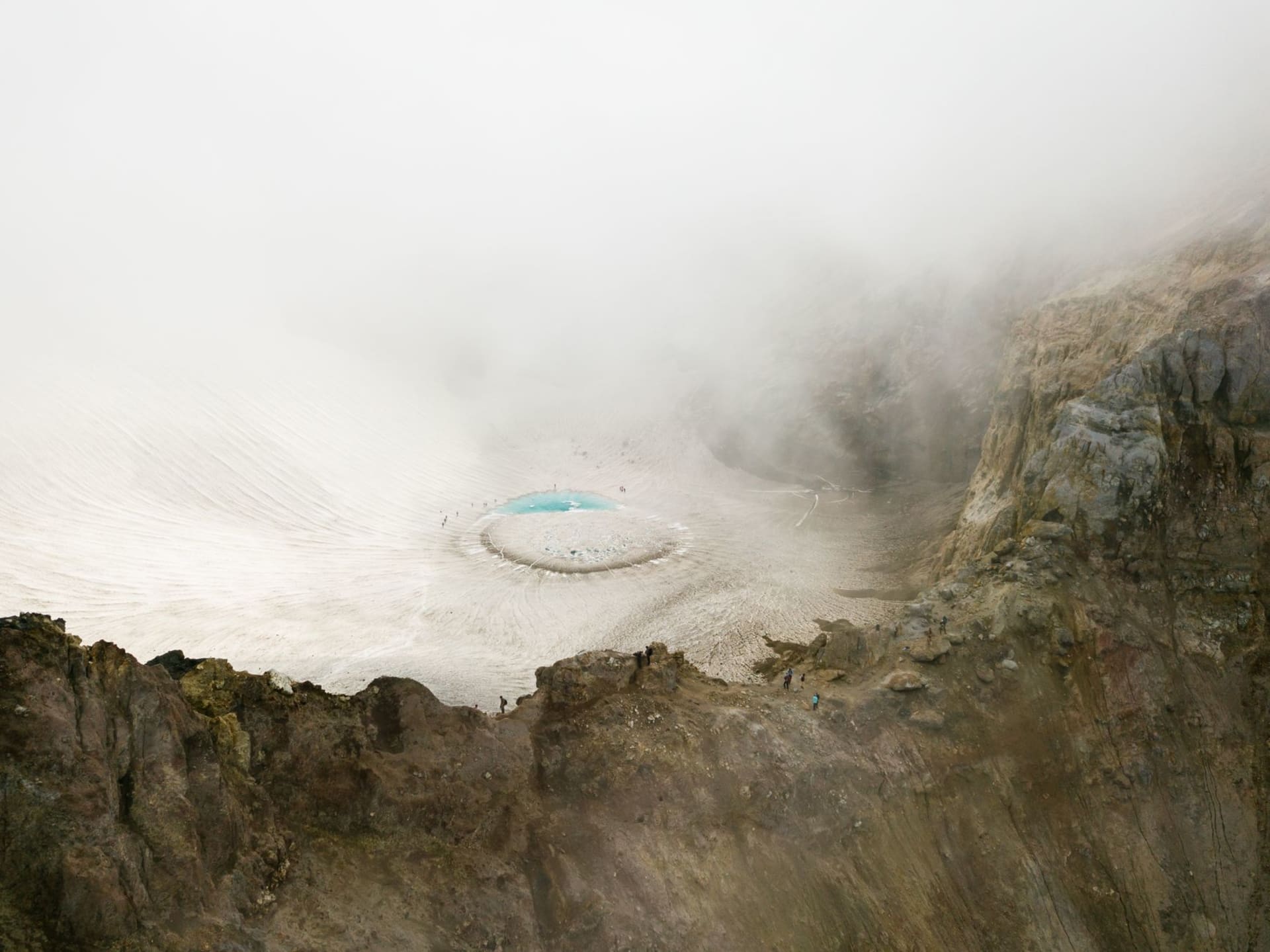
Mutnovsky Volcano
"I hiked into the caldera until the ice turned yellow and the ground started hissing at my feet."
An active volcano in southern Kamchatka you can actually walk into — craters, acid streams, and sulfur-stained ice beneath a glacier that the earth is slowly consuming.

We left the guesthouse at four in the morning because the guide wanted to reach the crater rim before the cloud moved in, which she said happened most afternoons. The headlamps cut through a darkness that smelled of cold ash and volcanic soil, and the trail — if it could be called that — was a series of boot-prints in the hardened snow left by a previous group, heading toward a skyline I couldn’t see but could hear: a low, continuous hiss that grew louder with every hundred meters of gain. By the time we reached the first crater rim the sun was coming up in the east and I understood why the early start was worth the discomfort.
Mutnovsky Volcano sits in the southern part of the Kamchatka peninsula, about eighty kilometers from Petropavlovsk, part of a volcanic complex that includes Gorely Volcano nearby. It is one of the most active volcanoes in Kamchatka and one of the most accessible — reachable by vehicle for most of the approach, with the final push to the crater rim a strenuous but non-technical hike of three to four hours. This accessibility is deceptive, because what you encounter inside the caldera is not a gentled or managed version of volcanic activity but the genuine article: active fumaroles, boiling mud pools, acid streams running bright orange and green, and a glacier that sits directly over the most active vent field and is being destroyed by it from below.
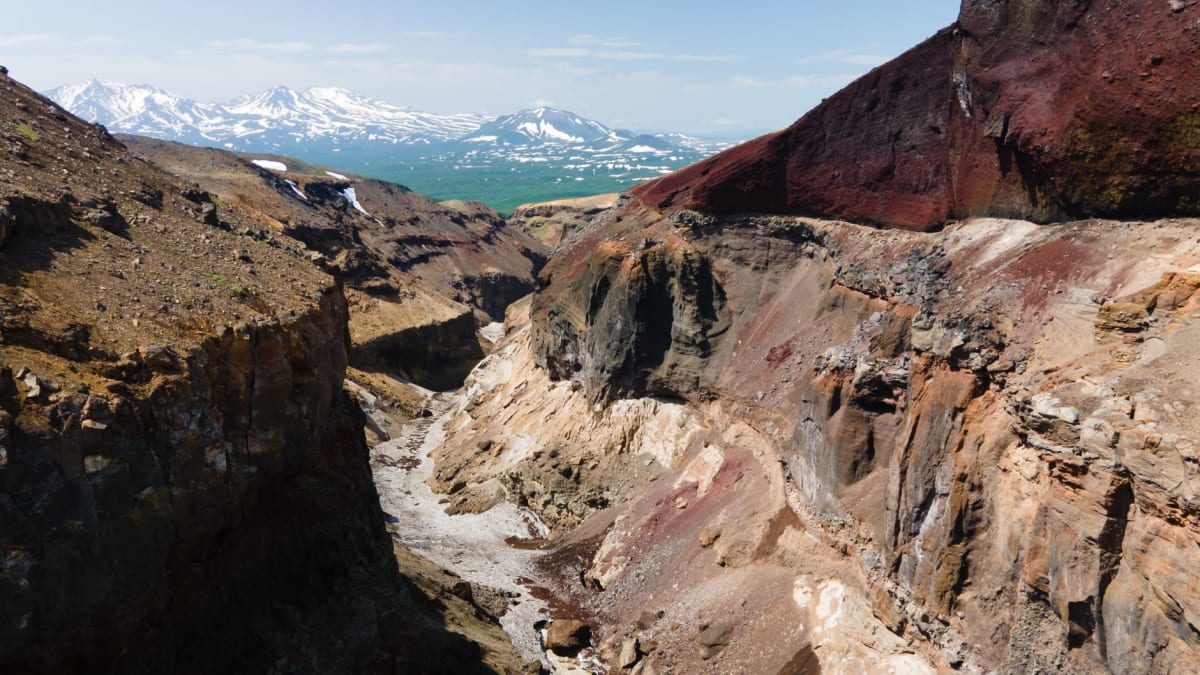
The glacier is the strangest thing. Glaciers belong on mountains above the snowline, in cold places where ice accumulates faster than it melts. The glacier on Mutnovsky is being actively heated from below — the ice is riddled with fumarole channels, some of them large enough to fall into, and the surface of the glacier nearest the vents has turned a shade of pale yellow from the sulfur deposits. Where glacier meets crater, the ice collapses into the acidic pools below in slow, continuous falls. You can stand on solid ice ten meters from this dissolution and feel the warmth rising through the soles of your boots.
The smell inside the crater is severe — concentrated hydrogen sulfide and sulfur dioxide, not quite at dangerous levels on the open crater floor but enough to make extended time unpleasant and to require a mask or at minimum a fabric covering over the nose and mouth. I had been warned but still underestimated it: after two hours in the caldera I developed a headache that stayed for the rest of the day. My guide seemed immune, or perhaps simply accustomed. She pointed out features with the matter-of-fact expertise of someone who has been here dozens of times, and each time I caught her quietly stepping upwind of the worst fumaroles.

The descent back to the vehicle takes you past the Mutnovsky geothermal power station, which pipes steam from the volcano’s hydrothermal system and generates a substantial portion of Petropavlovsk’s electricity. There is something poignant about this proximity — the wild, barely-contained energy of the caldera above, and then the very orderly infrastructure of turbines and cooling towers below, both of them dependent on the same geological engine. Kamchatka generating its own electricity from the heat beneath it feels right in a way that imported diesel never could.
When to go: July through September offers the best conditions; the access road is impassable until snow melts from the approach tracks, usually late June. August is the most reliable month for a clear crater view — afternoon clouds can obscure the caldera completely by noon on many days, so an early start is essential. Guided day trips run from Petropavlovsk in summer; a local guide is strongly recommended given the navigation challenges and the very real hazards inside the caldera.
Keep exploring
More from Kamchatka
 kamchatka
 Nalychevo Park
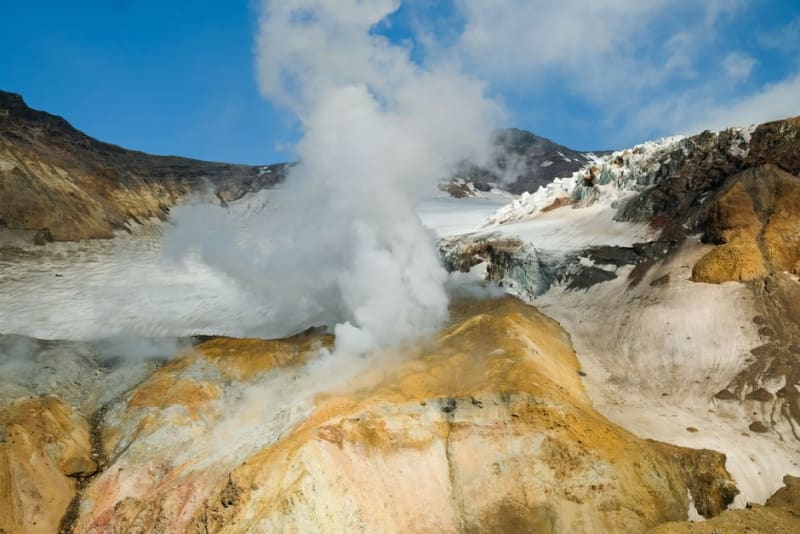
A wide nature park of hot springs and wildflower meadows reachable only on foot or by helicopter, ringed by three volcanoes.
Explore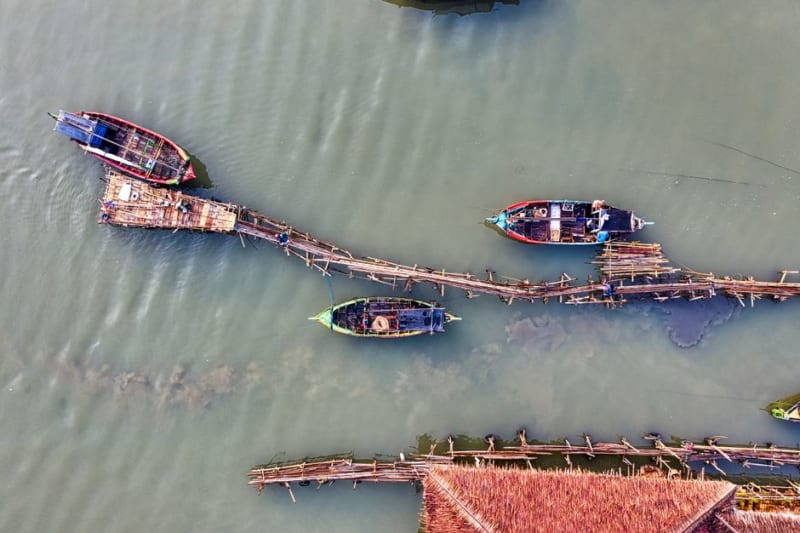 kamchatka
 Ozernovsky
A remote fishing settlement near the Kuril Lake salmon-spawning grounds, where the salt-air smell of the cannery never quite leaves.
Explore kamchatka
 Paratunka
Natural volcanic hot springs an hour from Petropavlovsk where locals soak in geothermally heated water while snow falls on the fir trees above.
Explore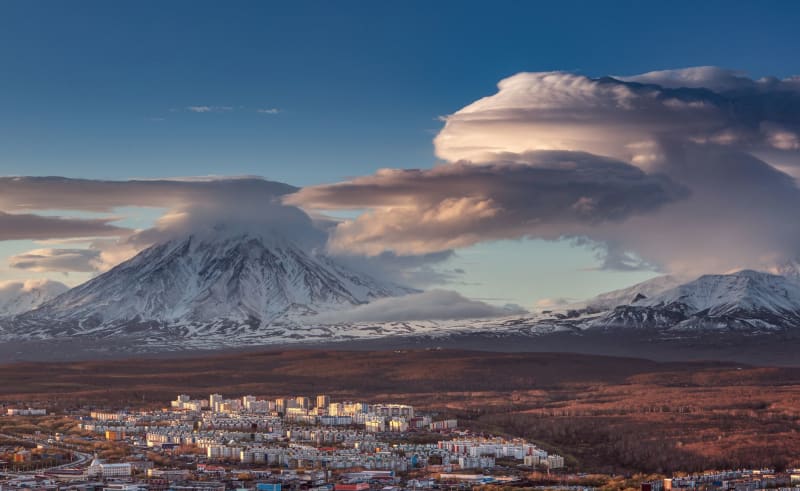 kamchatka
 Petropavlovsk-Kamchatsky
A Soviet-built port city where smoked salmon is breakfast and five volcanoes ring the harbour like a cathedral choir.
Explore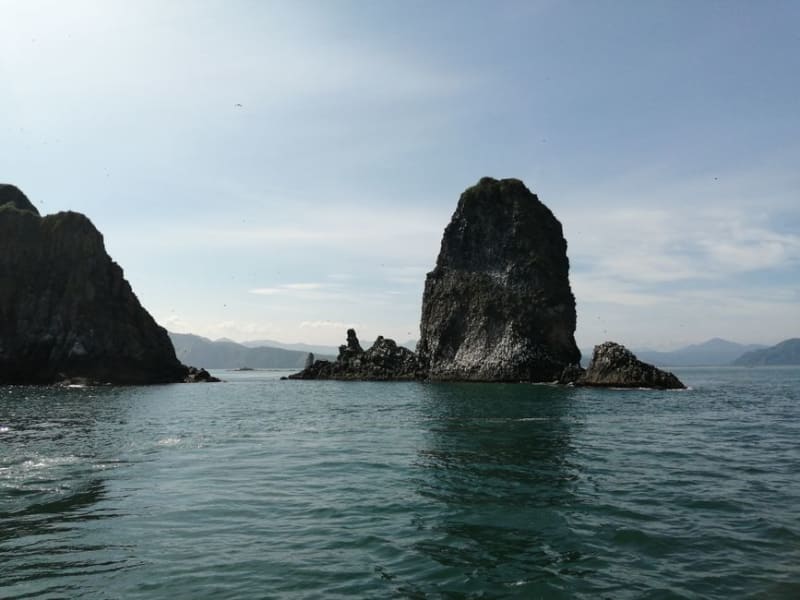 kamchatka
 Three Brothers Rocks
Three weathered sea stacks standing sentinel at the mouth of Avacha Bay, the unofficial gatekeepers of Kamchatka's coast.
Explore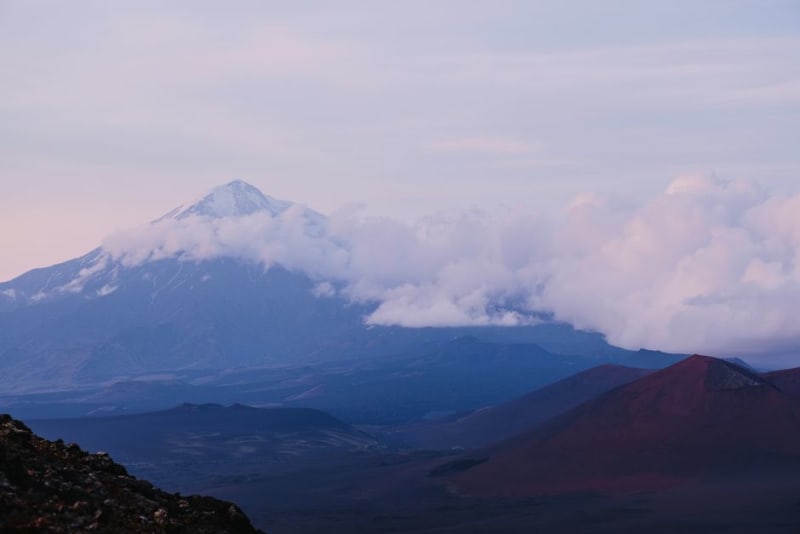 kamchatka
 Tolbachik
A sprawling volcanic complex whose 2012 fissure eruption buried the landscape under a black lava field you can still walk across.
Explore