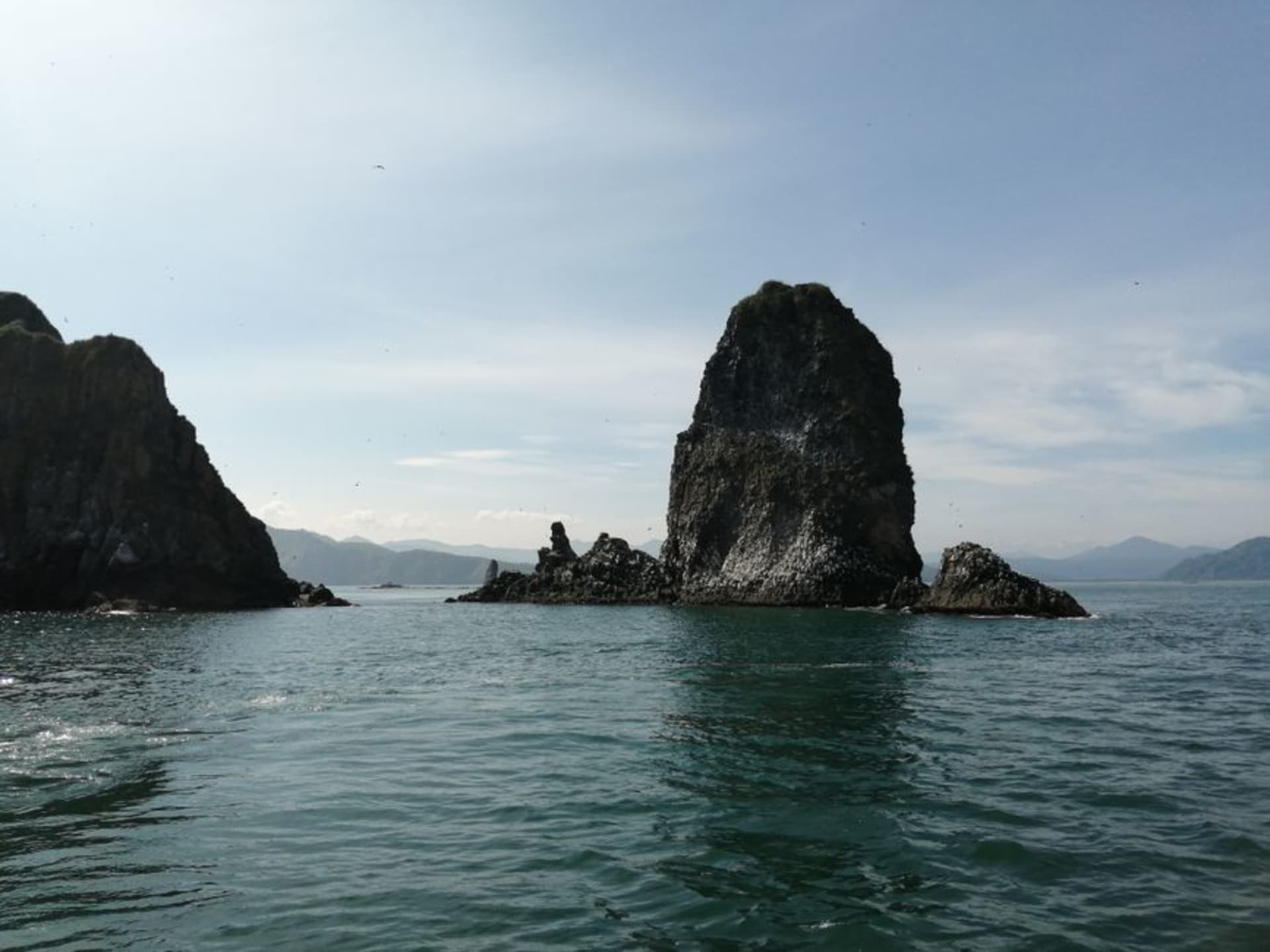
Three Brothers Rocks
"Our boat cut the engine right between the middle rock and the shore, and for a moment all I could hear was water slapping against stone."
Three weathered sea stacks standing sentinel at the mouth of Avacha Bay, the unofficial gatekeepers of Kamchatka's coast.

You see the Three Brothers before you see anything else of Kamchatka, if you’re arriving by boat the way we did. We’d taken an overnight ferry-adjacent fishing vessel up from a short coastal trip near Petropavlovsk, and somewhere around dawn our captain, a stocky guy who’d clearly made this run hundreds of times, pointed out the windshield without much ceremony and said “Tri Brata.” Three jagged shapes emerging out of sea mist at the mouth of Avacha Bay, standing there like they’d been posted on guard duty since before anyone thought to name them.
The legend, which our captain told with the slightly bored cadence of a man who’s told it a thousand times, is that three brothers turned to stone protecting the bay’s fishing villages from a massive wave. Whether or not you buy that, the rocks do genuinely function as a kind of gate, the last landmark before Avacha Bay opens into its wide protected harbor, and the first thing every fisherman and every incoming ship sees on the way back in. There’s a real sense of arrival passing between them, even from a boat as unglamorous as ours.

We circled them slowly, close enough to see the layers of volcanic rock banded across their surfaces and the seabirds, kittiwakes mostly, nesting in every available ledge and crevice. The largest of the three has a natural arch worn through its base by centuries of the same waves that supposedly turned the brothers to stone in the first place, and our captain slowed down just enough to let us watch a small skiff of local fishermen thread straight through it, which apparently is something of a rite of passage if the swell cooperates.
What struck me most was the scale against everything behind them. Beyond the rocks, the volcanoes Avachinsky and Koryaksky rise up from the bay in a way that makes the stacks themselves look almost modest by comparison, and yet they’re the ones that get photographed, painted, printed on postcards in Petropavlovsk gift shops. There’s something to that. Not everything has to be the biggest thing in the frame to be the thing people remember.

Lia took probably forty photos in the fifteen minutes we spent circling, and I don’t think a single one really captures how it felt to have those shapes loom up out of the mist that early in the morning, half awake, coffee gone cold in a paper cup. Some places you have to have actually been cold and tired in front of to understand.
When to go: Boat tours run reliably from June through September when the bay’s waters are calmer; early morning departures give the best chance of catching them in low mist.
Keep exploring
More from Kamchatka
 kamchatka
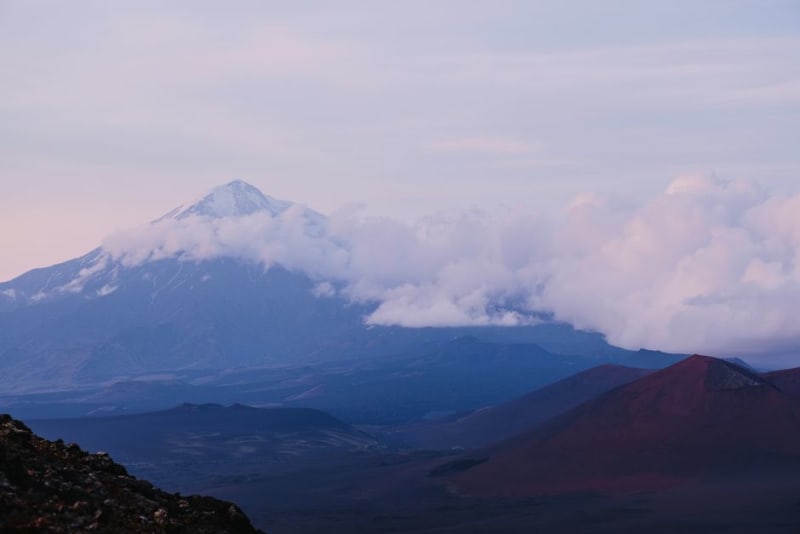
 Tolbachik
A sprawling volcanic complex whose 2012 fissure eruption buried the landscape under a black lava field you can still walk across.
Explore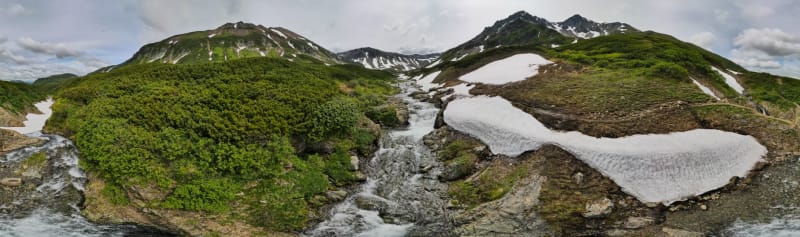 kamchatka
 Valley of Geysers
Sixty geysers erupting from a single river valley accessible only by helicopter, where the ground itself is too hot to trust.
Explore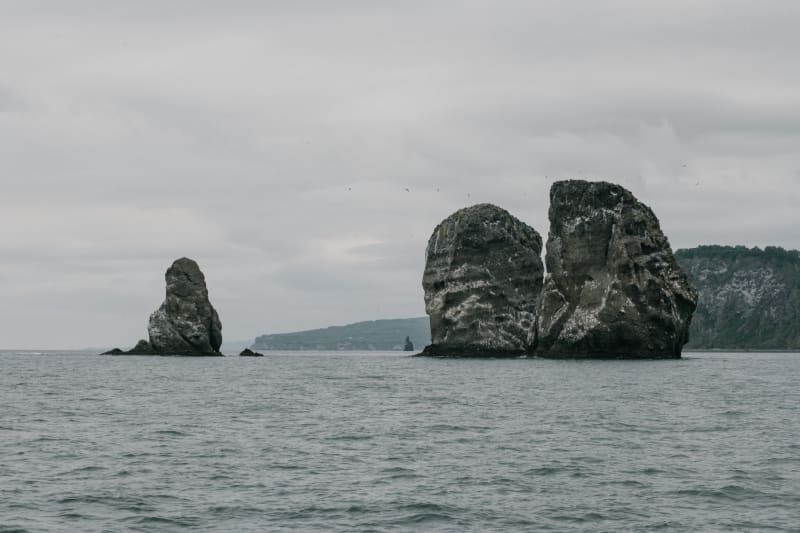 kamchatka
 Avacha Bay
One of the world's great natural harbours, guarded by volcanic peaks and the Three Brothers sea stacks that have stood in the Pacific swell for ten thousand years.
Explore kamchatka
 Bystrinsky Nature Park
A vast wilderness of taiga and tundra beneath Ichinsky Volcano, where reindeer herders still follow ancient rhythms.
Explore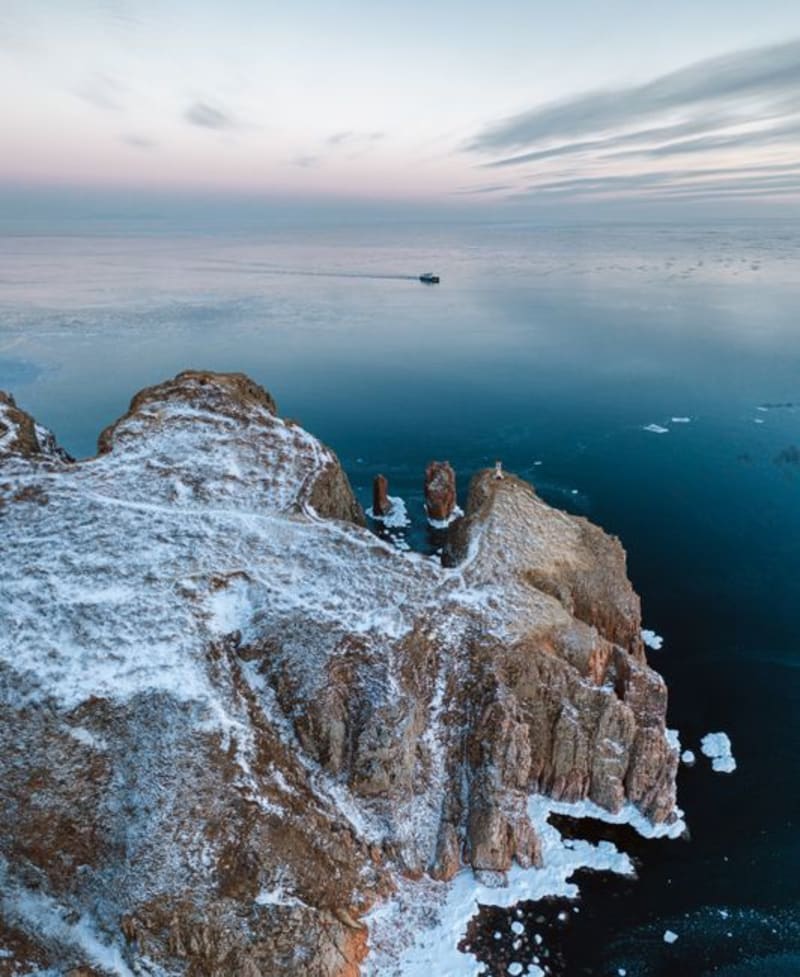 kamchatka
 Commander Islands
A wind-scoured archipelago in the Bering Sea where Vitus Bering died and the Steller's sea cow vanished forever.
Explore kamchatka
 Esso
A remote interior village where Itelmen and Koryak traditions survive between taiga and steppe, accessible by small plane and time measured by silence.
Explore