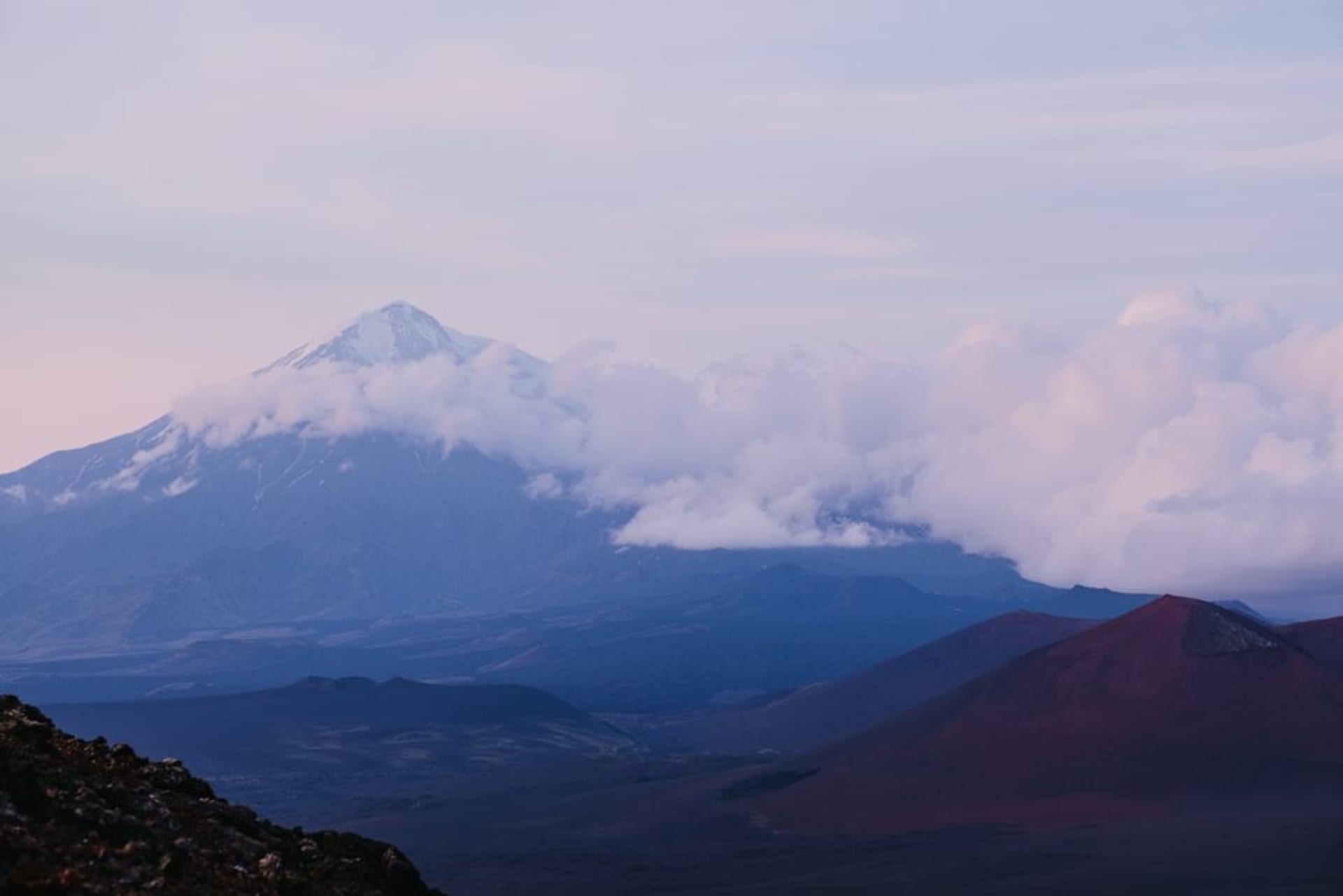
Tolbachik
"I picked up a piece of the 2012 lava and it was still lighter than any rock had a right to be."
A sprawling volcanic complex whose 2012 fissure eruption buried the landscape under a black lava field you can still walk across.

Tolbachik doesn’t look like a volcano so much as an entire ruined planet dropped into the middle of Kamchatka. We drove out from Kozyrevsk in a battered Ural truck, the kind with tires taller than Lia, bouncing for hours through birch forest that just abruptly stopped and gave way to black. Not dark gray, not brown-black. Actual black, in every direction, like someone had erased the color from the earth and left the texture behind.
The 2012 eruption is the one everyone talks about, a fissure event that opened up along Tolbachik’s flank and poured lava across roughly forty square kilometers over the following months. Our guide, a geologist who’d actually been out here monitoring the flow back then, pointed out where the birch trees had been swallowed mid-stand, their charred trunks now sticking up out of solidified rock like something out of a Cormac McCarthy novel. He said locals still call the area Mertvy Les, the dead forest, and once you’ve walked it that name makes uncomfortable sense.

What surprised me most was how the lava field wasn’t uniform at all. Some stretches were smooth and rope-like, what geologists call pahoehoe, almost pretty in a strange way, while others were jagged aa lava that shredded the soles of my boots within an hour. I kept nearly turning an ankle because the crust would hold my weight and then suddenly give under a hollow pocket beneath, a reminder that this ground, even a decade later, hasn’t fully finished settling into whatever it’s going to become.
We camped near the twin cones of Plosky Tolbachik and Ostry Tolbachik, and in the evening light the older cone’s crater rim glowed a dull red at its edges, heat still bleeding out from deep inside even years after the main eruption ended. Lia climbed up partway to a cinder cone the eruption had thrown up almost overnight back in 2012, this perfectly formed little mountain that hadn’t existed a decade before we stood on it. There’s something genuinely disorienting about standing on land younger than you are.

By the time we drove back out, my boots were half destroyed and I’d inhaled more volcanic dust than I probably should have, but I kept turning around to look back at it through the truck’s rear window. Kamchatka has a way of making you feel briefly irrelevant, and Tolbachik does that more bluntly than anywhere else I visited there.
When to go: July through early September gives the driest track conditions for the rough approach road; go later in that window if you want the cinder cones without lingering snow patches.
Keep exploring
More from Kamchatka
 kamchatka
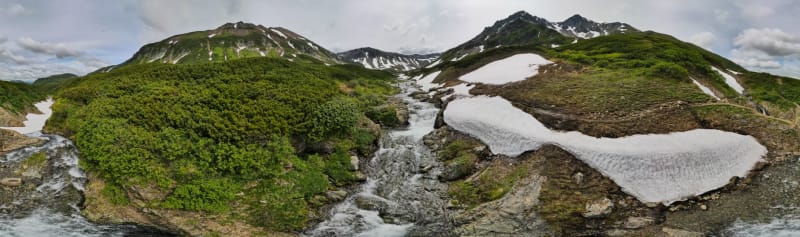
 Valley of Geysers
Sixty geysers erupting from a single river valley accessible only by helicopter, where the ground itself is too hot to trust.
Explore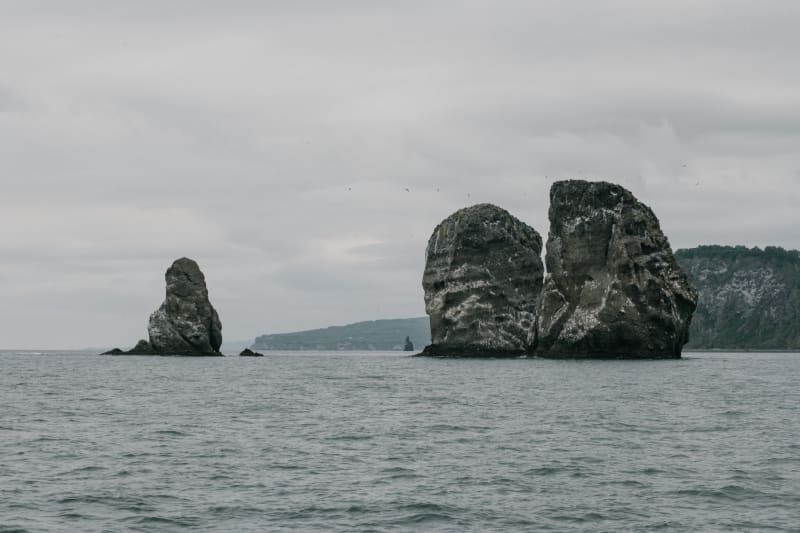 kamchatka
 Avacha Bay
One of the world's great natural harbours, guarded by volcanic peaks and the Three Brothers sea stacks that have stood in the Pacific swell for ten thousand years.
Explore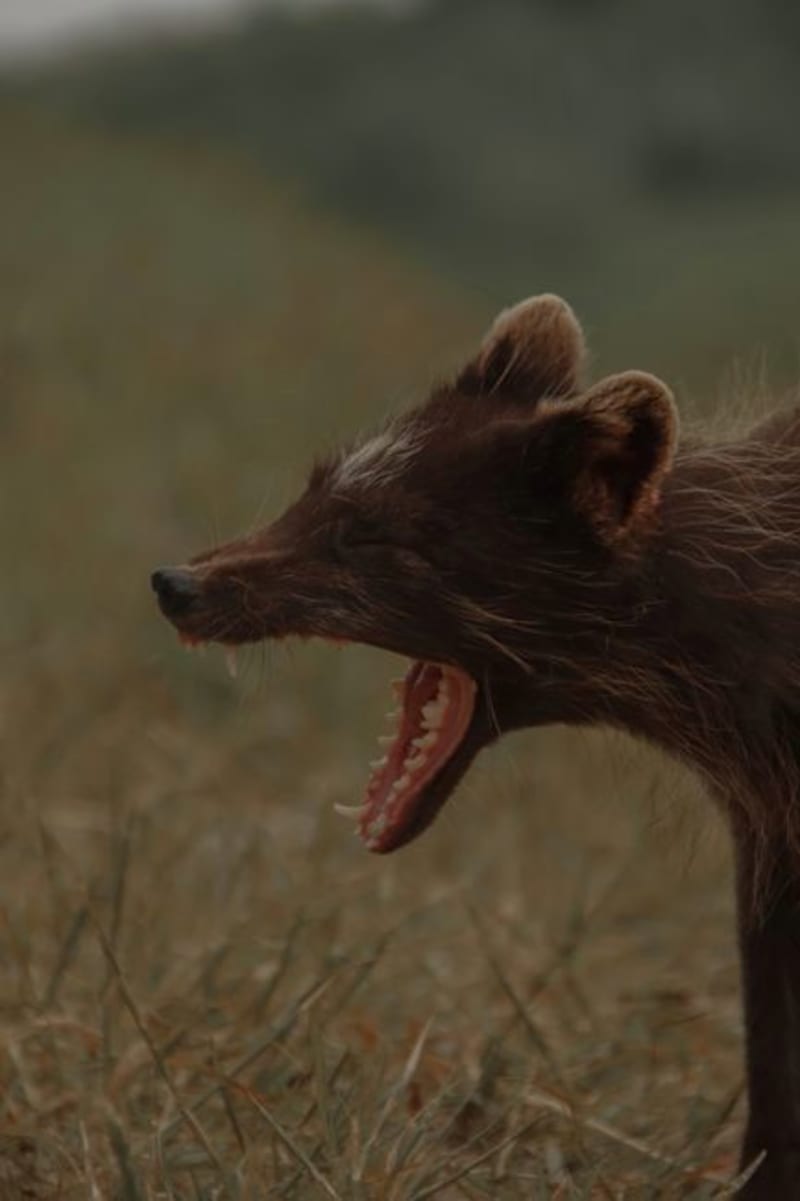 kamchatka
 Bystrinsky Nature Park
A vast wilderness of taiga and tundra beneath Ichinsky Volcano, where reindeer herders still follow ancient rhythms.
Explore kamchatka
 Commander Islands
A wind-scoured archipelago in the Bering Sea where Vitus Bering died and the Steller's sea cow vanished forever.
Explore kamchatka
 Esso
A remote interior village where Itelmen and Koryak traditions survive between taiga and steppe, accessible by small plane and time measured by silence.
Explore kamchatka
 Karymsky Volcano
One of Kamchatka's most reliably active volcanoes, its cone smoking above a crater lake that has swallowed whole eruptions.
Explore