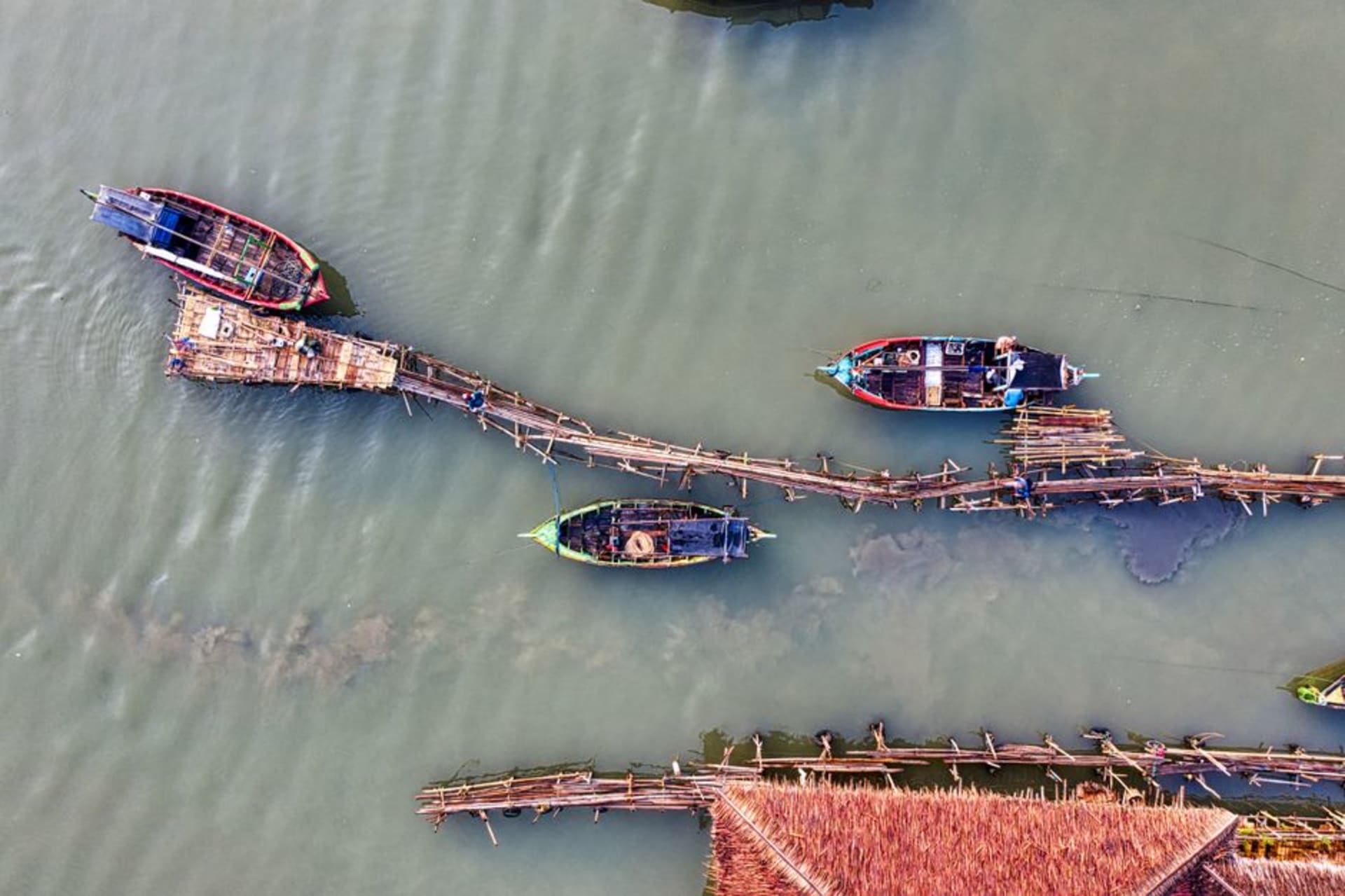
Ozernovsky
"Every third building in Ozernovsky seemed to be either a cannery or something that used to be one."
A remote fishing settlement near the Kuril Lake salmon-spawning grounds, where the salt-air smell of the cannery never quite leaves.

Ozernovsky isn’t on anyone’s list of Kamchatka highlights, and I understand why, but I keep thinking about it more than some of the places that are. We passed through on the way to Kuril Lake, one of the biggest sockeye salmon spawning grounds on earth, and the settlement itself felt like a working footnote to that fact, a place that exists almost entirely because of the fish running through the river beside it.
The town is small, a scatter of Soviet-era apartment blocks and wooden houses along the Ozernaya River, with a cannery that dominates both the skyline and, frankly, the smell of the place. Our driver, who’d grown up nearby, told us the population swells considerably during salmon season when workers come in from all over the region for a few intense months of processing fish around the clock. We arrived in that window, and the place had a strange, exhausted energy to it, trucks constantly moving, gulls screaming overhead in numbers I hadn’t seen anywhere else in Kamchatka.

We stopped at a small dock where a few men were unloading crates of sockeye straight off a boat, their hands moving fast, barely looking up as scales caught the light and scattered on the wood planks. One of them, noticing Lia’s camera, held up a fish for her without being asked, grinning in a way that needed no translation. It’s these small unscripted moments that stick with me more than most of the scheduled highlights, honestly, a guy proud of his catch on an ordinary Tuesday in a town most people only pass through.
From Ozernovsky it’s a short helicopter or boat hop to Kuril Lake itself, where the real spectacle happens, brown bears fishing in numbers that genuinely rival Alaska’s Katmai, dozens sometimes visible at once along the shallows. But coming back through Ozernovsky afterward, tired and smelling faintly of the lake’s sulfur springs nearby, the town felt like the necessary human counterweight to all that wilderness. Someone has to process the fish. Someone has to live here year-round, through winters I can’t really imagine.

I wouldn’t tell anyone to plan a trip around Ozernovsky specifically. But if you’re headed to Kuril Lake, don’t rush through it either. Sit at the dock for twenty minutes, watch the boats come in, and you’ll understand something about Kamchatka that the volcanoes alone won’t tell you.
When to go: July through September during peak salmon season, when the settlement is at its most active and boat or helicopter connections to Kuril Lake run most frequently.
Keep exploring
More from Kamchatka
 kamchatka
 Paratunka
Natural volcanic hot springs an hour from Petropavlovsk where locals soak in geothermally heated water while snow falls on the fir trees above.
Explore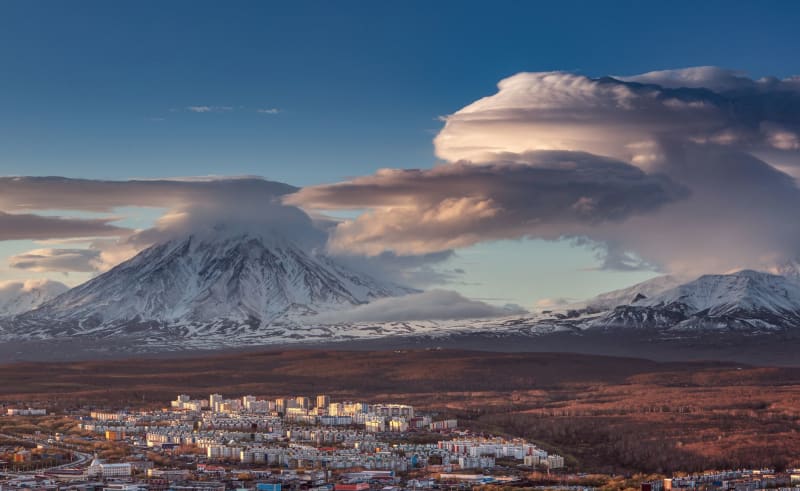 kamchatka
 Petropavlovsk-Kamchatsky
A Soviet-built port city where smoked salmon is breakfast and five volcanoes ring the harbour like a cathedral choir.
Explore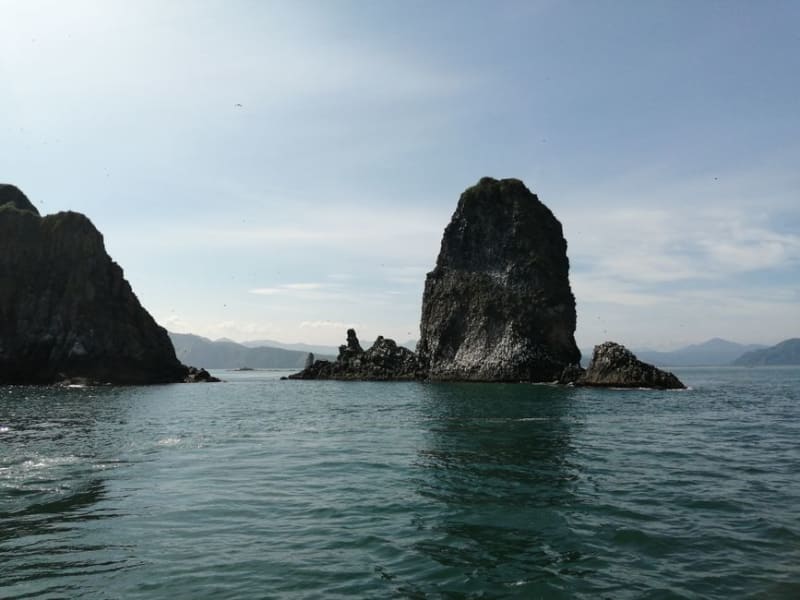 kamchatka
 Three Brothers Rocks
Three weathered sea stacks standing sentinel at the mouth of Avacha Bay, the unofficial gatekeepers of Kamchatka's coast.
Explore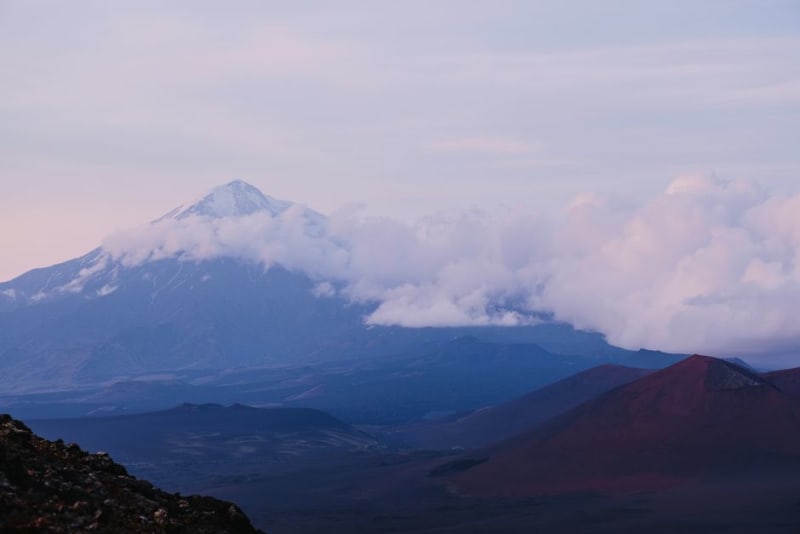 kamchatka
 Tolbachik
A sprawling volcanic complex whose 2012 fissure eruption buried the landscape under a black lava field you can still walk across.
Explore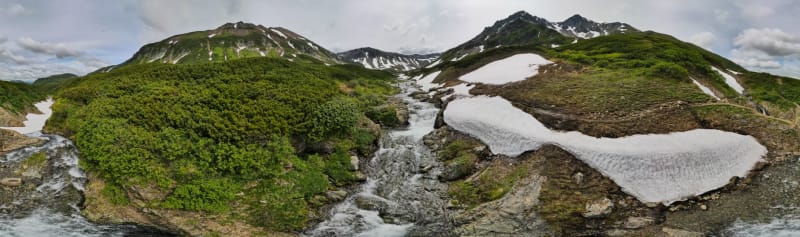 kamchatka
 Valley of Geysers
Sixty geysers erupting from a single river valley accessible only by helicopter, where the ground itself is too hot to trust.
Explore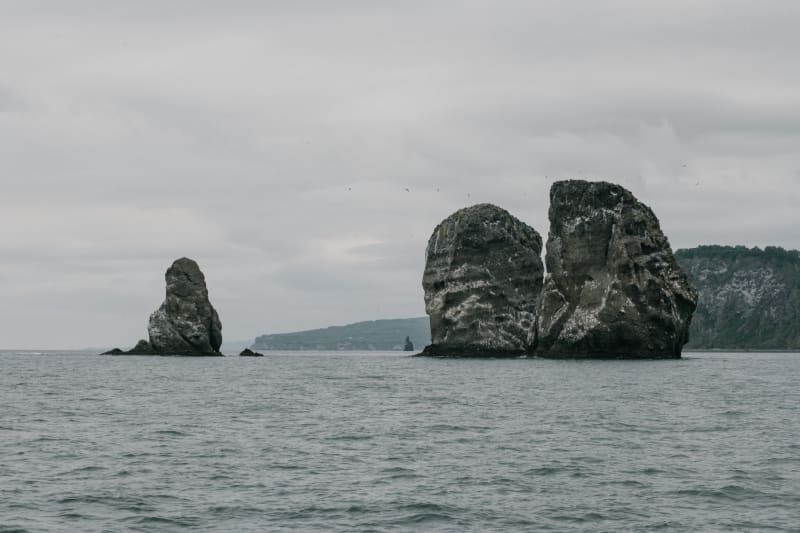 kamchatka
 Avacha Bay
One of the world's great natural harbours, guarded by volcanic peaks and the Three Brothers sea stacks that have stood in the Pacific swell for ten thousand years.
Explore