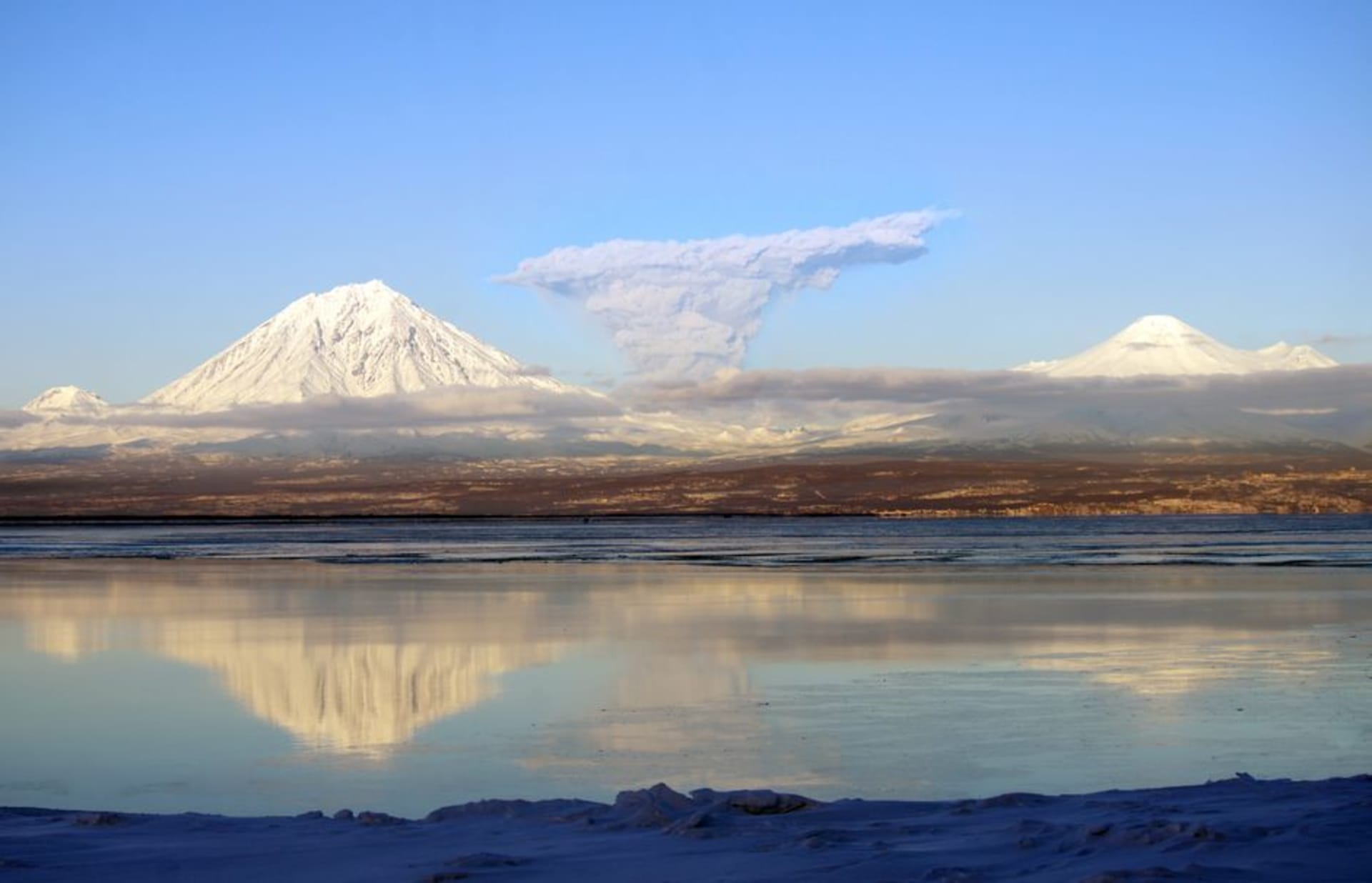
Karymsky Volcano
"I counted four small explosions before breakfast, each one just a cough of ash against a pink sky."
One of Kamchatka's most reliably active volcanoes, its cone smoking above a crater lake that has swallowed whole eruptions.

I’ll be honest, I didn’t fully understand what “consistently active” meant until I was sitting on a ridge above Karymsky with a thermos of instant coffee going cold in my hands, watching the summit huff out ash every twenty minutes or so like it was on a schedule. Our guide, a wiry guy named Igor who’d been coming here for over a decade, barely looked up each time. For him it was background noise. For me, every rumble sent a little jolt through my chest that never quite wore off, not even by day three.
Getting there is its own story. We flew into Petropavlovsk-Kamchatsky and then took a helicopter out toward Karymsky Lake, because there’s really no road that gets you close enough to matter. Lia had the window seat and kept elbowing me every time the volcano came into view below the rotor blades, this near-perfect cone rising straight out of the caldera with the lake curled around its base like it was cooling something down. From the air it looks almost too symmetrical to be real, like a diagram from a geology textbook someone forgot to finish shading in.

We camped a few kilometers off, close enough to hear it but far enough that Igor seemed unbothered, which I took as the relevant safety metric since none of the official ones meant much to me out there. At night the glow wasn’t dramatic, more like a faint orange smudge behind the ash cloud, but the sound carried further after dark. I remember waking up around 3am to what I thought was thunder and lying there for a full minute trying to convince myself it wasn’t getting closer.
The lake itself deserves more attention than it gets. Karymsky Lake formed after a massive underwater eruption back in 1996 essentially reshaped the crater, and the water still carries a faint sulfur smell if the wind shifts your way. Fishing boats used to work these waters before the eruption; now it’s just quiet, cold, mineral-blue water sitting at the foot of something that could, in theory, go off properly at any time. Igor told us the volcanologists monitoring it from Petropavlovsk track it almost daily, which I found both reassuring and slightly unsettling in equal measure.

What stayed with me wasn’t the eruptions themselves, honestly, it was the stillness in between them. Kamchatka does that to you everywhere, this constant tension between violence and total silence, and Karymsky is maybe the purest version of it I saw on that trip. Lia said afterward that it felt less like watching a natural phenomenon and more like sitting next to something that was breathing. I haven’t found a better way to describe it since.
When to go: Visit between July and September when helicopter access is reliable and trails aren’t buried in snow; conditions can shut down flights with little warning even in peak season.
Keep exploring
More from Kamchatka
 kamchatka
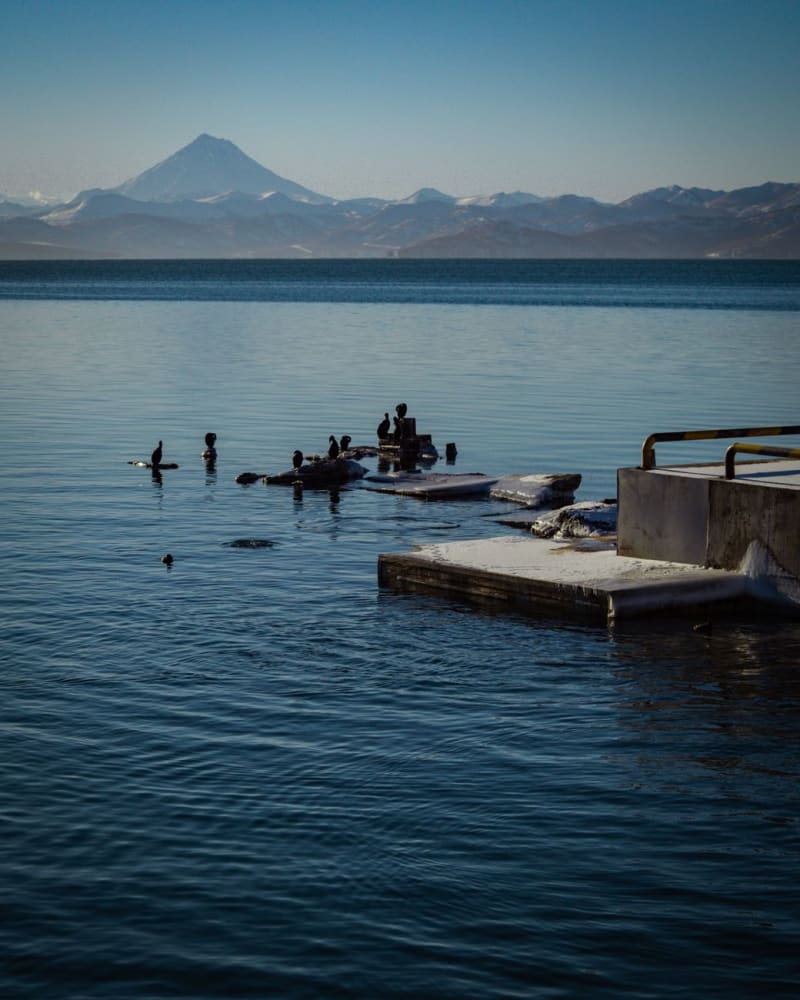
 Khalaktyrsky Beach
A vast wall of black volcanic sand on the open Pacific east of Petropavlovsk, where the surf is cold enough to steal your breath and the horizon holds nothing but grey ocean and the silhouettes of distant volcanoes.
Explore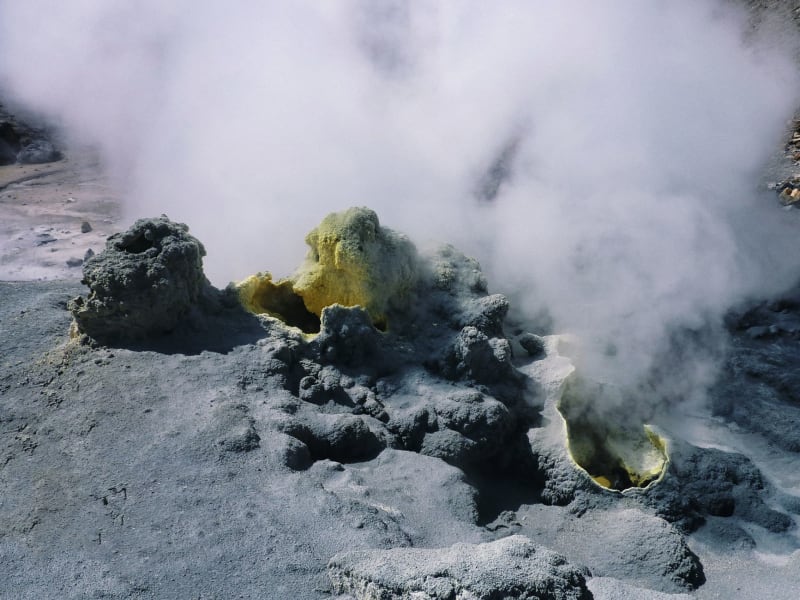 kamchatka
 Khodutka Hot Springs
A wild thermal pool deep in southern Kamchatka's wilderness, where hot springs emerge from a river valley with no map marker and no one keeping count.
Explore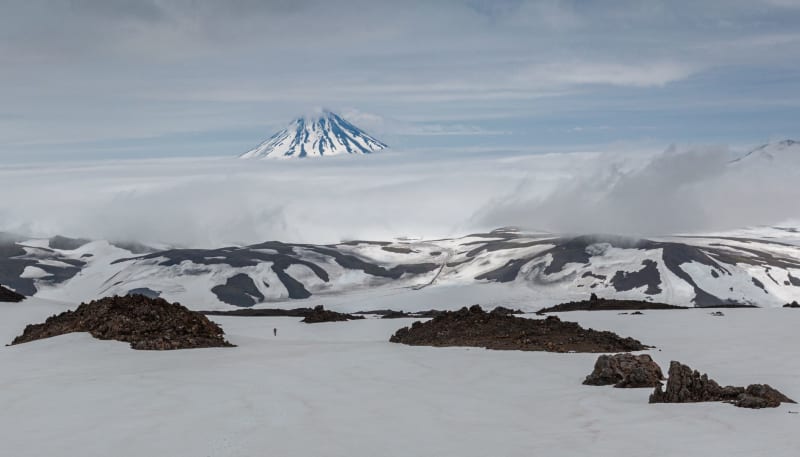 kamchatka
 Klyuchevskaya Sopka
Eurasia's highest active volcano rises 4,750 metres from the tundra and erupts with the casual regularity of something that has never needed a reason.
Explore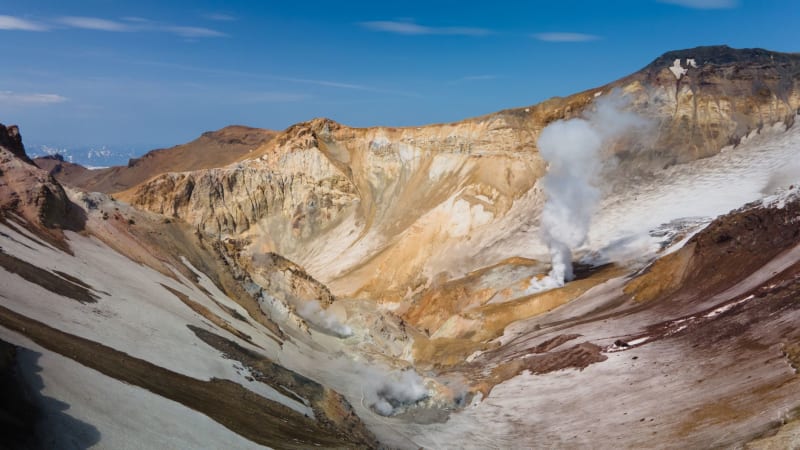 kamchatka
 Kronotsky Nature Reserve
A UNESCO biosphere with the world's densest brown bear population, active volcanoes, and salmon rivers where the fish run so thick you can hear them from the bank.
Explore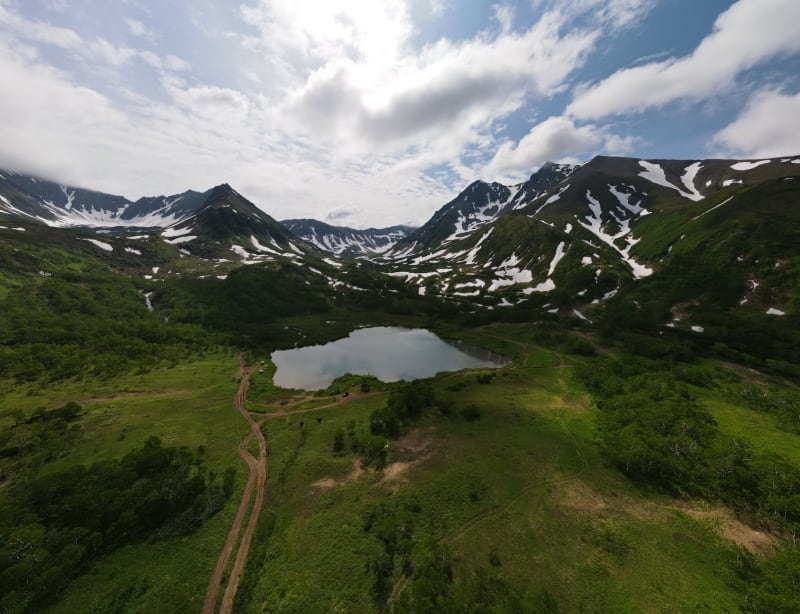 kamchatka
 Kurilskoye Lake
A volcanic caldera lake in the southern peninsula where tens of thousands of sockeye salmon spawn each August and the bears know exactly when to show up.
Explore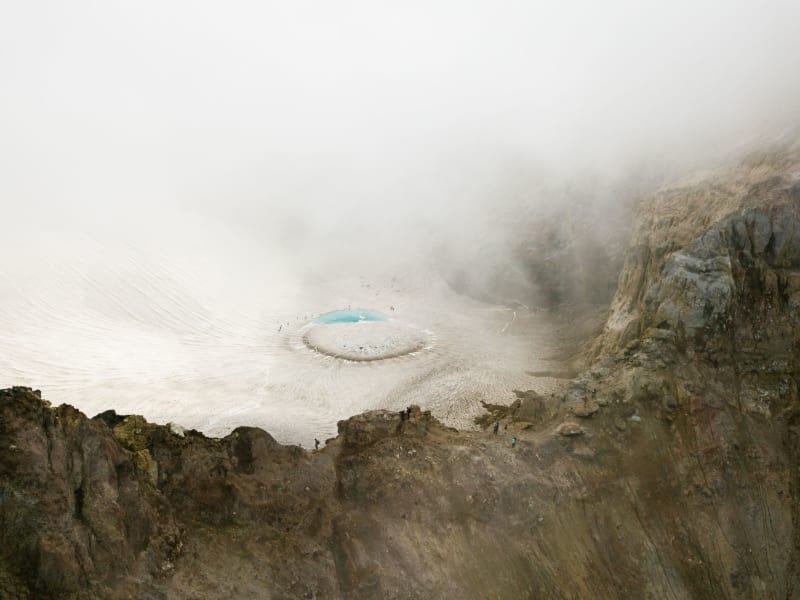 kamchatka
 Mutnovsky Volcano
An active volcano in southern Kamchatka you can actually walk into — craters, acid streams, and sulfur-stained ice beneath a glacier that the earth is slowly consuming.
Explore