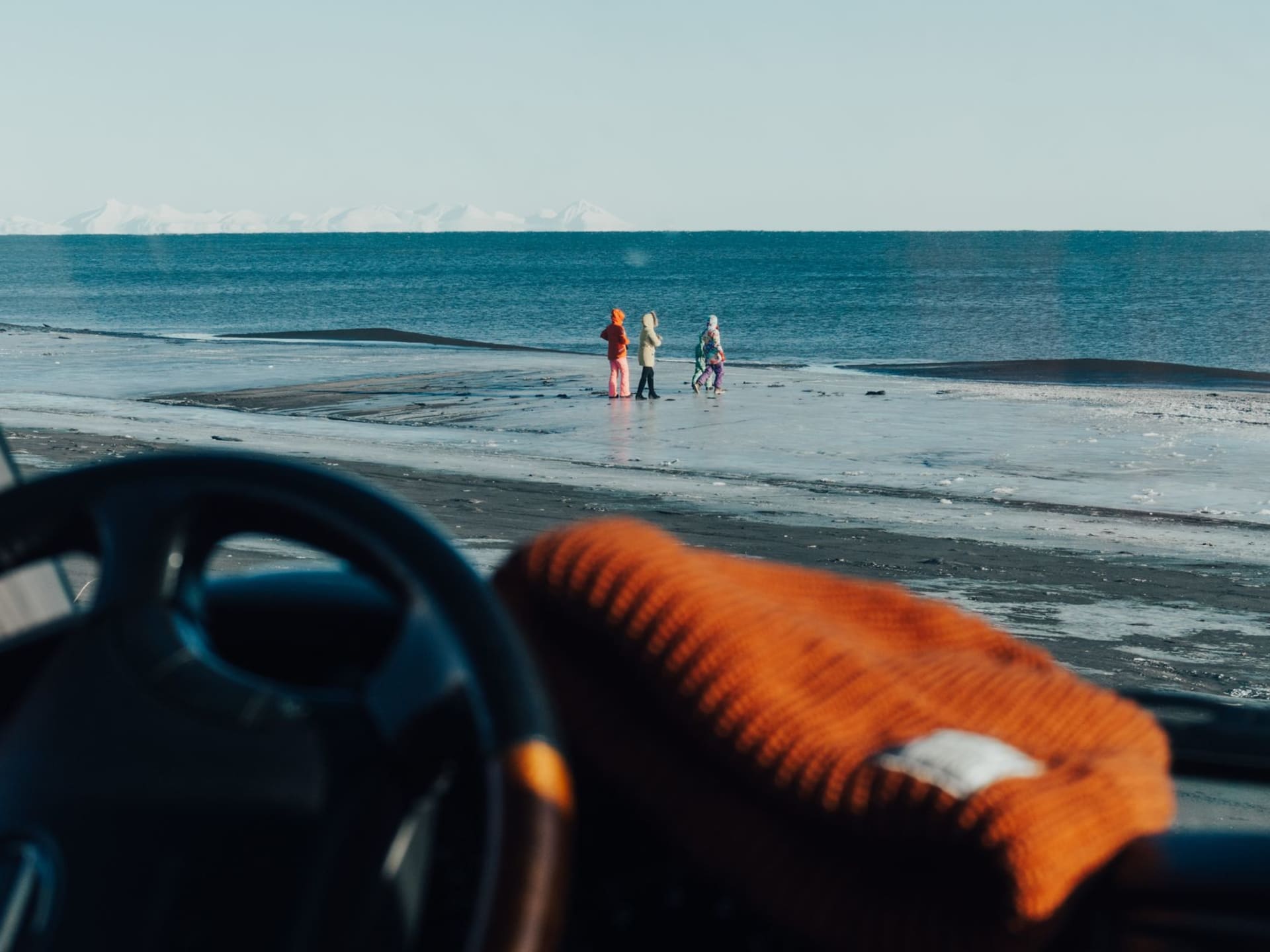
Khalaktyrsky Beach
"Black sand, grey ocean, and not a soul for a kilometer in either direction — Kamchatka does emptiness better than anywhere I have stood."
A vast wall of black volcanic sand on the open Pacific east of Petropavlovsk, where the surf is cold enough to steal your breath and the horizon holds nothing but grey ocean and the silhouettes of distant volcanoes.

I had imagined Kamchatka as all volcanoes and helicopters, so the beach caught me off guard. It is barely half an hour by car from Petropavlovsk, the road running out through scrubby birch and stunted pine until the trees give up and the land flattens into dunes, and then suddenly there it is: a black ribbon of sand running thirty kilometers up and down the Pacific coast, so wide and so dark it looks scorched. Lia put her hand flat on the sand the moment we arrived and pulled it back — even under a grey sky it had soaked up what little sun there was and held it like iron in a forge.
A beach made of volcano
The black comes from the volcanoes, of course. Khalaktyrsky is composed of fine basaltic sand, ground down from the andesite and basalt that built this whole peninsula, washed to the coast by rivers and pulled into long dunes by the Pacific wind. Up close the grains glitter; there is magnetite in the mix, and I watched a Russian family run a magnet through a handful and lift out a furred grey clump of iron filings. It is the kind of detail that makes you realize you are standing on the literal output of the volcanoes you came to see — Avachinsky and Koryaksky stood pale and snow-streaked on the horizon behind us, the source material in person.
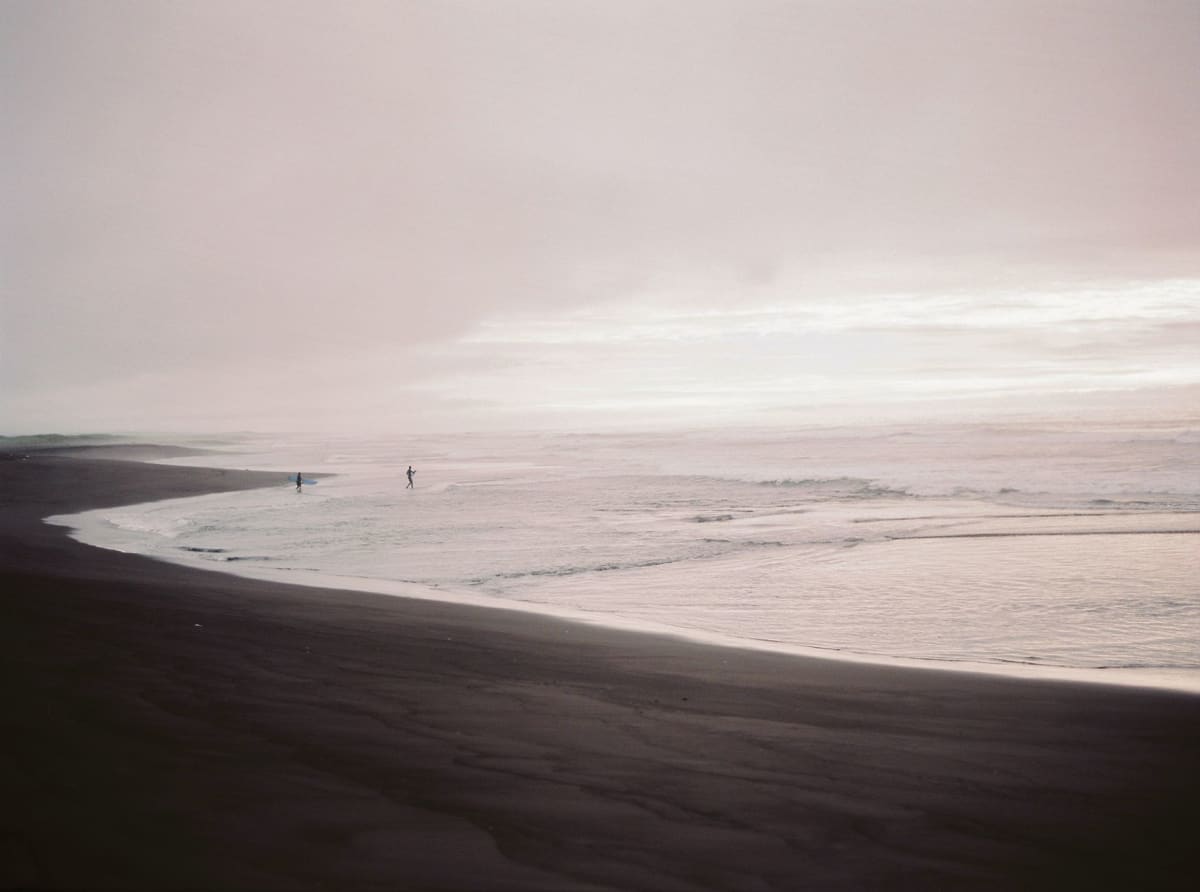
The Pacific here is not a swimming ocean. The water comes straight off cold northern currents and the surf breaks hard and frigid; the few surfers who come do it in thick hooded wetsuits, and there is a small surf camp near the road that rents boards and runs a sauna for afterward, which tells you everything about the priorities. I waded in to my knees on a dare from Lia and lasted about eight seconds. The cold is not a metaphor. It is a physical fact that reorganizes your sense of what a beach is for.
Walking the emptiness
What the beach is for, I decided, is walking. We walked north for an hour and met no one — a single set of dog tracks, a gull picking at something, the wind doing the talking. The scale is hard to convey: thirty kilometers of unbroken black sand, the dunes behind tufted with marram grass and dwarf pine, the ocean grey to the curve of the earth. Every so often a stream cut across the sand from the inland marsh, and the water ran clear and cold and brown with peat.
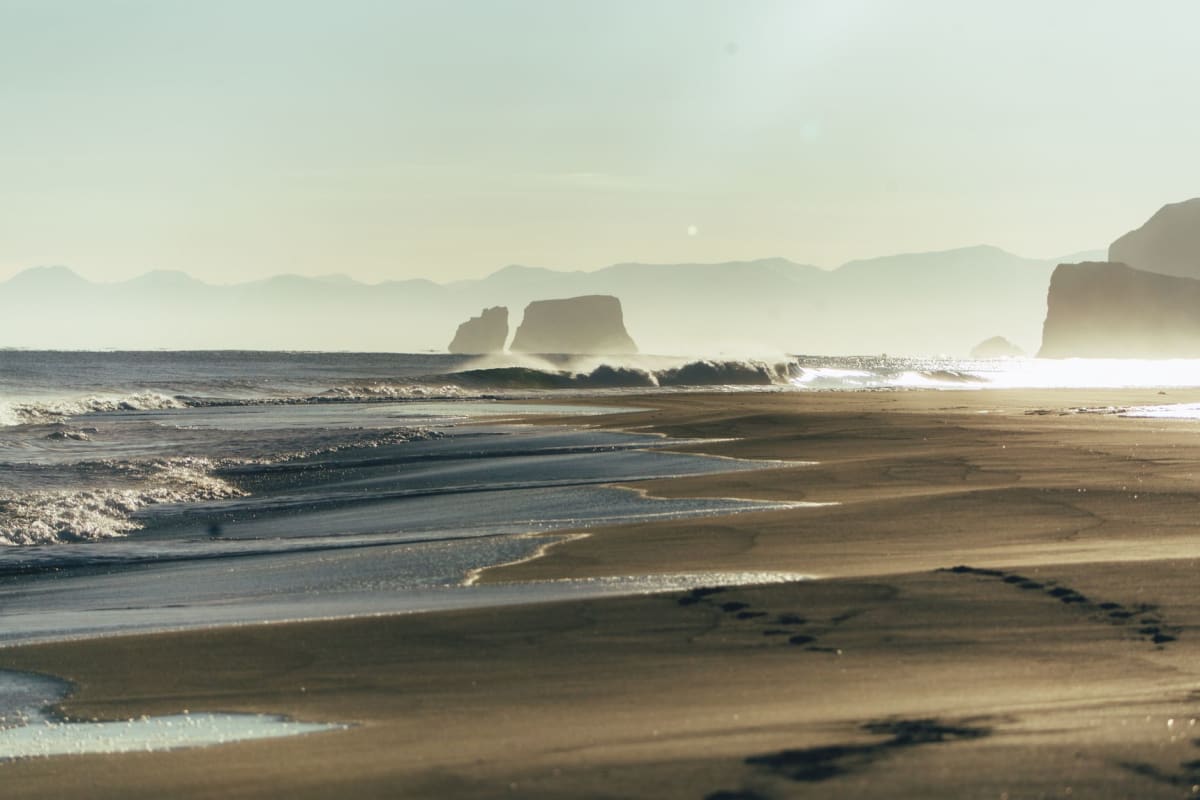
There is a memorial cross on the dunes and, increasingly, a scatter of glamping domes and food trucks near the access road in summer — Petropavlovsk has discovered its own beach, and on a warm weekend locals come out to grill and fly kites. But walk twenty minutes from the car park and all of it falls away. We stayed until the light went, drinking thermos tea with our backs to a dune, watching the volcanoes lose their color, and I thought: most people fly to Kamchatka and never come here, and they are wrong.
When to go: June through September for the mildest weather and the surf camp’s season — even then bring windproof layers, as the Pacific wind is relentless and the temperature rarely climbs far. Winter visits are starkly beautiful but brutally cold and the access road may be impassable.
Keep exploring
More from Kamchatka
 kamchatka
 Khodutka Hot Springs
A wild thermal pool deep in southern Kamchatka's wilderness, where hot springs emerge from a river valley with no map marker and no one keeping count.
Explore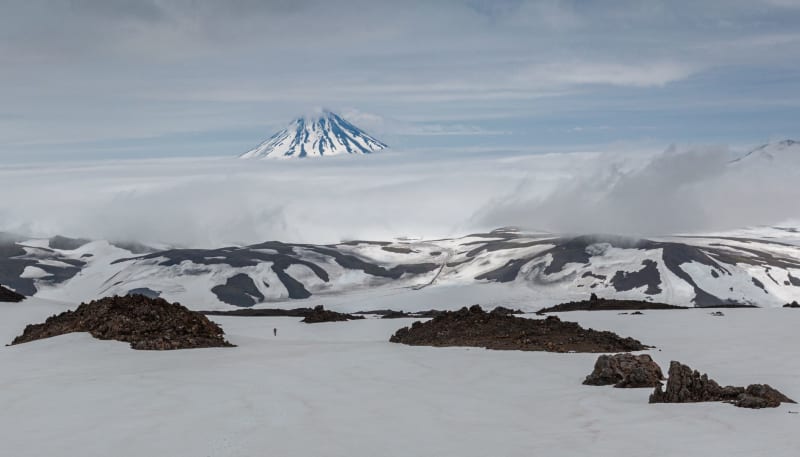 kamchatka
 Klyuchevskaya Sopka
Eurasia's highest active volcano rises 4,750 metres from the tundra and erupts with the casual regularity of something that has never needed a reason.
Explore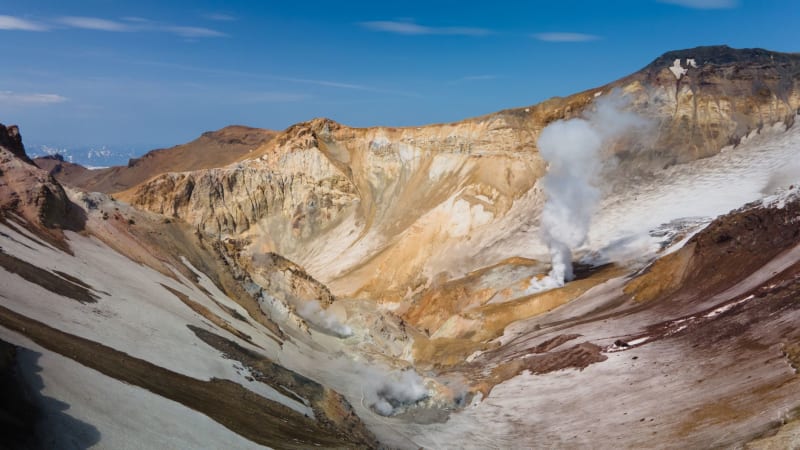 kamchatka
 Kronotsky Nature Reserve
A UNESCO biosphere with the world's densest brown bear population, active volcanoes, and salmon rivers where the fish run so thick you can hear them from the bank.
Explore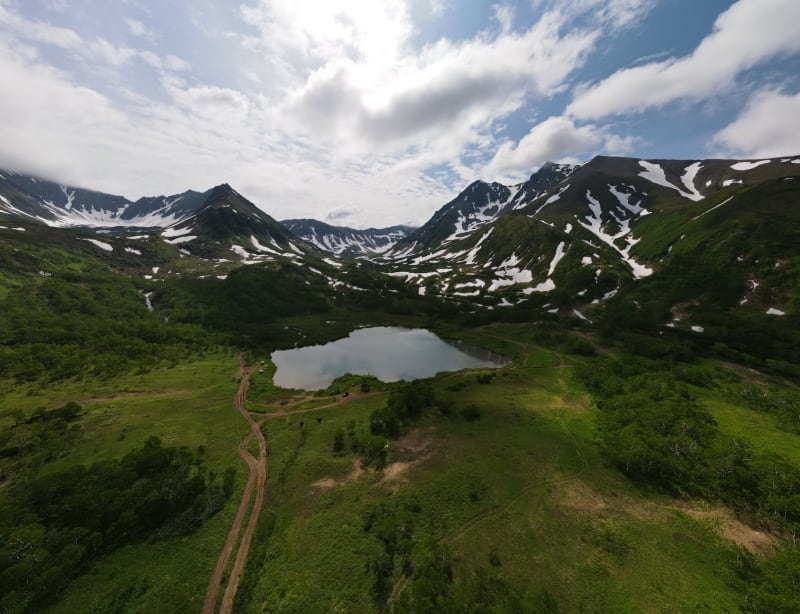 kamchatka
 Kurilskoye Lake
A volcanic caldera lake in the southern peninsula where tens of thousands of sockeye salmon spawn each August and the bears know exactly when to show up.
Explore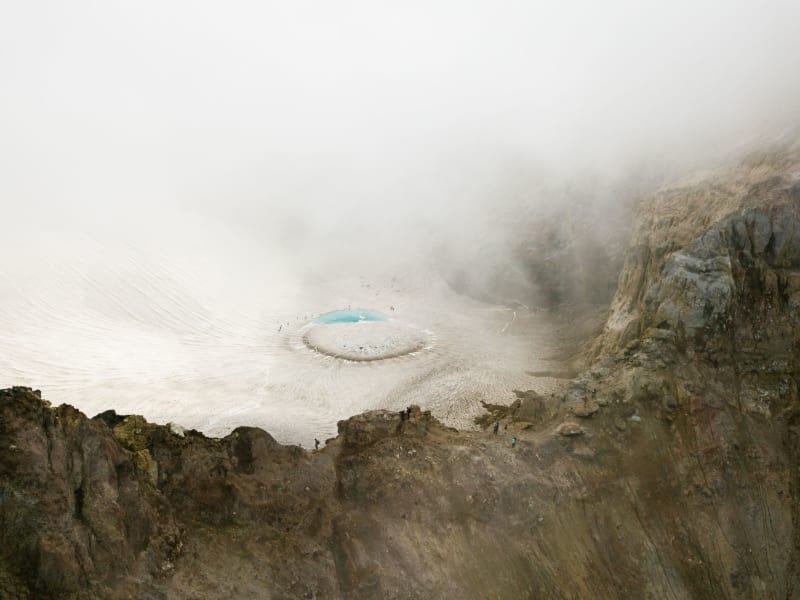 kamchatka
 Mutnovsky Volcano
An active volcano in southern Kamchatka you can actually walk into — craters, acid streams, and sulfur-stained ice beneath a glacier that the earth is slowly consuming.
Explore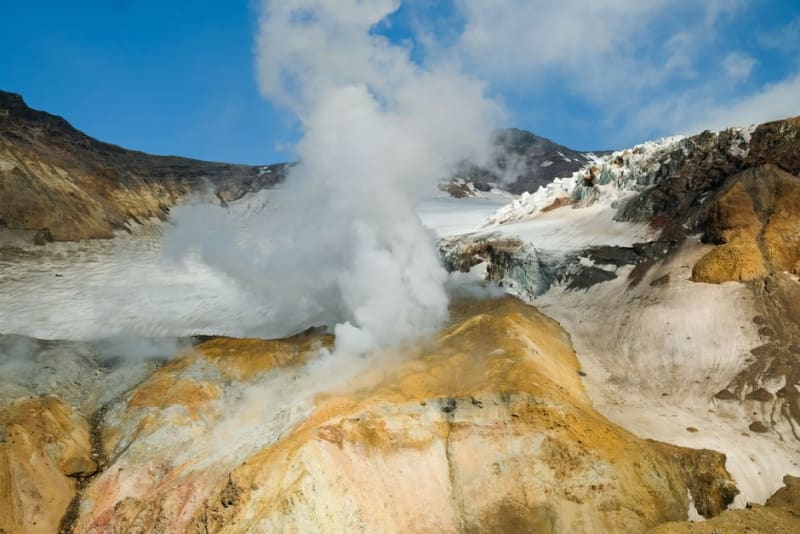 kamchatka
 Nalychevo Park
A wide nature park of hot springs and wildflower meadows reachable only on foot or by helicopter, ringed by three volcanoes.
Explore