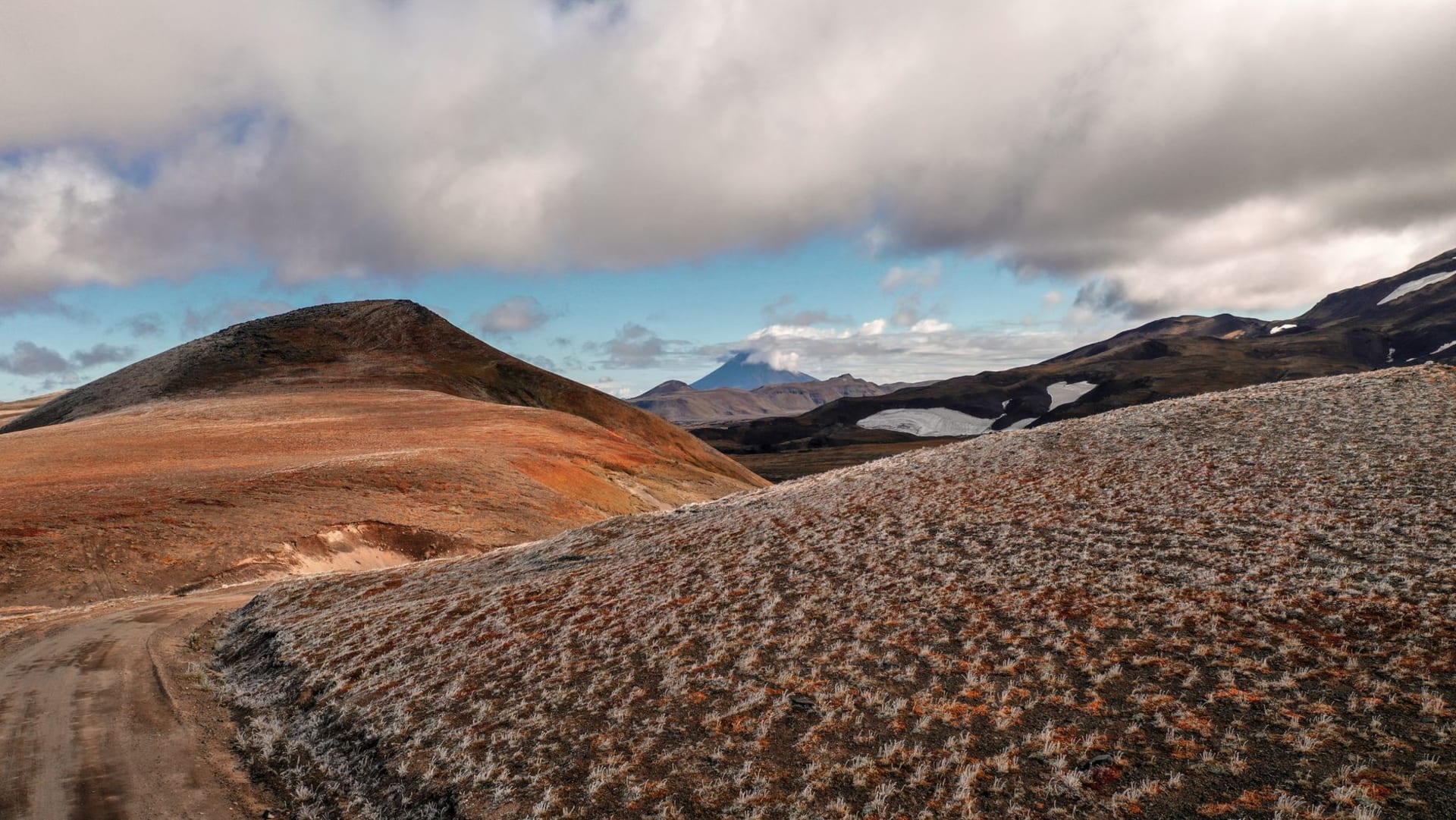
A remote interior village where Itelmen and Koryak traditions survive between taiga and steppe, accessible by small plane and time measured by silence.

The small propeller plane descended toward Esso in a spiral that let you see the whole village at once: maybe a hundred wooden houses following the bend of the Bystraya River, birch forest coming right up to the last gardens, and beyond that the open steppe rising toward peaks that had no names on the map I was carrying. The airstrip was a gravel rectangle. The pilot cut the engines and we rolled to a stop and a dog walked over to investigate. That was the official welcome to the most remote settlement I’ve been to on the Kamchatka peninsula.
Esso sits in the central depression of Kamchatka, three hundred kilometers from Petropavlovsk, and serves as the administrative center for the Bystrinsky District — which is a grand designation for a place with perhaps two thousand residents and one main street. The village is home to the Itelmen and Koryak peoples, indigenous Kamchatkans who have lived in this river valley for thousands of years, and whose presence gives Esso a cultural dimension that most of the peninsula’s more-visited spots lack entirely. The local ethnographic museum, run by a woman named Natalya who had clearly been waiting for someone interested enough to use the full script, took three hours and covered traditional dress, reindeer herding, the calendars of the salmon runs, and the shamanic practices the Soviet era tried to erase and mostly failed to.

The food in Esso is a negotiation between what the forest gives and what the river provides. In late summer: smoked venison, cloudberries gathered from the tundra (tart, orange, almost medicinal in their intensity), dried mushrooms that perfume any room where they’re stored, and the local fermented fish preparations that I found I either needed to approach with complete commitment or not at all. A woman at the communal kitchen — not a restaurant, exactly, more a place where several families ate together and guests were allowed in — served me a bowl of venison stew with wild garlic and bread from the wood-fired oven, and I cannot think of a meal that better embodied where it was made.
Esso also has hot springs, and this feels almost unfair given everything else the village already offers. The springs are a fifteen-minute walk from the village center, channeled into two outdoor pools that locals use year-round. I went at dusk in late August, the temperature outside somewhere near eight degrees, and soaked in water heated by whatever is happening kilometers below the surface while bats worked the insects above the pool and stars emerged over the steppe. There were four other people there, all local, all completely uninterested in my existence, which was exactly what I needed.

The walk east from the village into the transition zone where taiga gives way to open steppe is one of the more quietly astonishing walks I’ve done. You pass through birch forest, the trees thinning, the ground cover changing, and then suddenly you are in a completely different landscape — grassy, exposed, the mountains closer, the sky very large. Ground squirrels stand upright at their burrow entrances and watch you pass. In August the wildflowers are extravagant: fireweed in dense stands, arctic poppies, saxifrage in the rock crevices. The silence there is indeed textured: wind, grasses, the distant sound of the river, the occasional cry of something overhead.
When to go: July and August for the best weather and full access to the steppe walks, hot springs, and ethnographic culture. The Vyvenka festival in August celebrates Itelmen traditions with music, dance, and food and is worth timing a visit around. Esso is reachable by small plane from Petropavlovsk, or by an unpaved road that takes the better part of a day in good conditions — much longer in the mud season of spring.
Keep exploring
More from Kamchatka
 kamchatka
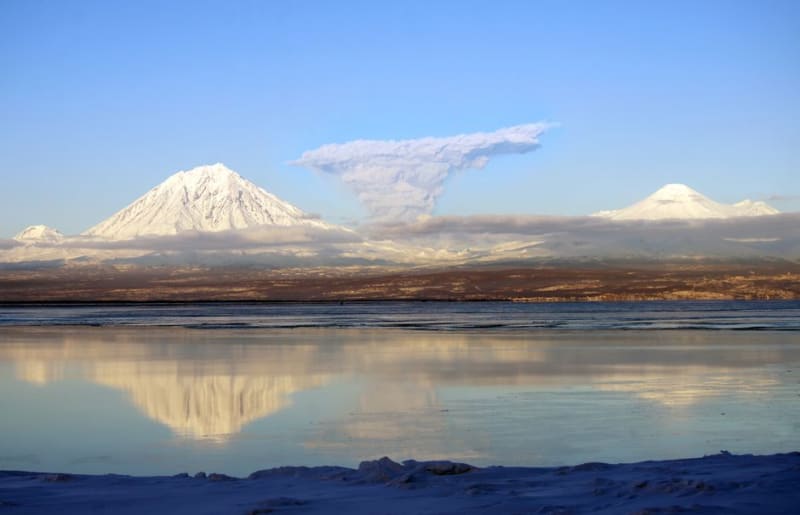
 Karymsky Volcano
One of Kamchatka's most reliably active volcanoes, its cone smoking above a crater lake that has swallowed whole eruptions.
Explore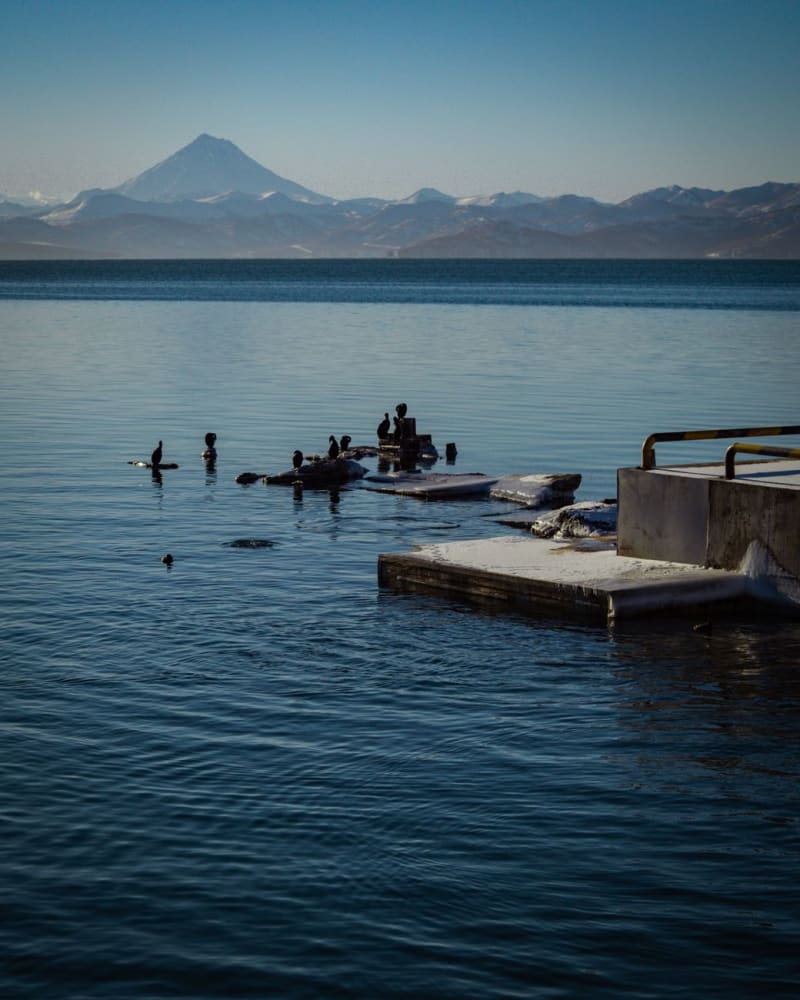 kamchatka
 Khalaktyrsky Beach
A vast wall of black volcanic sand on the open Pacific east of Petropavlovsk, where the surf is cold enough to steal your breath and the horizon holds nothing but grey ocean and the silhouettes of distant volcanoes.
Explore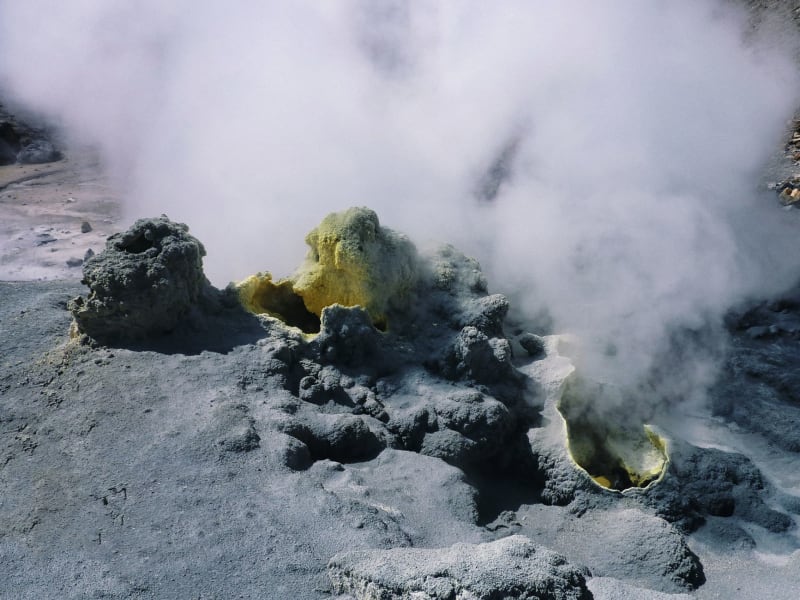 kamchatka
 Khodutka Hot Springs
A wild thermal pool deep in southern Kamchatka's wilderness, where hot springs emerge from a river valley with no map marker and no one keeping count.
Explore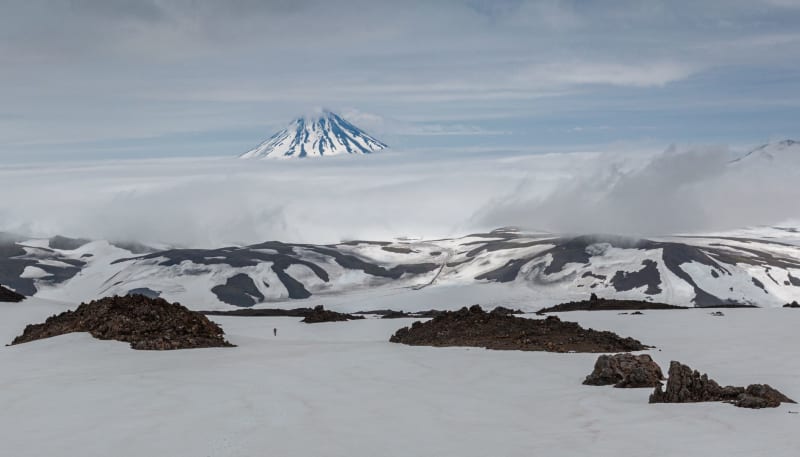 kamchatka
 Klyuchevskaya Sopka
Eurasia's highest active volcano rises 4,750 metres from the tundra and erupts with the casual regularity of something that has never needed a reason.
Explore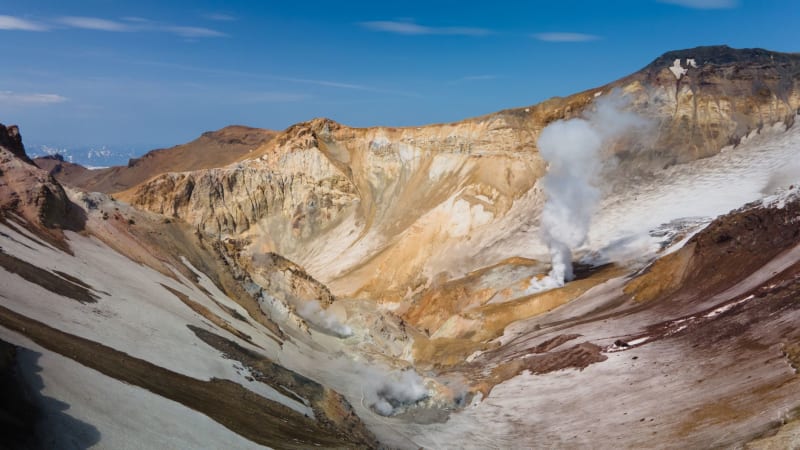 kamchatka
 Kronotsky Nature Reserve
A UNESCO biosphere with the world's densest brown bear population, active volcanoes, and salmon rivers where the fish run so thick you can hear them from the bank.
Explore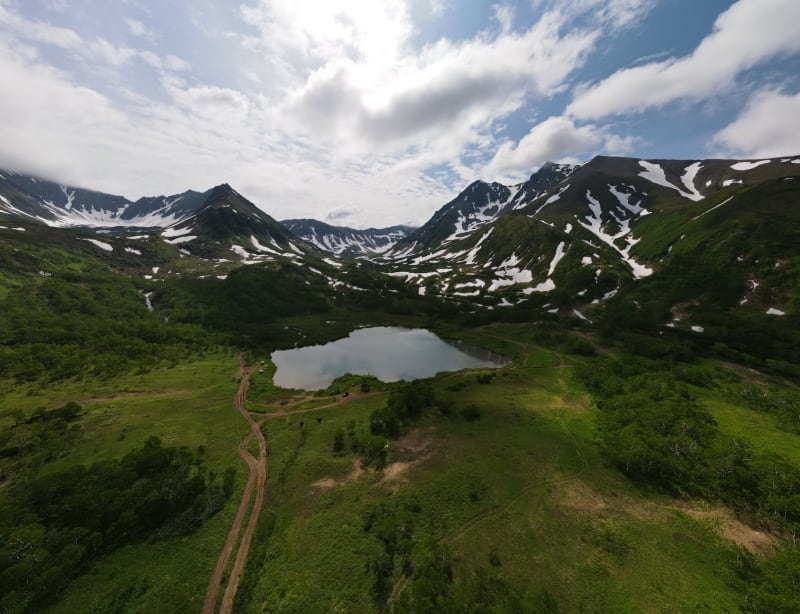 kamchatka
 Kurilskoye Lake
A volcanic caldera lake in the southern peninsula where tens of thousands of sockeye salmon spawn each August and the bears know exactly when to show up.
Explore