Hotokegaura
"It looked like a congregation of stone, standing in the water and waiting for something."
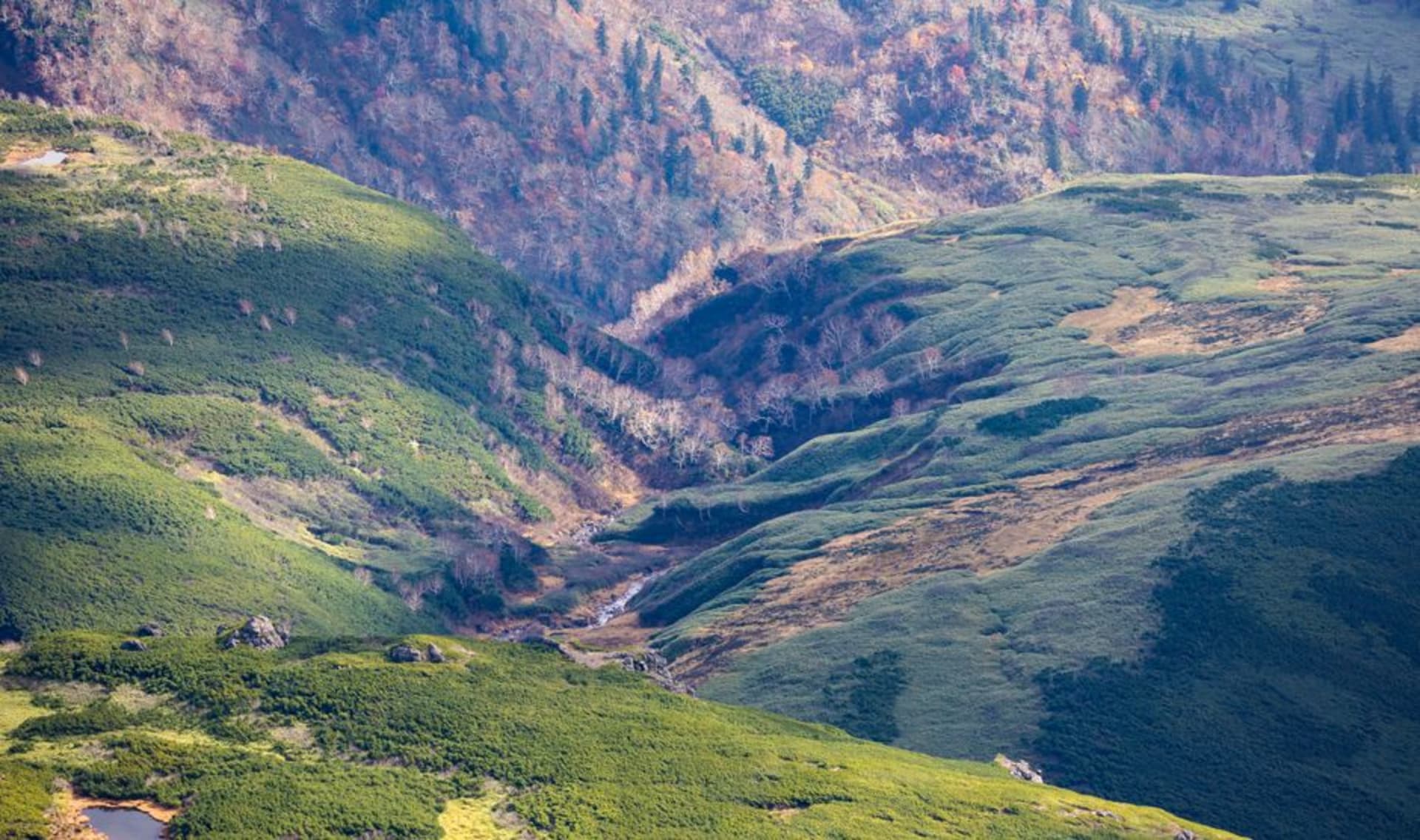
A remote stretch of green-white volcanic cliffs on the Shimokita Peninsula, carved by the sea into shapes locals named after Buddhist statues, best seen from a small sightseeing boat drifting past in near-total isolation.

Getting to Hotokegaura took more effort than almost anywhere else we went in Tohoku, and honestly that was part of the point. We’d heard about these strange cliffs on the wild, thinly populated Shimokita Peninsula from a fisherman we got talking to near Mutsu, who described them with a kind of reverence that made Lia immediately start plotting how to get there. There’s barely a road in, so we ended up in Sai Village waiting for a small sightseeing boat, unsure what exactly we were about to see. What we found, once we rounded the headland, was a coastline unlike anything else we’d come across in Japan — pale green-white rock rising straight from the sea in towering, improbable shapes.
Cliffs Shaped Like a Crowd of Statues
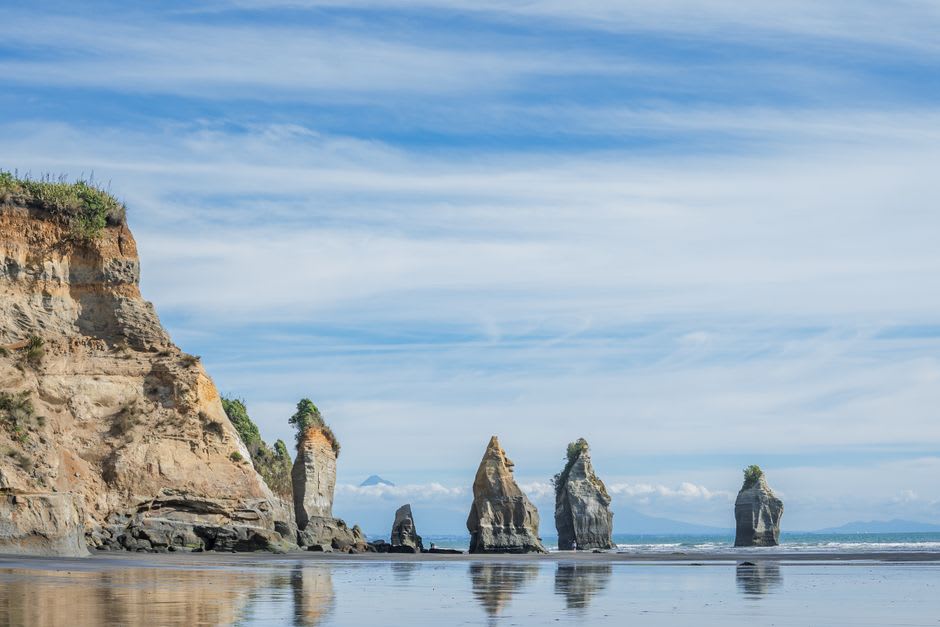
The rock here is volcanic tuff, soft enough that millions of years of wave and wind have carved it into upright spires and hollows that, from a distance, genuinely resemble standing figures. Locals gave the formations names tied to Buddhist statuary — Buddha’s Seat among them — and once our guide pointed out the resemblance, I couldn’t unsee it. Cruising slowly along the base of the cliffs, engine cut back to a low idle, we watched spire after spire drift past, pale and ghostly against the dark water, some huddled together like a congregation, others standing apart. Lia went quiet for most of that stretch, just watching, and I remember thinking that no photograph was going to capture the scale of it properly.

The Five Hundred Arhats
Further along, our guide pointed out a dense cluster of smaller formations known locally as the 500 Arhats, a nod to the disciples of the Buddha, each rock roughly figure-sized and crowded together at odd, almost conversational angles. It’s easy to be skeptical of these kinds of place-names until you actually see the rocks yourself, and then the resemblance just clicks into place. The boat idled there longer than anywhere else on the route, and everyone on board, us included, went quiet, cameras mostly forgotten, just looking. There’s a strange, slightly humbling stillness to a landscape this isolated and this old, shaped by nothing but water and time and given meaning only by the people who happened to pass by and see faces in the stone.
Total Isolation on the Water
What struck me most, once the boat slowed and cut its engine for a few minutes near the far end of the cliffs, was the silence. No other boats, no visible road, no buildings — just cliffs, water, and a thin line of forest on the ridge above. Lia leaned against the rail and said it felt like we’d sailed to the edge of the country, which isn’t far from true; the Shimokita Peninsula is about as remote as Honshu gets. On the ride back, the light had shifted and the cliffs took on a warmer, almost golden cast, and I found myself wishing the trip lasted twice as long. It’s a strange kind of place to visit — briefly, from the water, with almost no way to linger on land — but that briefness is part of what makes it stick with you.

Getting There
Hotokegaura is reached almost exclusively by sightseeing boat from Sai Village, on the western side of the Shimokita Peninsula, itself accessible by local bus from Mutsu. Mutsu connects by bus to Aomori city and onward to the Shinkansen network, but this is a long, multi-stage journey with infrequent connections, so plan the day carefully and check boat schedules in advance since sailings are limited and weather-dependent. There is very little accommodation or services directly at Sai Village, so most travelers base themselves in Mutsu the night before and treat Hotokegaura as a dedicated half-day excursion rather than a quick stop.
Keep exploring
More of Tōhoku
Keep exploring
More from Tōhoku
 japan
japan Iizaka Onsen
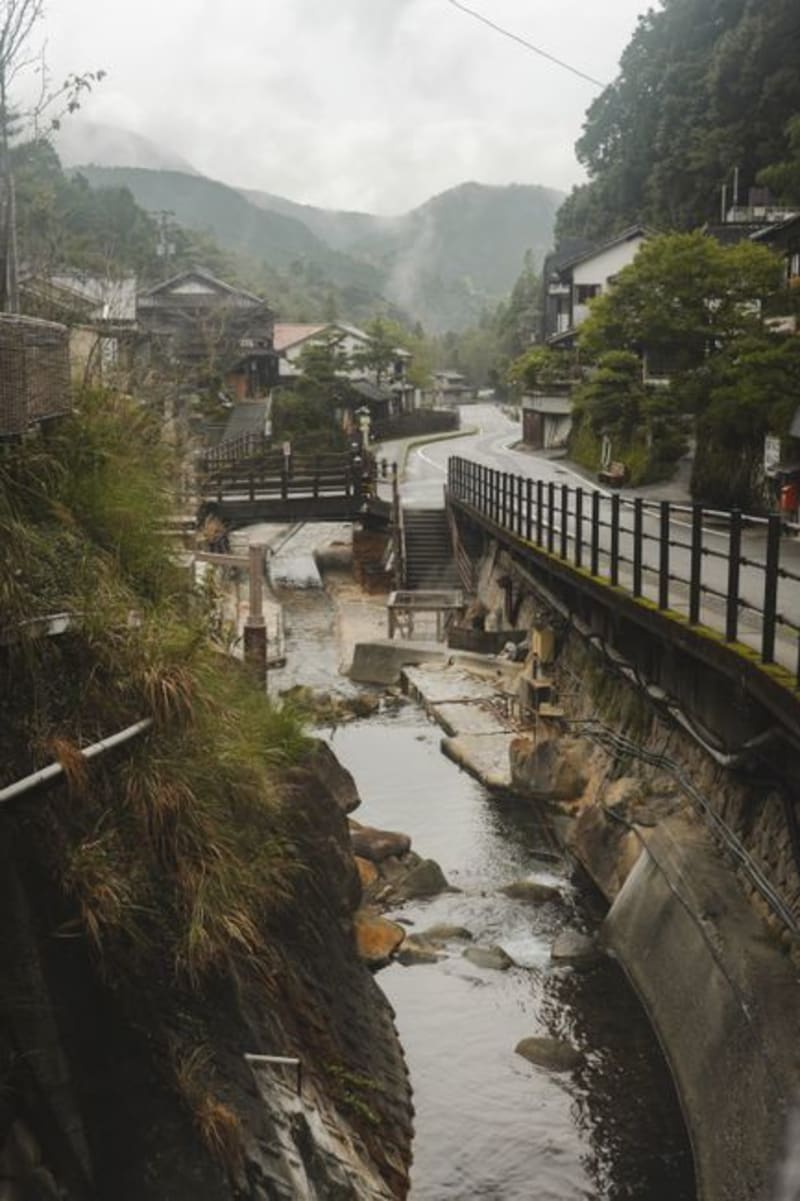
One of Japan's oldest hot spring towns near Fukushima City, visited by poet Matsuo Basho and later Helen Keller, where locals still rank it among the country's finest onsen and October brings the crashing Kenka Matsuri float festival.
Explore japan
japan Lake Inawashiro
Fukushima's great mirror lake, wide and pale under the perfect cone of Mount Bandai. In winter hundreds of swans come down to its edge and the shallows freeze into strange lacework. We came for the reflection and found ourselves standing on a beach full of swans in the snow.
Explore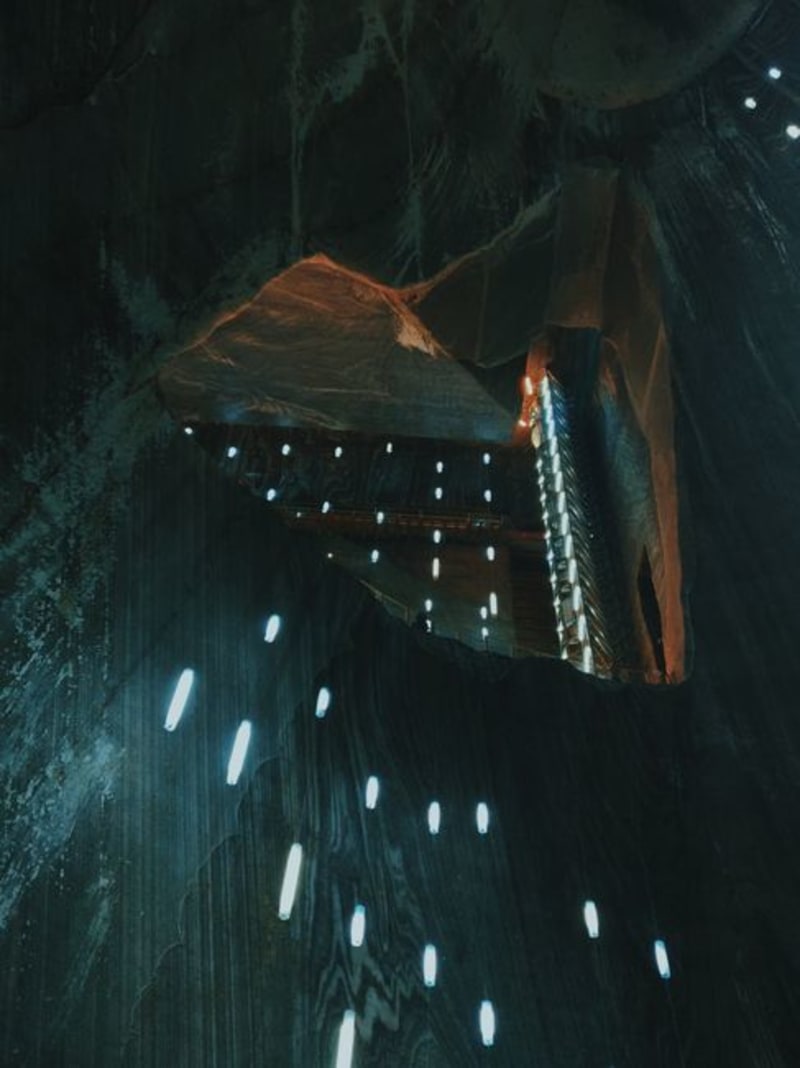 japan
japan Innai Ginzan (Innai Silver Mine Ruins)
The overgrown ruins of an Edo-period silver mine outside Yuzawa, once a boomtown of thousands funding the Akita domain, now reduced to stone foundations and forest paths that feel more like a lost civilization than a heritage site.
Explore japan
japan Iwaki
A sprawling, sun-warmed city on Fukushima's Pacific coast, where surf beaches meet a palm-fringed spa resort born from the ashes of a coal town. Iwaki wears its history and its reinvention with an easy, unpretentious grin.
Explore japan
japan Jodogahama
A cove of jagged white rhyolite spikes against blue-green Pacific water near Miyako, named centuries ago by a priest who thought it resembled the Buddhist Pure Land, and now one of Japan's top spots to swim among the rocks.
Explore japan
japan Juniko
A scatter of forest lakes hidden in the beech world of the Shirakami-Sanchi, where a single pond called Aoike burns a blue so unreasonable it looks lit from below. This is quiet, unhurried Tohoku — birdsong, wet moss, and water that keeps its own secrets.
Explore