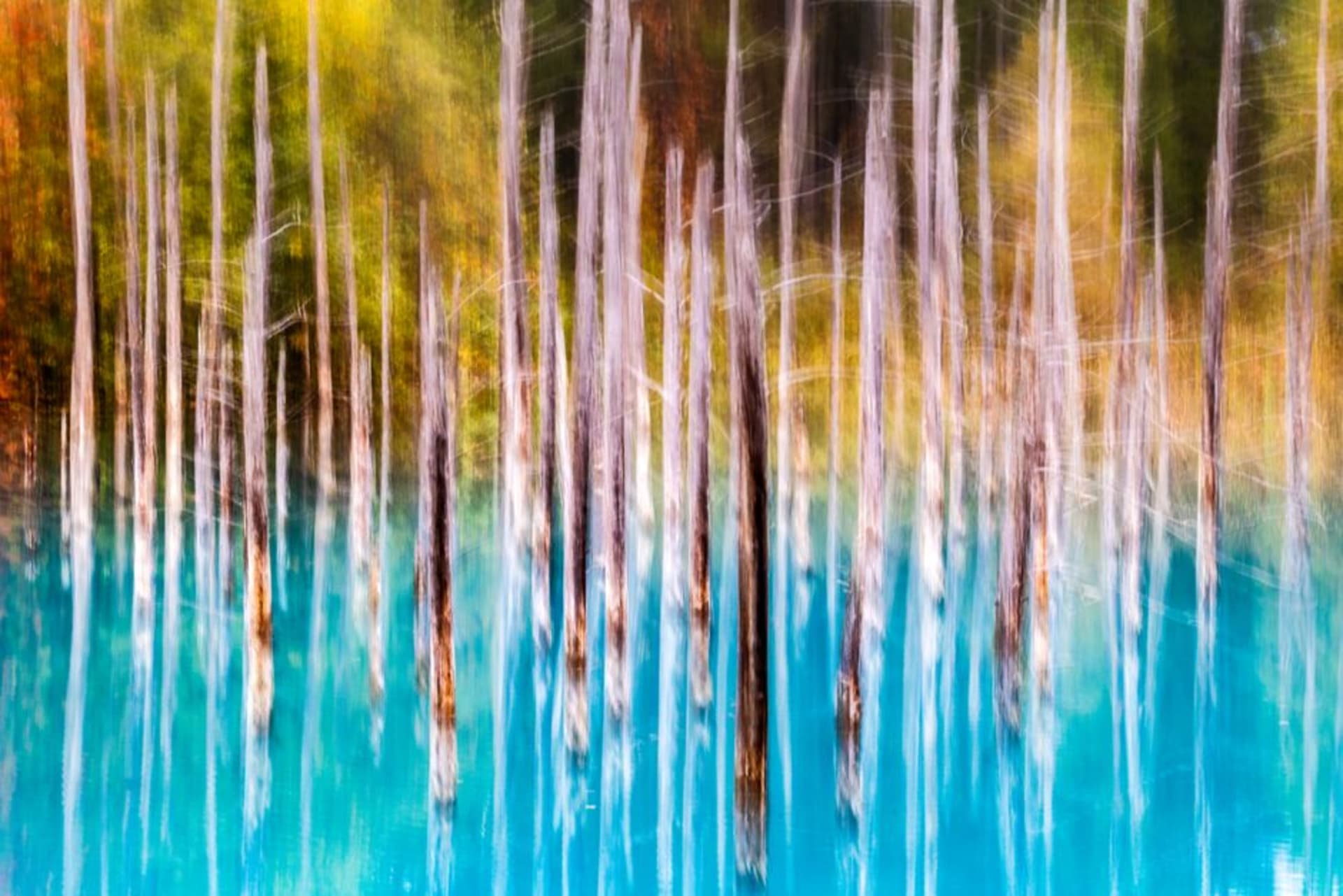
A scatter of forest lakes hidden in the beech world of the Shirakami-Sanchi, where a single pond called Aoike burns a blue so unreasonable it looks lit from below. This is quiet, unhurried Tohoku — birdsong, wet moss, and water that keeps its own secrets.

We had heard the blue was a trick of the light, or a filter, or the kind of thing that only works in October at eleven in the morning. So when Lia and I stepped off the forest path and the trees opened onto Aoike, neither of us was ready. She stopped talking mid-sentence, and I understood why. The pond was the blue of ink dropped into a glass of water, impossibly saturated, holding the drowned trunks of fallen beeches suspended in it like specimens. Nobody around us spoke above a murmur. It felt less like a viewpoint than a room you had wandered into by accident.
The blue that no one can quite explain
The guides will tell you the color comes from the way sunlight scatters through unusually pure water, and that it shifts with the season and the hour. What they don’t tell you is how personal it feels to stand there. Aoike is small — you can take it in with a single glance — but Lia and I lingered for the better part of an hour, watching the blue deepen and pale as clouds crossed the sun. A pair of Japanese schoolchildren dropped a leaf onto the surface and watched it drift; their teacher let them, because what else do you do here but watch water. I kept trying to photograph it and kept failing. The camera flattened the blue into something ordinary. Some things refuse to be carried home.

Twelve lakes, and the walk between them
Juniko means “twelve lakes,” though there are actually thirty-three ponds scattered through the forest — the name is old and nobody bothered to correct it. We spent the afternoon on the walking trails that link them, and this, honestly, was the part I loved most. The path from Aoike wanders past Wakitsubo-no-Ike, a spring-fed pool so clear you can watch the sand pulse where the water rises, then on through beech woods to quieter ponds where we saw no one at all. The Shirakami-Sanchi is a UNESCO site, one of the last great virgin beech forests in East Asia, and you feel that age in the light — green and underwater and slow. Lia found a bench by Ochikuchi-no-Ike and we ate the rice balls we’d bought at the station, saying almost nothing.

The Nihon Canyon and the light coming down
Above the lakes rises the Nihon Canyon, a raw white gash of eroded rock that looks startlingly out of place among all that green. We climbed to the overlook late in the day, when the sun had dropped low enough to pour gold sideways through the beeches. From up there the whole basin lay spread out, the ponds glinting like coins dropped in the forest. A ranger passing on his way down told us that in autumn the entire slope turns copper and that the buses fill weeks in advance. We’d come in early summer instead, and had the ridge nearly to ourselves. I remember the sound most: wind moving through a million leaves, a sound like distant surf that never quite arrived.

Getting There
Juniko sits on the wild western edge of Aomori Prefecture, along the Sea of Japan. Lia and I took the Gonō Line, the slow local railway that hugs the coast — a beautiful ride in itself — to Juniko Station, then a short bus up into the forest to the trailheads. From Aomori or Akita cities it’s a half-day journey each way, so we based ourselves overnight in Fukaura, a small fishing town nearby, which let us reach the lakes early before the day-trippers arrived. Come between May and October; the buses don’t run in the snow, and in winter the whole basin belongs to the bears and the silence.
Keep exploring
More of Tōhoku
Keep exploring
More from Tōhoku
 japan
japan Hirosaki
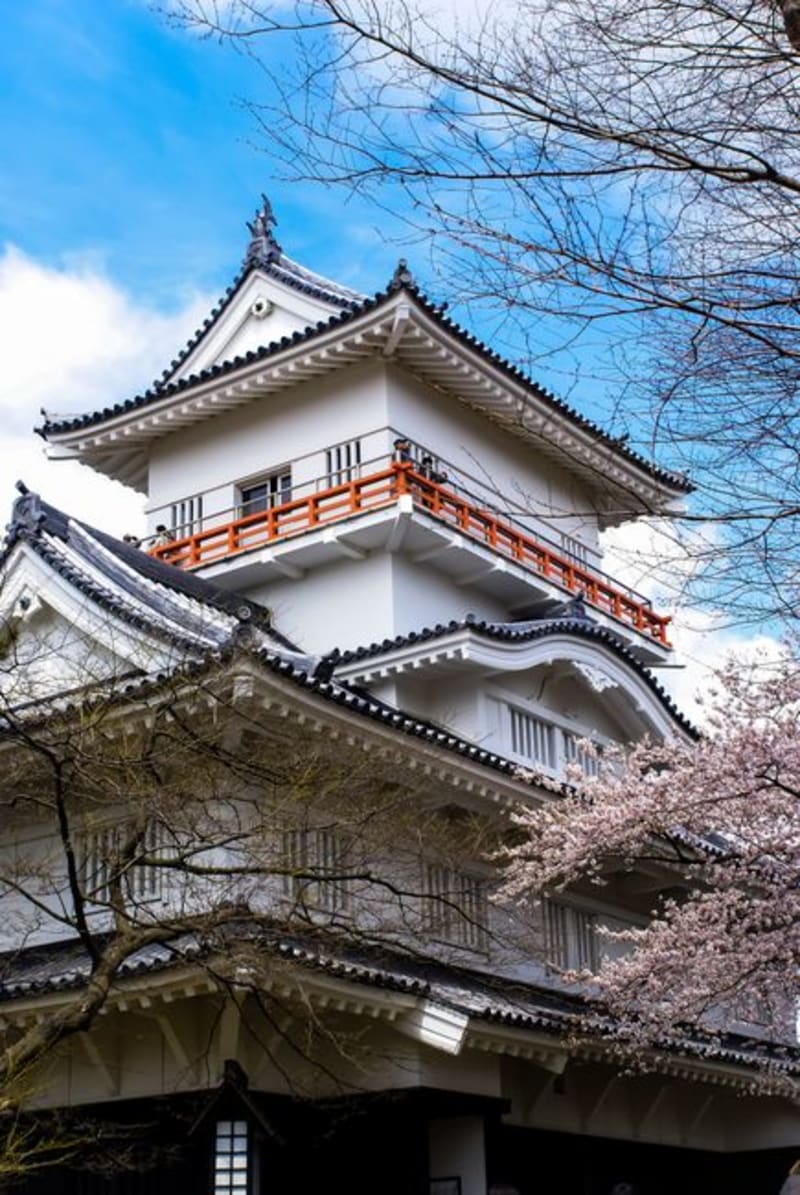
An Aomori castle town where cherry petals settle on the moats until the water turns solid pink, apple orchards ring the plain, and the fierce painted floats of the Neputa festival still glow in memory. Quietly one of the loveliest places we found in the north.
Explore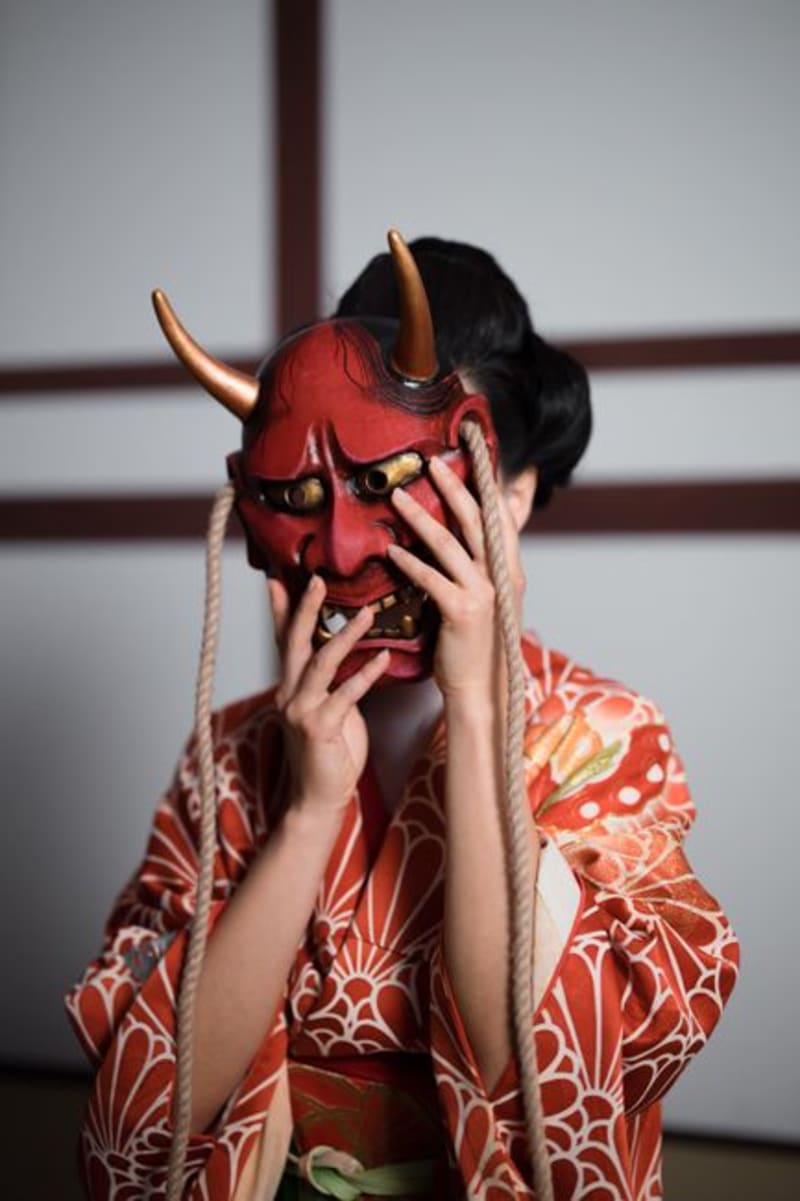 japan
japan Oga
A hook of land thrown out into the Sea of Japan, the Oga Peninsula is all dramatic cliffs, spinning sunsets and the memory of demons. This is the home of the Namahage, the straw-cloaked ogres who once a year come down from the mountains to terrify the region's children into being good. We came to meet them, more or less.
Explore japan
japan Aomori
A bayside city at the northern tip of Honshū with a frontier-north energy. Home to the fierce, glowing Nebuta festival floats, orchards of crisp apples, scallops pulled fresh from the bay, and the wild Hakkōda mountains rising just inland.
Explore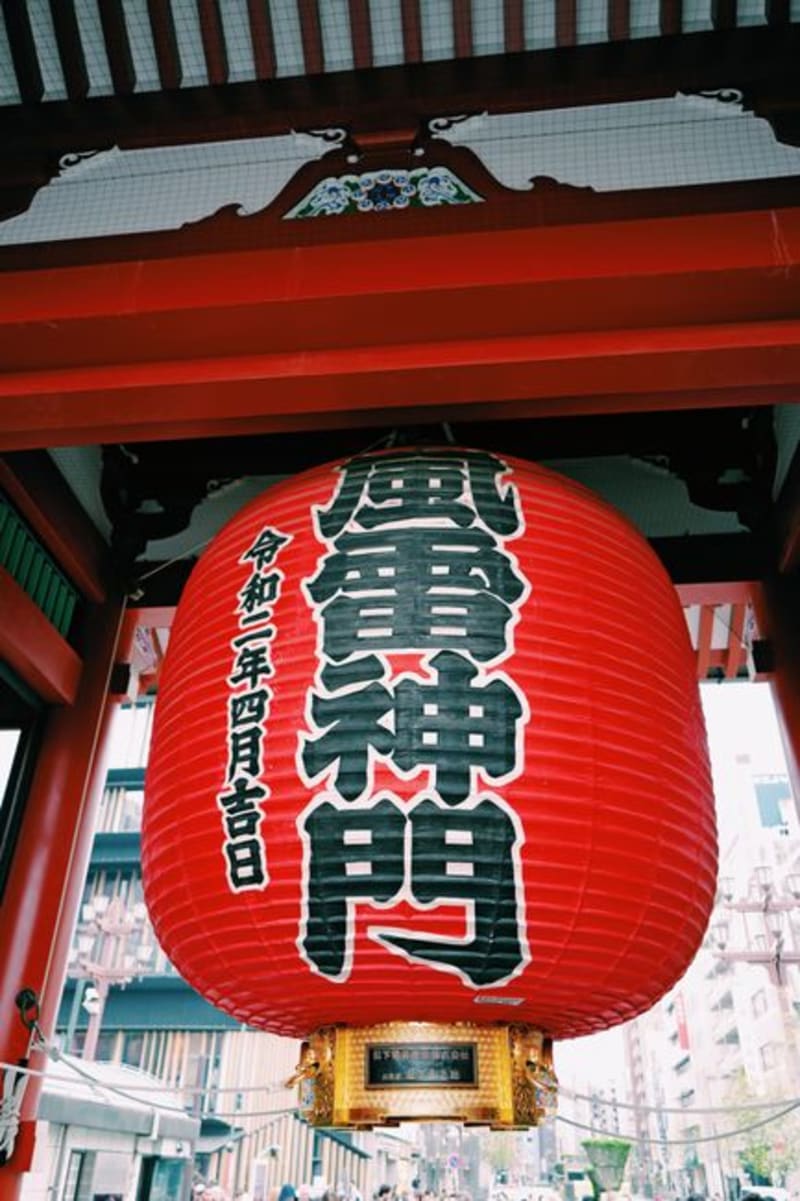 japan
japan Akita
A Tōhoku castle city on the Sea of Japan, home of the summer Kantō festival where performers balance towering poles hung with lanterns. Green Senshū Park on the old castle grounds, kiritanpo hotpot on cold nights, and some of the finest sake in the country.
Explore japan
japan Lake Tazawa
A startlingly blue crater lake in the mountains of Akita, the deepest in Japan, with the golden Tatsuko statue standing in its shallows. Serene, vivid, and close to the wild cedar baths of Nyūtō. A place that seems lit from below.
Explore japan
japan Nyūtō Onsen
A cluster of secluded, centuries-old hot-spring inns hidden deep in the Akita mountains. Milky-white open-air baths steaming in the forest, thatched-roof ryokan warmed by irori hearths, and the feeling of having slipped clean out of the modern world.
Explore