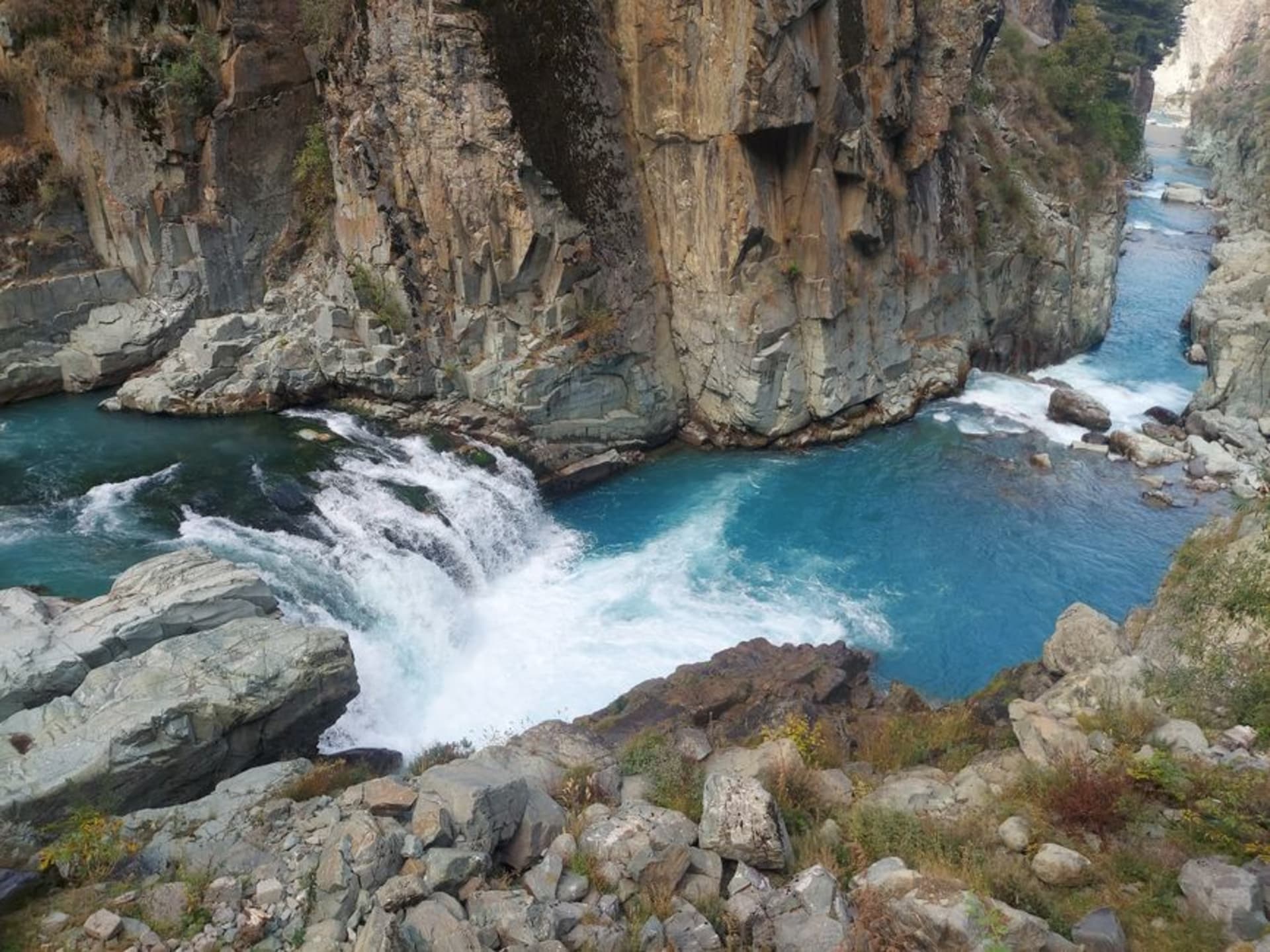
A gorge cut deep into the Tokushima mountains, where the Yoshino river turns jade and white between walls of folded rock. Pleasure boats drift and rafts crash through the rapids, and just beyond lies the hidden Iya Valley.

We came to Ōboke almost by accident, chasing the idea of the Iya Valley and finding the gorge on the way in. The bus from the station let us off by the river and the sound hit first — not a roar exactly, more a constant heavy breathing of water over stone that you stop hearing after ten minutes and then notice again when it briefly stops. Lia leaned over the guardrail and said the rock looked like someone had folded it while it was still soft. That’s more or less what happened, over a couple hundred million years, and the Yoshino has been sawing through it ever since.
Down on the water
The tourist boats leave from a jetty below the roadside station, flat-bottomed things with a canopy and a boatman who narrates in an unhurried Tokushima drawl none of us could follow and all of us enjoyed. It’s a gentle trip, out and back through the calmest stretch of the gorge, and it puts you down at water level where the scale finally lands — the cliffs go up and up, striped grey and rust and green, and the river underneath is the colour of bottle glass. A heron stood on a rock and ignored us completely. Lia trailed her hand in the water and pulled it back fast; even in early summer it came straight off the mountains and was shockingly cold.
Koboke and the rapids
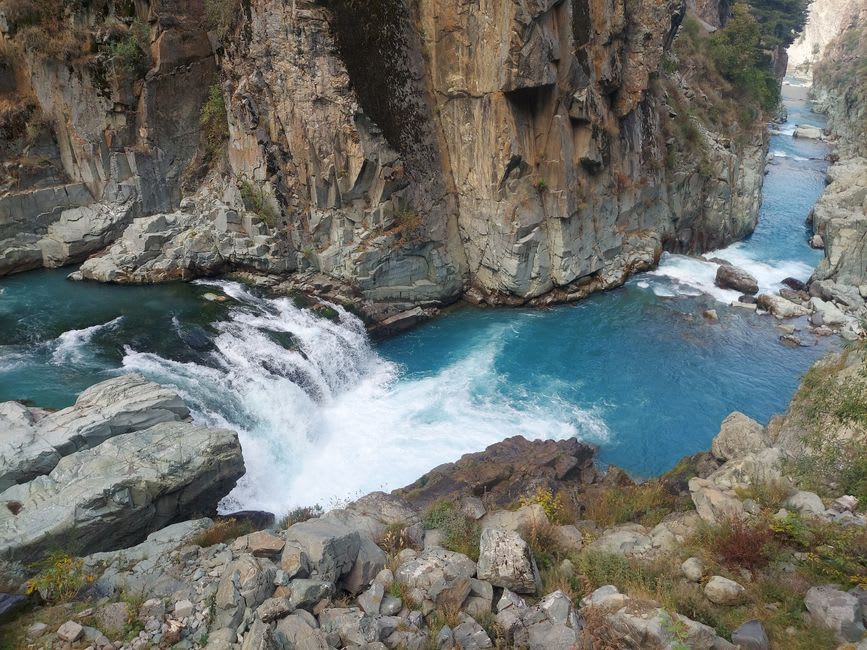
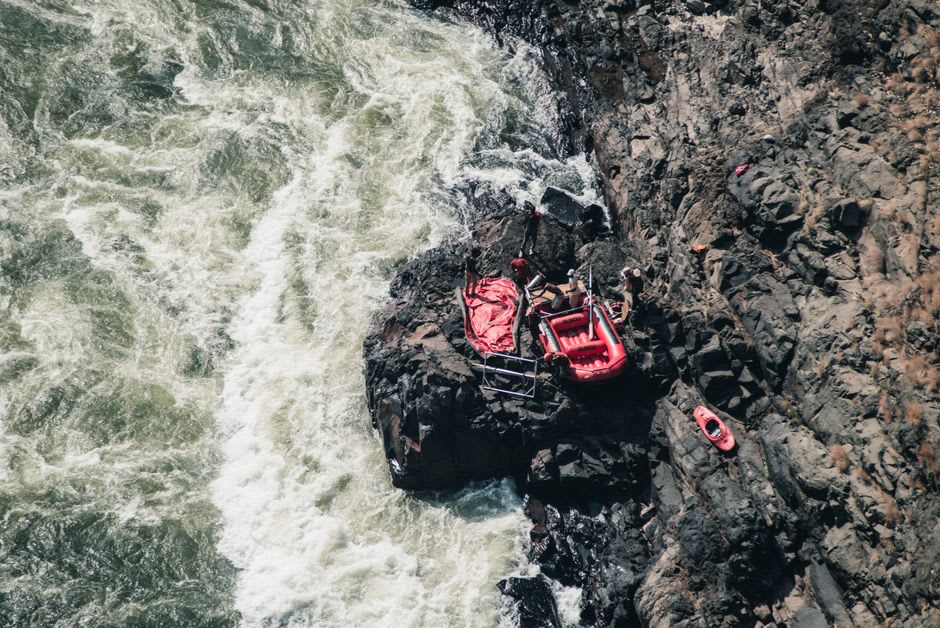
Upstream the gorge changes character and becomes Koboke, “the small dangerous crossing” to Ōboke’s “large dangerous crossing” — the old names are cheerfully blunt about what the river used to mean to anyone on foot. This is where the rafts run. We watched a group in helmets and wetsuits get flipped around a standing wave and come up whooping, and I’ll admit we talked ourselves out of joining them, mostly on Lia’s very reasonable point that the water was cold enough to stop your heart. So we did the coward’s version: stood on the bridge, ate rice balls from the station shop, and cheered the strangers below. They didn’t hear us over the water but they waved anyway.
Into the Iya Valley
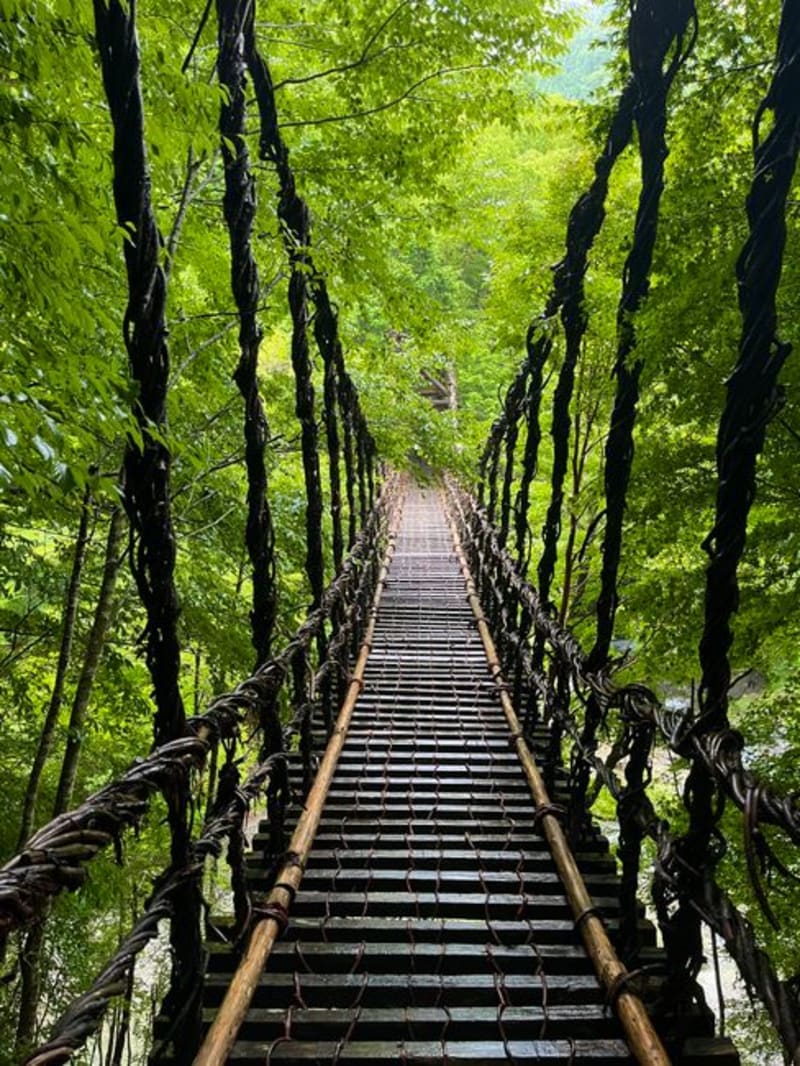
Ōboke is the gateway to the Iya Valley, one of the old hiding-places of Japan, where defeated clans are said to have vanished into the mountains centuries ago and where a handful of vine bridges still hang over the tributaries. We only had time for the edge of it — a road that clung to the mountainside past a small stone figure of a boy peeing off a rock ledge into the drop, placed there, the sign said, by locals to spook the tourists and honour the local kids who used to dare each other to do the same. It was the most Japanese piece of humour I’d met all trip: solemn, absurd, and hanging over a hundred-metre void. We drove back down as the light went orange and the river turned from jade to pewter.
Getting There
Ōboke station is on the JR Dosan line, roughly an hour by limited express from Awa-Ikeda, which connects toward Takamatsu and Tokushima. The pleasure boats run from the riverside station a short walk or shuttle from the platform; rafting is best booked ahead in summer through the local operators. For the Iya Valley proper — the vine bridges and the peeing-boy statue — you’ll want a rental car or the seasonal sightseeing bus, as services thin out fast once you leave the main river road.
Keep exploring
More of Shikoku
Keep exploring
More from Shikoku
 japan
japan Iya Valley
A deep, mist-wrapped gorge in the heart of Shikoku, laced with vine bridges and thatched houses and a strange population of straw scarecrows. Iya is the Japan we thought had disappeared — and hadn't.
Explore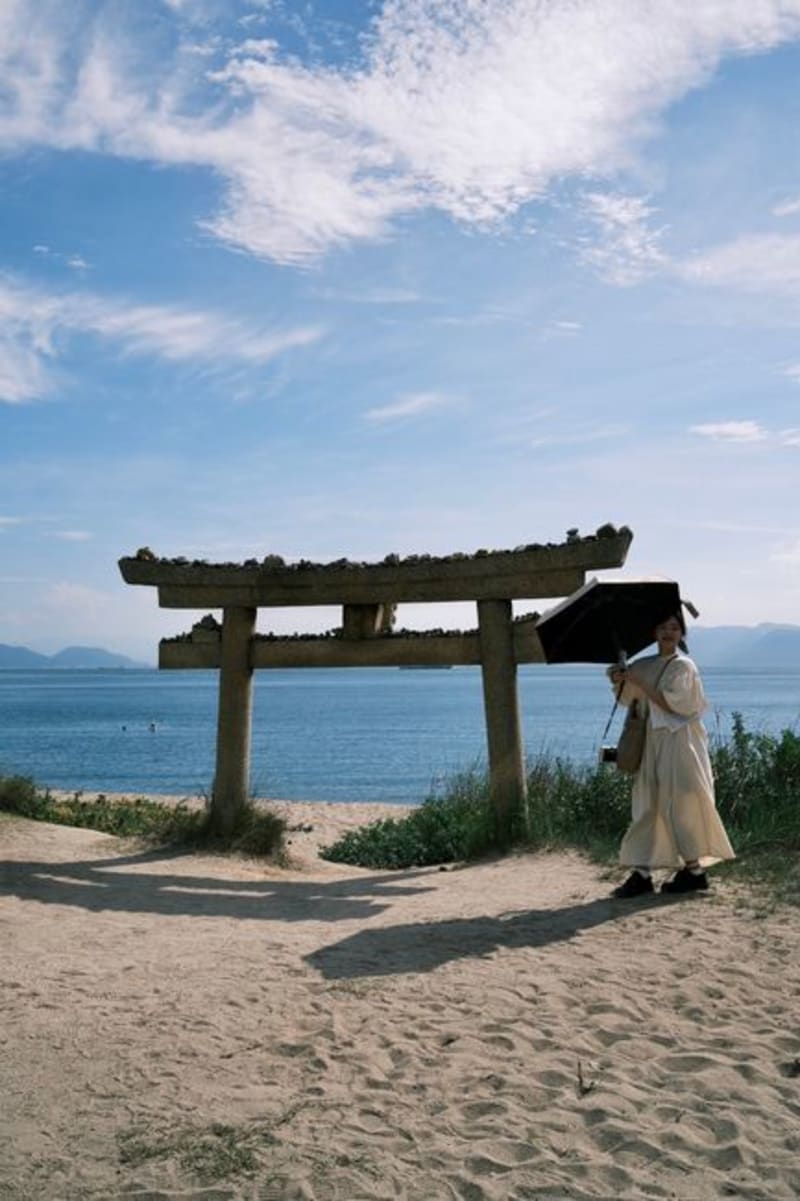 japan
japan Kanonji
A breezy Kagawa town on the Inland Sea where a giant coin lies raked into the beach sand, said to bless whoever looks upon it. Above it a pine-shaded hilltop shrine, and inland a mountaintop temple reached by ropeway over the whole silver sea.
Explore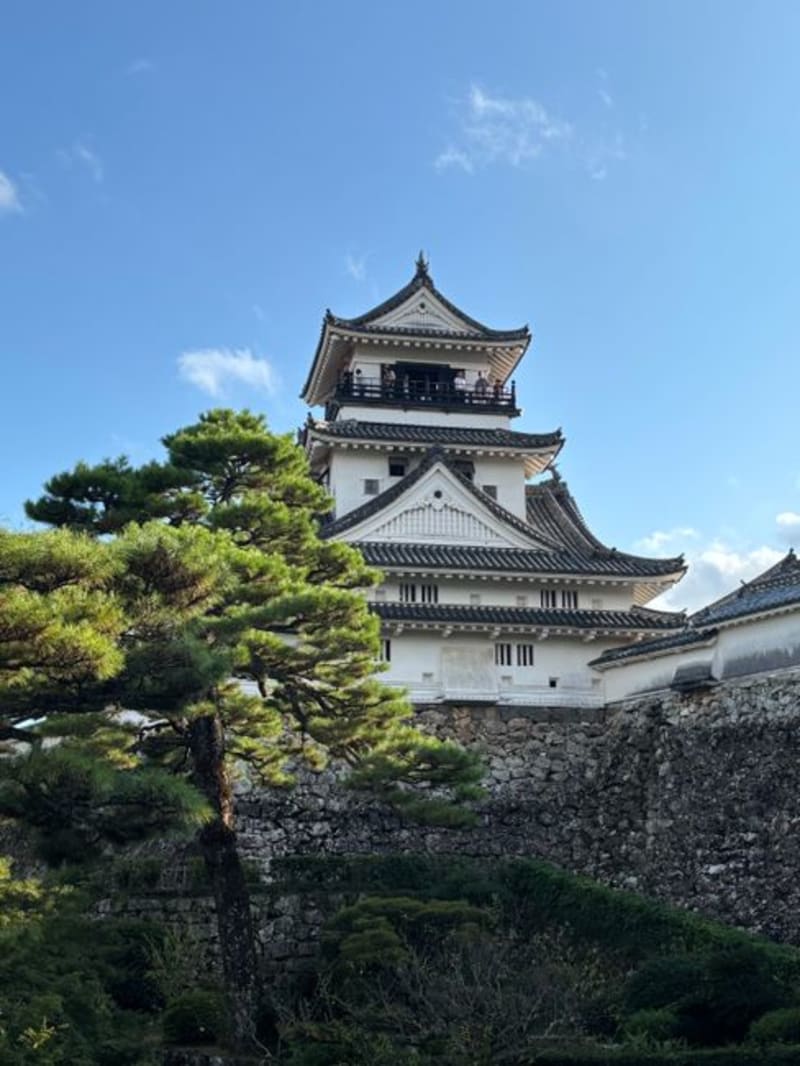 japan
japan Kōchi
South-coast Shikoku, warm and open-hearted, with one of Japan's few surviving original castles and a fish grilled over burning straw. Kōchi felt like the country exhaling — slower, sunnier, and unafraid of a drink.
Explore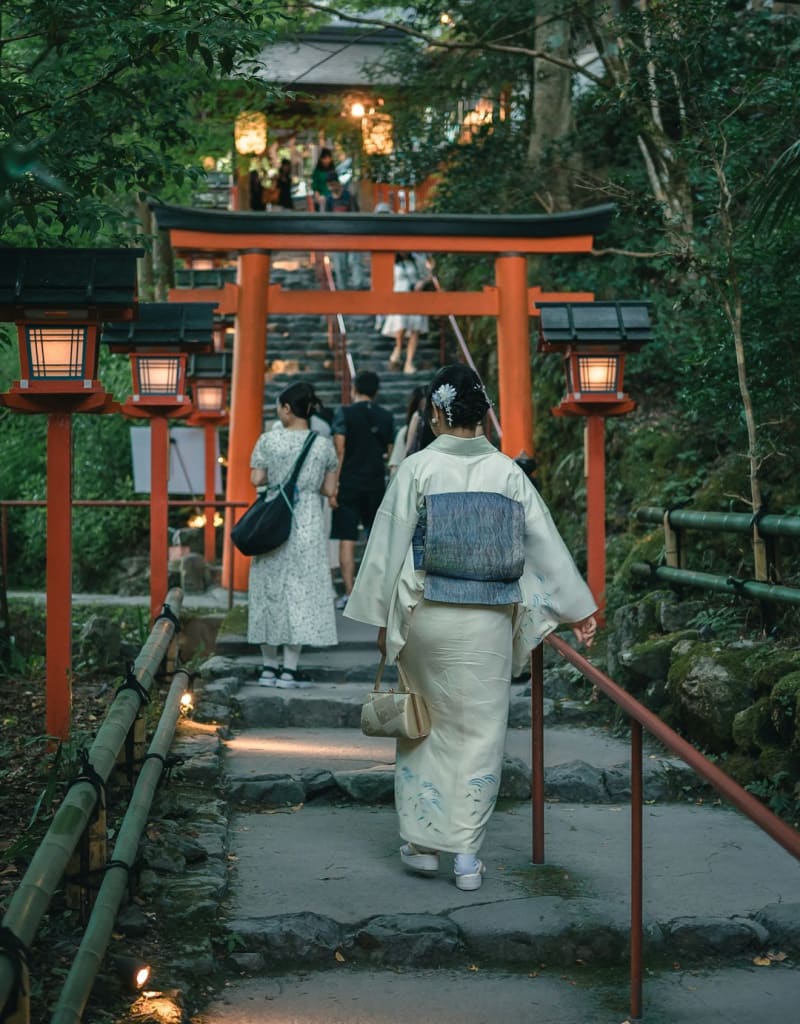 japan
japan Kotohira
A temple town in Kagawa on the island of Shikoku, built around Konpira-san — a mountainside shrine reached by more than 785 stone steps lined with old shops. It is a pilgrimage and a climb and a bowl of Sanuki udon at the top of it all. Earnest, a little breathless, and richly rewarded by the view.
Explore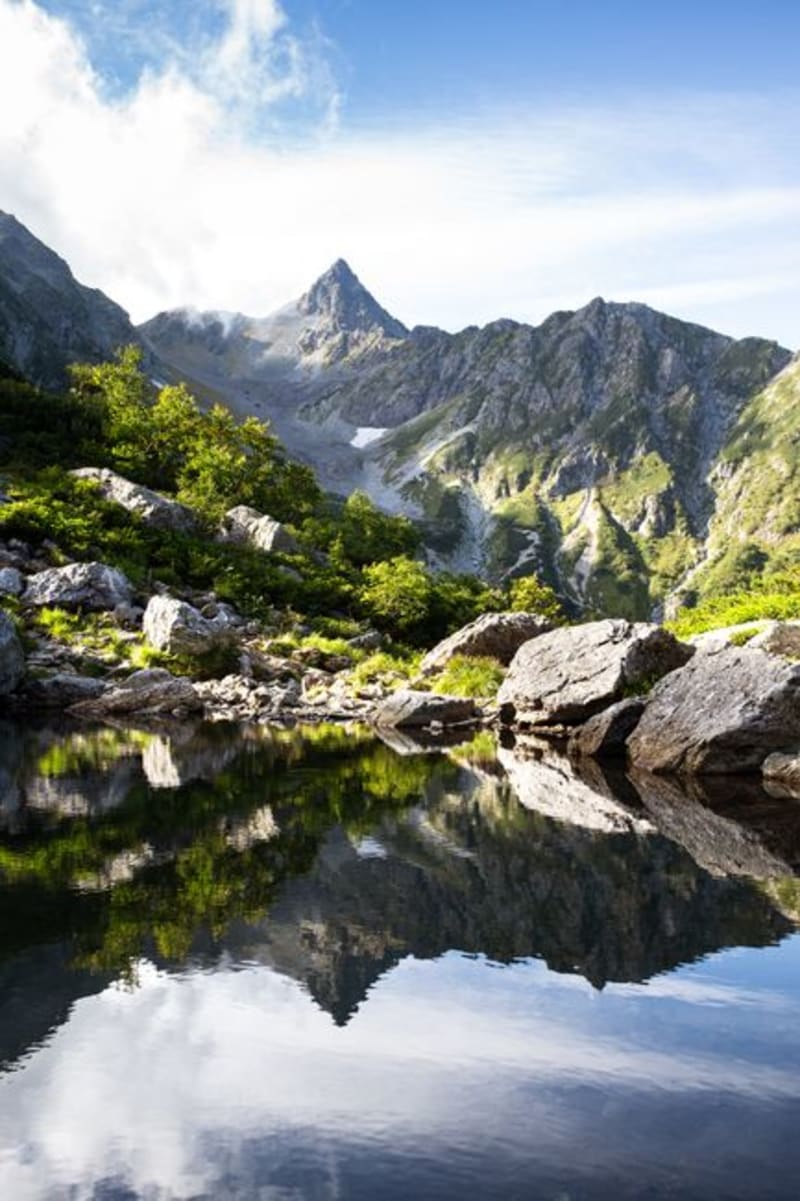 japan
japan Mount Tsurugi
Shikoku's second-highest peak and one of the gentlest sacred summits in Japan — a mountain you can walk up over grassy ridges and boardwalks, with a shrine near the top and views that on a clear day run all the way to the sea.
Explore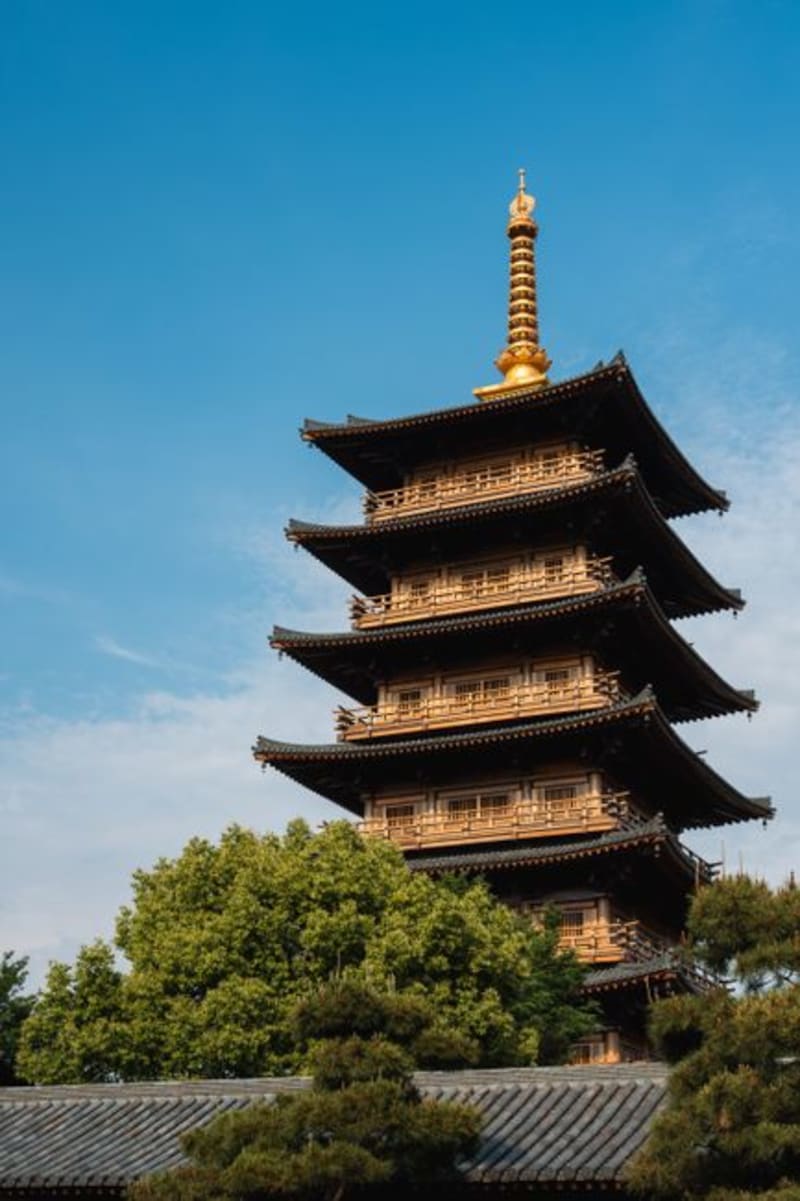 japan
japan Zentsūji
A quiet Kagawa temple town grown up around the birthplace of Kūkai, the monk who shaped Japanese Buddhism. A great five-storey pagoda watches over pilgrims in white, and the local udon is some of the best on the island.
Explore