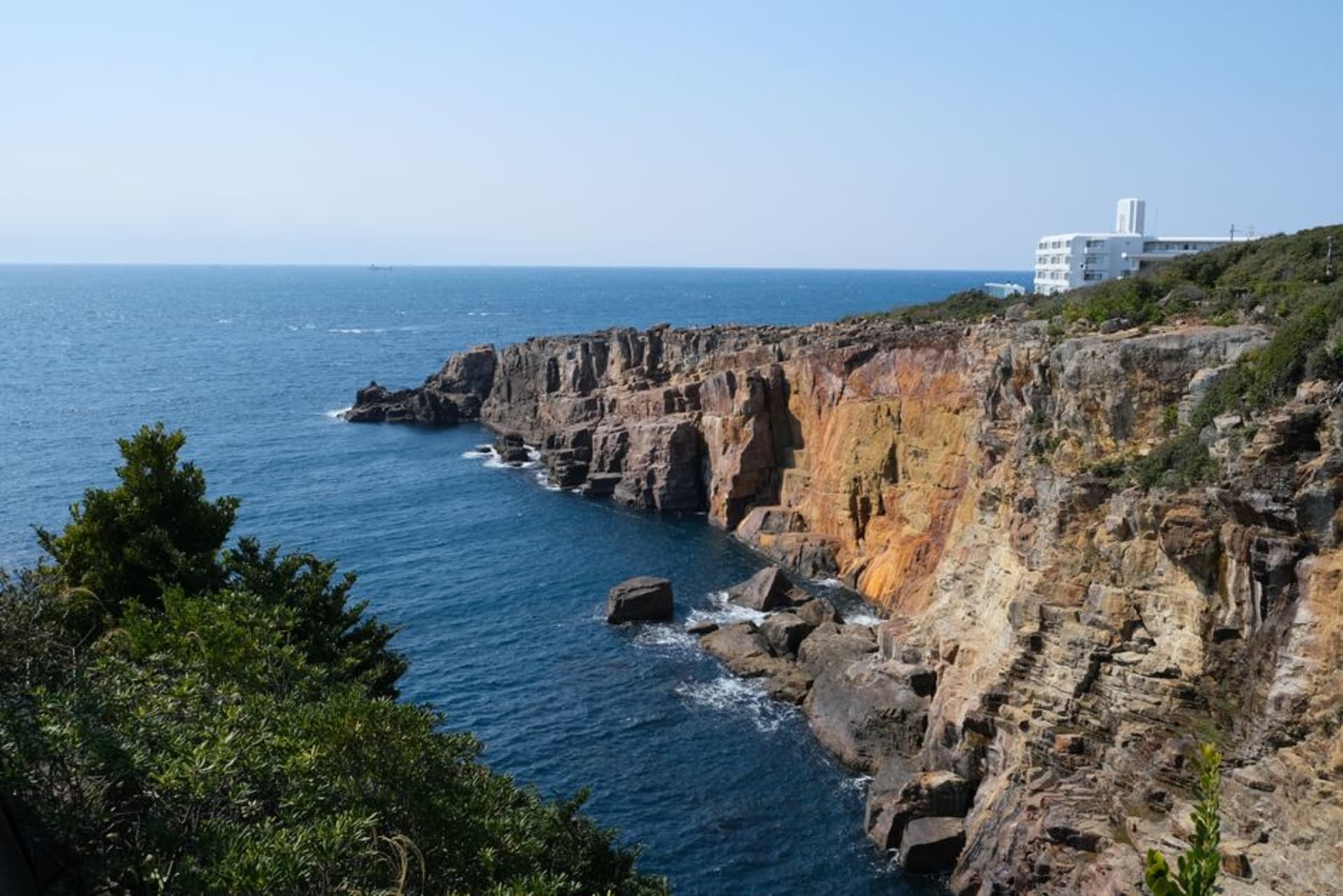
A sunny beach-and-onsen resort on the Wakayama coast, with white sand, hot springs older than the written record, and sea cliffs that catch fire at sunset. We came for a rare thing in Japan — an actual beach holiday — and got the mountains and the onsen thrown in for free.

We hadn’t planned to spend three days lying on sand in Japan, but Shirahama talked us into it. We’d come down the Kii coast expecting temples and trails, and then we stepped off the train into hot, salt-tanged air and a town that smelled unmistakably of the sea and the holidays. The name means “white beach,” and it is exactly that — a curve of pale imported sand against water the colour of a swimming pool. Lia was in the water within the hour. I sat on a towel, unreasonably happy, watching families and surfers and a group of teenagers burying one of their friends, and thought: this is not the Japan the guidebooks sold us, and it’s all the better for the surprise.
The White Beach
Shirahamas beach is the reason most people come, and it earns its reputation. The sand is famously white — so pale it’s almost blinding at midday — and the shallow water stays warm and swimmable through the long Kansai summer. It gets busy in August, when half of Osaka seems to decamp here, but come early or in the shoulder season and you can find your own stretch of it. We rented a parasol, swam until our fingers wrinkled, and ate shave ice from a beach stall between dips. There’s a genuine holiday looseness to the place that you rarely feel in Japan, everyone off-duty and sun-drowsy, and after weeks of trains and temples we let ourselves sink right into it.

Ancient Onsen and the Sea Cliffs
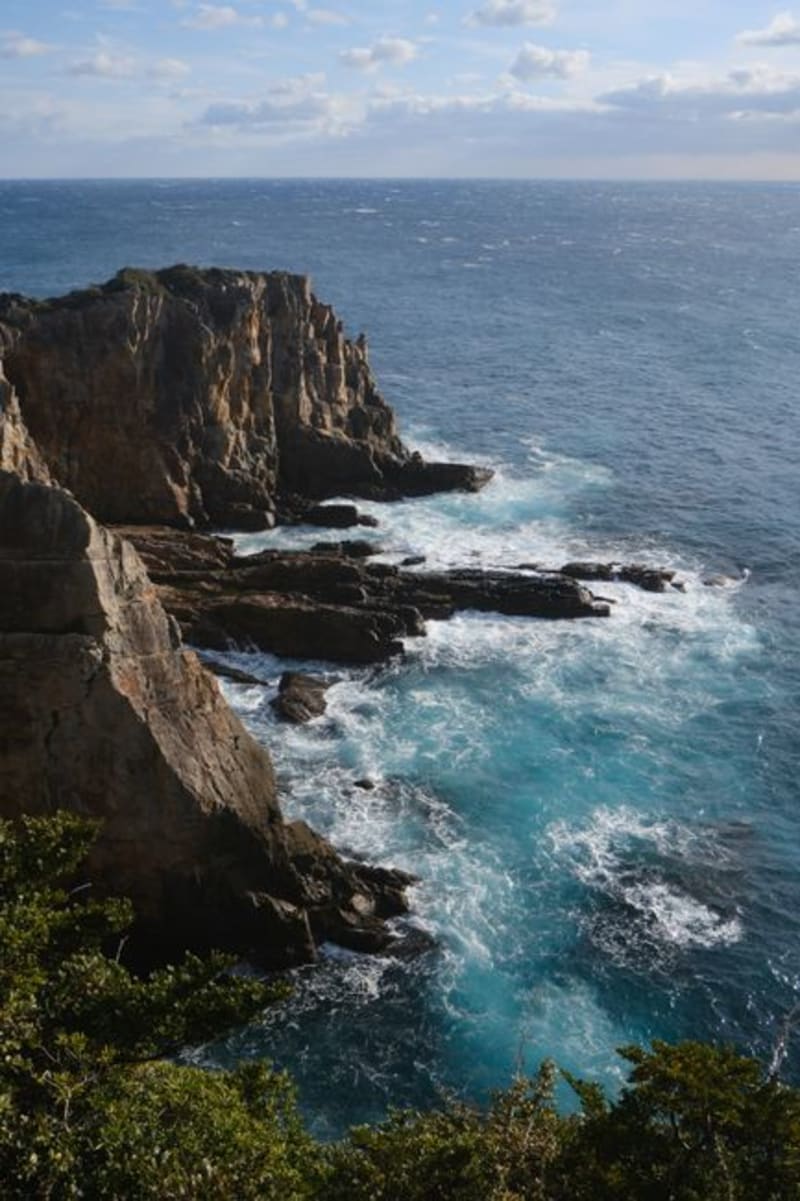
What makes Shirahama more than a beach is what surrounds it. This is one of Japans oldest hot-spring resorts — the springs here appear in records over a thousand years old, mentioned as a place emperors travelled to bathe. We soaked at Saki-no-yu, an open-air rotenburo set right on the rocks at the water’s edge, waves breaking just below the tubs, the two blues of sky and sea filling everything. Later we walked out to the Sandanbeki cliffs, great dark walls of rock dropping sheer into the surf, with a cave hollowed beneath them that once hid the boats of a medieval clan. The sea booms in that cave. Lia stood at the cliff edge letting the wind take her hair and said she could have watched the water hit the rock all afternoon.

Sunset at Engetsu-tō
Our last evening we walked to the shore opposite Engetsu-tō, a small offshore island with a natural arch punched clean through its middle — the name means “full-moon island,” for the round hole in its rock. The trick, everyone told us, is to come at sunset, and so we did, joining a quiet line of people along the seawall. As the sun dropped it slid down the sky until, for a few minutes, it burned directly through the arch, turning the whole island into a black silhouette around a disc of fire. Nobody spoke much. When it was gone the crowd let out a small collective breath and drifted off to dinner, and we walked back along the dark beach with the sea still warm on our feet.

Getting There
Shirahama is reached by JR limited express Kuroshio trains, which run down the coast from Osaka (Tennōji) in around two and a half hours, and from Wakayama city in about an hour. Shirahama station sits a little inland; frequent buses connect it to the beach, onsen, and cliffs, or a rental car makes the scattered sights easy. There’s also a small airport with flights from Tokyo if you’re short on time. Come outside the peak August fortnight if you can, stay a night in an onsen ryokan by the water, and time at least one evening for the sunset through Engetsu-tō.
Keep exploring
More of Kansai
Keep exploring
More from Kansai
 japan
japan Tanabe
A working Wakayama port that most pilgrims treat as a doorway to the Kumano Kodo and hurry through. Linger a night, and you find a town of narrow drinking alleys, fresh-off-the-boat fish, and a warmth that has nothing to do with performing for visitors.
Explore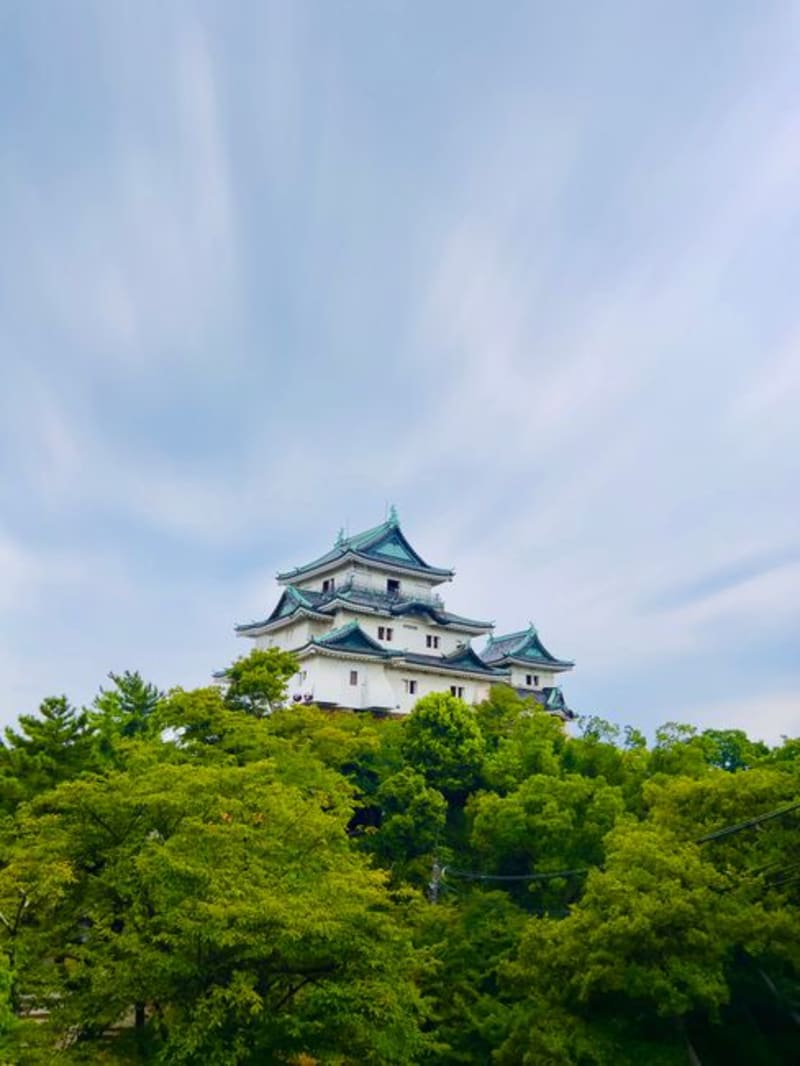 japan
japan Wakayama
The easygoing capital of Wakayama on the Kii coast, with a white castle on a hill and a ramen worth crossing a prefecture for. We used it as a gateway south toward Kōya-san and the Kumano coast, and found a city in no hurry to impress us — which is exactly why we liked it.
Explore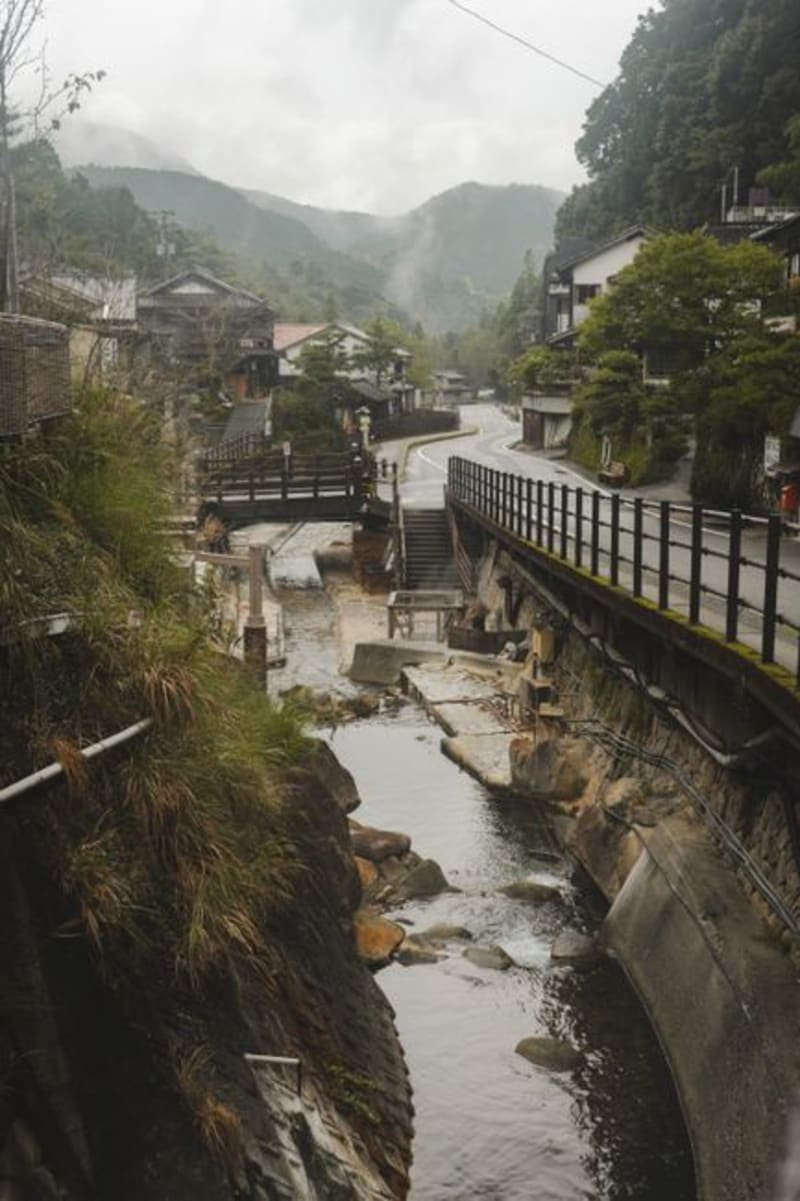 japan
japan Ryujin Onsen
A remote hot spring folded deep into Wakayama's Kii mountains, where the water runs so soft it feels like liquid silk on the skin. The kind of place you reach only after the last convenience store has vanished from the map, and are glad of it.
Explore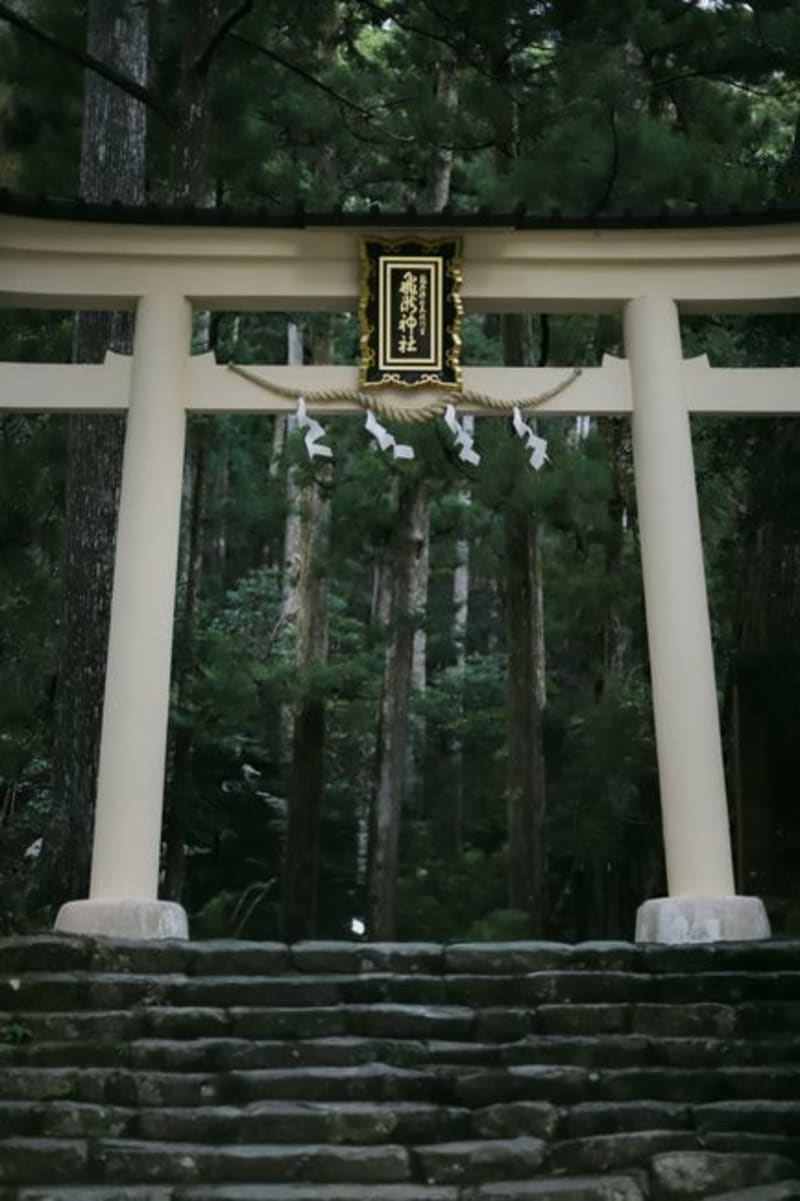 japan
japan Kumano Kodō
A thousand-year-old pilgrimage stitched through the Kii mountains in cedar, moss, and worn stone. We walked it slowly, one shrine at a time, and let the forest set the pace. Rain, incense, and the quiet company of everyone who'd come before.
Explore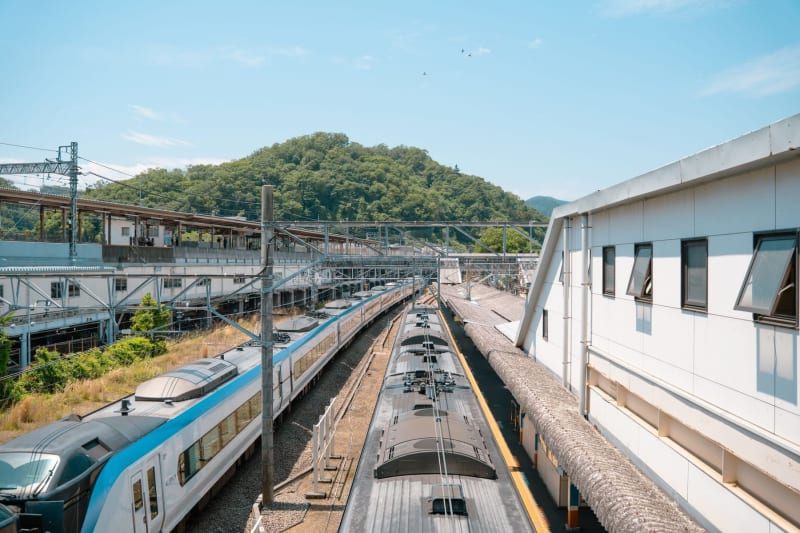 japan
japan Koya-san
A mountaintop monastery town where you sleep in a temple, eat shojin ryori, and walk a cedar-shrouded cemetery.
Explore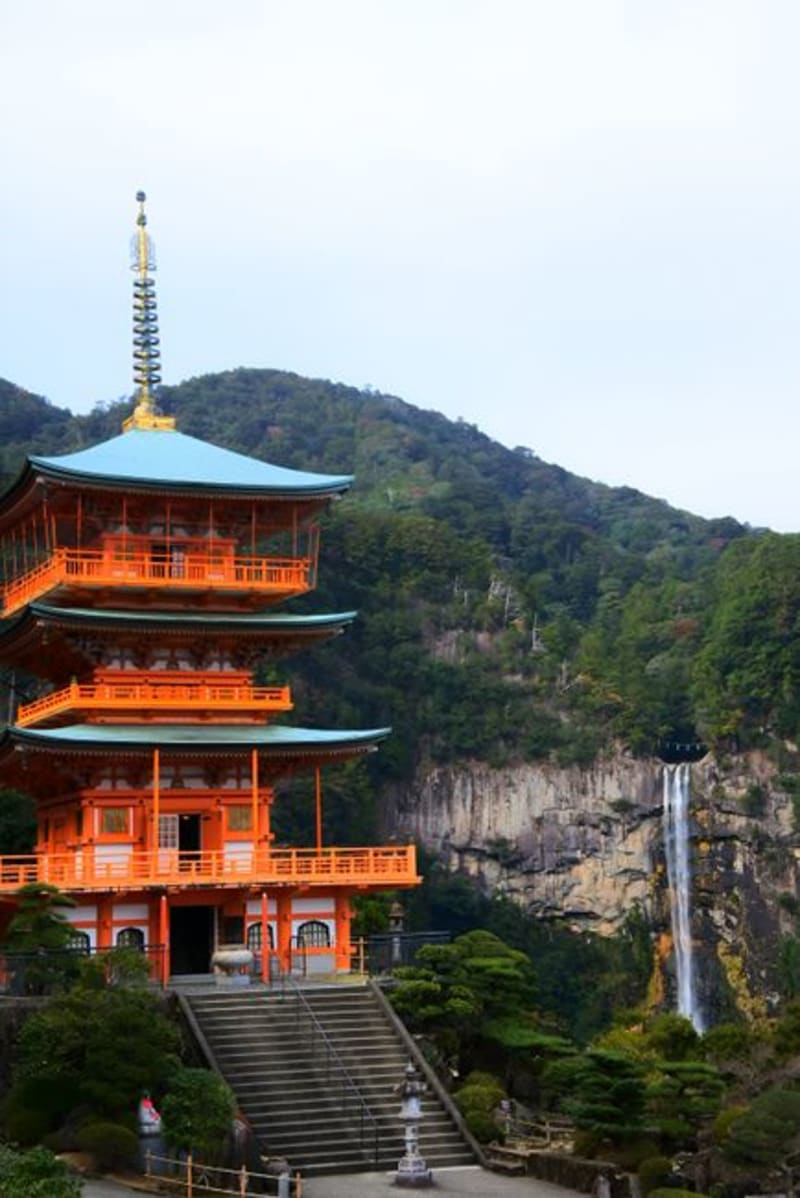 japan
japan Nachi-Katsuura
A vermilion pagoda, a waterfall taller than any in Japan, and a tuna port where the boats come in at dawn. This is where the mountains of Kumano finally meet the sea. We came for the famous view and stayed for the smell of the harbor.
Explore