Koka
"Lia crouched under a floorboard that wasn't a floorboard, and I finally understood the whole town."
The quiet Shiga cradle of the Kōga ninja, where thatched farmhouses hide false floors and revolving walls. Forested hills fold over a landscape that looks too ordinary to have hidden anything at all. That, of course, was always the point.

We almost skipped Koka. It’s the kind of name that slides off a rail map, a smudge of green between Kyoto and Nagoya where the express trains don’t bother to slow. But Lia had read one line in a secondhand book — that the ninja were never mystics, only very patient farmers — and she wanted to see the patience for herself. So we changed at a two-platform station, boarded a single rattling carriage, and let the hills close in around us.
The Kōka Ninja House
The Kōka Ninjutsu Yashiki doesn’t announce itself. It sits back from the road, a real 300-year-old farmhouse that belonged to the Mochizuki family, and from the outside it is aggressively unremarkable — dark timber, a low roof, a persimmon tree. Inside, a woman in an apron showed us how the floor lifted, how a wall spun on a hidden pivot, how a ladder vanished into the rafters. Lia crouched under a floorboard that wasn’t a floorboard, and I finally understood the whole town: the genius here was never disappearing in smoke, it was making a killing-room look like a place you’d store rice.

The Medicine Road
What surprised me more than the trapdoors was the pharmacy. Koka’s other trade, it turns out, is medicine — the same knowledge of herbs and poisons that made good spies also made good druggists, and the region still supplies a startling share of Japan’s household remedies. We wandered past old apothecary signs and a small museum of lacquered pill boxes, and I bought a tin of stomach powder mostly for the beautiful label. The man behind the counter laughed when I mispronounced it, then wrote the name out for me in careful strokes so I’d get it right the next time.

Kōkadera and the Silence
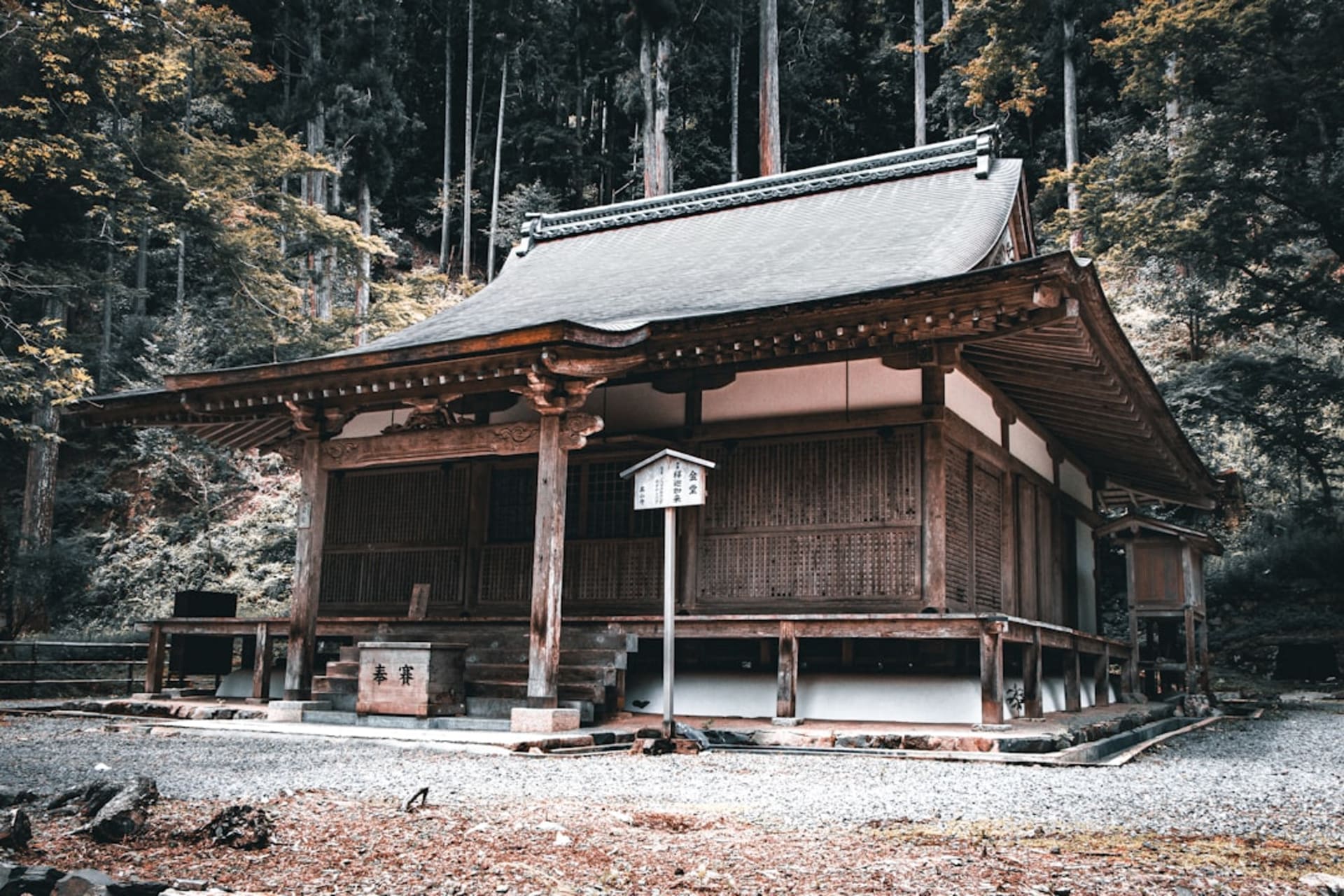
Late in the day we climbed to a temple the guidebooks don’t mention, and I’ve since decided that was the whole trip. The path went up through cedar, damp and dark, the kind of forest where sound just stops. Somewhere below us a train I couldn’t see slid through the valley. Lia sat on a mossy step and didn’t say anything for a long time, and neither did I. When you’ve spent an afternoon learning how a place hid itself, the silence starts to feel less like emptiness and more like a skill.

Getting There
Koka sits on the JR Kusatsu Line in southern Shiga. From Kyoto, take the JR Tōkaidō Line to Kusatsu and change for a local train toward Tsuge — the ninja house is a fair walk or a short taxi from Kōka Station, so we hired a bicycle at a shop near the station instead. Trains are infrequent, maybe one an hour, so we photographed the timetable on the platform and planned our afternoon around it rather than the other way round. Come on a weekday if you can; we had the whole farmhouse to ourselves.
Keep exploring
More of Kansai
Keep exploring
More from Kansai
 japan
japan Shigaraki
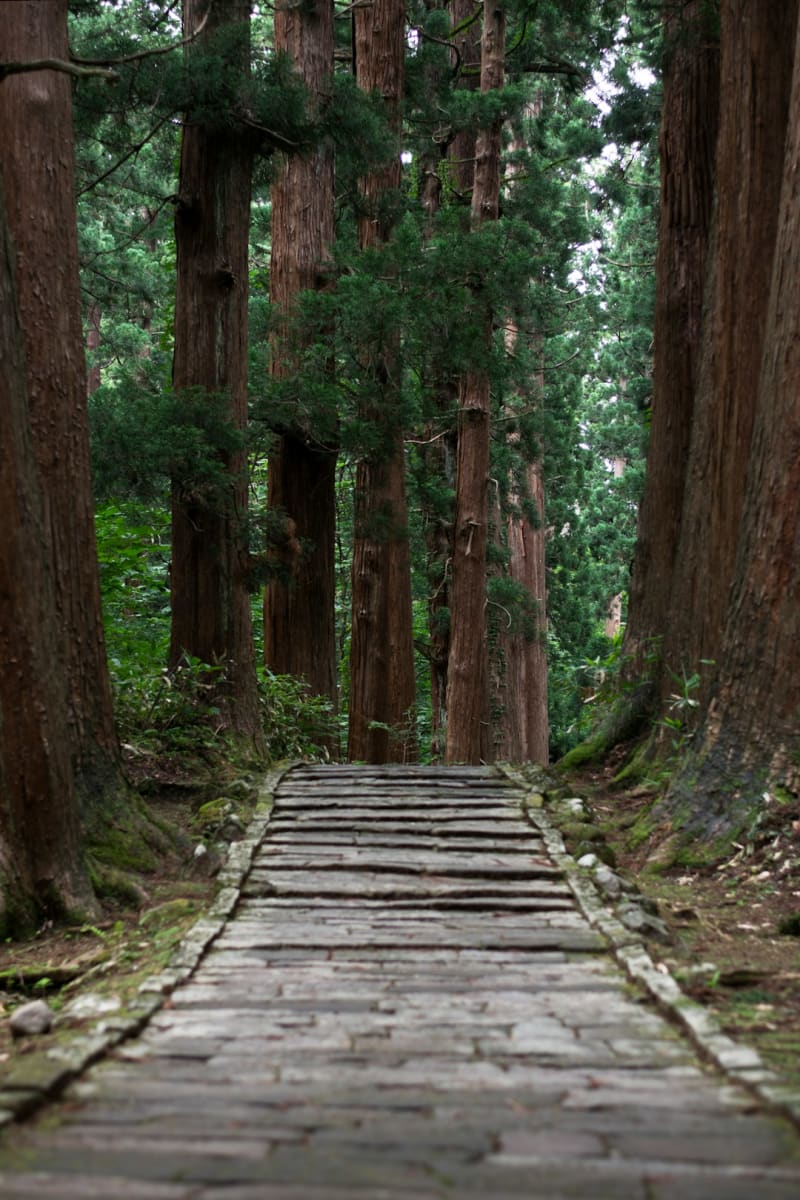
A pottery town in the Shiga hills where kilns have burned for eight centuries and cheerful clay raccoon-dogs stand guard outside nearly every door. Up a mountain road nearby hides the MIHO Museum, an I.M. Pei building reached through a cherry tunnel and a bridge, half-buried in the forest. Clay underfoot and architecture in the trees — Shigaraki is stranger and lovelier than it has any right to be.
Explore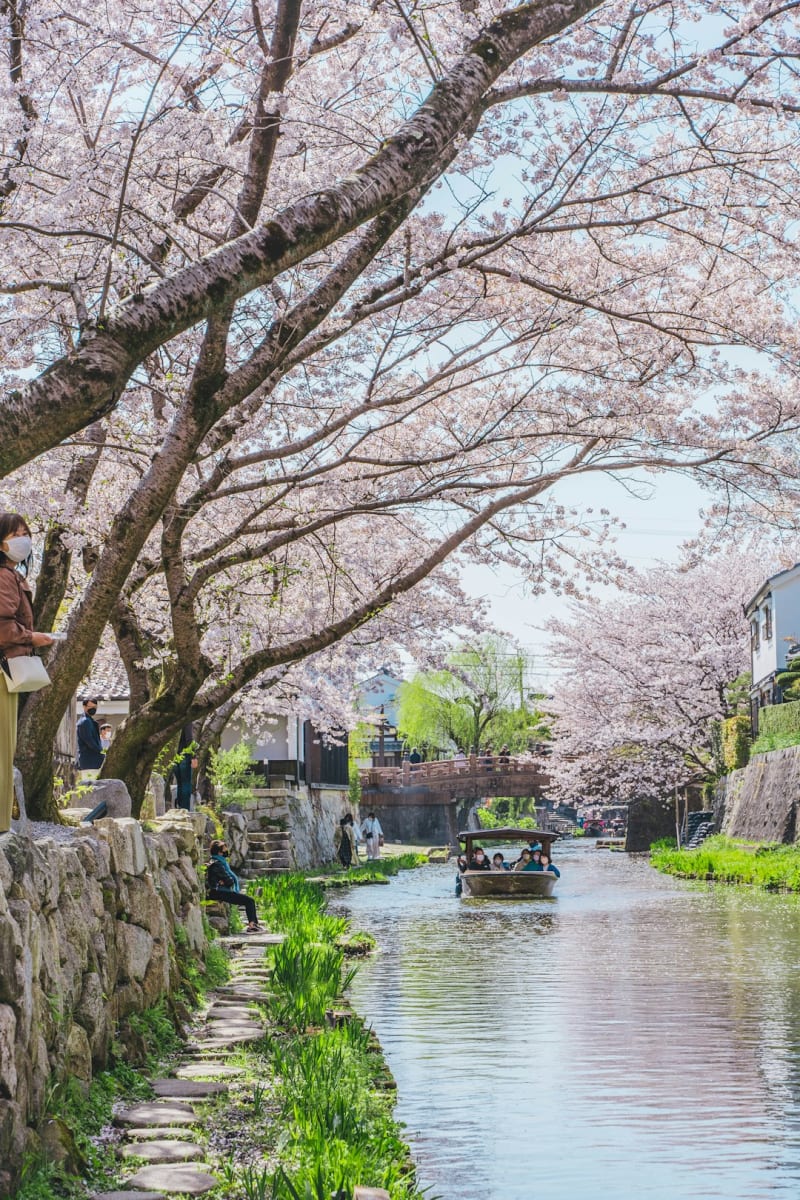 japan
japan Ōmihachiman
A merchant town near Lake Biwa where willow-lined canals still carry flat-bottomed boats past the whitewashed storehouses of the old Ōmi traders. We came for an afternoon and stayed until the water turned copper. Some places just refuse to be rushed.
Explore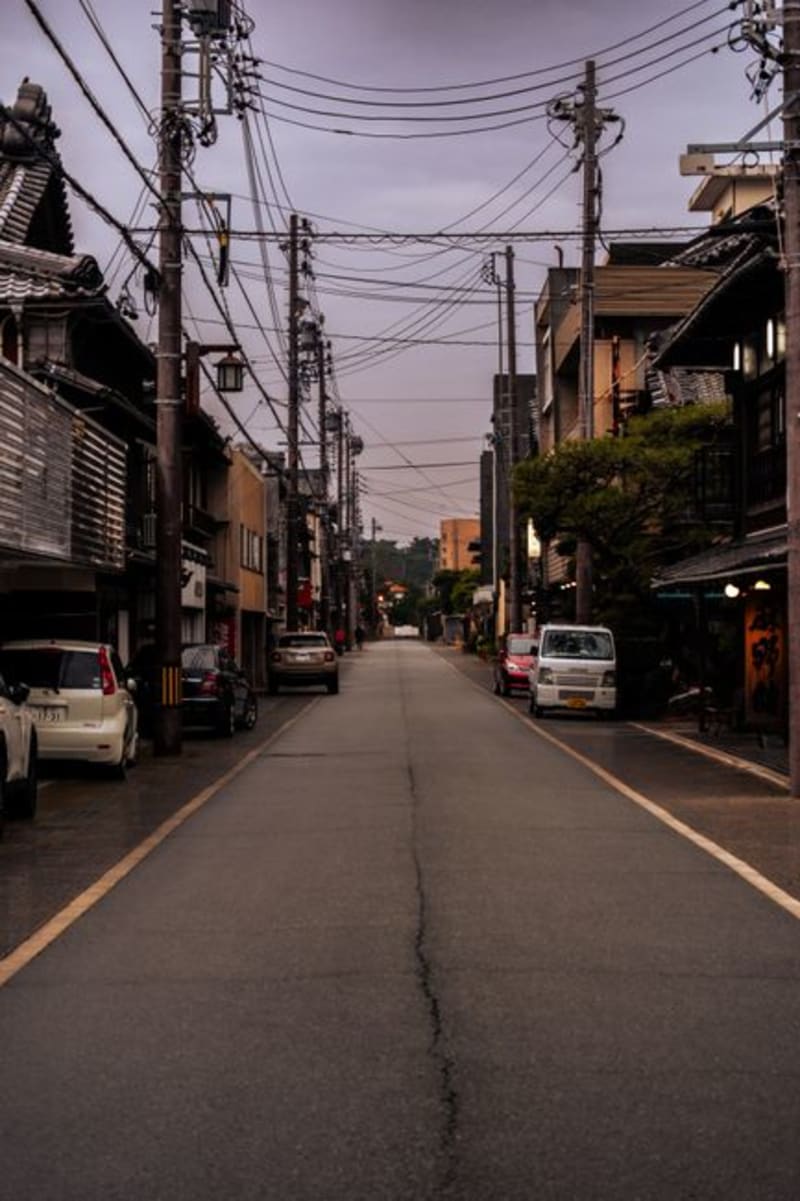 japan
japan Iga-Ueno
A quiet castle town in the mountains of Mie, birthplace of the Iga school of ninja, crowned by one of Japan's most beautifully proportioned white keeps. It wears its shadowy history lightly now — trick doors, a museum full of hidden blades, children in ninja costume — but the old spy-craft is real, and the town is prettier and slower than its reputation suggests.
Explore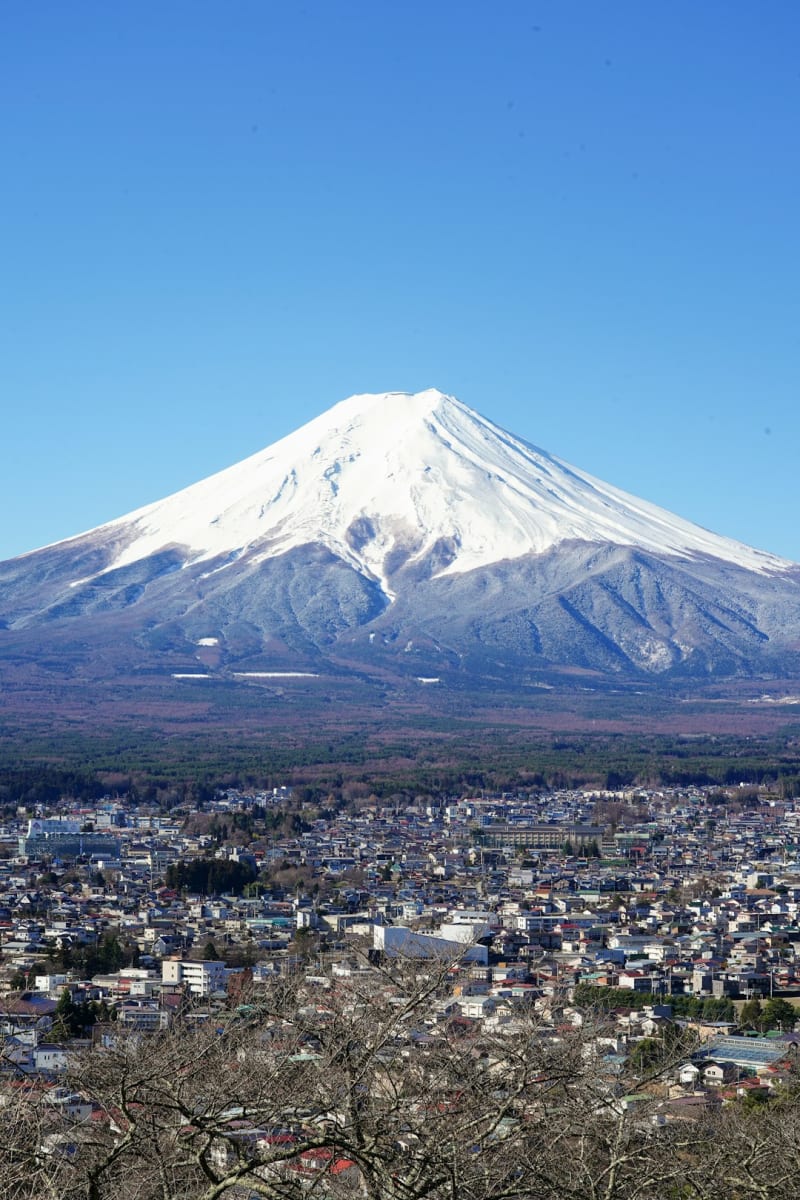 japan
japan Otsu
A lakeside city in Shiga where Japan's largest lake, Biwa, lies flat and enormous below the wooded shoulder of Mount Hiei — and on that mountain sits Enryaku-ji, the vast monastery that shaped Japanese Buddhism for a thousand years. Otsu is Kyoto's quieter neighbor, a place of lake light and temple bells that most travelers rush straight past. We didn't, and we were glad.
Explore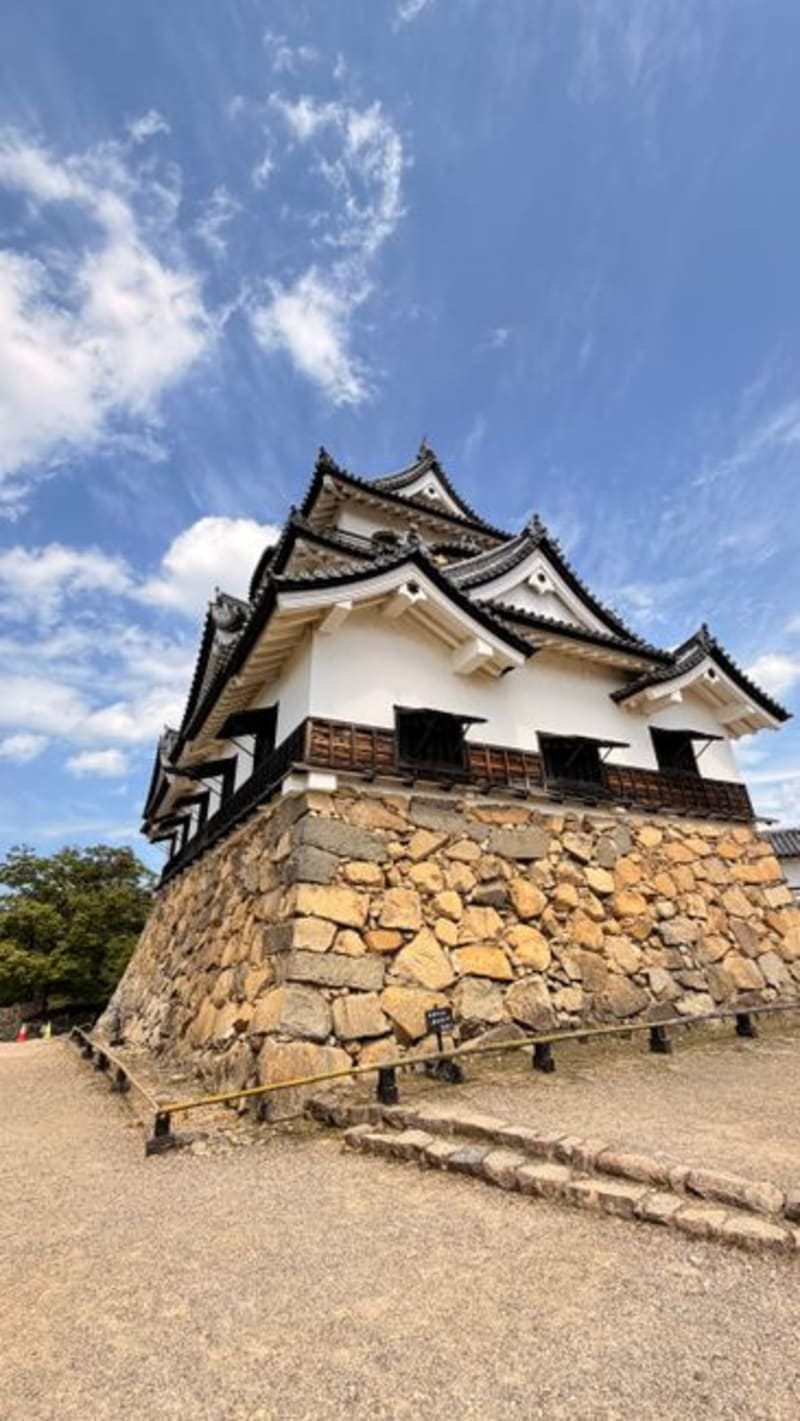 japan
japan Hikone
One of only a handful of original castles left standing in Japan, perched above Lake Biwa with a garden made for moon-viewing. We came expecting a quick stop and gave it a whole slow day. Sometimes the smaller places hold you longest.
Explore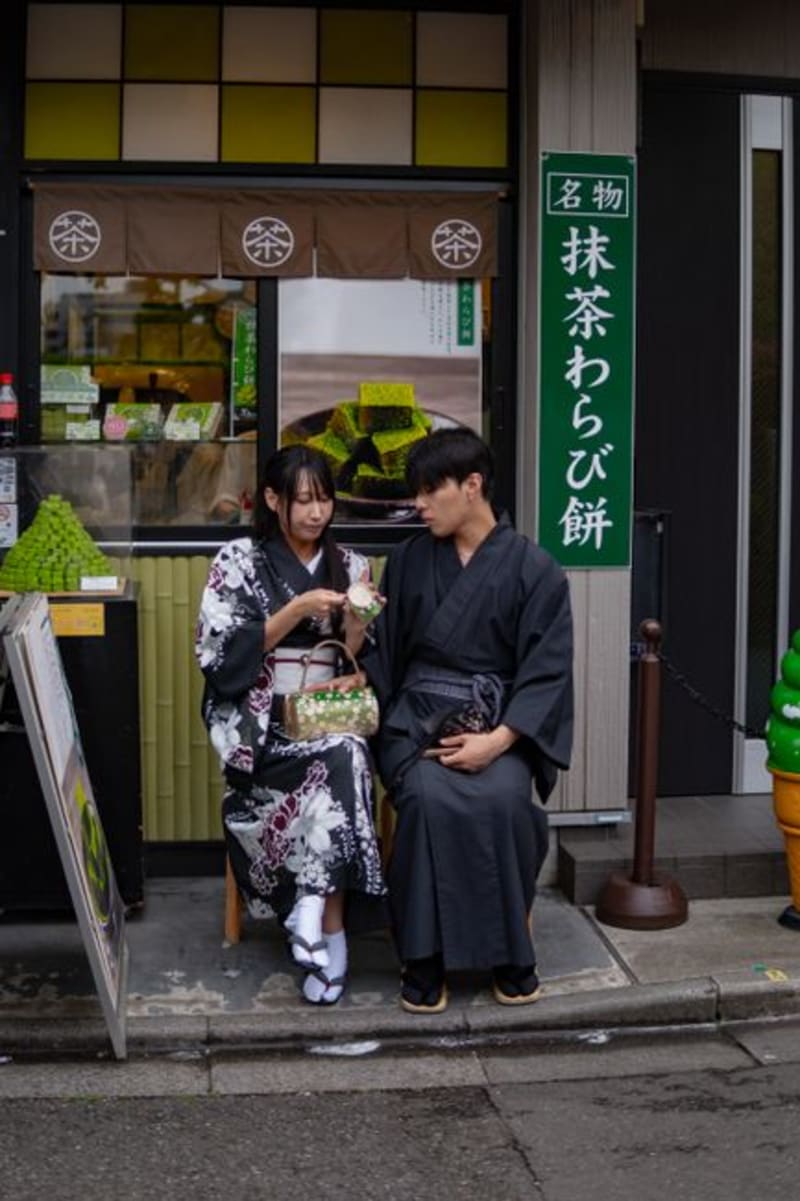 japan
japan Uji
A small riverside town between Kyoto and Nara that is the spiritual home of Japanese green tea, and home to the impossibly graceful Byōdō-in Phoenix Hall. Old tea houses line the streets, the river runs cold and fast, and the final chapters of The Tale of Genji are set here. Refined, green, and quietly ancient.
Explore