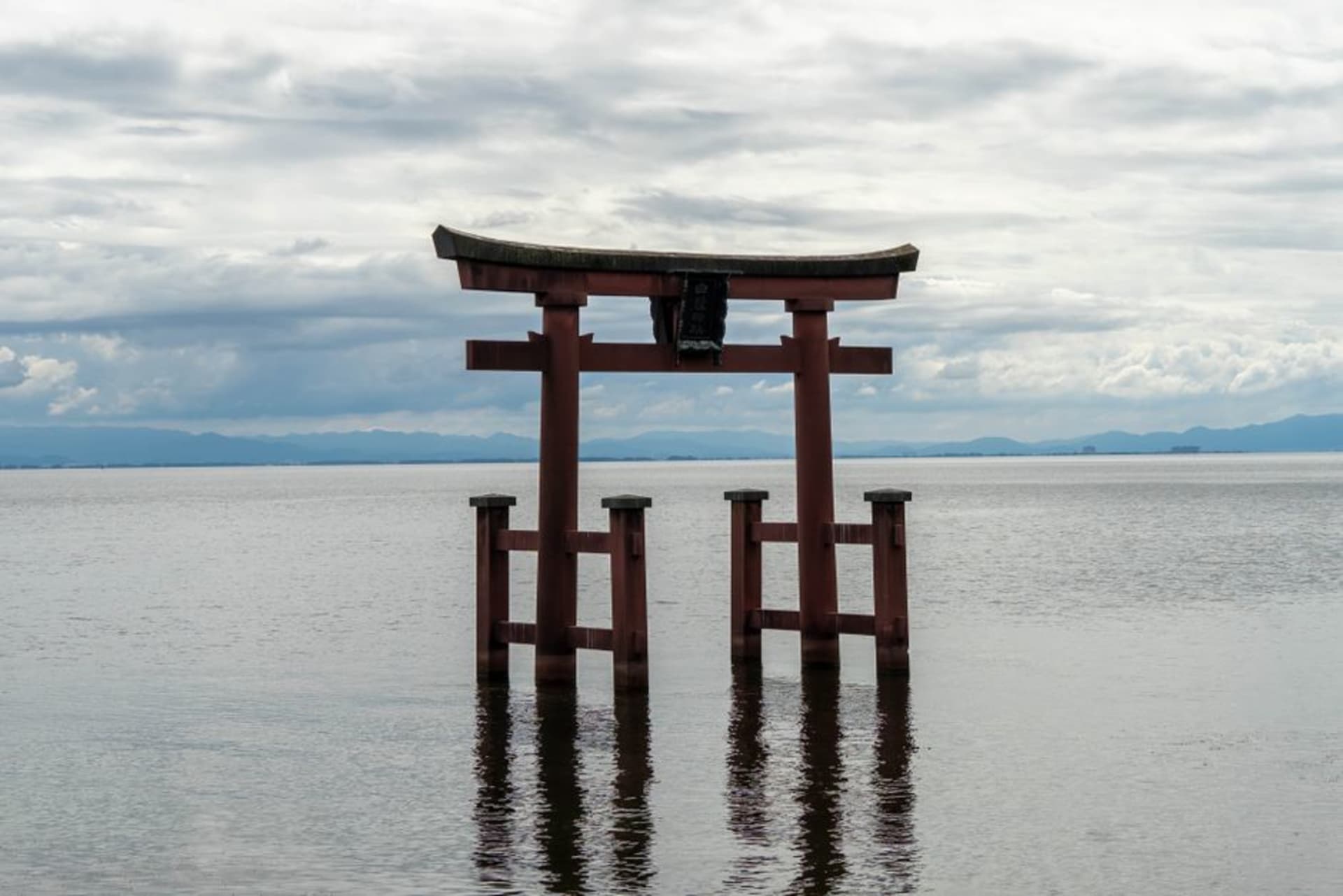
One of only a handful of original castles left standing in Japan, perched above Lake Biwa with a garden made for moon-viewing. We came expecting a quick stop and gave it a whole slow day. Sometimes the smaller places hold you longest.

We almost skipped Hikone. It was a name on the map between two bigger plans, and we only stopped because a train connection left us three hours to spare. Then we walked up the hill to the castle keep — one of just twelve original wooden keeps left in the whole country, never destroyed, never rebuilt in concrete — and I put my hand on a beam by the entrance and it was still, unmistakably, wood. Old wood, worn smooth. Lia climbed the near-vertical inner staircase ahead of me, laughing at how steep it was, defensive design meant to slow attackers, and at the top we looked out over Lake Biwa going silver in the afternoon and quietly agreed we weren’t catching that next train.
The Original Keep
There’s a particular feeling to a building that has genuinely survived rather than been reconstructed, and Hikone Castle has it in the creak of every floorboard. Built in the early 1600s and completed around 1622, it belonged to the Ii clan, and it has stood through wars, fires, and the great wave of demolitions that took most of Japan’s castles. The keep is smaller than Himeji, less crowded, and somehow more intimate for it. You climb ladder-steep stairs between floors, duck under low beams, and peer out through arrow slots at the town below. On the ramparts outside, the white walls and dark tiled roofs curve against the sky, and there’s usually a costumed mascot cat, Hikonyan, wandering the grounds to the delight of every child present.

Genkyū-en at Dusk
Below the castle lies Genkyū-en, a strolling garden laid out in the 1670s and modelled on the idea of a Chinese lake palace. We arrived late in the day when the tour groups had gone, and had the winding paths almost to ourselves. The garden is built around a central pond crossed by arched bridges, with the castle keep rising behind the trees so that every turn of the path frames it differently. There’s a teahouse where you can sit on tatami with a bowl of matcha and a small sweet, looking out over the water, and we did exactly that as the light went gold. It was designed for moon-viewing, and I understood why — you could feel the whole place tilting toward evening, made for the hour we happened to be in.

The Old Castle Town
Down from the hill, Yumekyobashi Castle Road is a recreated Edo-period street of dark wooden shopfronts, and while it leans a little touristy, it’s a pleasant place to wander before the trains. We bought Omi beef croquettes from a butcher’s counter and ate them walking, grease on our fingers, and browsed a shop selling nothing but locally made sensu fans. Hikone sits in Shiga, a prefecture most visitors blow straight through on the shinkansen, and there’s something satisfying about giving one of its towns your full attention. The lake, the largest in Japan, is right there at the edge of everything, flat and enormous, and we ended the day sitting on its shore watching the light drain out of the water.
Getting There
Hikone is easy: local and rapid trains on the JR Biwako line reach Hikone station from Kyoto in about fifty minutes, or from Osaka in roughly an hour and twenty. The castle is a flat ten-minute walk from the station, with Genkyū-en right beside it. It makes an excellent half-day or unhurried full-day trip, and pairs naturally with a longer loop around Lake Biwa if you have the time. Go late in the afternoon if you can, when the garden empties and the light turns the lake to metal.
Keep exploring
More of Kansai
Keep exploring
More from Kansai
 japan
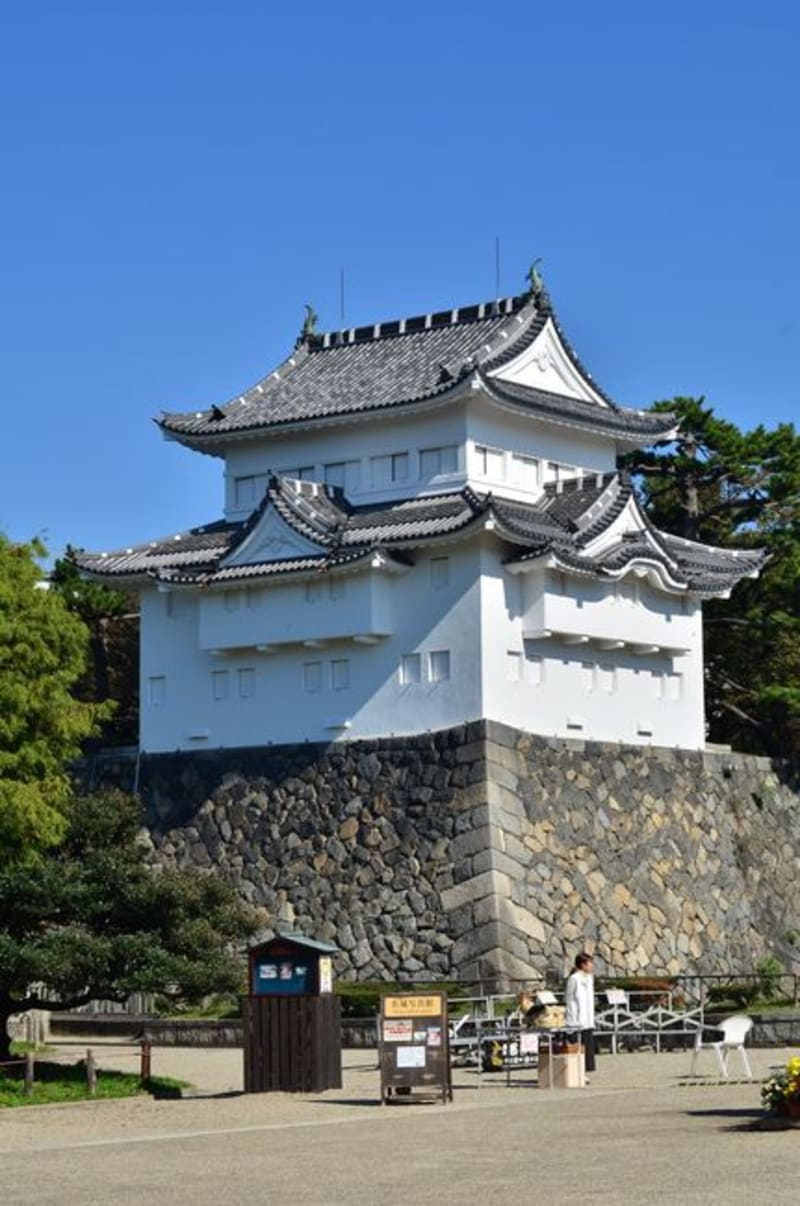
japan Nagahama
A lakeside castle town on the northern shore of Lake Biwa, where a district of black-walled merchant houses has been reborn as a glass-craft quarter. We wandered in on a slow afternoon and found a town that had quietly reinvented itself without losing its bones. The lake sits at the end of every street like a held breath.
Explore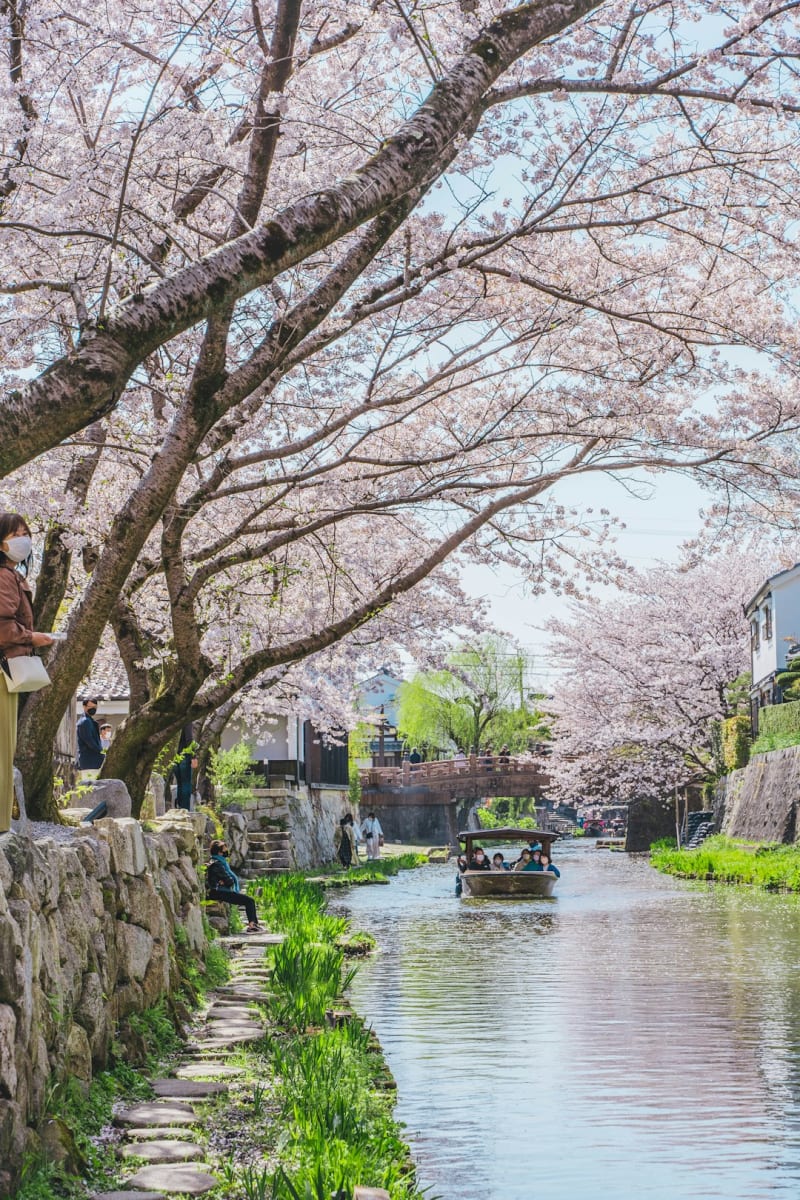 japan
japan Ōmihachiman
A merchant town near Lake Biwa where willow-lined canals still carry flat-bottomed boats past the whitewashed storehouses of the old Ōmi traders. We came for an afternoon and stayed until the water turned copper. Some places just refuse to be rushed.
Explore japan
japan Koka
The quiet Shiga cradle of the Kōga ninja, where thatched farmhouses hide false floors and revolving walls. Forested hills fold over a landscape that looks too ordinary to have hidden anything at all. That, of course, was always the point.
Explore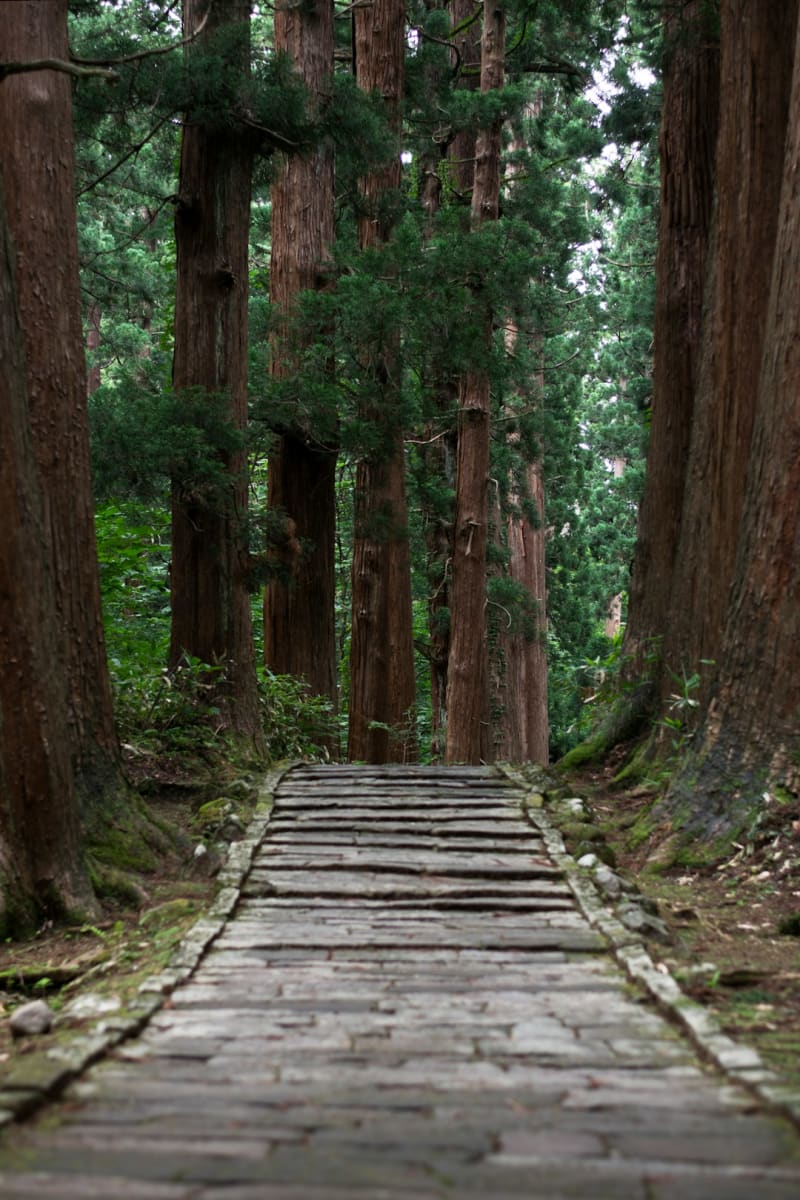 japan
japan Shigaraki
A pottery town in the Shiga hills where kilns have burned for eight centuries and cheerful clay raccoon-dogs stand guard outside nearly every door. Up a mountain road nearby hides the MIHO Museum, an I.M. Pei building reached through a cherry tunnel and a bridge, half-buried in the forest. Clay underfoot and architecture in the trees — Shigaraki is stranger and lovelier than it has any right to be.
Explore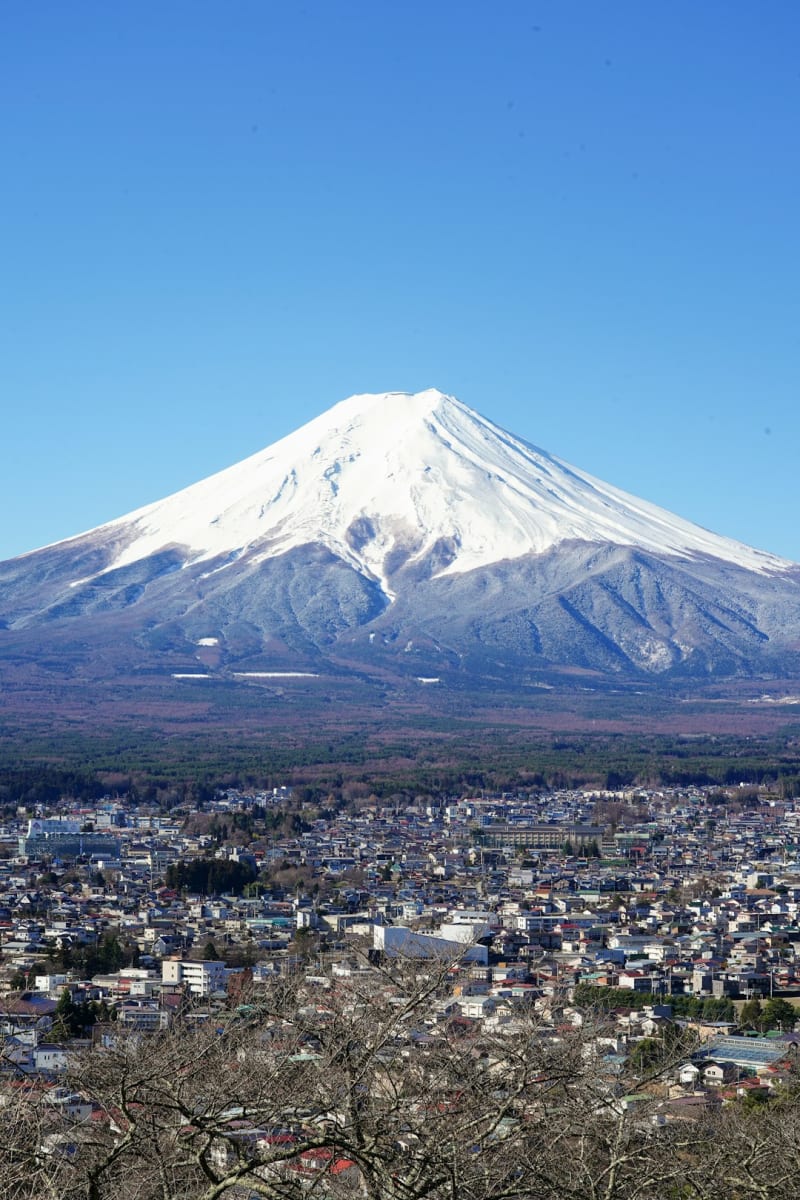 japan
japan Otsu
A lakeside city in Shiga where Japan's largest lake, Biwa, lies flat and enormous below the wooded shoulder of Mount Hiei — and on that mountain sits Enryaku-ji, the vast monastery that shaped Japanese Buddhism for a thousand years. Otsu is Kyoto's quieter neighbor, a place of lake light and temple bells that most travelers rush straight past. We didn't, and we were glad.
Explore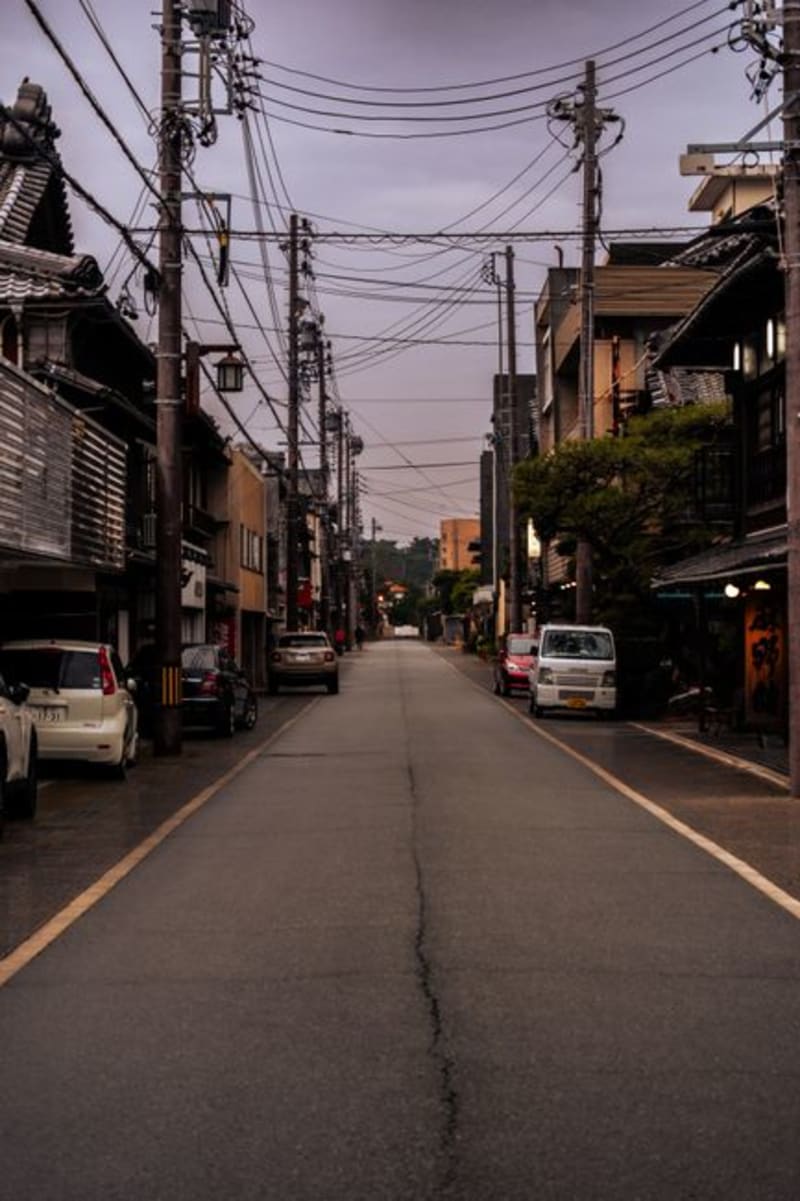 japan
japan Iga-Ueno
A quiet castle town in the mountains of Mie, birthplace of the Iga school of ninja, crowned by one of Japan's most beautifully proportioned white keeps. It wears its shadowy history lightly now — trick doors, a museum full of hidden blades, children in ninja costume — but the old spy-craft is real, and the town is prettier and slower than its reputation suggests.
Explore