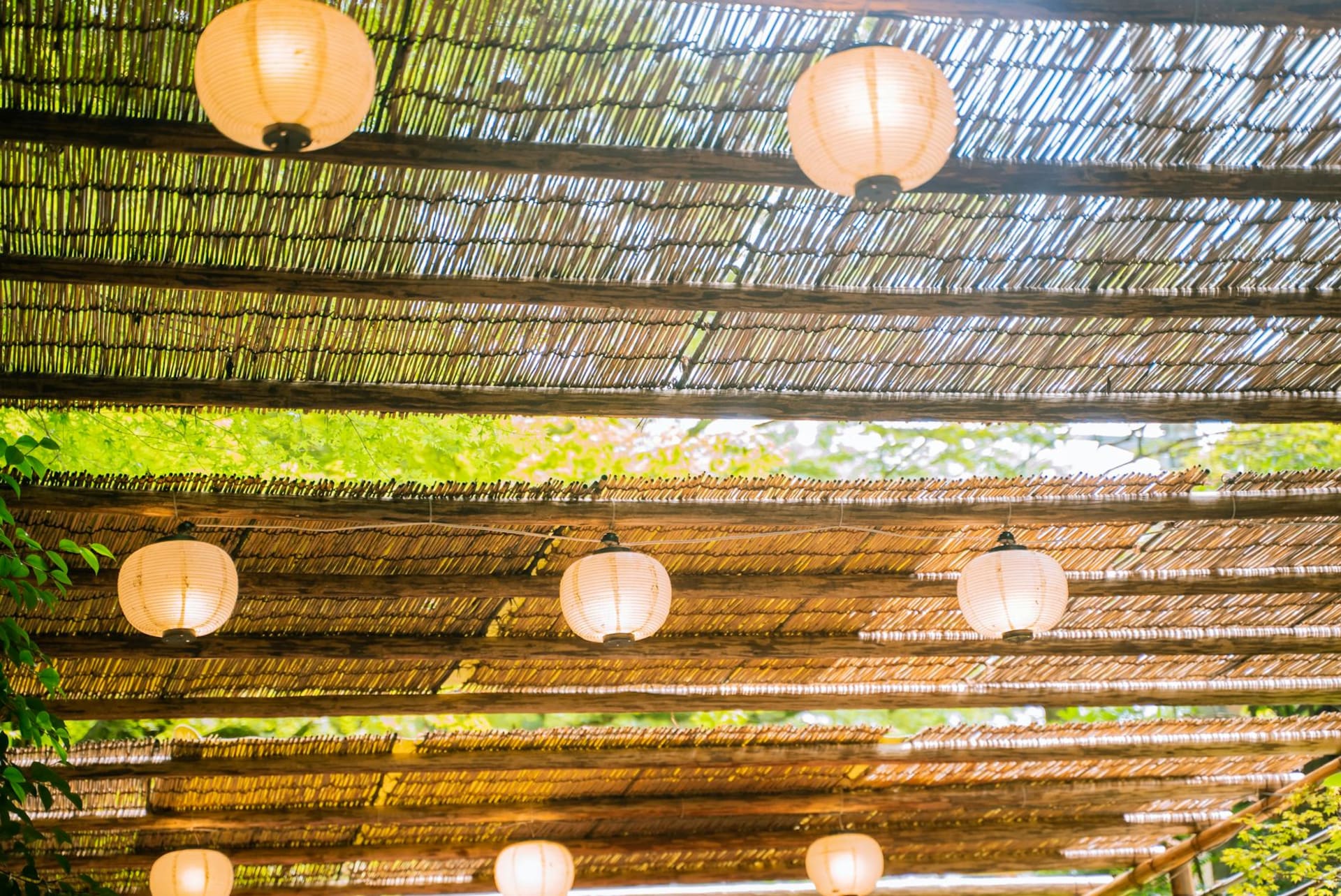
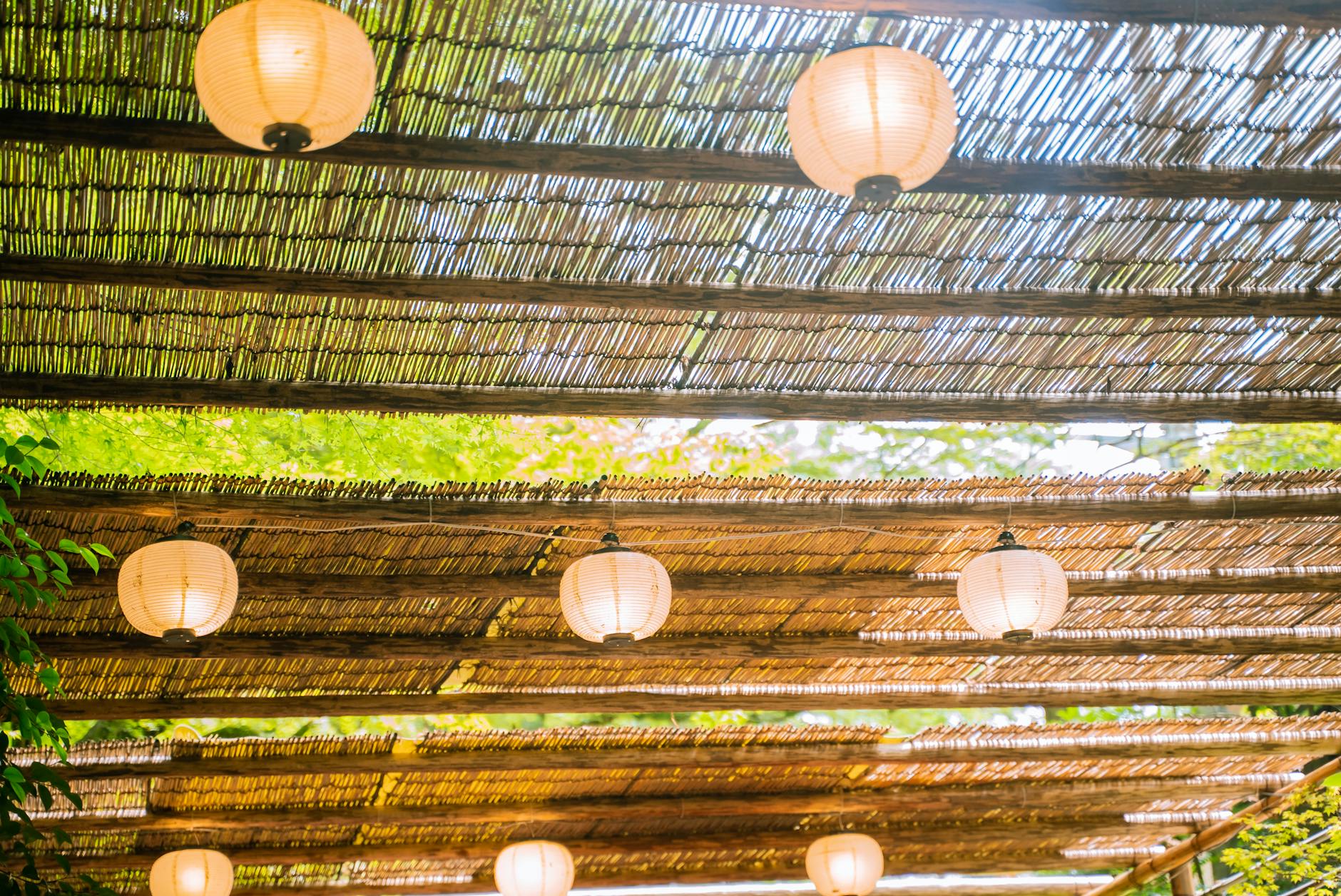
Kibune
"You eat sitting above the river, close enough that the cold comes up through the floor."
A one-lane river valley north of Kyoto where the restaurants build their floors out over the water and lunch takes three hours.
We came into Kibune the good way — over the ridge on foot from Kurama, ninety minutes through cedars so tall and so closely ranked that the light arrives already green. The trail crosses a saddle and then drops, and you hear the valley before you see it: water over stones, constant, somewhere below and to the left. Then the trees thin and there is a single lane running along a river with wooden buildings hanging off both banks.
Kibune Shrine
The shrine sits partway up the lane and is dedicated to the god of water, which in a valley that exists entirely because of a river feels less like symbolism than like municipal record-keeping. The approach is the photograph everyone takes and it deserves it — a stone stairway climbing between two rows of vermillion lanterns, moss on every horizontal surface, cedars closing overhead.
What I remember more than the stairway is the quiet. There is a specific kind of silence in places where running water is the loudest thing, and it takes a full minute standing still before you notice it has replaced everything else. Lia bought a water fortune — you float the paper in the sacred spring and the writing surfaces as it soaks, which is a very good piece of design regardless of whether you believe any of it.
Kawadoko — Eating Over the River
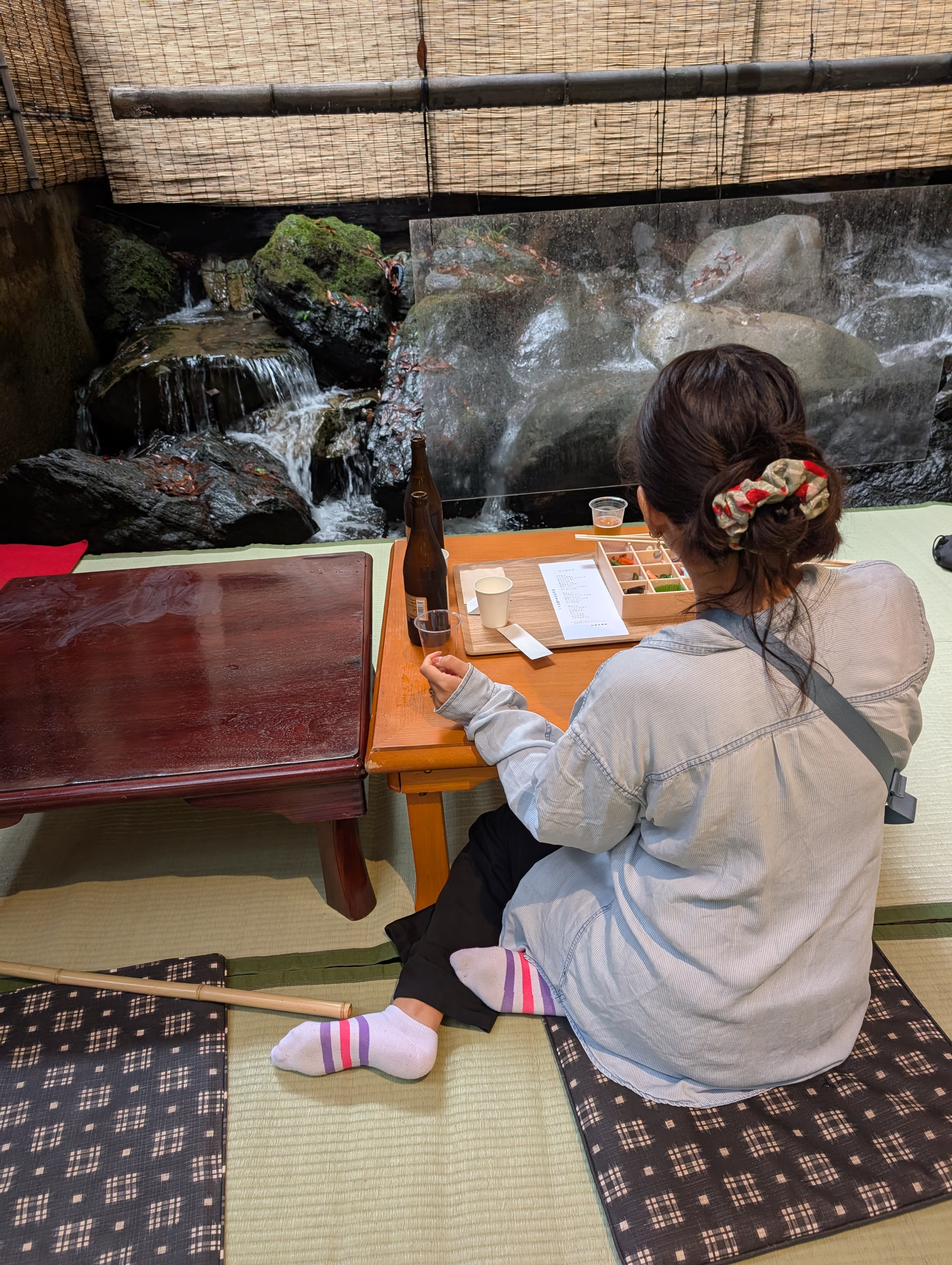
Then lunch, which is the reason most people come. In summer the restaurants along the lane build kawadoko — wooden platforms cantilevered directly out over the river, low tables set on tatami, the water running a few inches beneath the boards. The cold rises up through the floor. In a Kyoto August, when the city is a held breath at thirty-six degrees, this is not a novelty but a survival strategy that happens to be beautiful.
Lia ordered tempura. I took whatever the set menu decided, which turned out to be a run of small precise plates — grilled river fish, pickled vegetables, tofu, rice, miso — arriving in an order somebody had clearly thought about. It was not the most technically impressive meal we ate in Japan. It is the one I would go back for. The setting does most of the work and knows it.
Practical Honesty
Kibune is small. It is one lane, a shrine, and a row of restaurants, and you can see all of it in an hour if you insist on being efficient about it. Do not be efficient about it. The valley works as a slow half-day: walk over from Kurama in the morning, eat over the river, then take the Eizan Railway back to Kyoto from Kibuneguchi Station at the bottom of the hill — there is a bus down from the village, or a walk of about twenty-five minutes along the road.
Book the kawadoko restaurants ahead in summer. They are the entire reason the valley is busy between May and September, and the good ones fill.
When to go: June through September for kawadoko dining, which is the whole point and only operates in the warm months. November for maples without the platforms. The through-walk from Kurama is the best approach in any season — arriving on foot out of the forest is a completely different experience from arriving by train at the bottom.
Questions people ask
- What is kawadoko dining?
- Restaurants along the Kibune lane build wooden platforms out over the river, with low tables on tatami and the water running inches beneath the boards. The cold rising off the river is the point — it is how the valley stays bearable in a Kyoto summer.
- When can you eat over the river at Kibune?
- The kawadoko platforms only operate in the warm months, roughly June through September. Outside that season the restaurants serve indoors.
- How do you get from Kurama to Kibune?
- There is a mountain trail over the ridge between them that takes about ninety minutes through old cedar forest. It is the best way to arrive. Otherwise the Eizan Railway serves Kibuneguchi Station at the bottom of the hill.
- Do I need to book a kawadoko restaurant in advance?
- In summer, yes. The platforms are the entire reason the valley is busy between May and September and the good restaurants fill up.
Keep exploring
More of Kansai
Keep exploring
More from Kansai
 japan
japan Kurama
A temple built into a cedar mountainside an hour north of Kyoto, and the trailhead for the best half-day walk in Kansai.
Explore japan
japan Kyoto Arashiyama
The towering bamboo grove and monkey mountain above the Hozu River at Kyoto's elegant western edge.
Explore japan
japan Kyoto
Thousand-gate shrines, bamboo forests, and a city that hides its best moments behind early mornings and quiet side streets.
Explore japan
japan Otsu
A lakeside city in Shiga where Japan's largest lake, Biwa, lies flat and enormous below the wooded shoulder of Mount Hiei — and on that mountain sits Enryaku-ji, the vast monastery that shaped Japanese Buddhism for a thousand years. Otsu is Kyoto's quieter neighbor, a place of lake light and temple bells that most travelers rush straight past. We didn't, and we were glad.
Explore japan
japan Fushimi Inari Taisha
The mountain of ten thousand vermillion torii gates south of Kyoto — and the two-hour climb above them that almost nobody bothers to finish.
Explore japan
japan Uji
A small riverside town between Kyoto and Nara that is the spiritual home of Japanese green tea, and home to the impossibly graceful Byōdō-in Phoenix Hall. Old tea houses line the streets, the river runs cold and fast, and the final chapters of The Tale of Genji are set here. Refined, green, and quietly ancient.
Explore