Fushimi Inari Taisha
"Everyone photographs the first two hundred gates. The mountain begins after that."
The mountain of ten thousand vermillion torii gates south of Kyoto — and the two-hour climb above them that almost nobody bothers to finish.
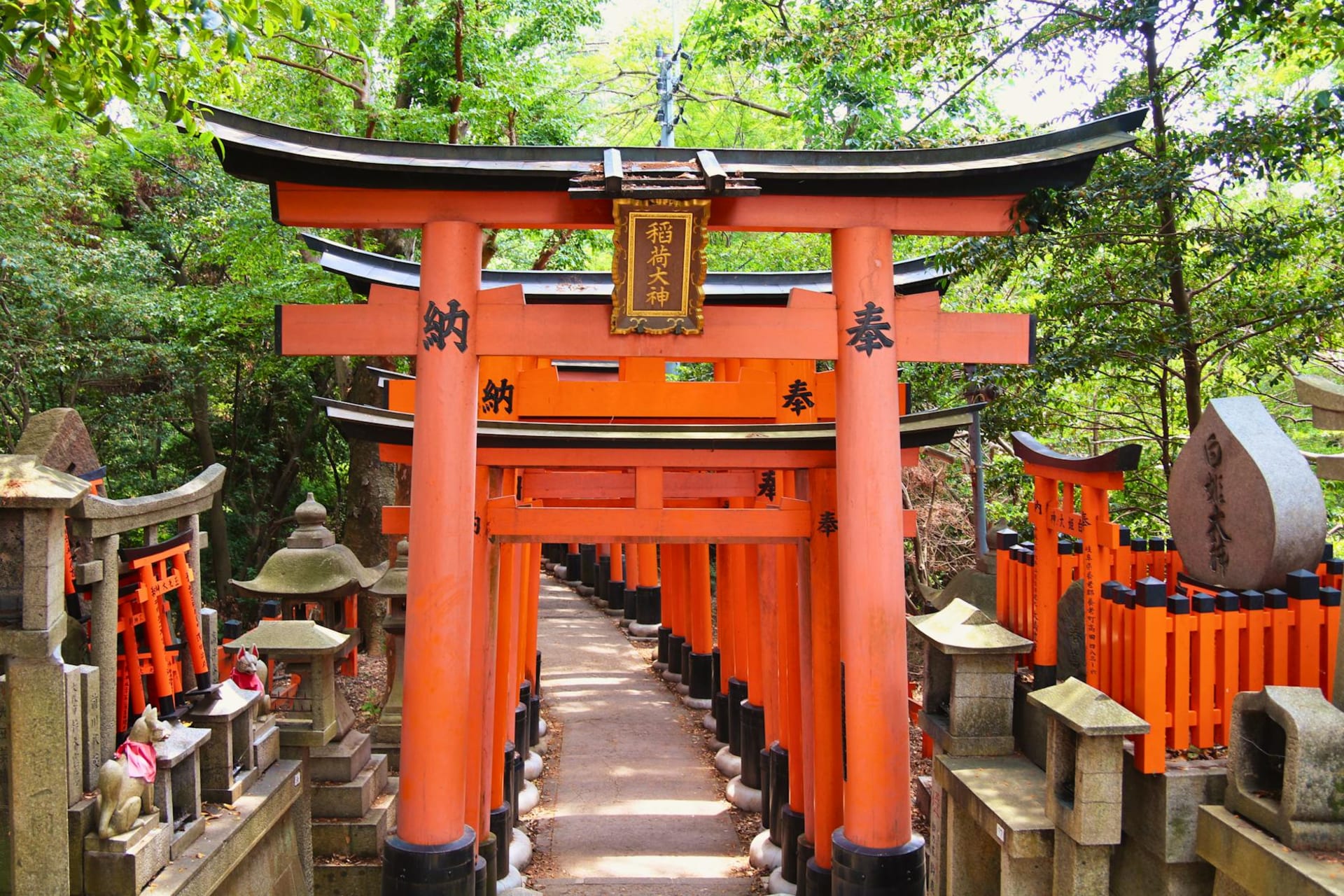
We took the JR Nara Line two stops south from Kyoto to Inari Station and stepped off the train at eight in the morning directly opposite the entrance, which is either excellent planning by the railway or the most efficient piece of pilgrim infrastructure in Japan. The main approach was already busy — the great red torii, the Rōmon gate behind it, a slow drift of people with cameras held at chest height. I remember thinking we had arrived too late. We had not. We had simply arrived at the part everybody sees.
The Gates, and the Point Where They Thin Out
The famous corridor starts behind the main hall, where the torii stand so close together that the daylight between them narrows to orange slits. Each gate is an offering, paid for by a business or a family, the donor’s name and the date inked down the back of the posts in black — which means the tunnel you are walking through is, read from the other direction, a ledger of several centuries of people asking for help with money, harvest, rice, luck. I liked it more once I understood that. It is not decoration. It is a very long list of hopes.
For the first fifteen minutes we shuffled. Then the path forked at Okusha Hōhaisho, most of the crowd turned around, and the density dropped by something like ninety per cent. This is the thing nobody tells you about Fushimi Inari: it is not a shrine you visit, it is a mountain you climb, and the overwhelming majority of visitors stop before the climbing starts.
The Full Loop
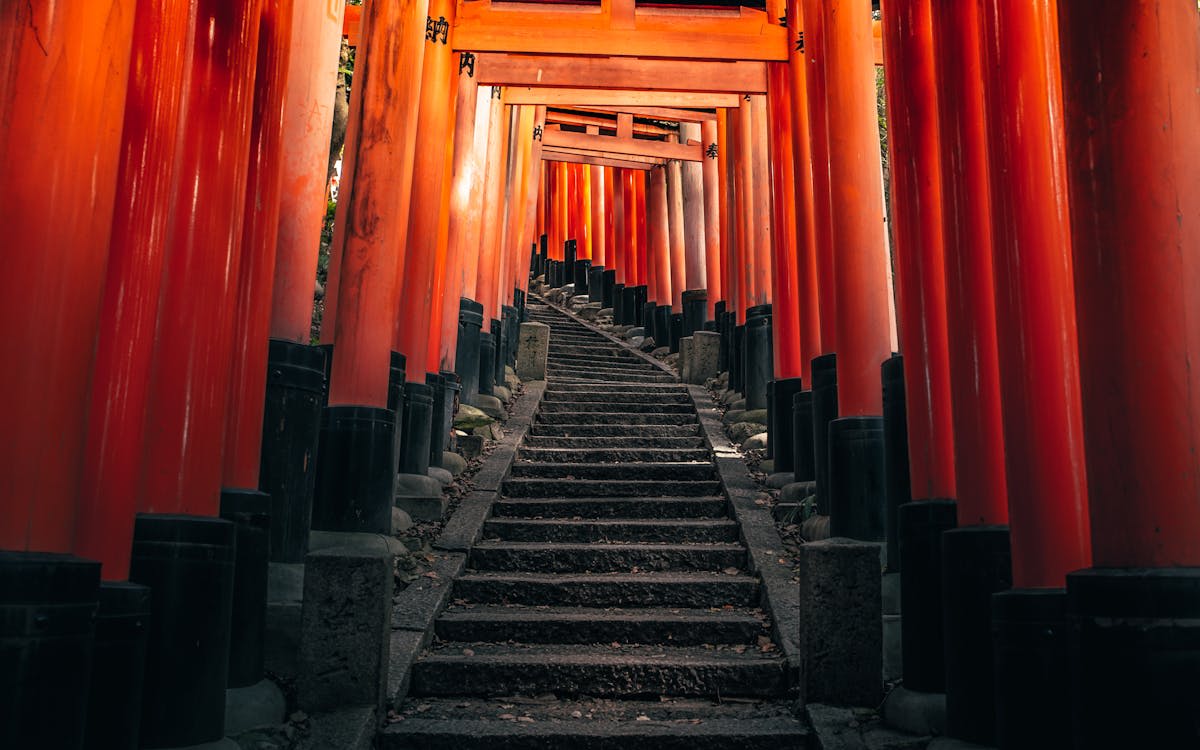
The complete circuit to the summit of Mount Inari took us about two hours at an unhurried pace, and it is a genuine climb — stone stairways, switchbacks, the air getting cooler and greener as you go. The gates continue almost the whole way, thinning in places to single file, interrupted by clusters of smaller shrines where stone foxes sit with keys and rice sheaves in their mouths. The foxes are messengers. They are also, at certain angles in low forest light, quietly unsettling in a way I did not expect from a national tourist attraction.
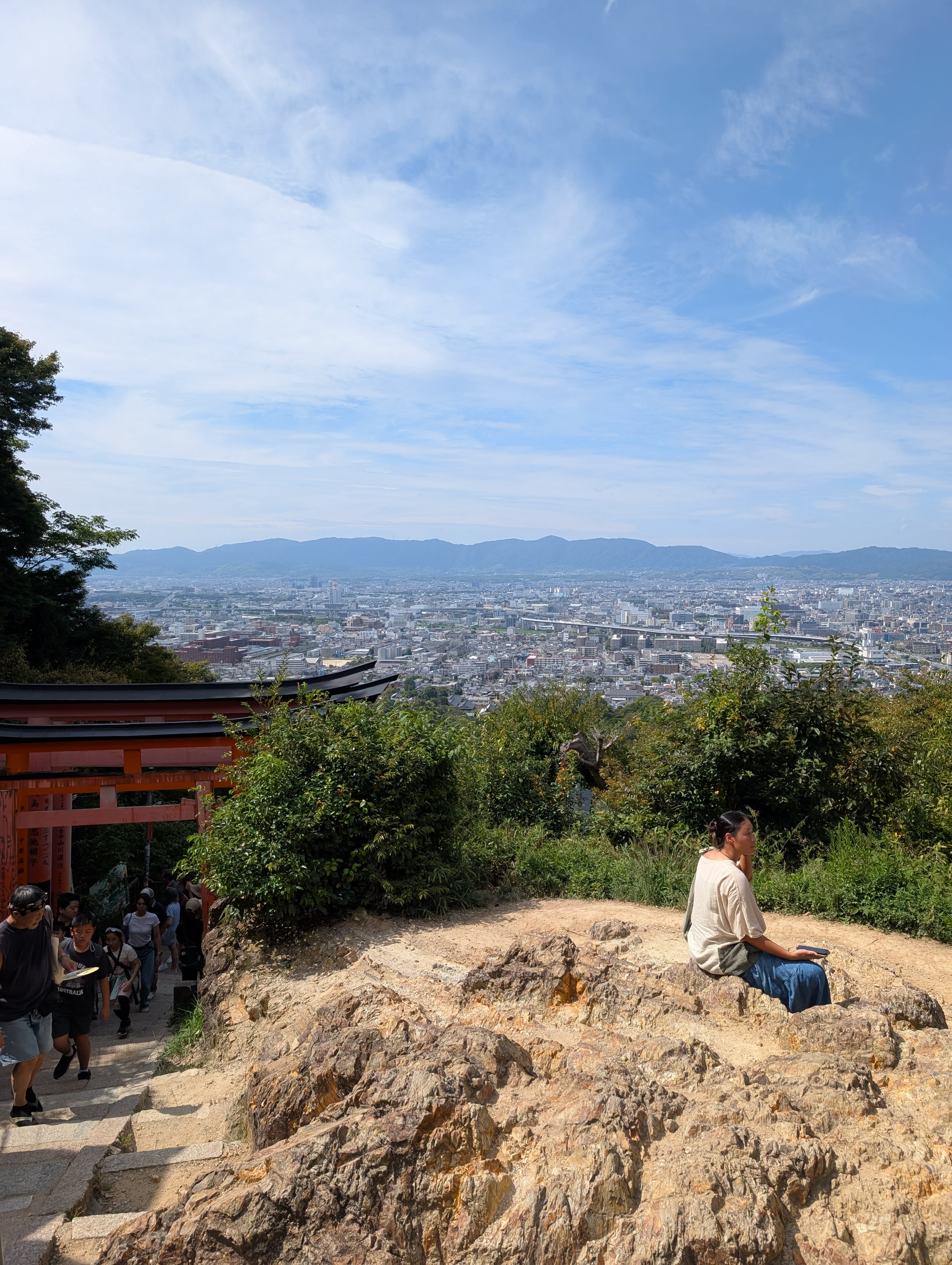
Near the top we came out at a clearing where the trees open toward the city, and Kyoto lay below us flattened into haze — the grid, the river, the mountains folding away behind it. We sat on a bench and ate rice balls we had bought at a convenience store that morning. I have eaten in Michelin-starred restaurants. That konbini rice ball, on that bench, after that climb, was better than most of them, and I am aware of how that sounds.
Coming Back Down
By the time we descended, the lower gates were packed shoulder to shoulder and the light had gone flat and hard. The entire character of the place had changed in three hours. The lesson is not complicated: go early, or accept that you are going to photograph the back of somebody’s head.
If you have the afternoon, the Fushimi sake district is about ten minutes away — one of the most important sake-producing areas in the country, built along willow-lined canals that look like a woodblock print someone forgot to stop maintaining. We visited the Gekkeikan Ōkura Sake Museum, tasted three varieties, and carried a bottle of junmai daiginjō back to the hotel terrace to drink while the lights came on across Higashiyama. It is a good way to end a day that started with a mountain.
When to go: Arrive by 8am, earlier if you can — the difference between eight and eleven is the difference between a corridor and a queue. Autumn gives the best light through the gates; summer on the upper mountain is humid and hard work. The shrine grounds never close, and walking the lower gates after dark is genuinely eerie and almost empty, if you are the sort of person who enjoys that. I am.
Questions people ask
- How long does the full Fushimi Inari hike take?
- The complete loop to the summit of Mount Inari took us about two hours at an unhurried pace. Most visitors never attempt it — the crowds turn back at the Okusha Hohaisho fork, roughly fifteen minutes in.
- What time should I arrive to avoid the crowds?
- Arrive by 8am. We were there at eight and the lower gates were walkable; by the time we came down three hours later they were packed shoulder to shoulder.
- Is Fushimi Inari free to visit?
- Yes. The shrine grounds are open and there is no admission gate, which is also why they can be walked after dark when the site is nearly empty.
- How do I get there from Kyoto?
- Take the JR Nara Line two stops south from Kyoto Station to Inari Station. The station exit faces the shrine approach directly.
Keep exploring
More of Kansai
Keep exploring
More from Kansai
 japan
japan Kyoto
Thousand-gate shrines, bamboo forests, and a city that hides its best moments behind early mornings and quiet side streets.
Explore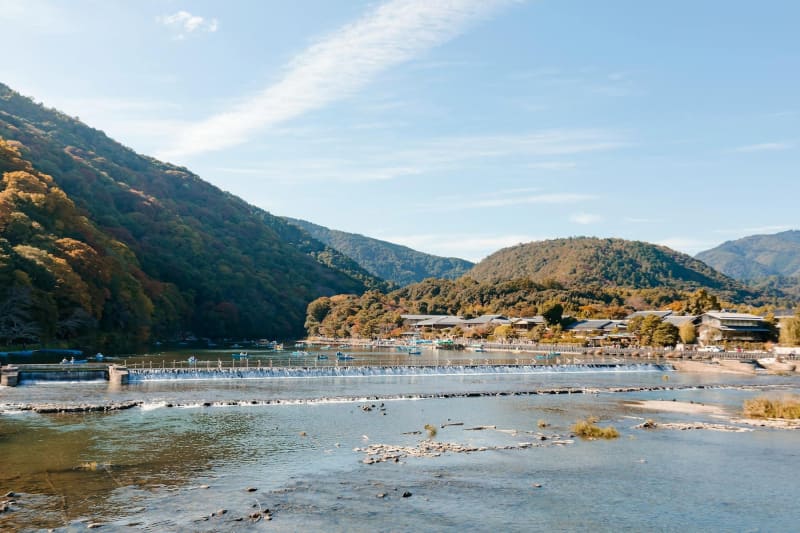 japan
japan Kyoto Arashiyama
The towering bamboo grove and monkey mountain above the Hozu River at Kyoto's elegant western edge.
Explore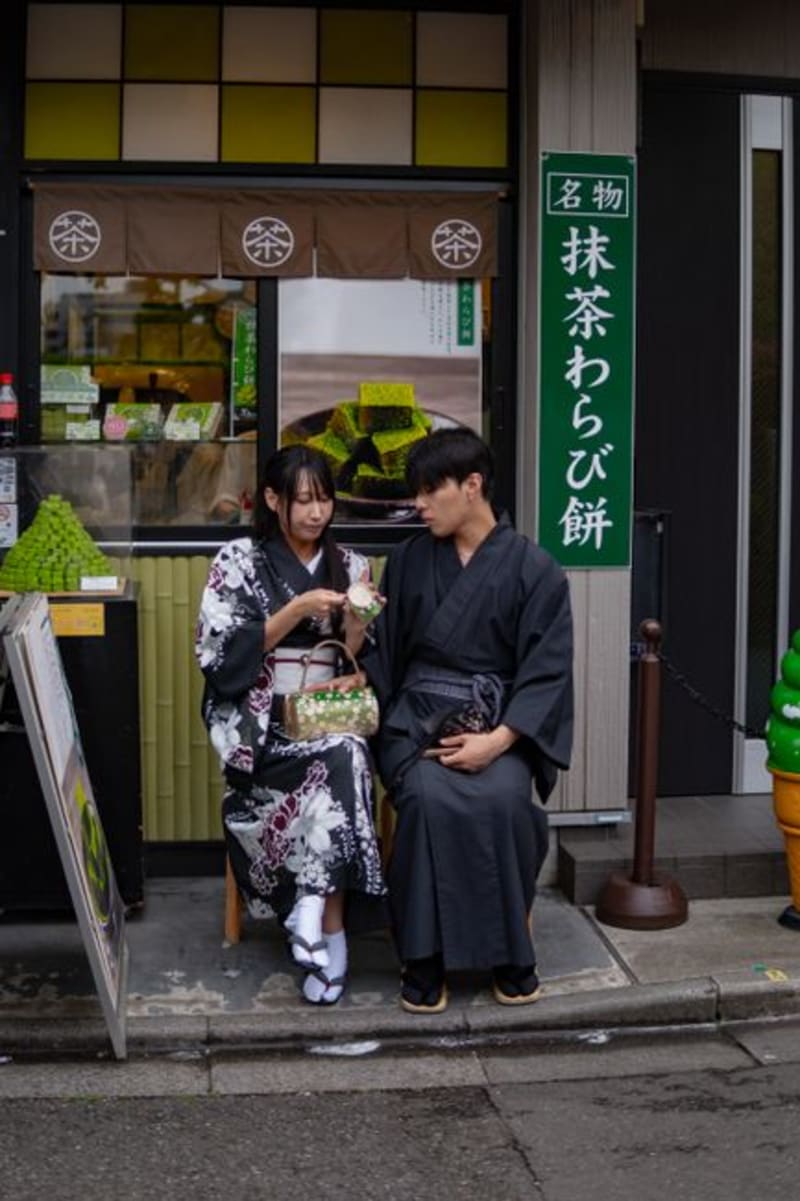 japan
japan Uji
A small riverside town between Kyoto and Nara that is the spiritual home of Japanese green tea, and home to the impossibly graceful Byōdō-in Phoenix Hall. Old tea houses line the streets, the river runs cold and fast, and the final chapters of The Tale of Genji are set here. Refined, green, and quietly ancient.
Explore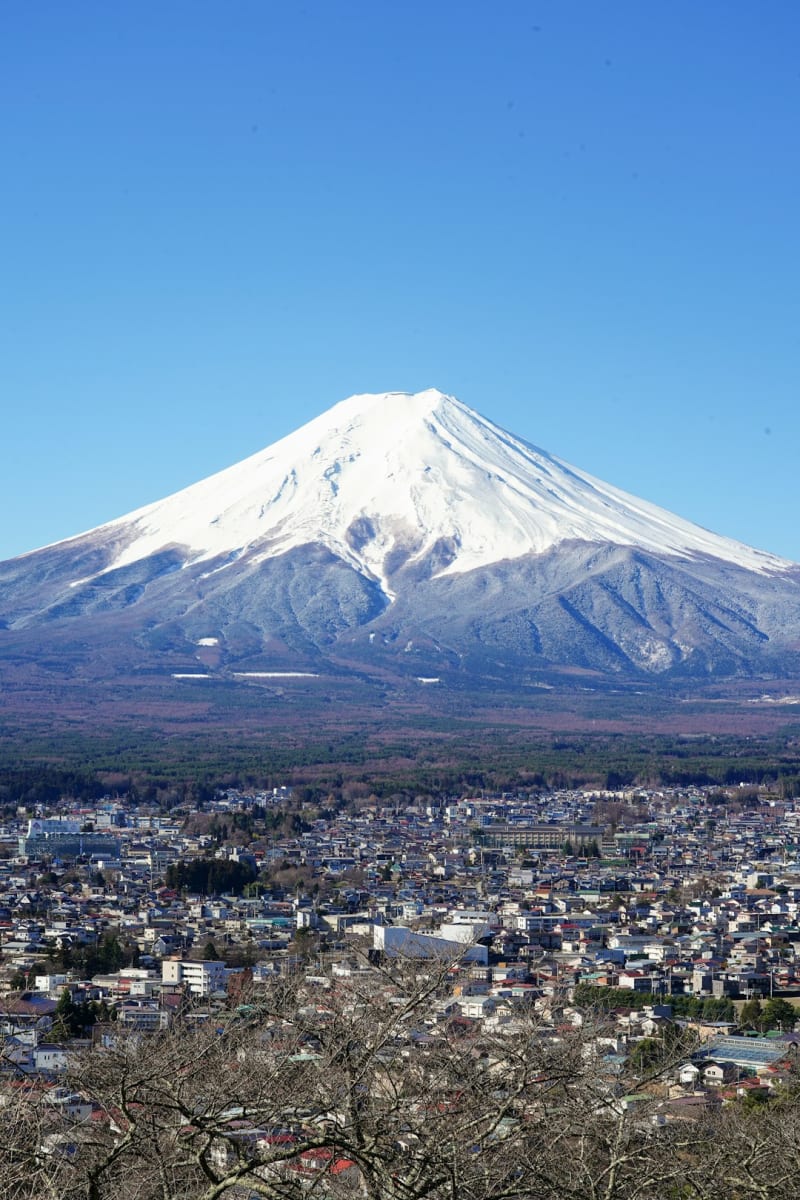 japan
japan Otsu
A lakeside city in Shiga where Japan's largest lake, Biwa, lies flat and enormous below the wooded shoulder of Mount Hiei — and on that mountain sits Enryaku-ji, the vast monastery that shaped Japanese Buddhism for a thousand years. Otsu is Kyoto's quieter neighbor, a place of lake light and temple bells that most travelers rush straight past. We didn't, and we were glad.
Explore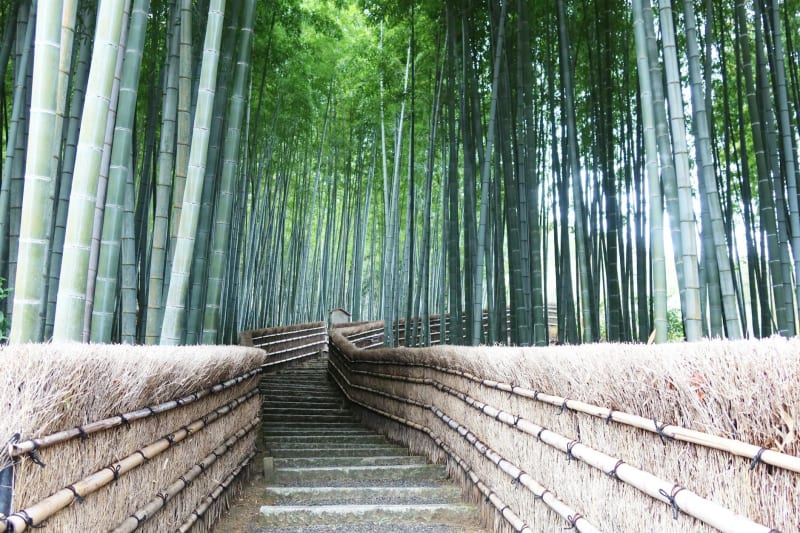 japan
japan Kurama
A temple built into a cedar mountainside an hour north of Kyoto, and the trailhead for the best half-day walk in Kansai.
Explore japan
japan Kibune
A one-lane river valley north of Kyoto where the restaurants build their floors out over the water and lunch takes three hours.
Explore