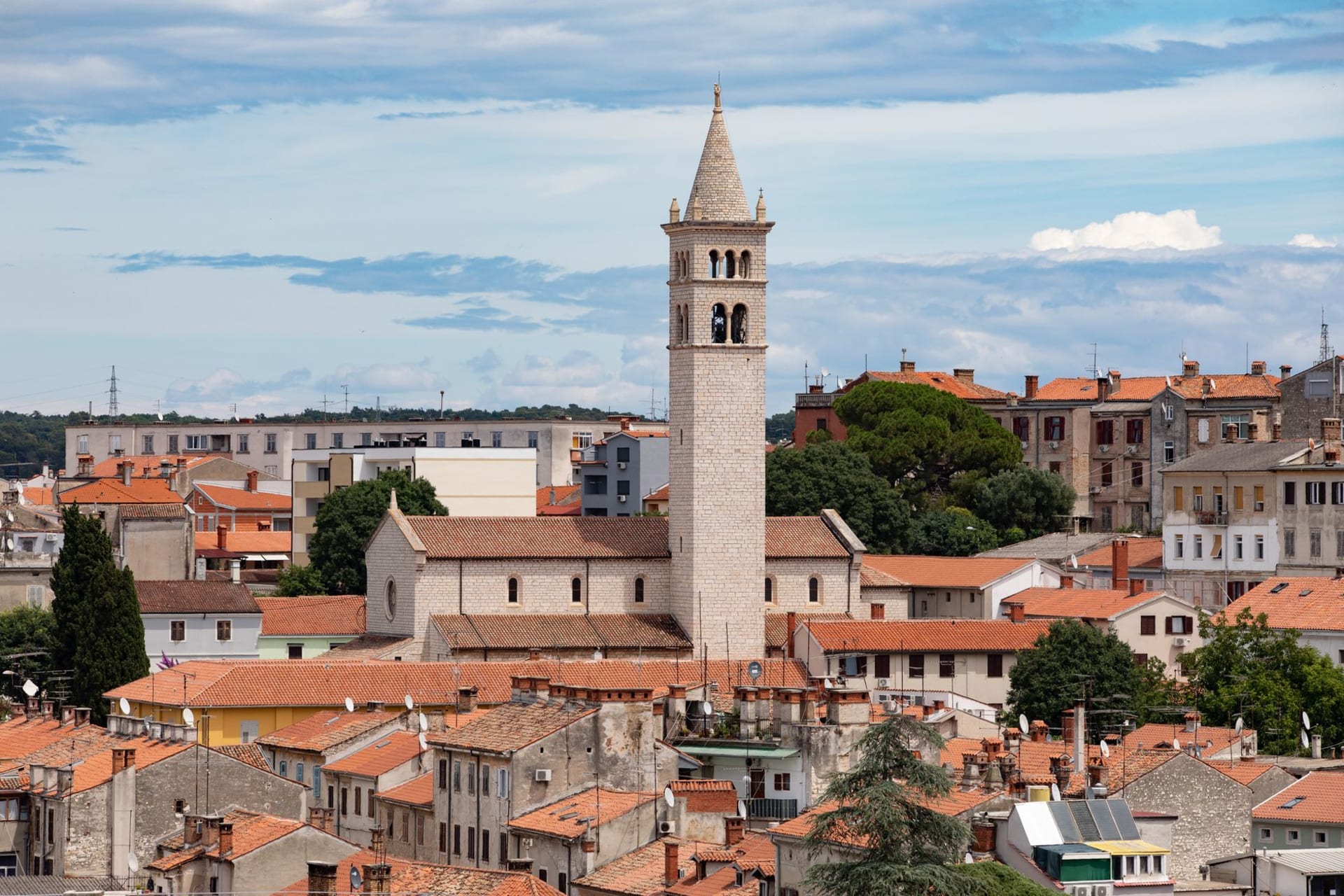
Oprtalj
"The frescoed church is unlocked. The last family in the village watches the square from a window. I didn't knock."
A nearly abandoned hilltop village where the frescoes in the church predate the living residents and the silence has real mass.

The road to Oprtalj is not signed well, which is possibly deliberate, or possibly an oversight that nobody has gotten around to correcting because the people of Oprtalj are few enough and patient enough that the absence of tourists has become a condition they’ve stopped noticing. I took two wrong turns on the limestone plateau above the Mirna valley before the road climbed and the town appeared at the end of it — walls, a gate, a square with a dead fountain, and a view to the northwest that covered most of the Istrian interior and, on a clear day, reached Slovenia.
Oprtalj had six hundred residents in its fourteenth-century prime. It has fewer than sixty now — the number varies depending on who you ask and how generously you count the houses with lights on at night. The Venetian loggia in the main square is intact. The church of St. Mary, just outside the walls, holds fifteenth-century frescoes that were recently restored by the Croatian Institute for the Conservation of Cultural Heritage, a process that took years and involved scaffolding and specialised lighting and the patient removal of centuries of whitewash. The result is extraordinary: a full cycle of biblical scenes in the nave, the colours still saturated, the figures in the long-limbed Gothic style of the period, staring out with the wide-set eyes that Istrian fresco painters favoured.

I was there on a Tuesday in mid-October. There was no one on the main square. There was a cat on the loggia steps and the door of the church was unlocked, which I discovered by pushing it, having assumed it wouldn’t be. Inside the frescoes waited in the cool dark, and I walked slowly around them with my phone torch and felt the specific guilt of someone who knows they should have brought a better light source. The quality of that guilt was itself a kind of appreciation.
The roadside stands on the approach to Oprtalj sell olive oil in recycled wine bottles with handwritten labels, honey in unlabelled jars, and occasionally vegetables from someone’s garden — the informal commerce of places that can’t sustain a shop but still have things to sell. I bought a bottle of oil from a stand that appeared to be operating on the honour system: a box of coins, a hand-lettered price, the products arranged on a wooden board under a small plastic roof. The oil, at home a week later, was the best I brought back from Istria: grassy, peppery at the back of the throat, with that bitterness that the best Istrian oils share with good Tuscan oil but inflected differently, like the same argument made in a different accent.

There is no restaurant in Oprtalj in the off-season. There may be something available in summer — a konoba that opens weekends, a family that serves lunch if you call ahead. I brought food from Buzet, ate it on the loggia steps watching the view, and spent the afternoon in a state that might be described as productive idleness. The clouds moved over the plateau. A kestrel worked the vineyard edge below the walls. The silence accumulated.
When to go: Any time you want to be alone in a medieval village with excellent frescoes and a view that takes your breath away. Spring and autumn are the most beautiful seasons for the surrounding landscape. Weekends in summer occasionally bring Croatian day-trippers from the coast, which gives the square a social dimension it otherwise lacks. Winter is austere and honest and, if you have come to Istria for the landscape rather than the beach, worth considering.
Keep exploring
More from Istria
 istria
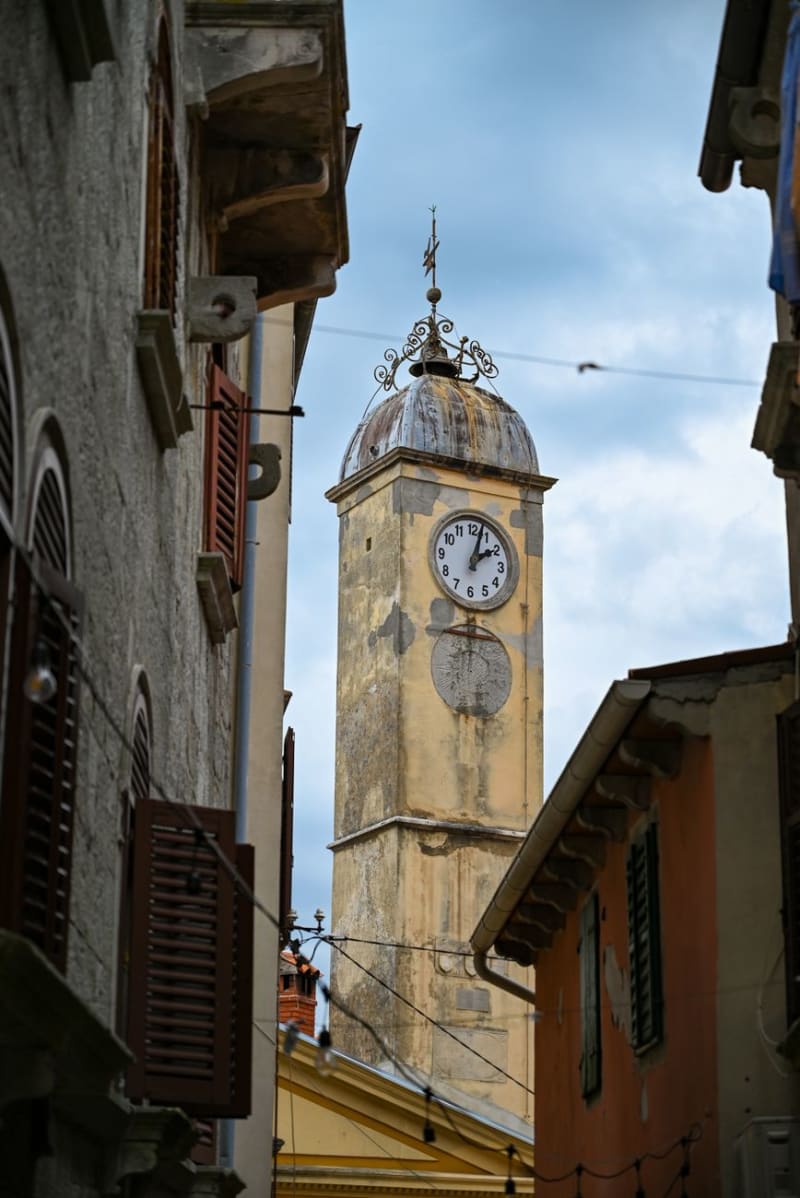
 Pazin
Istria's overlooked inland capital, built on the lip of a karst chasm so dramatic it gave Jules Verne a plot and gave me vertigo.
Explore istria
 Poreč
A Roman grid town on the Adriatic whose sixth-century basilica holds Byzantine mosaics that most tourists walk past too quickly.
Explore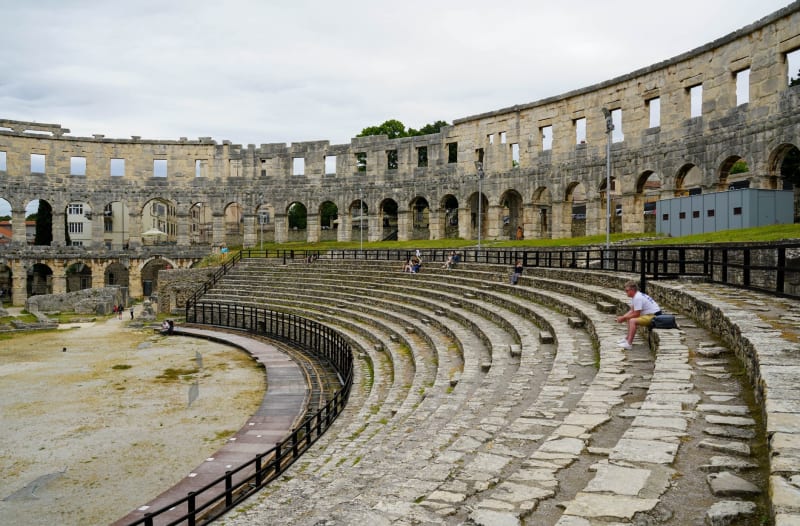 istria
 Pula
A working industrial port where a Roman amphitheater sits at the edge of town like it belongs there, because it does.
Explore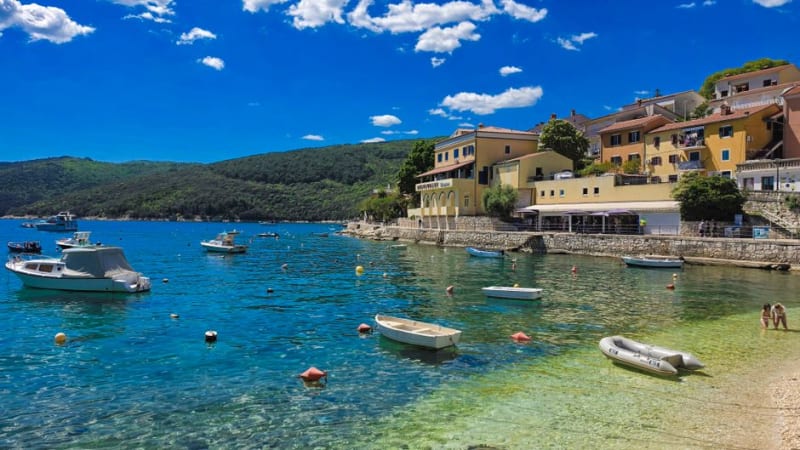 istria
 Rabac
A pebble-beach resort curled beneath Labin's hilltop silhouette, where turquoise coves fill with sunbathers every summer evening.
Explore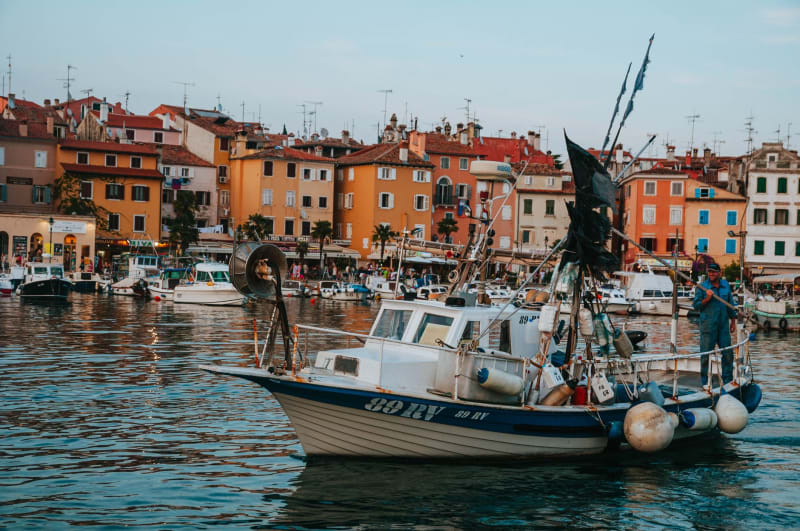 istria
 Rovinj
A coral-painted harbour town so Venetian it makes you wonder if Croatia was always just Italy in disguise.
Explore istria
 Savudrija
A low-key fishing village at Istria's northwestern tip, home to the Adriatic's oldest working lighthouse and a shoreline of quiet rocky coves.
Explore