
Reed Flute Cave
"The Chinese call it the Palace of Natural Arts. For once, the official name is not an exaggeration."
An underground cathedral of stalactites and limestone formations lit in colors no cathedral architect would have dared, hidden inside a hill at the edge of Guilin city.

I walked into the Reed Flute Cave at two in the afternoon, stepping out of Guilin’s September heat into stone-cold darkness in a matter of seconds. The cave — Ludi Yan in Mandarin, named for the reeds that grow at its entrance and were once cut into flutes — opens almost immediately into a chamber so large that my eyes took a full minute to adjust. When they did, what I saw was either magnificent or preposterous or both, and I am still not entirely sure which.
The cave has been lit with colored LED lights. This sounds, and occasionally is, slightly garish. But the scale of the formations makes the lighting work in ways it should not. Stalactites hang in curtains from the ceiling, some of them twelve meters long, catching the colored light in their mineral surfaces and refracting it down into pools on the cave floor that reflect the whole scene doubled. There are columns where floor stalagmites and ceiling stalactites have grown together over millions of years, and chambers named with the poetic straightforwardness of classical Chinese description — the Crystal Palace, the Virgin Forest, the Flower and Fruit Mountain. The names sound fanciful until you stand inside the formations they describe.

The cave is 240 meters deep and the guided route takes about an hour. I went on a weekday morning — the afternoon visit I had first attempted was too crowded, the guide’s voice competing with six other simultaneous tours echoing off the limestone. In the morning I found a smaller group and a guide who spoke slowly enough that my phone’s translation app could keep up. She explained the formations by shape rather than geology — this one looks like a lion, this one a pagoda, this one an old man writing calligraphy — and though this approach is not strictly scientific, it is the correct way to see the cave. The formations do look like things. This is the cave’s particular gift: it is not abstract beauty but narrative beauty, a gallery of accidental sculpture.
What the lighting also reveals — and this is the part I did not expect — is the sheer variety of minerals in the limestone. Iron gives the stalactites their rust and ochre streaks. Manganese creates violet and blue. Calcite running pure goes white. In the cave’s deepest chamber, a section of wall has been polished smooth by an underground stream long since redirected, and it shows the layered geological history of the hill above it like a cross-section in a textbook, only far more beautiful. I stood in front of it for ten minutes while the group moved on.

The cave’s inscription record is the other remarkable thing. On a section of wall near the exit, Tang dynasty travelers who sheltered here in the seventh and eighth centuries left ink inscriptions — more than 70 of them — describing what they saw. Some are poetry. Some are names and dates. One is a painting. They had no LED lighting. What they saw by torchlight was apparently still worth commemorating. That continuity — from Tang dynasty travelers to selfie-taking tourists, the same stones, the same astonishment — is the thing I kept thinking about on the taxi ride back to the city.
When to go: The cave maintains a constant temperature of around 20°C year-round, making it excellent on hot summer days and mild winter ones. Go on a weekday morning to avoid the tour-group crowds. The cave is conveniently close to Guilin city center — about four kilometers northwest — and easily combined with Elephant Trunk Hill in a half-day.
Keep exploring
More from Guilin
 guilin
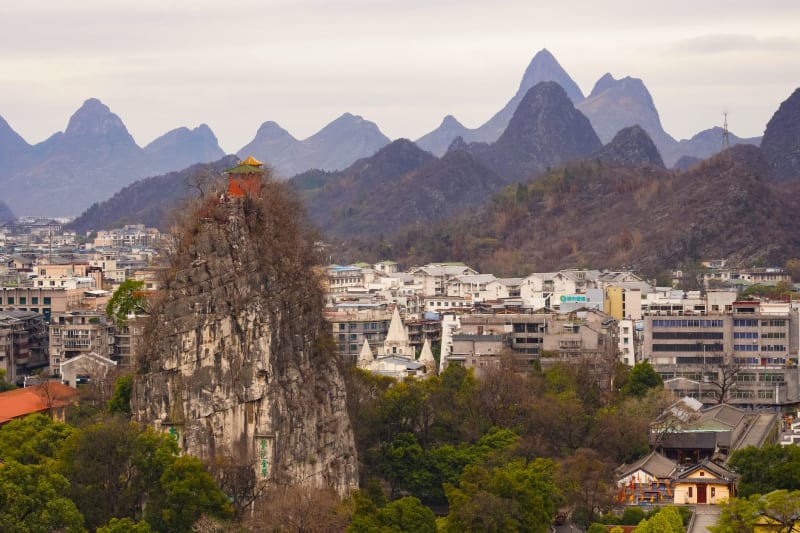
Seven Star Park
Guilin's vast urban park contains karst peaks, a millennium-old cave, Tang dynasty stone inscriptions, and every retired citizen in the city doing tai chi before nine in the morning.
Explore guilin
Silver Cave
A karst cave near Lipu where calcite formations glint like metal under the lights, far from Guilin's crowded tourist circuit.
Explore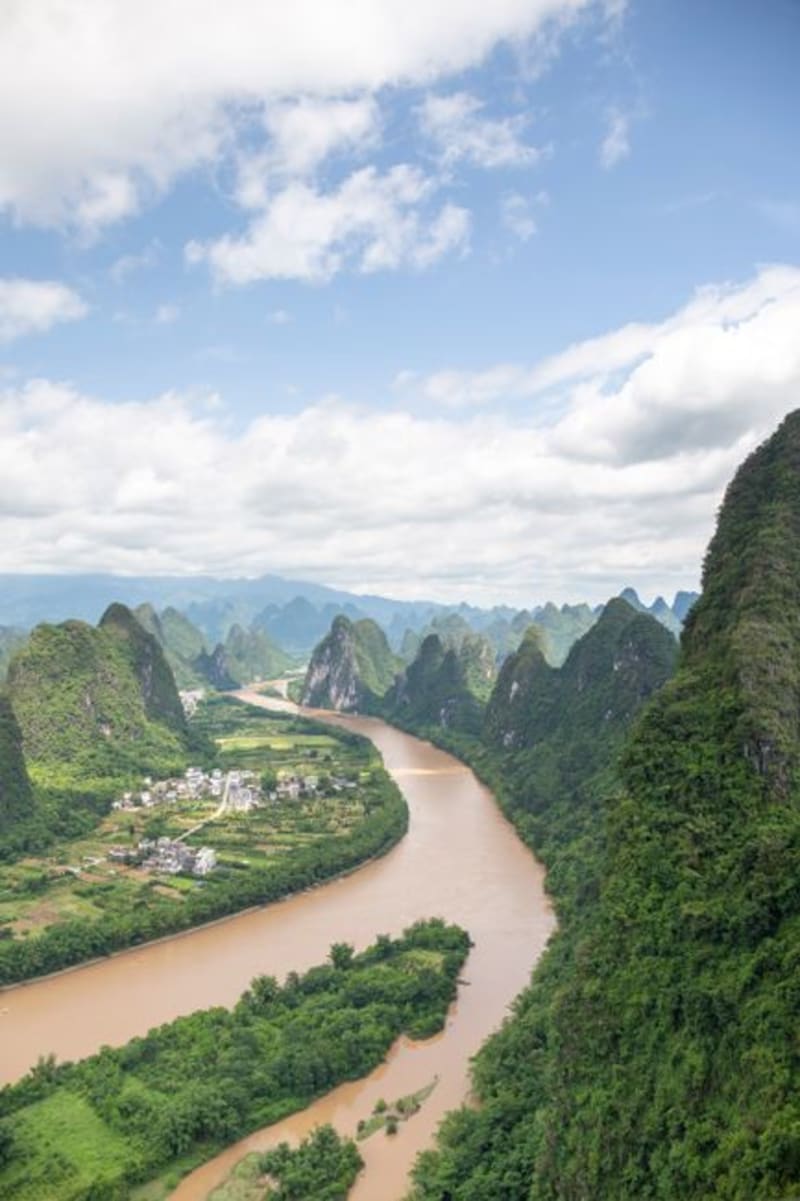 guilin
Ten-Mile Gallery
A quiet karst-lined road between Guilin and Yangshuo that unrolls like a painted scroll, best seen slowly, by bike.
Explore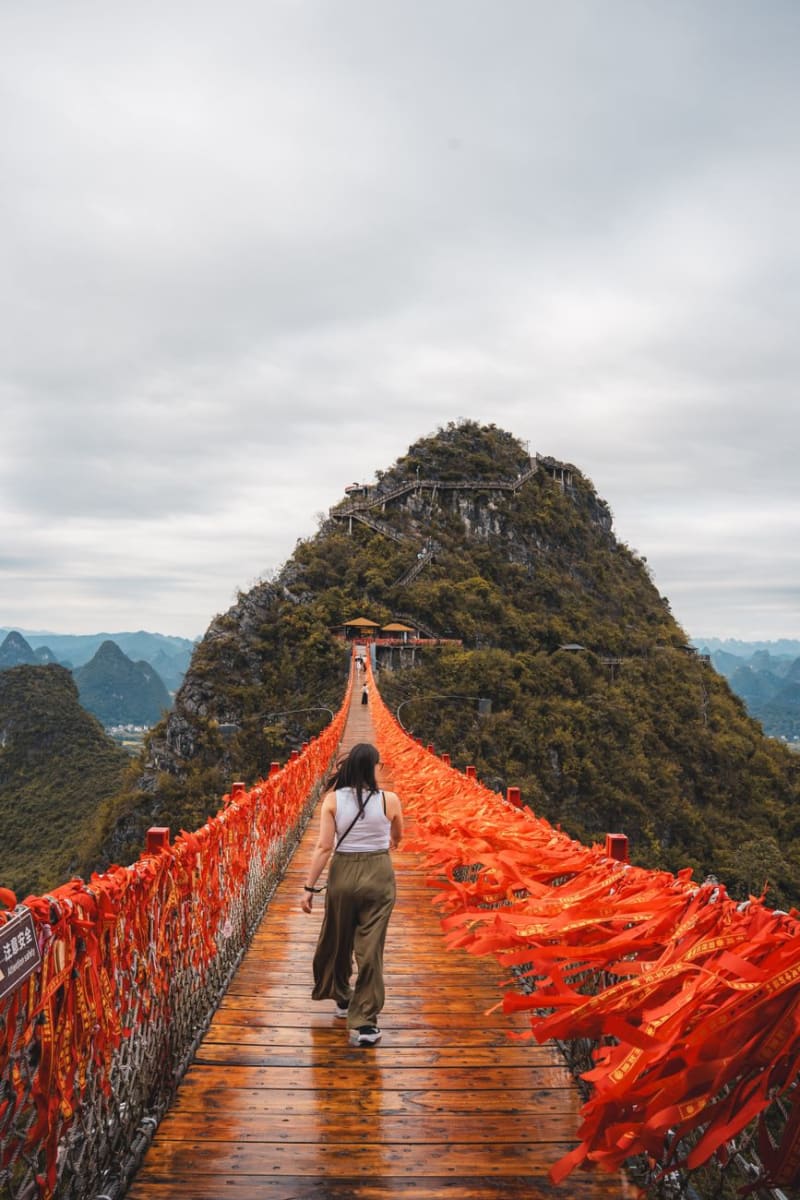 guilin
Xianggong Hill
A modest hill above the Li River near Xingping that delivers the single greatest karst panorama in Guilin — if you are willing to climb it in the dark and gamble on the mist.
Explore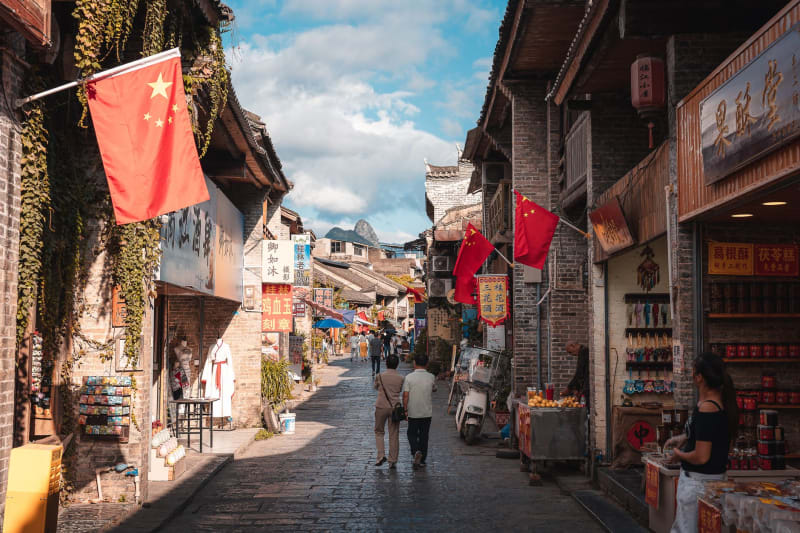 guilin
Xingping
The village on China's twenty-yuan note, where cormorant fishermen still work the river at dusk and the karst view earns its fame.
Explore guilin
Yangshuo
The karst countryside outside this frenetic tourist town is so beautiful it almost justifies the chaos inside it.
Explore