Seven Star Park
"I came expecting a park and found a compressed version of everything Guilin means."
Guilin's vast urban park contains karst peaks, a millennium-old cave, Tang dynasty stone inscriptions, and every retired citizen in the city doing tai chi before nine in the morning.

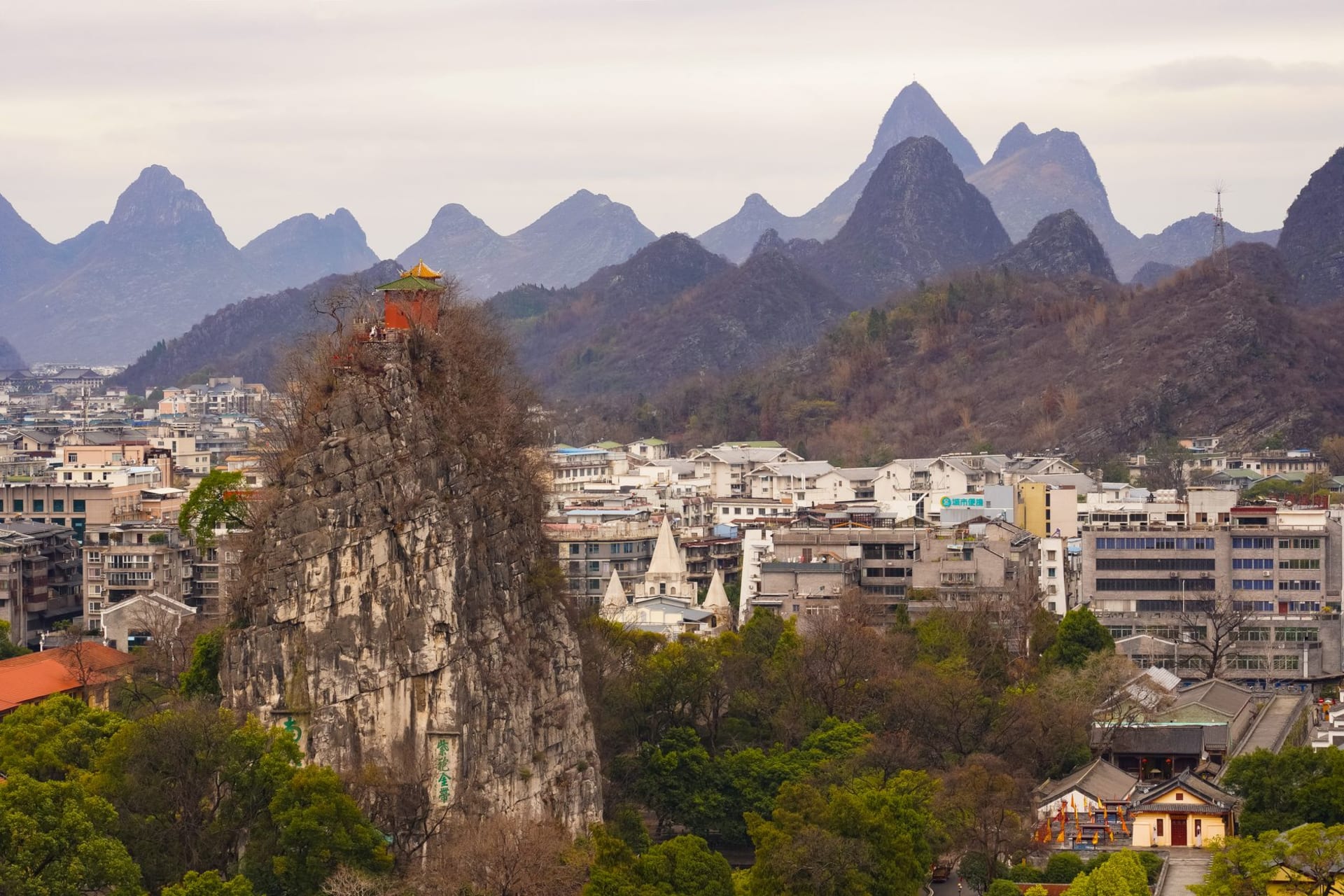
Seven Star Park — Qixing Gongyuan — takes its name from the arrangement of its seven karst peaks, which are said to mirror the pattern of the Big Dipper constellation when viewed from above. I was unable to verify this from ground level, but the peaks are impressive regardless of their celestial correspondence: sharp, heavily forested limestone towers rising from relatively flat parkland, the same geology as the countryside to the south but encountered here in the middle of a city, surrounded by jogging paths and retired couples playing cards.
I arrived early, just after seven, which is the correct time for a Chinese urban park. The morning culture here is a revelation if you are accustomed to parks as places for passive recreation. By seven-fifteen I had passed a group of women doing synchronized fan dancing in a clearing, an old man practicing calligraphy on concrete with a brush dipped in water — the characters appearing in wet darkness and then evaporating in the morning sun — a retired couple playing a two-stringed erhu facing each other under a banyan tree, and approximately forty people doing various forms of tai chi at varying speeds. The park operates as a living room for the surrounding neighborhoods, which is what parks are for, and Guilin has figured this out.

The park contains Seven Star Cave — Qixing Yan — which is one of Guilin’s larger cave systems and has been visited and inscribed by poets and officials since the Tang dynasty. The inscriptions are the remarkable part: more than 200 of them, carved into the cave walls over fourteen centuries, ranging from couplets praising the scenery to the practical notation of administrative visits. Some are signed by names recognizable from the classical canon. Others are anonymous. Standing in front of a seventh-century inscription in a cave illuminated by modern LED lights, reading a Tang dynasty poet’s description of the same stalactites I was looking at, produced a particular kind of temporal vertigo I have not experienced anywhere else.
The Camel Hill — Tuofeng — is the park’s most photographed peak, named for its double-humped profile and most beautiful when reflected in the pond below it. In the morning, before the tour groups arrive, the reflection is clear enough to mistake for the real thing. I stood on the bridge over the pond for a long time trying to determine which version of the image was more real and concluded that both were equally so, which is either a philosophical insight or a sign that I had not slept enough.

The park also contains a small zoo that I walked through more quickly than intended when I saw the conditions, and a section of what remains of the ancient city wall that once enclosed Guilin. The wall fragments are unassuming — rough stone, partially reconstructed, without the grandeur of Xi’an or Beijing — but they contextualize the park within the city’s longer history. Guilin was a garrison town and provincial capital for centuries; the park sits on ground that has been used and valued and inscribed with meaning for as long as the city has existed.
When to go: Come early morning, any day of the week. The park is at its best between seven and nine, when the local morning routines are in full swing and the tour groups have not yet arrived. Weekday mornings are particularly quiet. The park is open year-round; in winter the leafless trees reveal the karst peaks more clearly against the sky, which has its own austere beauty. Skip the zoo.
Keep exploring
More from Guilin
 guilin
Silver Cave
A karst cave near Lipu where calcite formations glint like metal under the lights, far from Guilin's crowded tourist circuit.
Explore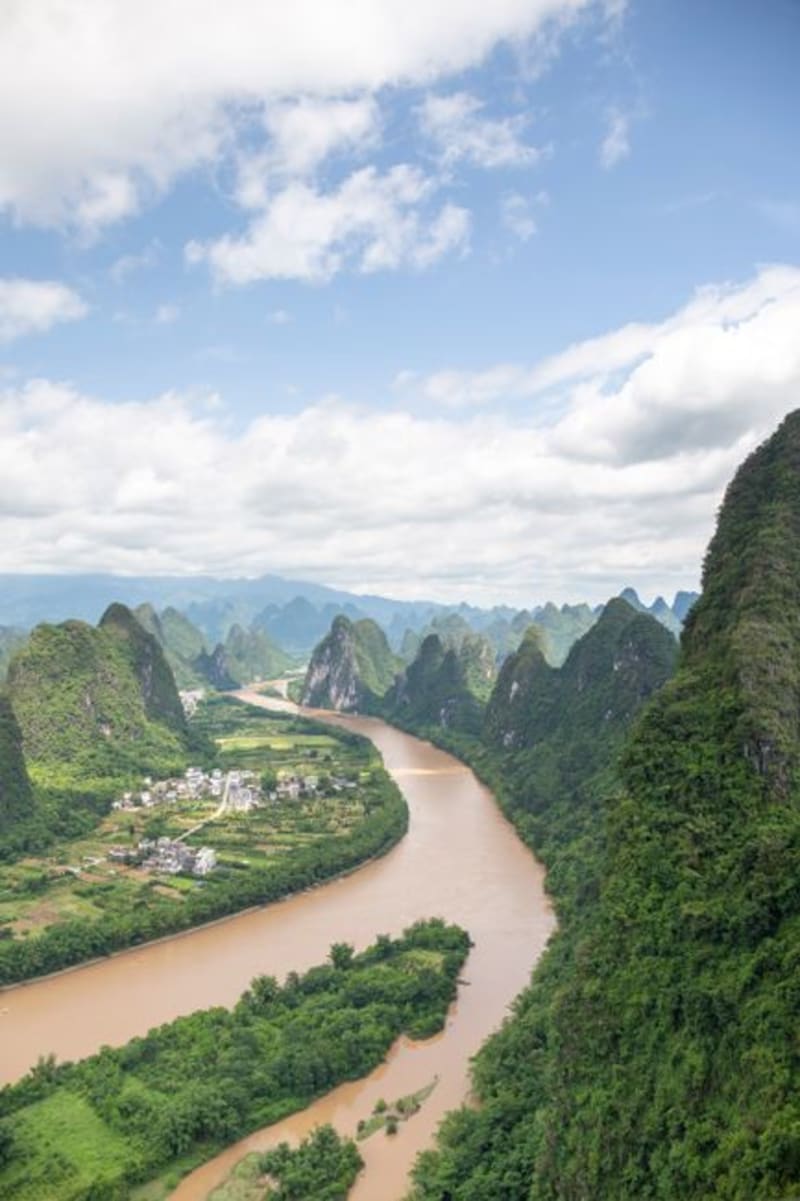 guilin
Ten-Mile Gallery
A quiet karst-lined road between Guilin and Yangshuo that unrolls like a painted scroll, best seen slowly, by bike.
Explore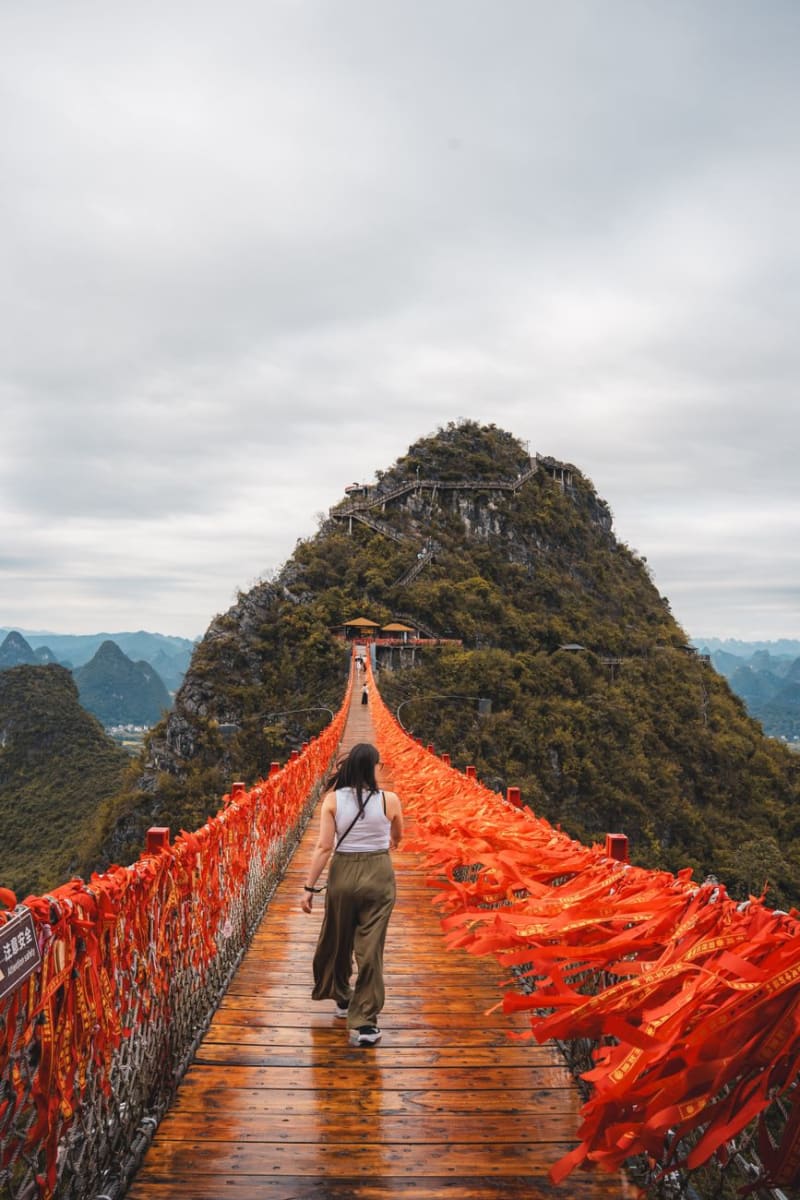 guilin
Xianggong Hill
A modest hill above the Li River near Xingping that delivers the single greatest karst panorama in Guilin — if you are willing to climb it in the dark and gamble on the mist.
Explore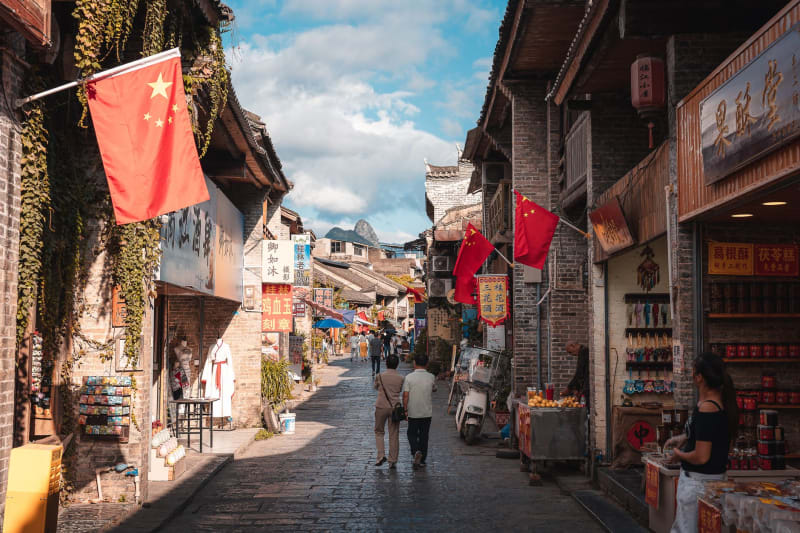 guilin
Xingping
The village on China's twenty-yuan note, where cormorant fishermen still work the river at dusk and the karst view earns its fame.
Explore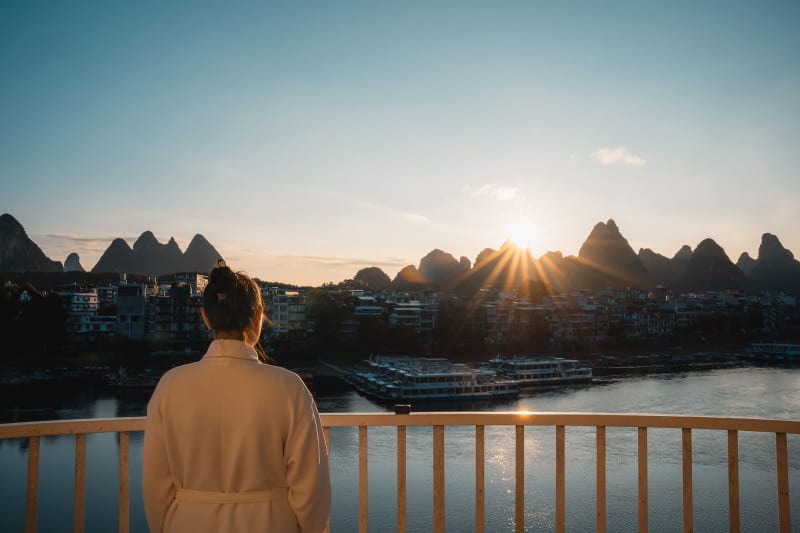 guilin
Yangshuo
The karst countryside outside this frenetic tourist town is so beautiful it almost justifies the chaos inside it.
Explore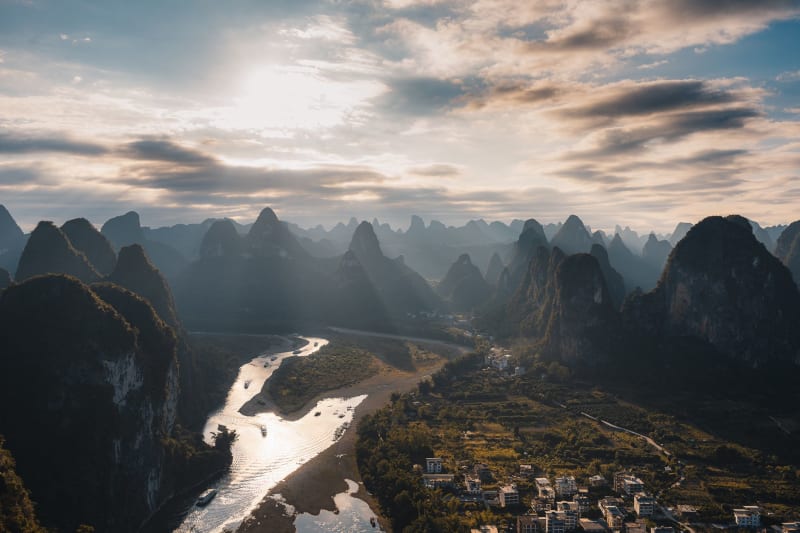 guilin
Yulong River
The Li River's quieter sibling winds through karst countryside on bamboo rafts, past stone bridges older than memory and fields nobody has photographed yet.
Explore