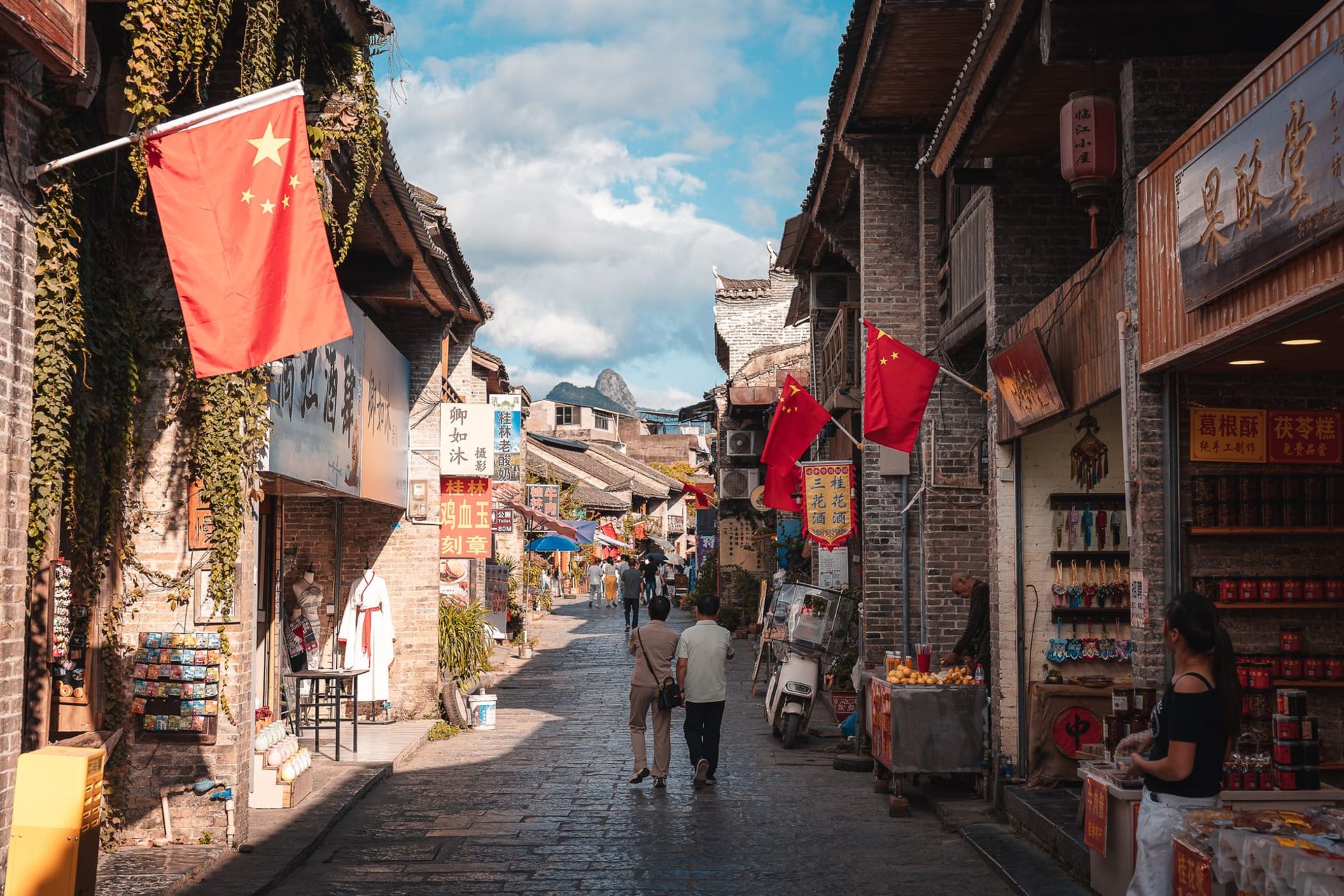
Xingping
"I had been carrying the view in my wallet for years before I finally stood in it."
The village on China's twenty-yuan note, where cormorant fishermen still work the river at dusk and the karst view earns its fame.

I had the twenty-yuan note in my pocket when I arrived in Xingping. I had been carrying it around since Guilin — one of those habits that seems slightly ridiculous until the moment it does not. The note shows a bend in the Li River with limestone peaks arranged behind it in a sequence that looks more like a painter’s composition than anything geology should be allowed to produce. Standing on the hillside above the village, looking down at the same bend in the same early light, I held the note up and compared. The river had moved slightly — a centimeter of bank eroded or accreted since the photograph was taken — but the peaks were all there, unhurried, doing exactly what they had been doing for ten million years.
Xingping is smaller than Yangshuo and quieter in proportion. Its old quarter — a grid of Ming and Qing dynasty buildings with dark timber facades and carved wooden screens — runs just a few streets long before the town dissolves into river and rice paddy. The morning market happens in a narrow lane between crumbling plaster walls: women selling river shrimp, towers of lotus root, bundles of water spinach still wet from the fields. The smell is mud and ginger and something sweet I never identified. I stood there for a long time just watching transactions happen in a language I did not understand, which is one of the better ways to exist in a foreign country.

The cormorant fishermen come out in the evening. They pole bamboo rafts into the center of the river while cormorants — black, prehistoric-looking birds with rings around their throats that prevent them from swallowing the fish they catch — dive and surface alongside. It is a practice that has been going on here for a thousand years, though I am aware that some of the evening demonstrations are partly for tourists. The man I watched from the bank seemed uninterested in being watched. He worked quietly, methodically, barely looking at the birds. The river was orange and green in the last light. A few minutes after sunset the mountains turned mauve and then the color went out of everything.
Local food in Xingping runs to river fish and rice noodles. The snail noodle soup — luosifen — appears on menus everywhere in Guilin, but in Xingping I ate it from a cart near the river at midday: the broth deeply fermented and sour, the noodles thick, the whole thing topped with peanuts and dried bean curd that crumbled between the teeth. It smells, as the locals will cheerfully warn you, terrible. It tastes extraordinary. I ate two bowls.

The hike up to the viewpoint above the famous bend takes twenty minutes on a steep path through scrubby vegetation. Most people come with their twenty-yuan notes and take the photograph and leave. I went in the other direction after — along a ridge trail that followed the contour of the hills for an hour and offered the same river bend from fifteen different angles, each one slightly different, each one worth stopping for. By the time I came down, the village was setting up its evening lights and the air smelled like charcoal and chili oil, and I was deeply glad I had not taken the bus straight back to Yangshuo.
When to go: Xingping rewards the shoulder seasons. March and April bring morning mist that rises off the river and gives the karst view an ink-wash quality. September and October are cleaner and brighter. Avoid July and August — the crowds arrive with the summer heat and the famous viewpoint fills with selfie sticks by eight in the morning.
Keep exploring
More from Guilin
 guilin
 Yangshuo
The karst countryside outside this frenetic tourist town is so beautiful it almost justifies the chaos inside it.
Explore guilin
 Yulong River
The Li River's quieter sibling winds through karst countryside on bamboo rafts, past stone bridges older than memory and fields nobody has photographed yet.
Explore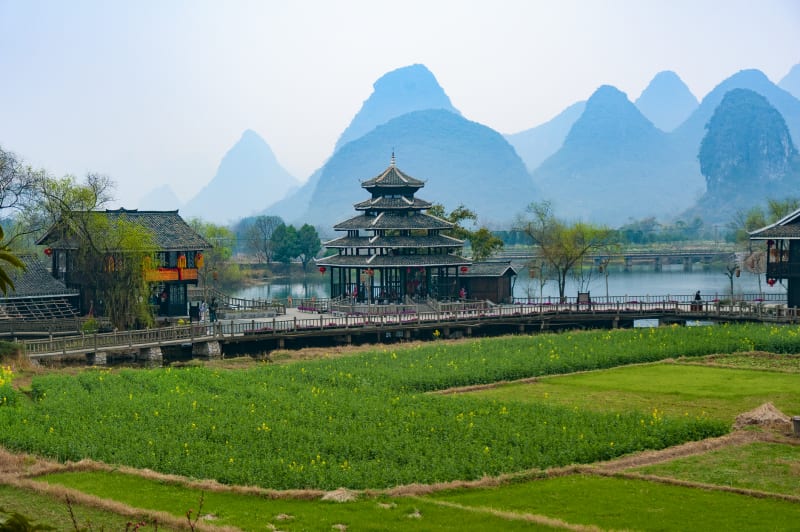 guilin
 Daxu Ancient Town
One of China's best-preserved riverside trading towns sits eighteen kilometers from Guilin on the Li River, mostly unvisited, its Ming dynasty streets intact and its residents unbothered.
Explore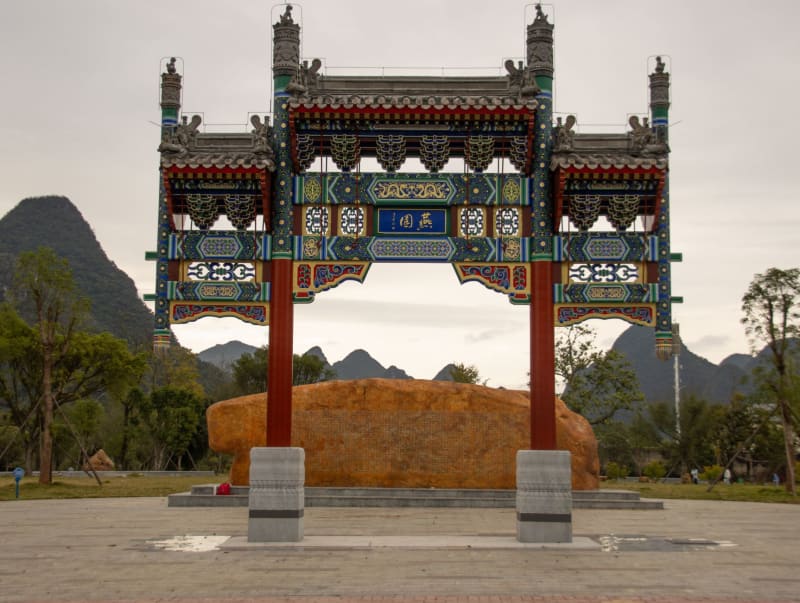 guilin
 Elephant Trunk Hill
Guilin's most recognizable limestone formation rises from the river junction like a pachyderm mid-drink, and the arch it forms is more perfectly geological than any invention.
Explore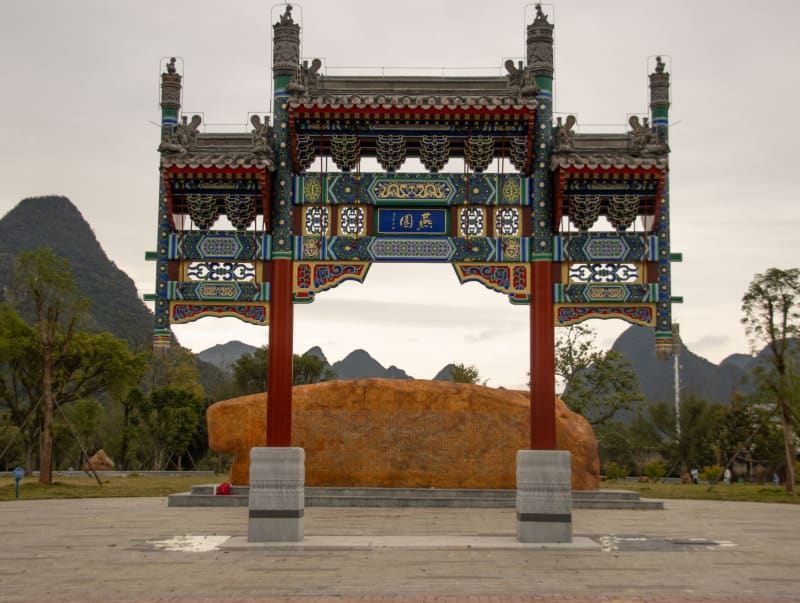 guilin
 Fuli Ancient Town
A riverside Ming dynasty town where artisans still paint folding fans by hand and the cobblestone lanes have not yet been smoothed into a tourist promenade.
Explore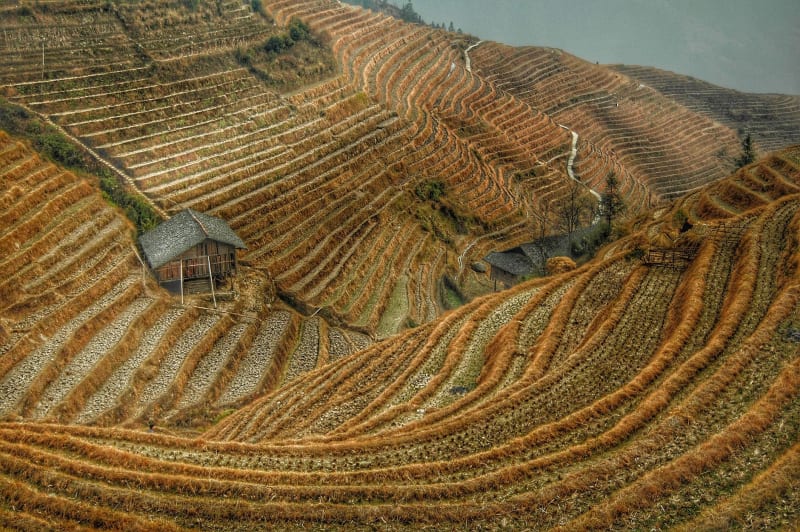 guilin
 Longji Rice Terraces
Centuries of Zhuang and Yao farming carved these dragon-spine ridges into a living landscape that changes color with every season.
Explore