
Longji Rice Terraces
"Patience carved this mountain into something more beautiful than the mountain already was."
Centuries of Zhuang and Yao farming carved these dragon-spine ridges into a living landscape that changes color with every season.

The bus from Guilin climbs for two hours through increasingly dense forest, the road switchbacking up limestone ridges until, quite suddenly, the trees open and the terraces appear. Nothing quite prepares you for the scale of it. The Dragon’s Backbone — Longji in Mandarin, Lóng Jǐ — is not one terrace or ten or a hundred. It is an entire mountain range reshaped, ridge after ridge of flooded paddies stepping down the slopes in curves that follow the land’s contour rather than impose upon it. The Zhuang and Yao people have been farming these slopes for seven hundred years. The mountain learned to cooperate.
I went in late September, when the paddies were still green but the edges had started to turn. A week later, I was told, the whole thing would go gold. I almost wish I had waited, but the green version has its own particular completeness — the color of deep, unhurried growth, the color of somewhere that takes the long view. From the viewpoint above Ping’an village, looking out at the full spread of the terraces in morning light with mist sitting in the lower valleys, I stood for a long time doing nothing in particular. Sometimes that is the point of a place.

The villages embedded in the terraces are two distinct communities with distinct characters. Ping’an is the Zhuang village — easier to access, more organized for visitors, with guesthouses and restaurants strung along the main trail. Dazhai, further along the ridge, belongs to the Red Yao, and the women there are the reason most travelers make the longer hike. The Red Yao tradition holds that a woman’s hair is her greatest beauty and is cut only once in a lifetime — at age eighteen — and then kept, wound around the head in elaborate arrangements that can reach extraordinary lengths. Walking through Dazhai in the morning, passing women in indigo-dyed cloth doing ordinary domestic tasks with their hair coiled and pinned, felt like being granted access to something very private.
Food on the mountain is simple and honest. The guesthouses serve sticky rice steamed in bamboo tubes, river fish from the paddies, and winter melon soup that comes to the table still boiling in an earthenware pot. The bamboo rice is the thing to eat: the grains absorb the bamboo flavor as they cook, and you split the tube open at the table and eat the rice still fragrant, slightly sweet, faintly green. I ate it for three consecutive meals without feeling any need for variety.

Staying overnight on the mountain is one of those decisions that seems mildly inconvenient until you wake up at five-thirty with no one else awake and the terraces below still full of overnight mist and the first light coming in horizontally from the east. The tourist crowds that arrive on the morning buses had not yet reached the viewpoints. The farmers were already in the paddies, moving between the rows in the half-light with a slowness that matched the mountain’s own pace. That hour cost nothing extra. It just required staying.
When to go: Each season offers something different. April to May brings flooded paddies filled with water that reflects the sky — a mirror landscape. June to September is full green, lush and deep. October is golden harvest season, arguably the most photogenic. Winter strips the paddies bare and reveals the pure geometry of the terraces without color — stark and beautiful in a completely different register. Avoid national holiday weeks in October when the trails fill entirely.
Keep exploring
More from Guilin
 guilin
Moon Hill
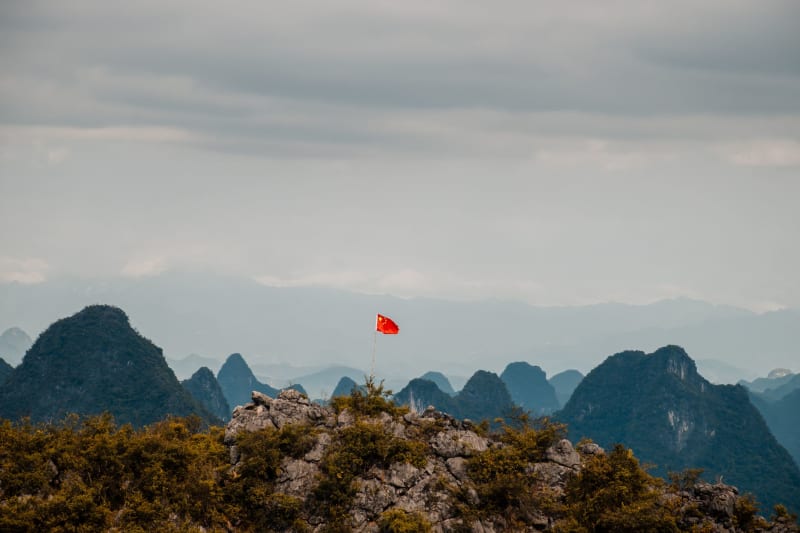
A single limestone arch punched through a karst peak above Yangshuo, requiring forty minutes of sweating to reach and offering views that make you forget the sweating entirely.
Explore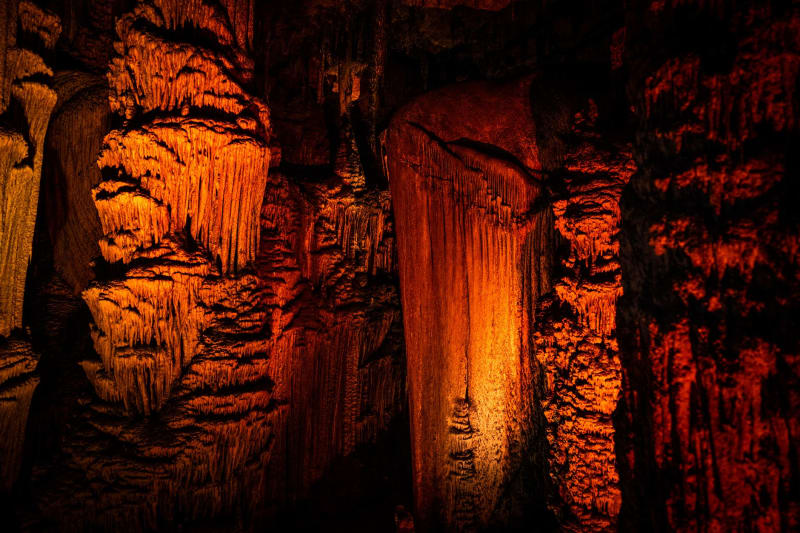 guilin
Reed Flute Cave
An underground cathedral of stalactites and limestone formations lit in colors no cathedral architect would have dared, hidden inside a hill at the edge of Guilin city.
Explore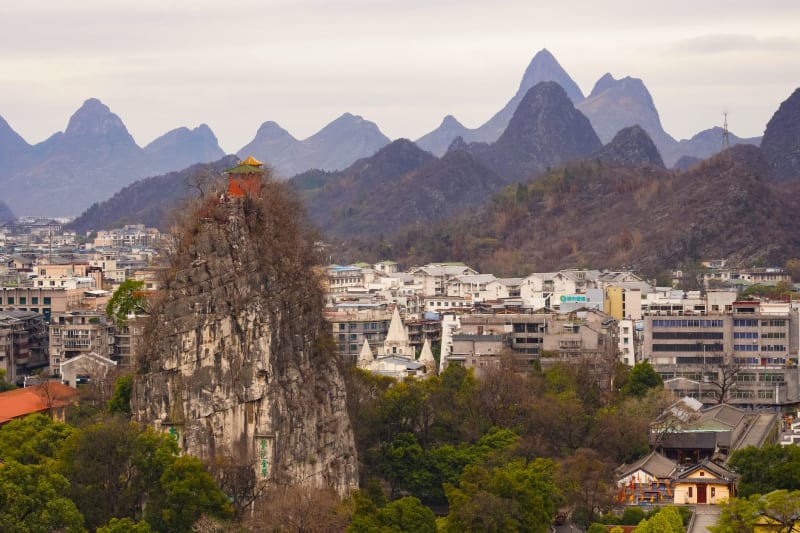 guilin
Seven Star Park
Guilin's vast urban park contains karst peaks, a millennium-old cave, Tang dynasty stone inscriptions, and every retired citizen in the city doing tai chi before nine in the morning.
Explore guilin
Silver Cave
A karst cave near Lipu where calcite formations glint like metal under the lights, far from Guilin's crowded tourist circuit.
Explore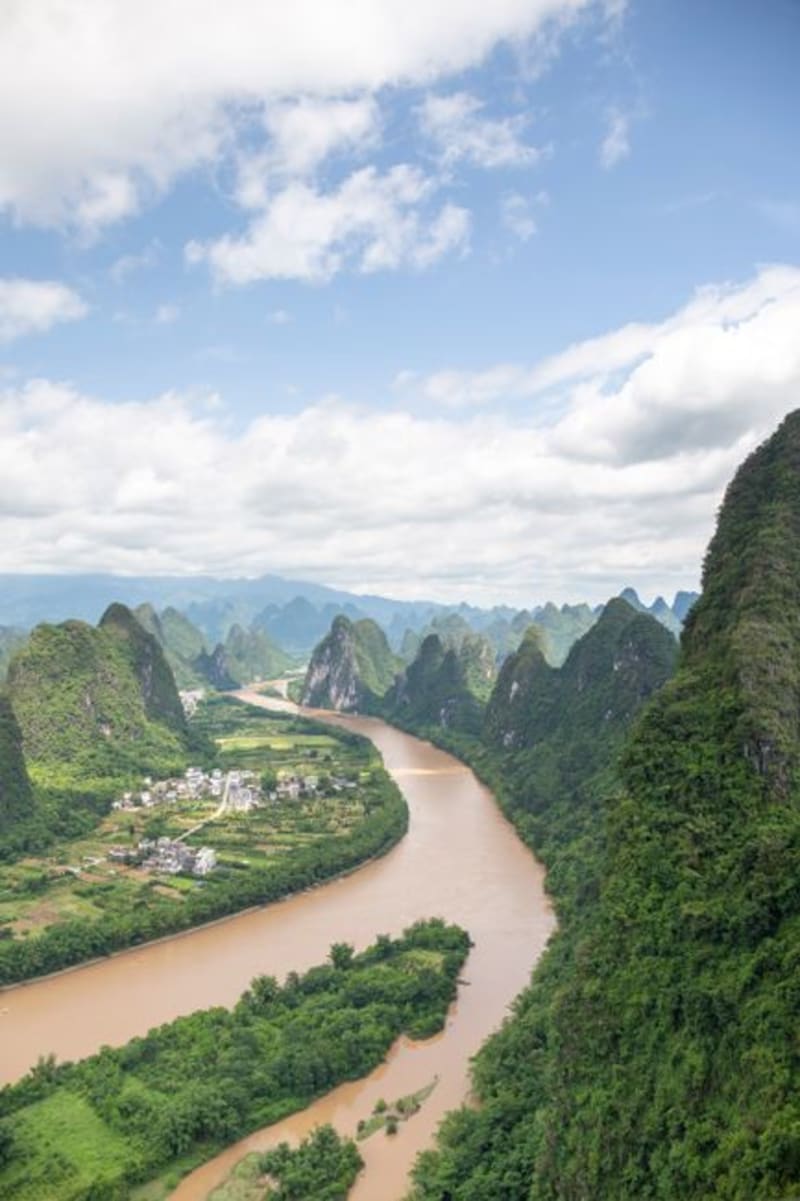 guilin
Ten-Mile Gallery
A quiet karst-lined road between Guilin and Yangshuo that unrolls like a painted scroll, best seen slowly, by bike.
Explore guilin
Xianggong Hill
A modest hill above the Li River near Xingping that delivers the single greatest karst panorama in Guilin — if you are willing to climb it in the dark and gamble on the mist.
Explore