
Roma Monastery
"The monks left in 1525 and nobody has found a good reason to fix the roof since."
The roofless ruins of a twelfth-century Cistercian monastery standing unguarded in a farm field at the island's geographical center, where silence is interrupted only by wind and the occasional outdoor theater performance.

I found Roma Monastery by accident, on a bicycle detour inland from the main north-south road. I had been following a sign that said “Klostret” and expecting something small and managed, a ruin with an information board and a parking lot. What I found instead, in the middle of a flat agricultural landscape of sugar beet and barley, was a set of stone arches of considerable scale rising out of grass and wildflowers, with no fence, no entrance fee, no one present at all. I left my bicycle against a wall and walked into the nave through what was once the west door, now just an opening, and stood in the roofless interior and listened to the wind move through the Gothic arches above me.

The monastery was founded in 1164 by Cistercian monks from the German house of Nydala, making it one of the oldest in Scandinavia. The church was large — you can still read the scale of it from the surviving walls and the footprint of the columns — and the complex once included a chapter house, cloister, refectory, and dormitory, most of which now survive only as foundation stones half-hidden in the grass. The monks managed a substantial agricultural estate across the Gotland interior, and their work transformed the landscape; they drained the marshes, introduced new crops, and ran the island’s mills. They were expelled in 1525 during the Reformation, and the monastery was used as a storage facility, then a stable, then gradually stripped of its cut stone by locals who found it a convenient quarry over the following centuries. The arches survived because they were too complicated to take apart.
In summer, the ruins host an outdoor theater festival — Roma Teater — that uses the arches as a natural stage. I was there too early in the season for performances, but I saw the seating setup: wooden benches arranged in the grass facing the surviving east wall, and I imagined what it must look like at dusk with the stone lit from below and the Baltic sky darkening behind the arches. Outdoor theater works best when the architecture has already done the heavy lifting, and these walls have had nine hundred years to practice.

The village of Roma itself, half a kilometer away, is quiet and agricultural — a cooperative center, a café that opens on weekday mornings, a church. The monastery is the reason to come, and the reason to come is specifically the quality of the abandonment. Unlike Visby’s church ruins, which are carefully maintained within a UNESCO World Heritage context, Roma Kloster sits in a field and gets wet in the rain and has moss growing on everything and is better for it. I cycled away from it slowly, stopping once to look back at the arches through a gap in the hedge, and they looked like a natural feature of the landscape, which perhaps, after nine hundred years, they are.
When to go: May through September, when the grass inside the ruins is green and the sky above the arches rewards every upward glance. Roma Teater runs performances in July and August — check their schedule online if you want to combine culture with the ruins. The monastery is an easy bicycle day trip from Visby, about twenty flat kilometers inland through agricultural countryside.
Keep exploring
More from Gotland
 gotland
 Stora Karlsö
A wind-scoured limestone island off Gotland where guillemots crowd the cliffs and Stone Age hands once shaped bone tools in the caves.
Explore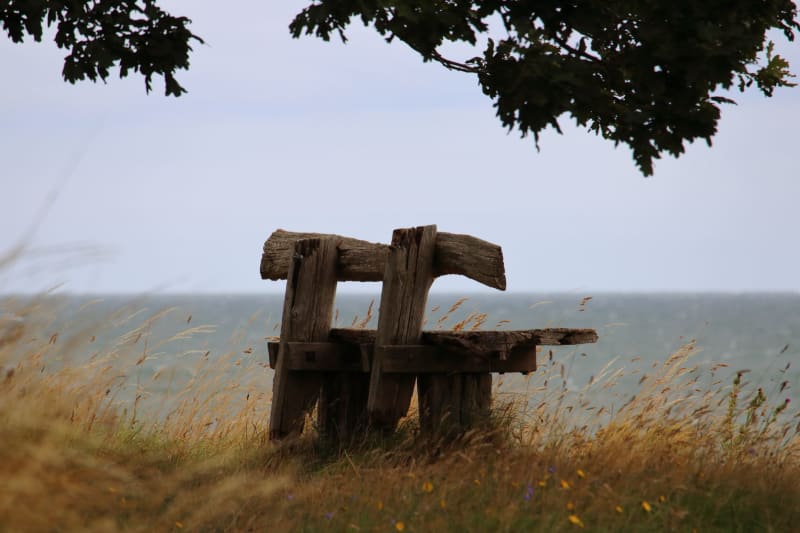 gotland
 Tofta
A long sweep of white Baltic sand backed by pine forest on Gotland's west coast, where Swedish families return summer after summer with a loyalty that other beaches simply cannot explain.
Explore gotland
 Torsburgen
Sweden's largest Iron Age hill fort, its rampart walls swallowed by forest, still holding the quiet of a refuge nobody had to use for long.
Explore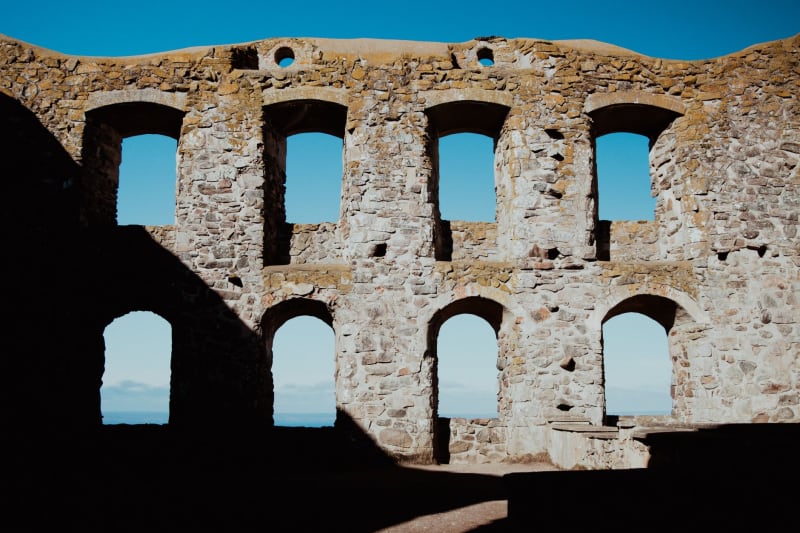 gotland
 Visby
The best-preserved medieval walled city in Scandinavia, where rose bushes grow over church ruins and the Baltic light makes everything glow amber at dusk.
Explore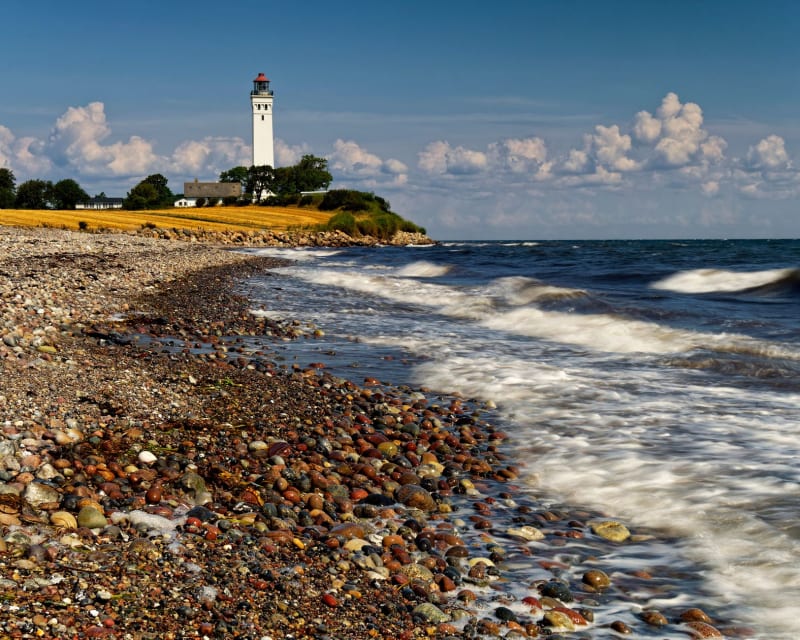 gotland
 Bunge
A quiet northern village with a thirteenth-century limestone church full of rediscovered medieval frescoes and an open-air museum of traditional Gotland farm buildings, where the island's long agricultural past is still legible in the landscape.
Explore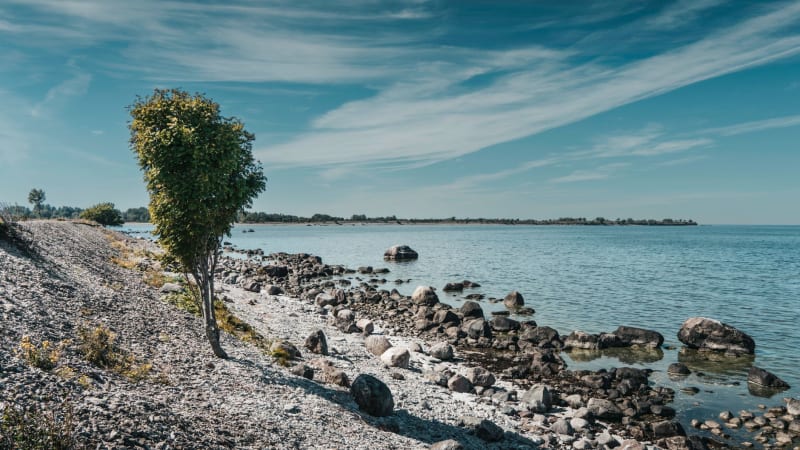 gotland
 Fårö
The spare, windswept island north of Gotland where Ingmar Bergman chose to live and die, and where the landscape strips everything down to stone, sky, and the sound of the Baltic.
Explore