
Bijilo Forest Park
"One of them unzipped the side pocket of my backpack before I'd even noticed he was there."
A small coastal reserve of palms and mahogany near the resort strip where habituated green vervet monkeys will practically walk up and inspect your bag.

Bijilo Forest Park sits just a few minutes’ walk from the big resorts on the Senegambia strip, which is almost funny once you’re inside it — you go from sunbed rows and pool bars to actual jungle canopy in about the time it takes to cross a road. We went on a whim one morning when Lia got restless with beach days, and it turned out to be one of those small, unglamorous outings that stuck with us more than half the “must-see” spots on our list.
The park is tiny by reserve standards, maybe six or seven hundred acres, but it’s dense with towering rhun palms and gnarled old mahogany, and there are marked trails looping down toward the beach. What everyone actually goes for, though, is the green vervet monkeys, and they know it. They’re fully habituated to people, which sounds charming until one is sitting on the trail marker three feet away staring you down, clearly assessing whether you’re carrying fruit. We also spotted red colobus monkeys higher in the canopy, shier and rustier-colored, and a decent handful of birds — hornbills mostly, plus a green woodhoopoe that our guide got weirdly excited about.

There’s a local guide system at the entrance and I’d actually recommend hiring one, not because you need it to find monkeys — they find you — but because ours pointed out termite mounds, medicinal plants, and a monitor lizard sunning itself that we’d have walked right past. It cost us next to nothing and he clearly knew the terrain intimately, down to which fruiting trees the vervets favor that week.
The trail eventually spits you out onto a quiet stretch of beach at the park’s edge, which felt like a small reward after the humidity of the forest interior. We sat there for a while watching fishing boats work the shoreline before looping back. It’s not a dramatic wilderness experience — you can hear the resort’s pool music faintly in parts — but that contrast is sort of the point, this pocket of real forest surviving right against the development.

When to go: Early morning is best, both for cooler walking temperatures and because the monkeys are most active and visible before the midday heat sends everyone, animal and human, looking for shade.
Keep exploring
More from The Gambia
 gambia
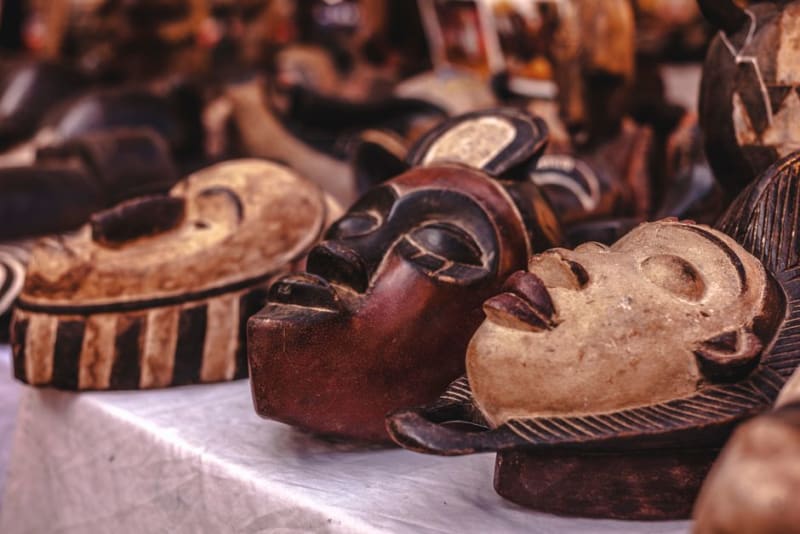
Brikama
An inland market town thick with woodcarving workshops, where the sound of chisels on mahogany carries down the street before you even reach the craft market.
Explore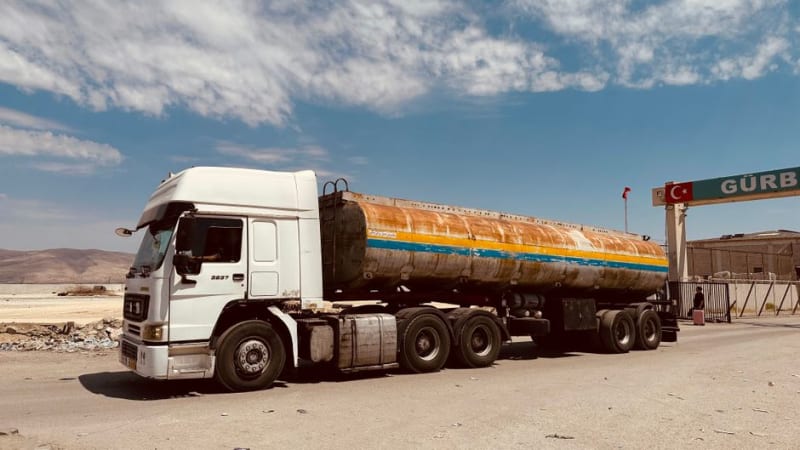 gambia
Farafenni
A dusty North Bank crossroads town whose whole rhythm is set by the border traffic to Senegal passing through its market and taxi park.
Explore gambia
Janjanbureh
A colonial river island town — once a slave-trade hub, now a quiet place where the Gambia River wraps around faded history.
Explore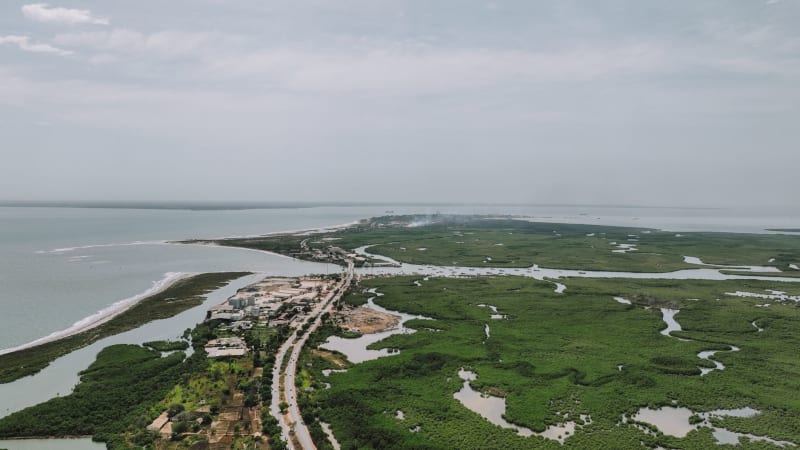 gambia
Jinack Island
A remote barrier island with sea-turtle nesting beaches, no paved roads, and the kind of solitude that resets something in you.
Explore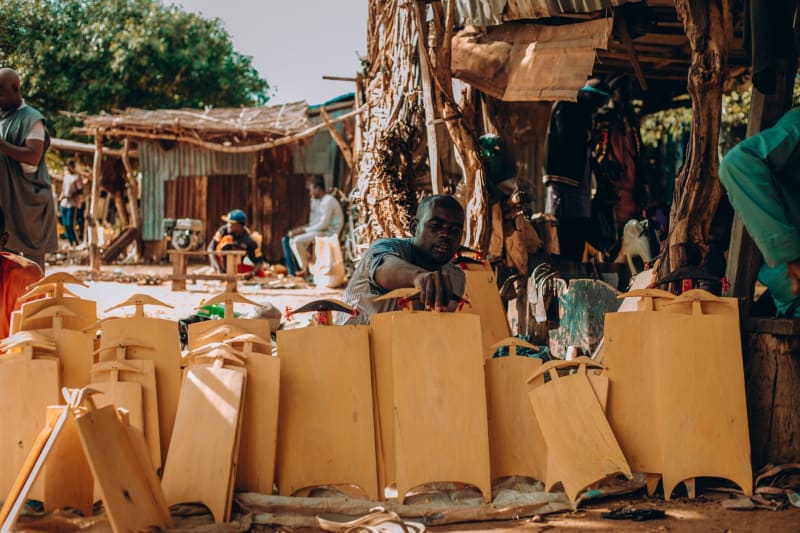 gambia
Kartong
The southernmost village on the Gambian coast where the beach ends at the Senegalese border and time runs at the river's pace.
Explore gambia
Kiang West National Park
The Gambia's largest national park, where laterite cliffs drop to mangrove shore and roan antelope walk through a silence that feels prehistoric.
Explore