Brikama
"The carver let me hold the half-finished mask and I could feel exactly where his hands had already been."
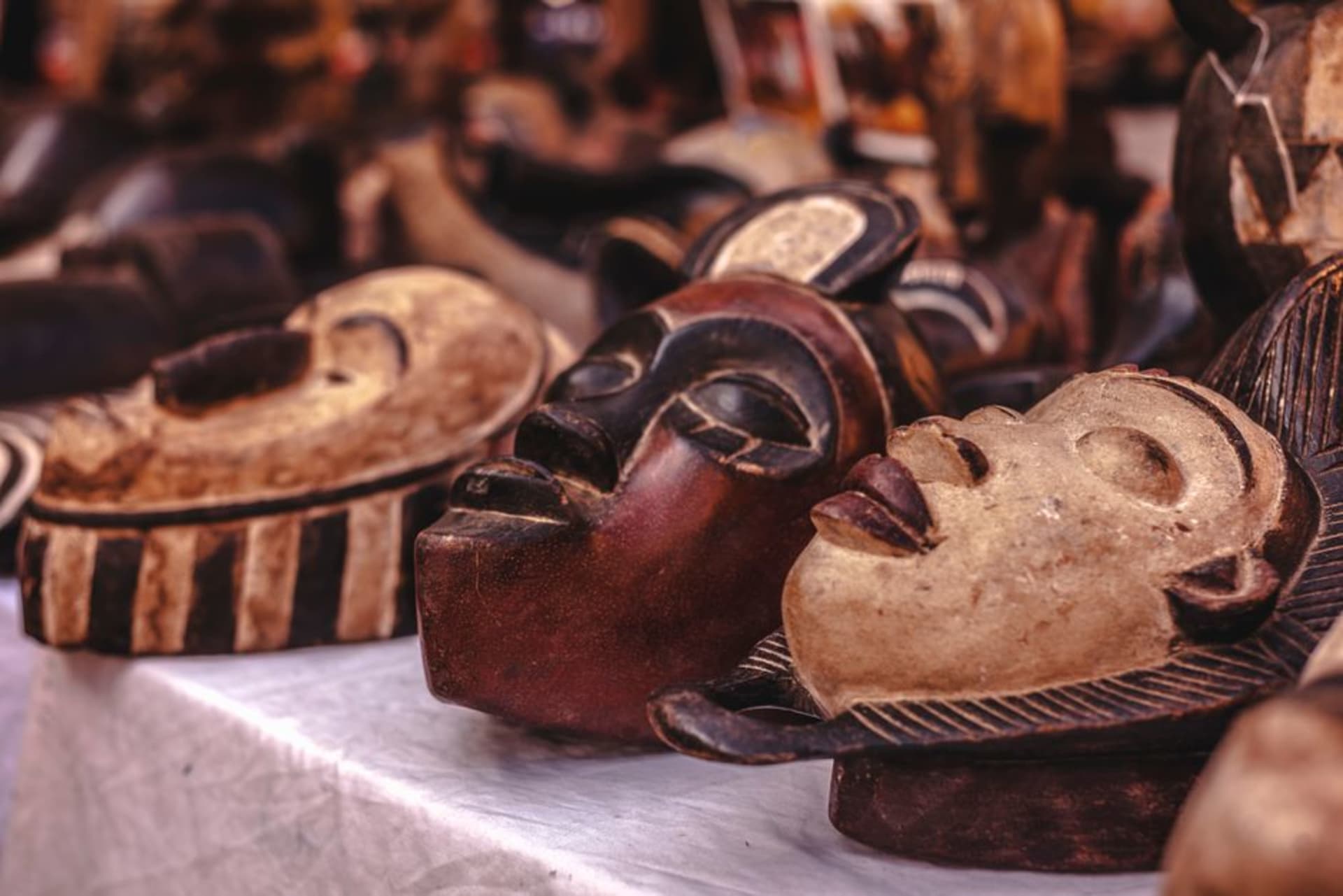
An inland market town thick with woodcarving workshops, where the sound of chisels on mahogany carries down the street before you even reach the craft market.

Brikama isn’t a place anyone puts on a postcard, and that’s kind of why I liked it. It’s the biggest town outside the Greater Banjul area, a real working town with a sprawling produce market, motorbike taxis weaving through dust, and — the reason most travelers detour here — one of the best-known woodcarving centers in the country. We hired a taxi from the coast for the day, maybe forty minutes inland, and I remember the shift from beach-town English being spoken everywhere to a thicker mix of Mandinka and Wolof the moment we got out of the car.
The craft market is the obvious draw: stall after stall of carved masks, ebony figures, drums, and furniture, much of it made right there by artisans who’ll happily let you watch. I spent a long while at one stall where a guy named Lamin was working on a hardwood figure with hand tools that looked older than he was, and when I asked how long he’d been carving he laughed and said since before he could read. There’s a real haggling culture here, more so than the tourist shops on the coast, and I don’t think we got a “good” price on anything, but it felt more honest than the fixed-markup resort stalls.

What surprised me was how little of Brikama is actually about tourists. Wander two streets off the craft market and you’re in the produce section, sacks of rice and dried fish and enormous piles of chili peppers, women calling out prices, nobody paying us much attention at all. Lia bought some fabric off a stall run by a woman who does tailoring on the spot, and we ended up sitting with her for twenty minutes drinking attaya, the sweet foamy green tea that gets poured back and forth between glasses to build up froth, while she finished the hem.
It’s also worth knowing Brikama has a reputation, fair or not, as a hub for some of the country’s Afro-manding music scene — we didn’t manage to catch anything live that day, but a local told us weekend evenings sometimes have kora players around informally. I’d go back just to try.

When to go: Go on a weekday morning when the market is at full swing and it’s still cool enough to wander comfortably before the afternoon heat sets in — Brikama’s craft workshops run year-round regardless of season.
Keep exploring
More from The Gambia
 gambia
Farafenni
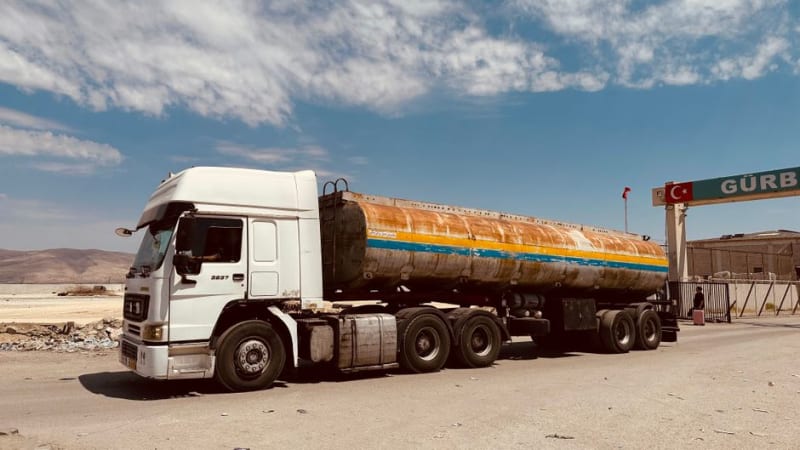
A dusty North Bank crossroads town whose whole rhythm is set by the border traffic to Senegal passing through its market and taxi park.
Explore gambia
Janjanbureh
A colonial river island town — once a slave-trade hub, now a quiet place where the Gambia River wraps around faded history.
Explore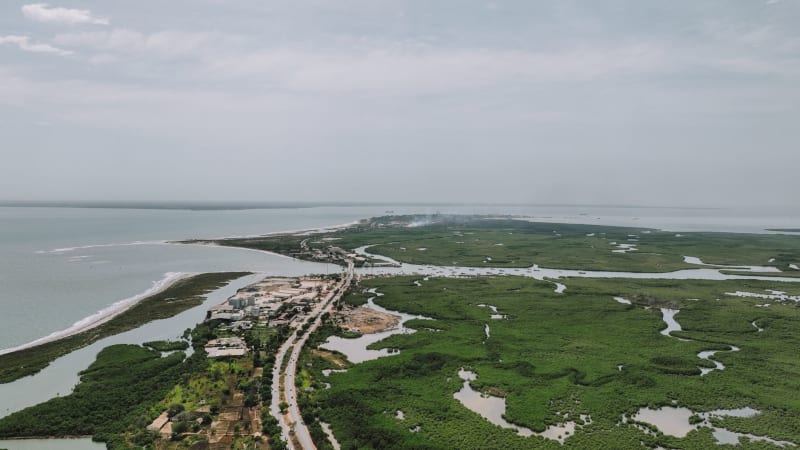 gambia
Jinack Island
A remote barrier island with sea-turtle nesting beaches, no paved roads, and the kind of solitude that resets something in you.
Explore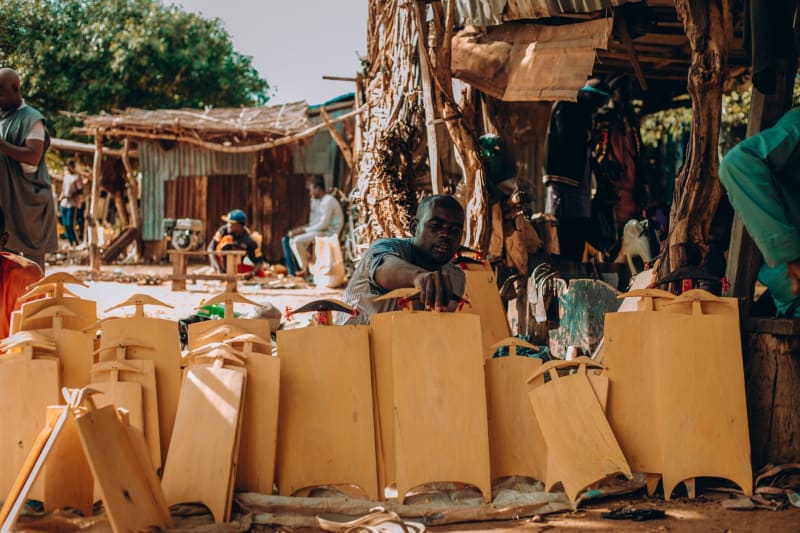 gambia
Kartong
The southernmost village on the Gambian coast where the beach ends at the Senegalese border and time runs at the river's pace.
Explore gambia
Kiang West National Park
The Gambia's largest national park, where laterite cliffs drop to mangrove shore and roan antelope walk through a silence that feels prehistoric.
Explore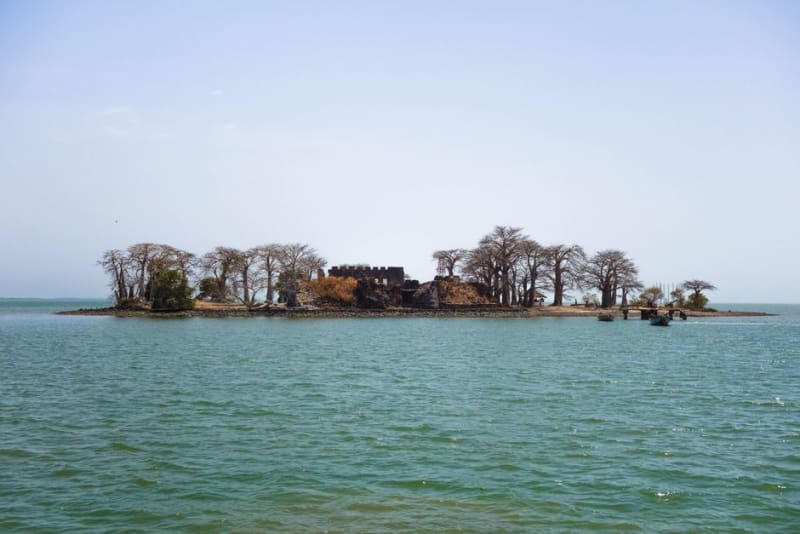 gambia
Kunta Kinteh Island
A crumbling fort on a mangrove islet in the Gambia River, the place that gave Alex Haley's 'Roots' its name and its weight.
Explore