Carpentras
"Behind the plainest door on the street sits a synagogue older than most of the cathedrals I've visited in France."
A market town with the oldest synagogue still in use in France tucked behind an ordinary-looking door, and a Friday market smelling so strongly of truffle in winter that I followed my nose before I found the stall.

Carpentras doesn’t announce itself the way Avignon or Arles does, and that’s exactly why I liked it. It was the historic capital of the Comtat Venaissin, a papal territory administered from Avignon for nearly five centuries, and that odd legal status is the reason for the town’s most surprising landmark: a synagogue, tucked behind an unmarked door just off Place Maurice Charretier, that has been in continuous use since the 1360s and is the oldest in France still functioning today. Jewish communities were tolerated under papal rule here in a way they weren’t in the rest of the kingdom, and the building’s quiet, almost hidden street presence is a physical trace of that history — no grand façade, just a discreet entrance leading down to a ritual bath and up to a gilded 18th-century sanctuary.
A synagogue, a Roman arch, and a cathedral, all within a few minutes’ walk
A few streets over stands the Arc Romain, a first-century triumphal arch that predates the synagogue by well over a thousand years and is now half-swallowed by the archbishop’s later palace built around it — you have to walk right up to the base to see its worn reliefs of chained captives, one of the oldest Roman monuments in this part of Provence. The Cathédrale Saint-Siffrein next door has its own oddity, a side doorway known as the Porte Juive that was reportedly used for Jewish converts entering to be baptized, a detail that made the whole town feel like it was quietly narrating centuries of coexistence and pressure at once. We wandered between all three in under an hour and felt like we’d covered more history than most day trips manage.

Truffle season turns the market into theater
Carpentras runs a Friday market that’s pleasant any time of year, but from late November through March it becomes one of the more serious truffle markets in France, trading in the black Tuber melanosporum dug from oak groves across the surrounding Vaucluse. We arrived in January on a whim after hearing about it from a Séguret winemaker, and the covered market hall had that unmistakable earthy, almost gassy truffle smell rolling out into the street before we’d even seen a stall. Buyers — restaurant owners, brokers, a few very serious-looking older men — inspected lots with the gravity of a stock exchange. We bought a small truffle we absolutely could not afford and ate it shaved over eggs that night, which felt like the correct use of the whole detour.

When to go: Friday mornings year-round for the general market, but late November through March if truffle season is the draw — book a table somewhere that will cook whatever you buy, because we didn’t think that far ahead.
Keep exploring
More of Provence
Keep exploring
More from Provence
 france
 Isle-sur-la-Sorgue
A town split into channels by the clear, fast-running Sorgue river, its old waterwheels still turning beside one of the biggest antiques markets in France.
Explore france
 Séguret
A village stacked into a hillside below the jagged Dentelles de Montmirail, small enough to see in twenty minutes and beautiful enough that we stayed for two hours anyway.
Explore france
 Vaison-la-Romaine
A town split by the Ouvèze river into a Roman city of excavated ruins on one bank and a medieval hilltop citadel on the other, connected by a bridge the Romans built and the floods never quite took.
Explore france
 Gordes
A village of pale stone stacked in tiers up a Luberon cliff face, visible from the valley floor for kilometres before you've worked out how to actually drive up to it.
Explore france
 Orange
A workaday Rhône town wrapped around the best-preserved Roman theatre in Europe, where the wall still throws sound the way its engineers intended two thousand years later.
Explore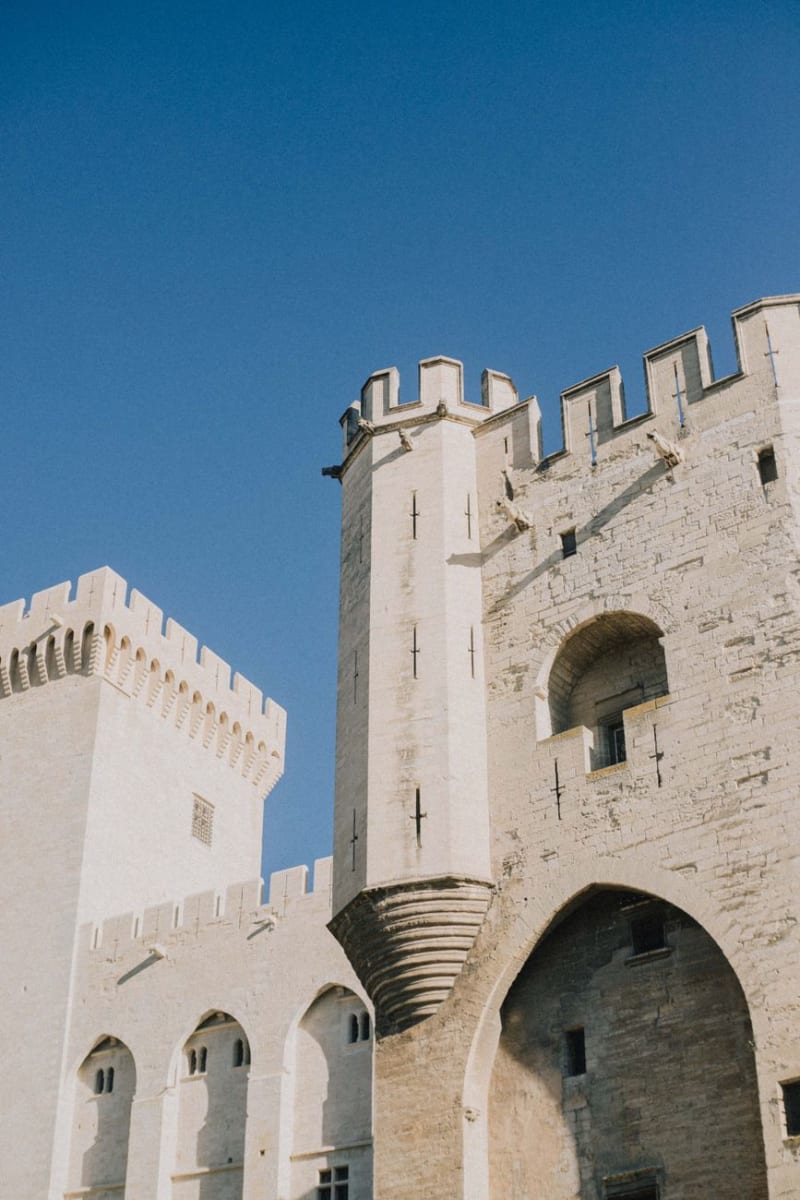 france
 Avignon
Once the seat of the Avignon Papacy, this walled Provençal city hosts Europe's largest performing arts festival each July around its immense palace.
Explore