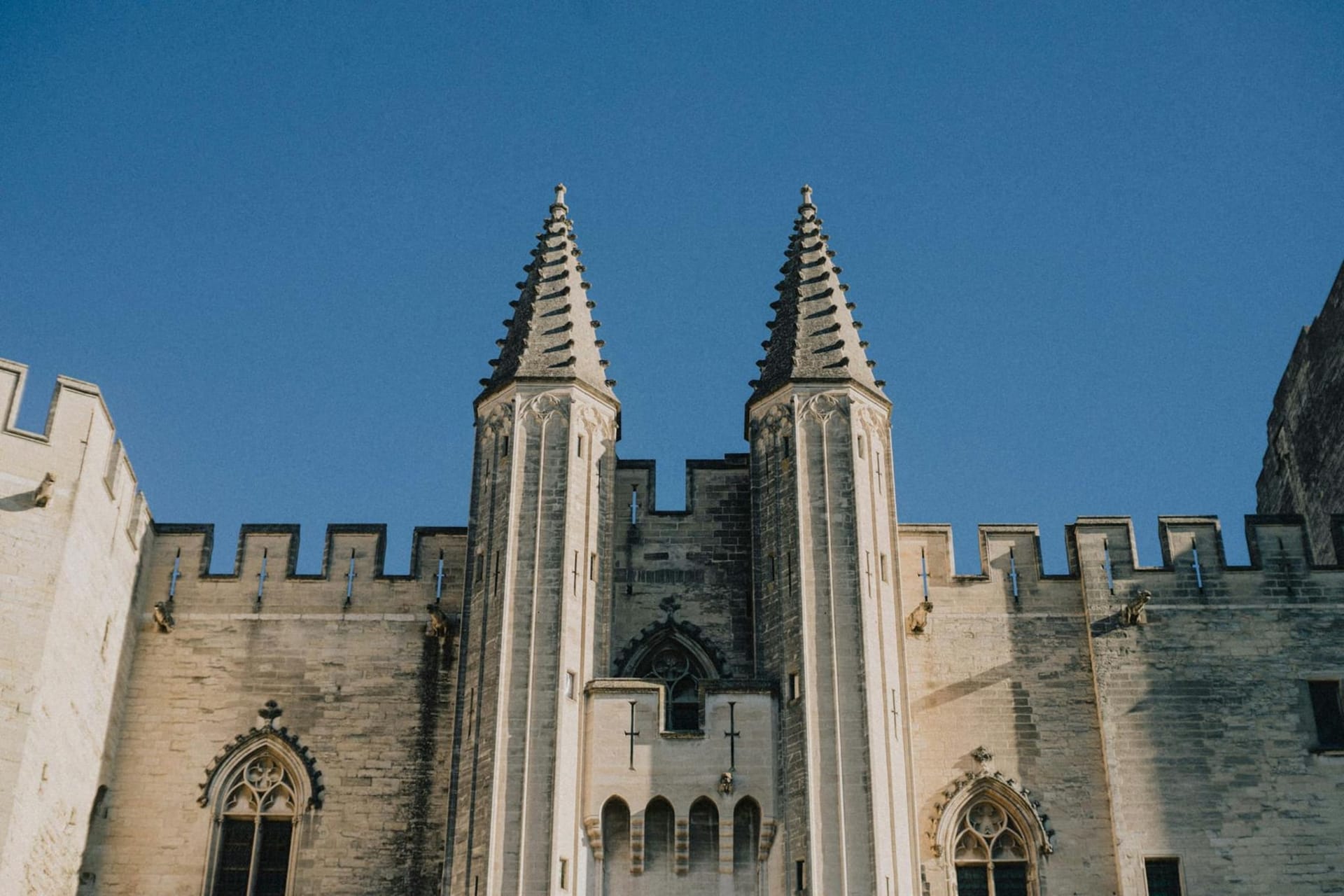
Avignon
"Avignon held the papacy for a century, and the walls have never let the world forget it."
Once the seat of the Avignon Papacy, this walled Provençal city hosts Europe's largest performing arts festival each July around its immense palace.

I arrived in Avignon on a July evening, stepping off the TGV into air that smelled of hot stone and lavender from some unseen vendor on the platform. The ramparts — the remparts — appeared almost immediately, a pale limestone wall stretching further than seemed reasonable for a city this size, fourteen towers intact after seven centuries. They do not feel like ruins. They feel like a statement.
The Palace and the Weight of It
Nothing quite prepares you for the Palais des Papes. I had seen photographs, of course, but photographs cannot convey scale in a place like this. Standing in the Grand Tinel — the banquet hall where cardinals ate and conspired — I felt the particular vertigo of rooms built for power rather than comfort. The walls are bare now, the frescoes mostly gone, but that bareness amplifies something. The stone breathes cold even in July.
Lia spent twenty minutes in the chambre du cerf, the study of Clement VI, photographing the hunting frescoes painted directly onto plaster — deer leaping through painted water, falconers, fishing boats — delicate and almost tender against the palace’s outer severity. We both kept returning to them.
The festival had taken over the courtyard of honor when we visited. Bleachers, rigging, cables everywhere — the kind of organized chaos that theatre people thrive in. I had not expected to find a dress rehearsal in progress, a company working through a Molière in the late heat, actors projecting across empty seats while stagehands shouted measurements at each other. We watched from a doorway for longer than we should have.
Rue des Teinturiers and the River Below the Bridge
The part of Avignon I kept returning to was the Rue des Teinturiers — the dyers’ street — a narrow canal-side lane where water-wheels still hang over the stream, mossy and half-submerged. The plane trees close overhead. On a hot afternoon it is the coolest street in the city, and the light comes through green.
I ate a tian here, at a small place without a sign I can now reconstruct, the Provençal gratin of layered courgette and tomato that tastes of preserved summer. Simple food that requires excellent tomatoes. Avignon in July has excellent tomatoes.
The Pont Saint-Bénézet — the famous bridge, Sur le Pont d’Avignon — stops halfway across the Rhône. This I knew. What I did not know was how strange it feels to stand at that broken edge and look out over the water at nothing, the far bank unreachable, the bridge simply ending in open sky.
When to go: July brings the Festival d’Avignon and extraordinary energy, though accommodation books months ahead. May and September offer the same light and heat with far more room to breathe inside the palace.
Keep exploring
More of Provence
Keep exploring
More from Provence
 france
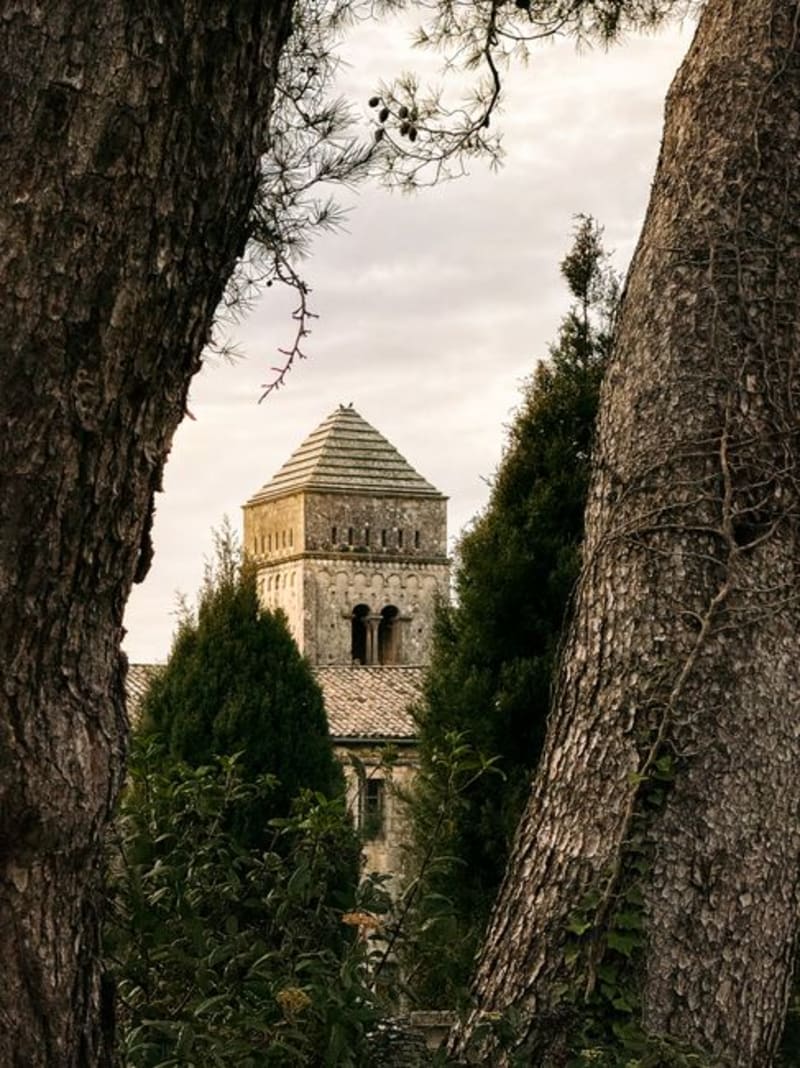
 Saint-Rémy-de-Provence
A market town in the Alpilles where Roman ruins sit beside the asylum walls Van Gogh painted his cypresses and irises from, a year of his life folded into a few hundred metres.
Explore france
 Orange
A workaday Rhône town wrapped around the best-preserved Roman theatre in Europe, where the wall still throws sound the way its engineers intended two thousand years later.
Explore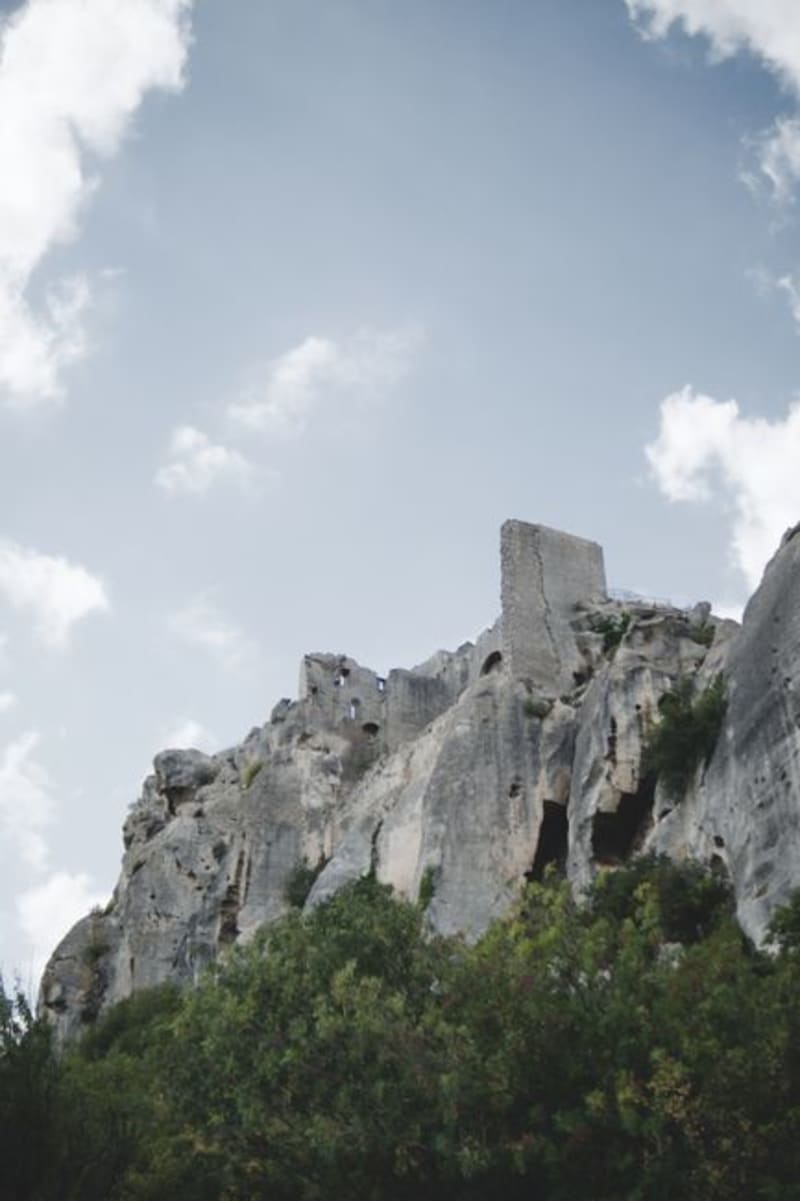 france
 Les Baux-de-Provence
A ruined citadel fused into a jagged limestone spur in the Alpilles, half village and half rockface, with a quarry cave nearby that turns Klimt and Van Gogh into wraparound light shows.
Explore france
 Isle-sur-la-Sorgue
A town split into channels by the clear, fast-running Sorgue river, its old waterwheels still turning beside one of the biggest antiques markets in France.
Explore france
 Carpentras
A market town with the oldest synagogue still in use in France tucked behind an ordinary-looking door, and a Friday market smelling so strongly of truffle in winter that I followed my nose before I found the stall.
Explore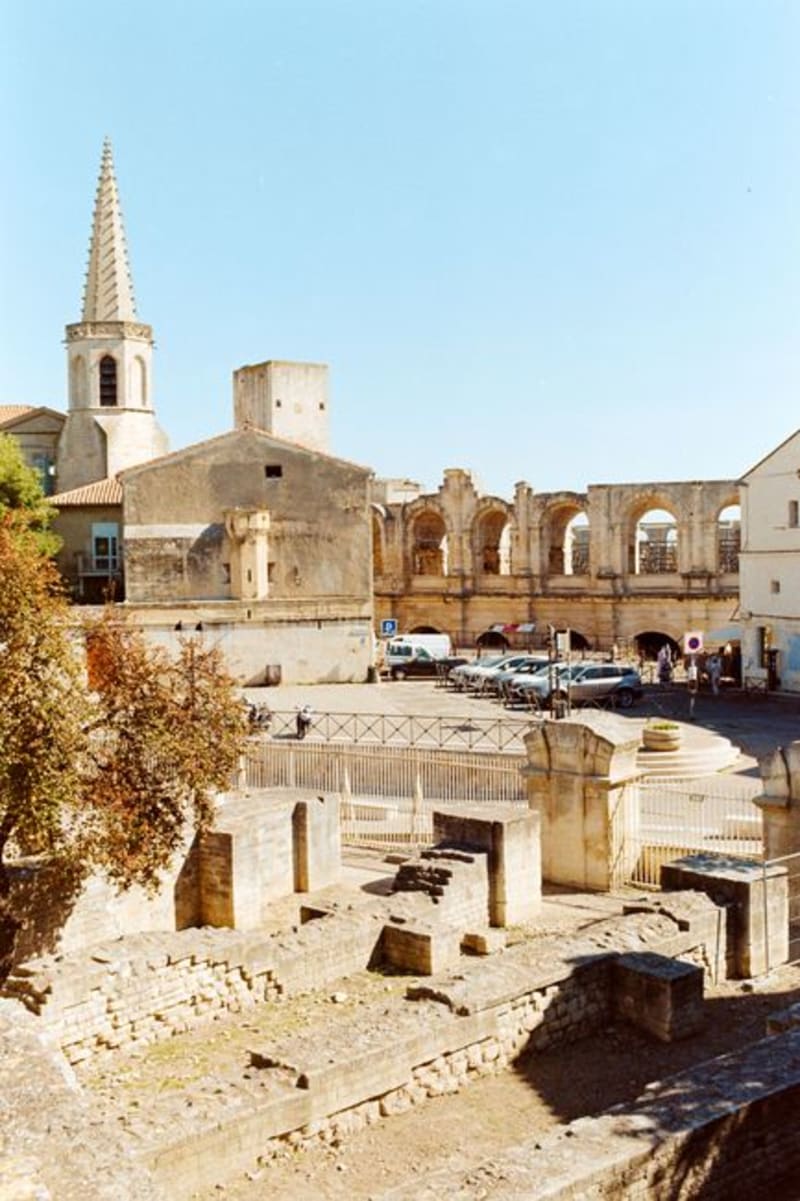 france
 Arles
A Roman city on the Rhône where the amphitheatre still fills for bullfights on Sunday afternoons and the light that undid Van Gogh's eyes hasn't dimmed a shade.
Explore