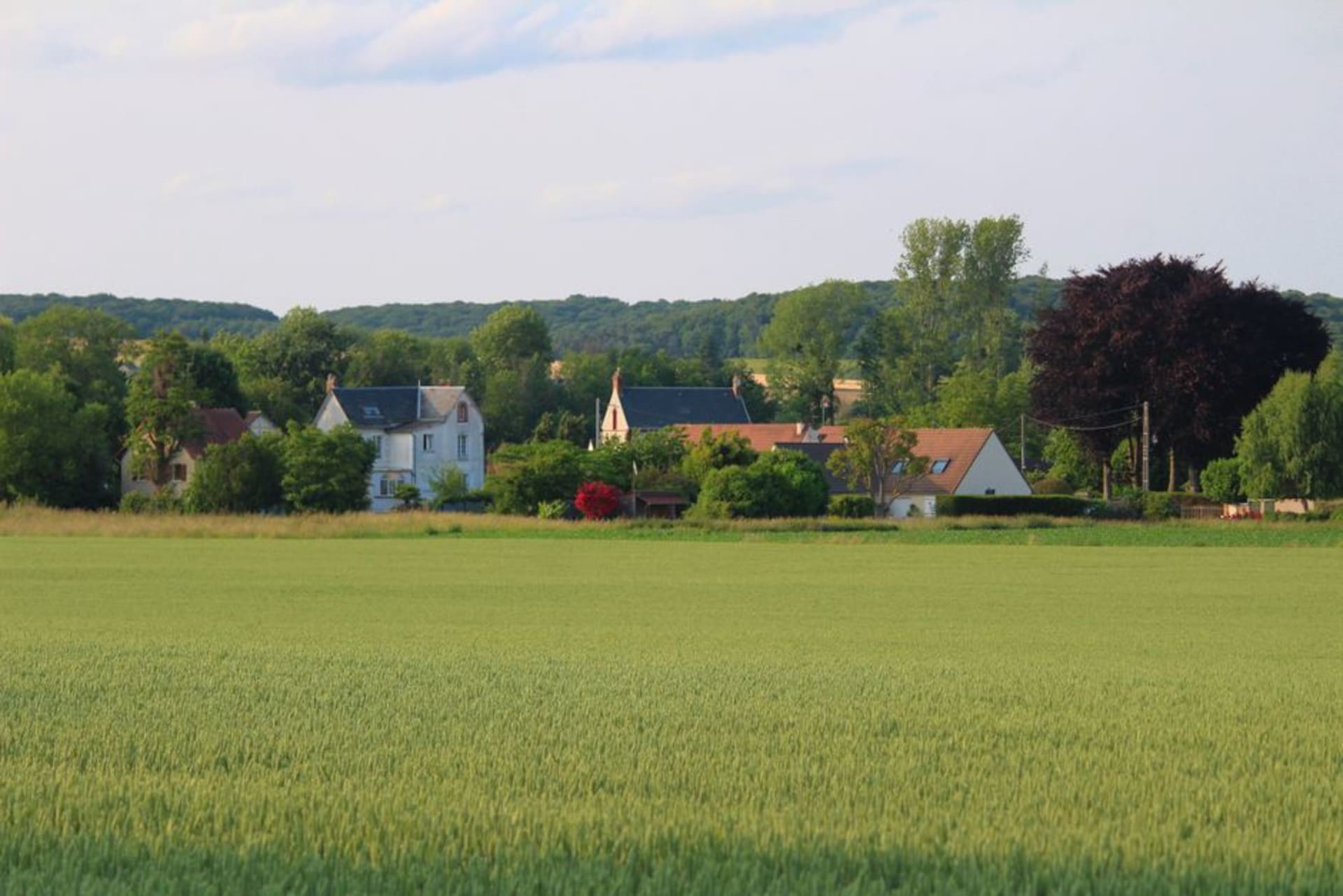
Pupillin
"A village this small shouldn't have this many people willing to pour you a glass at eleven in the morning."
A village of maybe two hundred people and roughly as many wine cellars, self-declared capital of the Poulsard grape, where every second door seemed to open onto someone's family cave.

Pupillin is barely a village at all by most standards, a scatter of stone houses on a hillside a few minutes outside Arbois, and yet it calls itself, with a road sign to prove it, the capital of Poulsard — a pale, thin-skinned red grape that’s practically the Jura’s signature and grows almost nowhere else in France. We’d come from Arbois expecting a quick detour and stayed most of the afternoon, mostly because it felt like every third house had a hand-painted sign for a “cave” or a “dégustation,” and we ran out of willpower to keep driving past them.
A village made of cellars
Poulsard is a strange grape to explain to people who haven’t tasted it — thin-skinned enough that the wine it makes is often so pale it looks almost like a rosé, low in tannin, high in a kind of wild, earthy perfume that reminded me faintly of the pét-nat wines becoming fashionable everywhere else, except this tradition predates that trend by at least two centuries. We stopped at a small independent vigneron’s cellar where the woman pouring, maybe in her sixties, told us her family had worked these particular parcels since her grandfather’s time, and poured us a young Poulsard straight from a barrel with a wooden spigot, still faintly cloudy. It tasted like nothing else we’d had in the Jura, lighter than the vin jaune everyone talks about, but just as stubbornly regional.

Vines up to the doorsteps
What struck me most about Pupillin is how close the vineyards come to the village itself — there’s barely a transition, the last house’s garden simply becomes the first row of vines, and walking the lane above the village put us at eye level with the whole valley, Arbois visible in the distance and the marl slopes striped with vine rows all the way to the tree line. In late summer, before the harvest, the village hosts a wine festival, La Biou, that dates back to a 1360 vow made after the plague passed the village by, where a giant bunch of grapes is carried in procession to the church — a tradition Pupillin has kept going, more or less unbroken, for over six and a half centuries.

When to go: Early September for the harvest atmosphere and, in years it falls around then, the Biou festival procession; any weekend afternoon in summer is enough to find several cellars open for tastings without a reservation.
Keep exploring
More of Jura
Keep exploring
More from Jura
 france
 Arbois
The unofficial wine capital of the Jura, a stone-built town along the Cuisance river where Louis Pasteur did his early wine research and vin jaune, the region's strange, sherry-like specialty, still ages in oak for over six years.
Explore france
 Salins-les-Bains
A UNESCO-listed saltworks built into a river gorge, where I walked underground galleries that funded the Franche-Comté for a thousand years before soaking in the same brine that made the town rich.
Explore france
 Arc-et-Senans
A salt factory built as a utopia, half-moon shaped and dropped into the Jura countryside by an architect who wanted to redesign society along with the buildings, and who only ever finished the half.
Explore france
 Château-Chalon
A clifftop village of barely one hundred and fifty people that somehow invented vin jaune, and where the ruined abbey above the vines gave us the single best view of the whole Jura wine country.
Explore france
 Champagnole
A quiet forest town we used purely as a base, and which turned out to be the best decision of the whole trip once we found the Hérisson waterfalls a short drive away.
Explore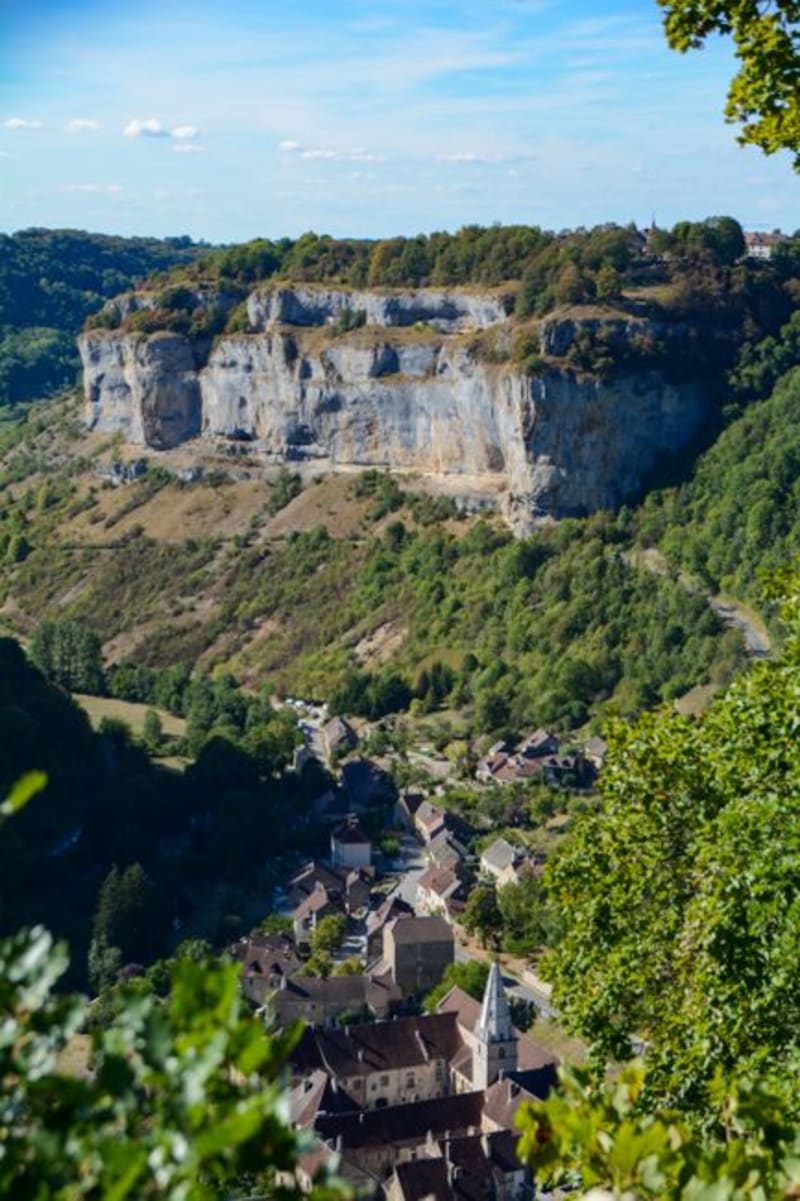 france
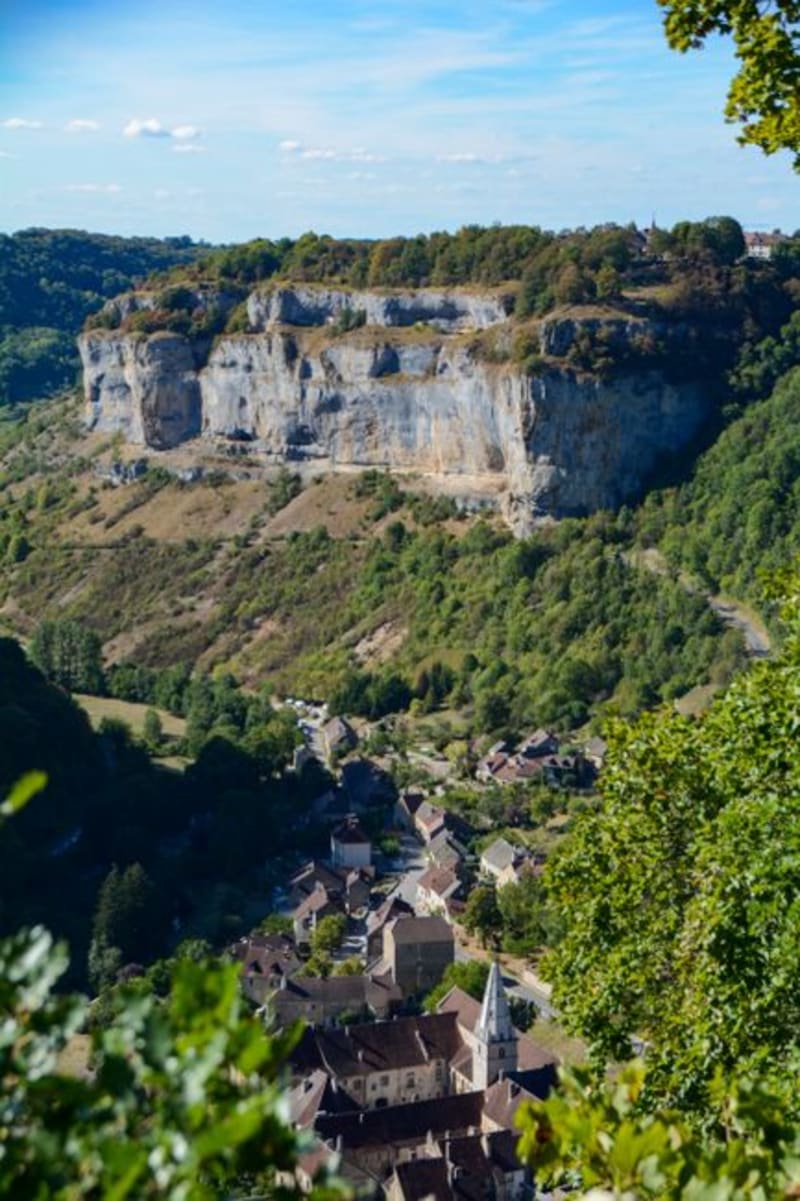
 Baume-les-Messieurs
A village hidden inside a dead-end limestone canyon in the Jura, built around an ancient abbey and surrounded by cheese cellars ageing the region's prized Comté in caves cut into the cliffs.
Explore