
Champagnole
"We picked Champagnole because it was central. We stayed longer because of what surrounds it."
A quiet forest town we used purely as a base, and which turned out to be the best decision of the whole trip once we found the Hérisson waterfalls a short drive away.

Champagnole doesn’t try very hard to be a destination in its own right, and I mean that as a compliment. It’s a working town in the middle of the Jura’s high forest plateau, historically built on timber, pipe-making, and the kind of small manufacturing that never made it into any guidebook, and we chose it mainly because it sits almost equidistant from the region’s lakes, the Hérisson gorge, and the cross-country ski trails around Bois de la Loge. It turned out to be exactly the kind of unglamorous, well-placed base that made every day trip easy without ever feeling like the point of the visit.
The waterfalls that justified everything
The cascades du Hérisson, a chain of roughly thirty waterfalls dropping through a forested limestone gorge a short drive from town, are genuinely one of the best walks we’ve done anywhere in France. The trail follows the Hérisson river down past cascade after cascade, the biggest, the Grand Saut, dropping some sixty meters into a plunge pool ringed by moss and spray, with a smaller one further along, the Éventail, fanning out over a wide curved rock face in a way that looks almost deliberately designed. We went in early autumn when the flow was strong enough to be dramatic but the crowds had already thinned, and spent most of a day just moving from one fall to the next, Lia insisting on stopping at each one “just for two minutes” that never once stayed two minutes.

Lakes, forest, and snow depending on the season
Champagnole also sits at the edge of the Jura’s lake district, with Lac de Chalain and Lac de Vouglans both within easy reach for swimming or kayaking in summer, and the surrounding plateau forest turns into one of France’s best cross-country skiing areas the moment real snow arrives, with groomed loops threading through Bois de la Loge that felt almost empty compared to anywhere we’d skied in the Alps. The town itself has a modest but pleasant center with a handful of good bakeries and a Saturday market where a farmer sold us a wheel of unpasteurized Comté straight off his truck, still faintly warm from the morning.

When to go: Early autumn for the Hérisson waterfalls at their most photogenic with the beech forest turning, or January through March if cross-country skiing is the goal — just check snow conditions before committing, since low-elevation Jura winters can be unreliable.
Keep exploring
More of Jura
Keep exploring
More from Jura
 france
 Nozeroy
A medieval capital so small today that it's easy to drive past it, though its ramparts and fortified gates still guard a hilltop that once ruled its own slice of the old Comté de Bourgogne.
Explore france
 Foncine-le-Haut
A high Jura ski village where the winter trade used to be carving wood and building clocks by hand, and where a few workshops still keep both crafts alive between chairlift runs.
Explore france
 Salins-les-Bains
A UNESCO-listed saltworks built into a river gorge, where I walked underground galleries that funded the Franche-Comté for a thousand years before soaking in the same brine that made the town rich.
Explore france
 Pupillin
A village of maybe two hundred people and roughly as many wine cellars, self-declared capital of the Poulsard grape, where every second door seemed to open onto someone's family cave.
Explore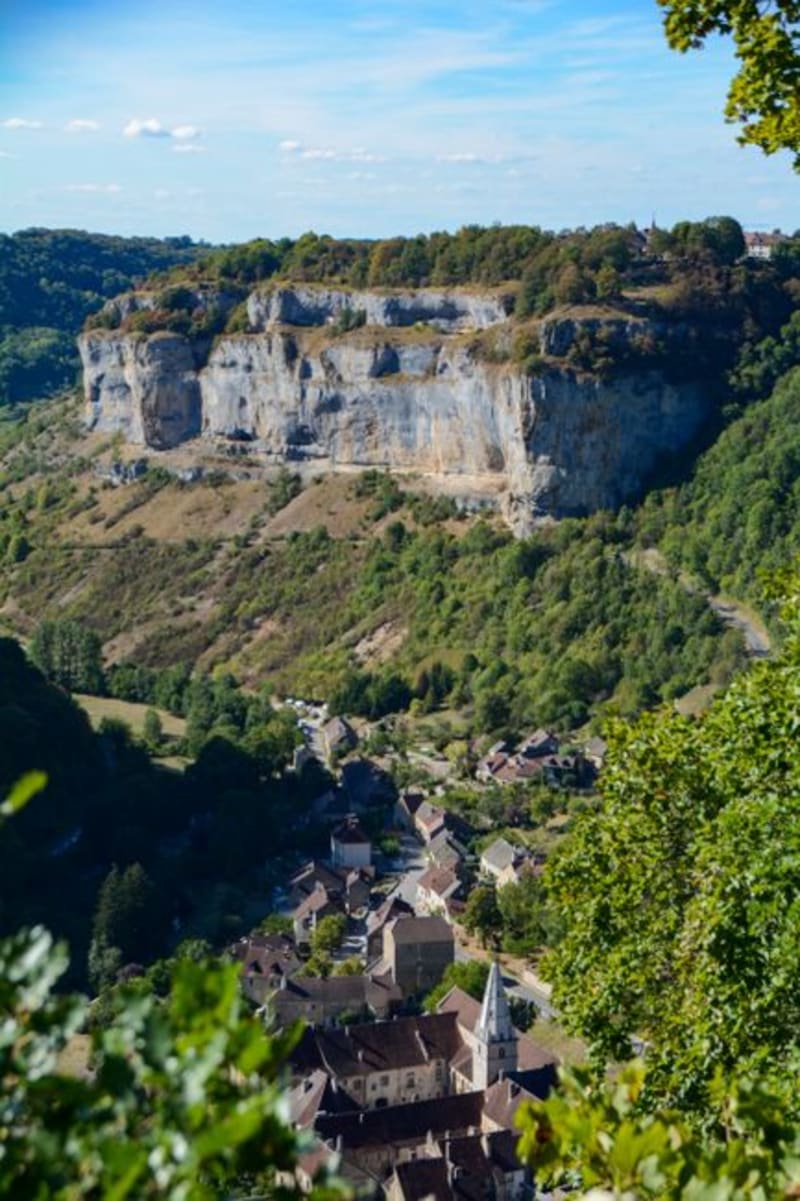 france
 Arbois
The unofficial wine capital of the Jura, a stone-built town along the Cuisance river where Louis Pasteur did his early wine research and vin jaune, the region's strange, sherry-like specialty, still ages in oak for over six years.
Explore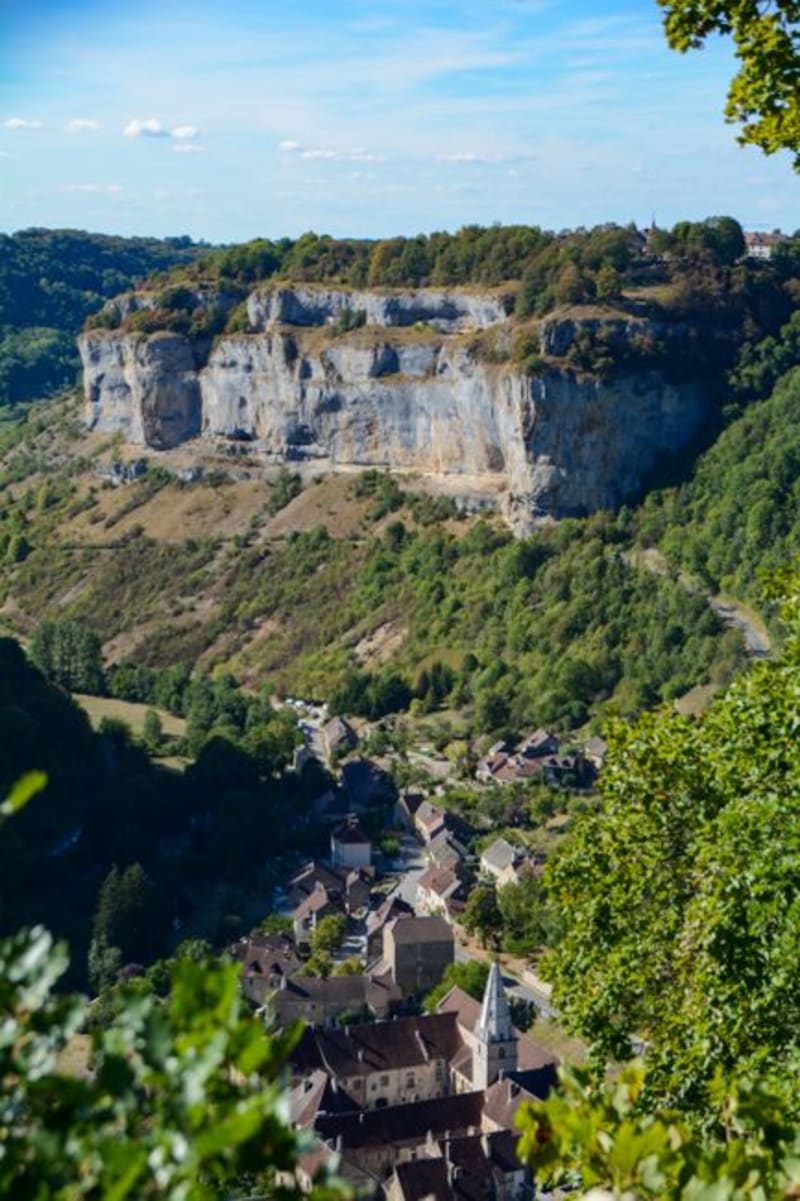 france
 Baume-les-Messieurs
A village hidden inside a dead-end limestone canyon in the Jura, built around an ancient abbey and surrounded by cheese cellars ageing the region's prized Comté in caves cut into the cliffs.
Explore