Bormes-les-Mimosas
"I've never seen a village try this hard to be pretty, and somehow it never feels like it's trying."
A hillside village so covered in flowers that its own tourist office once ran a competition for the best-decorated doorway, and where the mimosa trees that gave it its name turn whole hillsides yellow every winter.

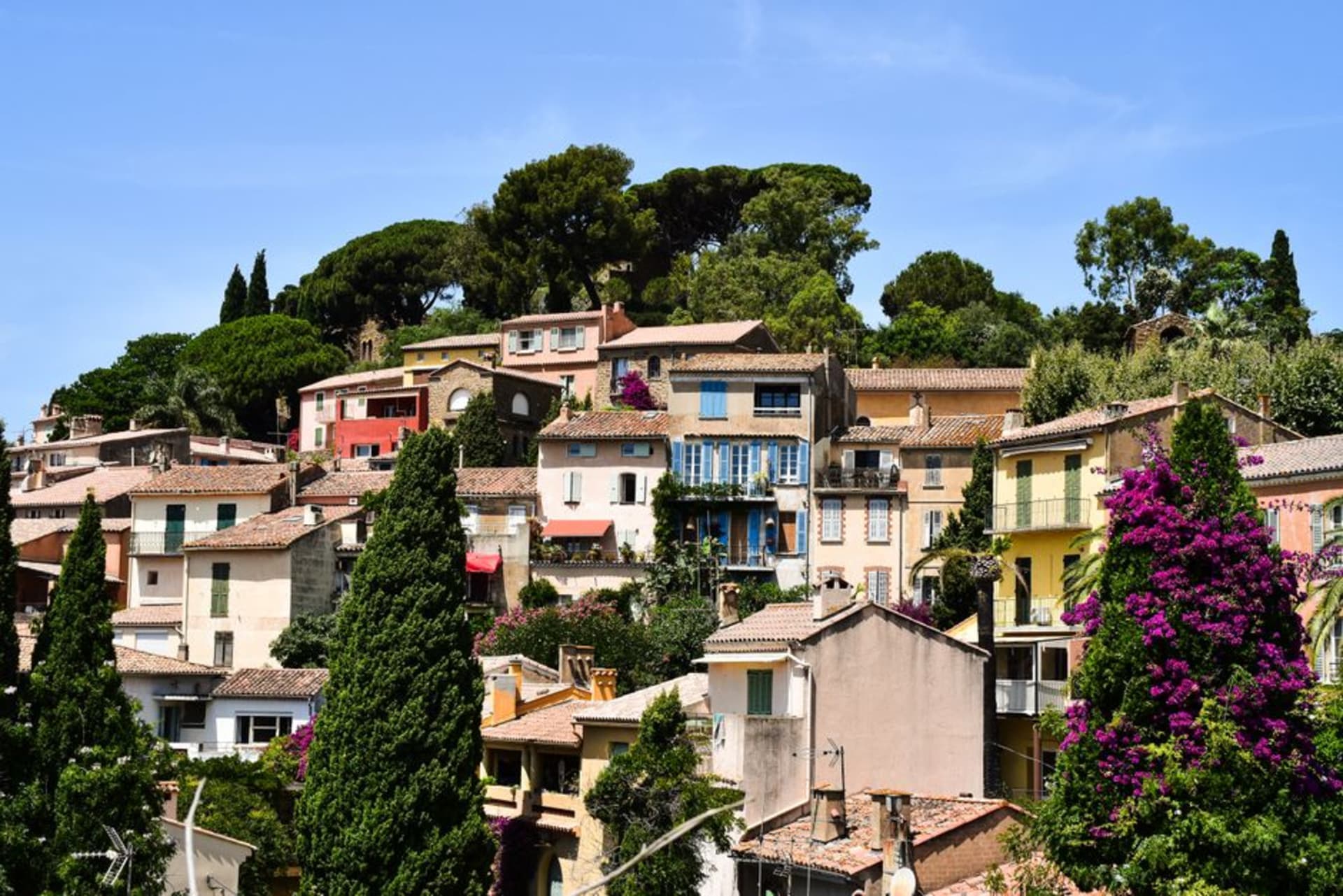
Bormes-les-Mimosas only added the flower to its name in 1968, tacking it onto the older “Bormes” once the mimosa trees imported from Australia in the nineteenth century had thoroughly taken over the surrounding hills. The original village needs no help — a steep medieval knot of stone lanes rising toward a ruined château above the Massif des Maures — but the mimosas turned it into something else: a place where, for a few weeks each winter, entire slopes go incandescent yellow while the rest of the coast is still gray and bare. We came in late January chasing exactly that, driving up from a beach day near Le Lavandou on a tip from a French friend, and found half of Provence apparently doing the same thing on the hillside road above town.
A village that decorates itself
Walking Bormes is mostly a matter of climbing — the lanes are steep, vaulted in places to keep the mistral out, and named with the kind of specificity (“Rue de la Rompi-Cuou,” roughly “the lane that breaks backsides”) that tells you locals have been complaining about these stairs for centuries. What struck Lia more than the medieval bones was how deliberately flowered the whole place is: bougainvillea trained up almost every façade, geraniums in windowboxes on houses that are otherwise plain stone, wisteria over doorways in spring. It isn’t accidental — Bormes has held the country’s top “villes fleuries” flower award for decades, and you can feel a village-wide agreement that no wall should go undecorated.

Gateway to the Maures, not just a viewpoint
Bormes sits at the edge of the Massif des Maures, the range of dark schist hills — the name comes from the Provençal for “dark forest,” nothing to do with the Moors — that separates the coast from inland Provence, and the village works as well as a trailhead as it does as a postcard. From the ruins of the old château above town, the view runs south over cork-oak forest to the sea and the silhouette of the Îles d’Hyères, and several signed paths drop from there into the Maures’ chestnut and cork-oak woods, which feel almost alpine compared to the Riviera glitz twenty minutes down the hill. We hiked one loop past an old cork-processing hut, bark stacked in drying piles, before dropping back into the village for a pastis on the church square.

When to go: Late January through February is peak mimosa bloom and the best reason to visit outside summer. If flowers aren’t the draw, come in shoulder season for the hiking and skip the August crowds, which the narrow lanes handle badly.
Keep exploring
More of Côte d'Azur
Keep exploring
More from Côte d'Azur
 france
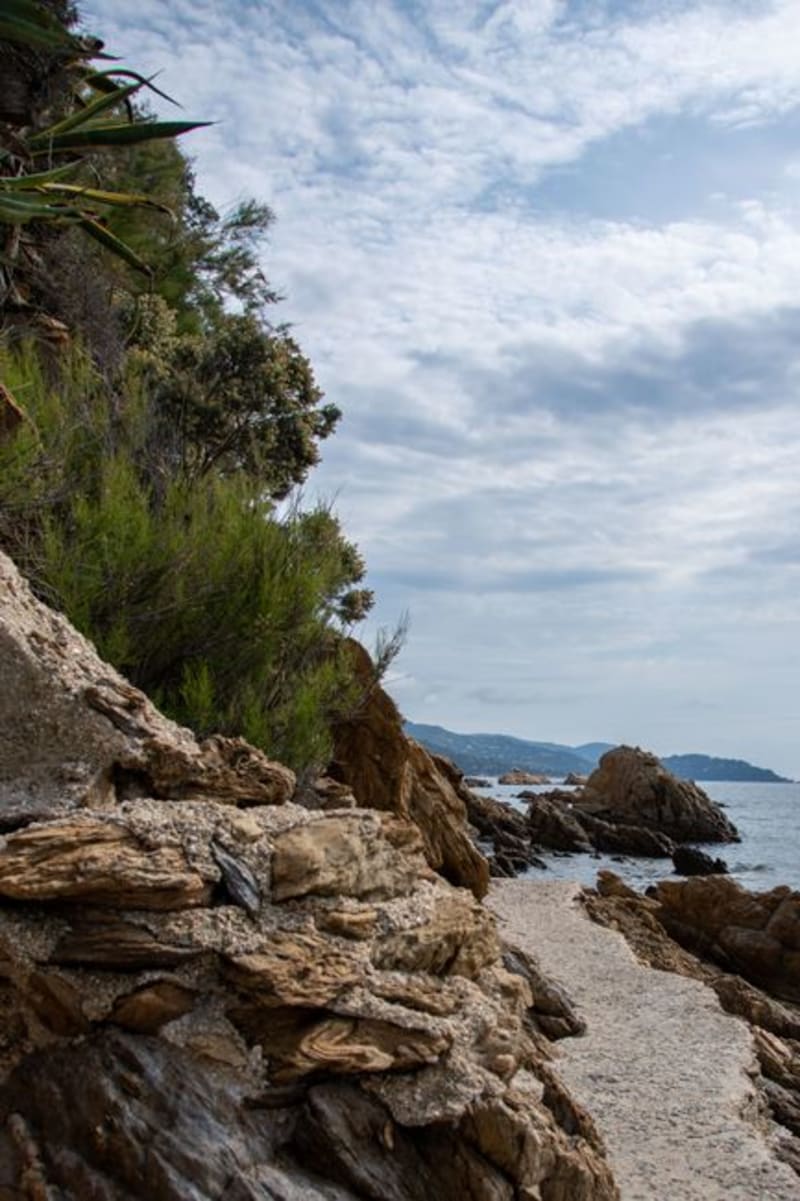
 Le Lavandou
A working fishing port that turned its twelve beaches into a full-time job and its harbor into the easiest way onto the Îles d'Hyères, without ever quite losing the smell of a Provençal fish market.
Explore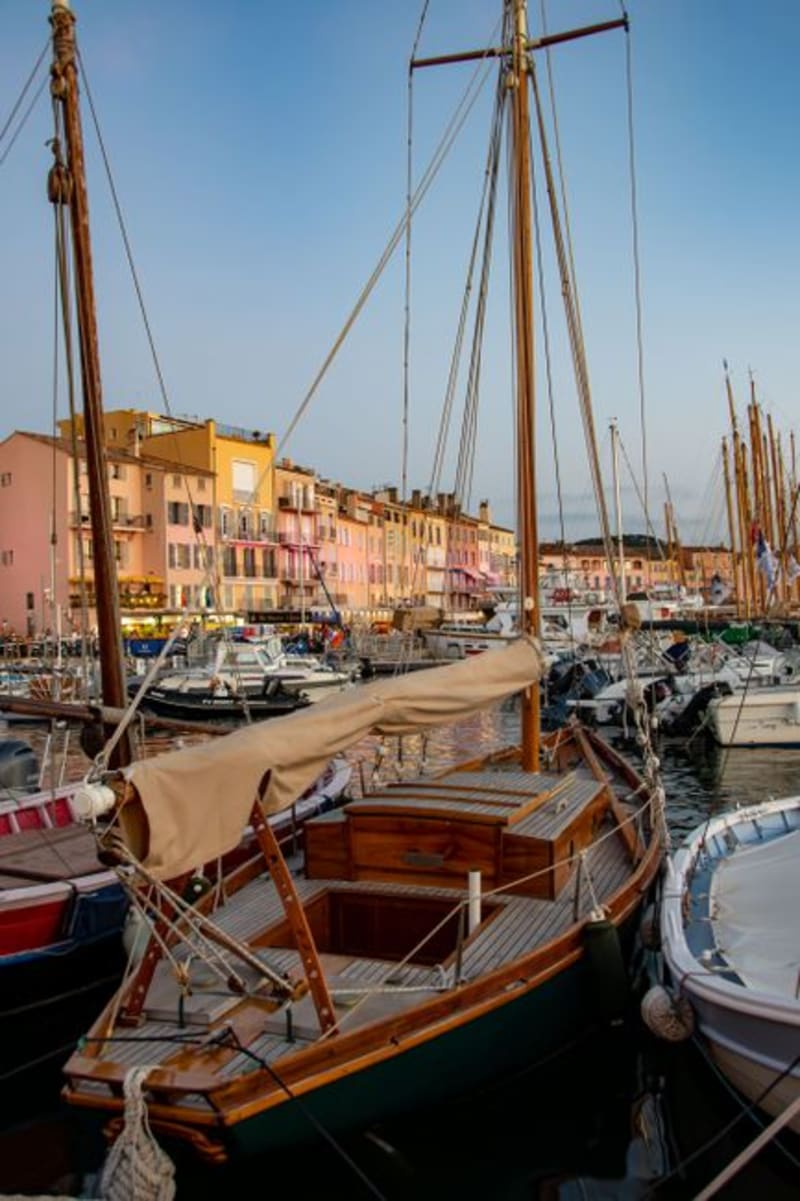 france
 Saint-Tropez
A former fishing village that became shorthand for Riviera glamour, still built around a small pastel harbour that fills, every evening, with a genuinely absurd number of yachts.
Explore france
 Fréjus
Rome's oldest naval base on this coast, still readable in an amphitheater that hosts concerts instead of gladiators and an aqueduct that just quietly keeps standing in the middle of roundabouts and parking lots.
Explore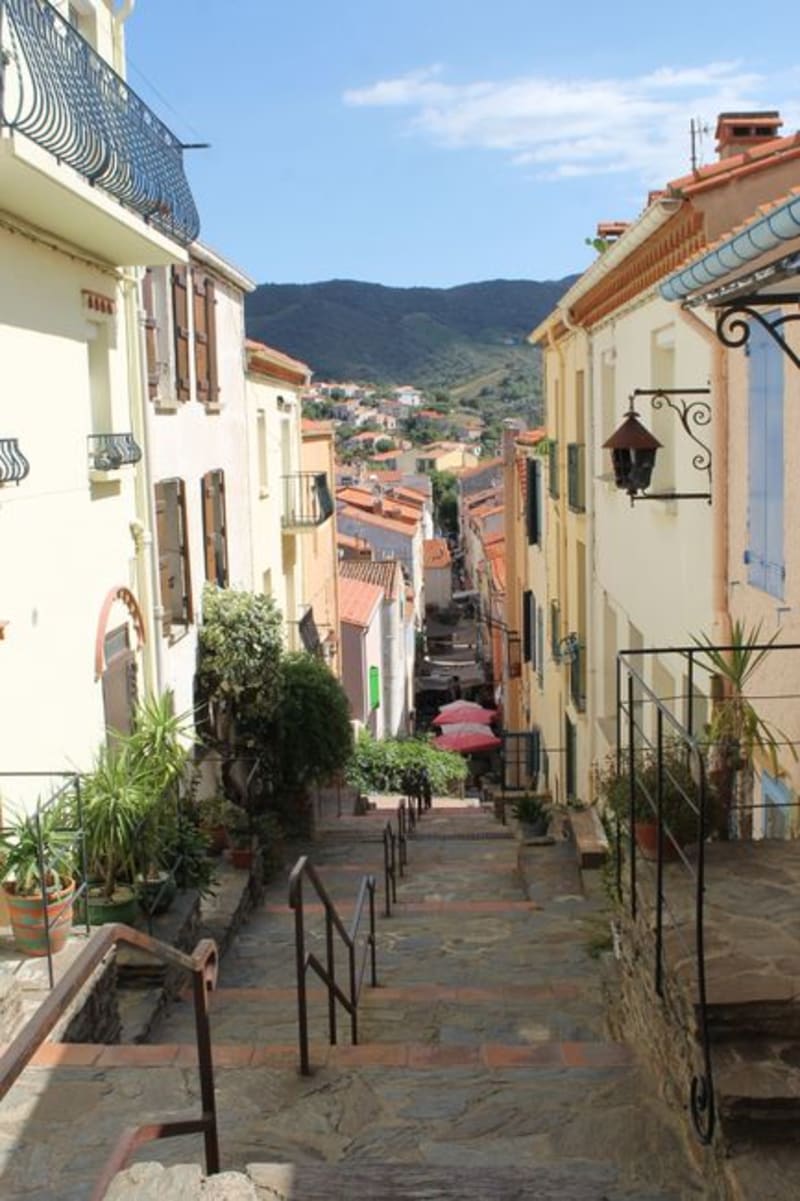 france
 Théoule-sur-Mer
The last town before the red rock of the Estérel takes over the coastline entirely, where the water goes an almost unnatural turquoise against the porphyry cliffs and the coves empty out the moment you walk five minutes past the last parking spot.
Explore france
 Mandelieu-la-Napoule
A town that smells like mimosa every January and hides a genuinely strange fairy-tale château full of an American sculptor's gargoyles right on its waterfront.
Explore france
 Grasse
The self-declared perfume capital of the world, a hill town above Cannes where the air smells faintly of jasmine and three historic houses still blend scent the old way.
Explore