Africa
Ethiopia
"I landed expecting poverty and left thinking about eternity."
The country where Christianity carved its churches directly into living rock, where ancient Semitic scripts still fill the mouths of priests at dawn, and where the highlands feel like a continent that history forgot to flatten.
The first thing I remember is the light. We touched down in Addis before sunrise — I’d barely slept on the overnight from Paris — and the terminal was this odd mix of hypermodern construction and decade-old signage. But then I stepped outside and the air hit me: cool, thin, pine-scented at 2,300 meters. I hadn’t expected Addis to be cold. I hadn’t expected much of anything to be what I expected.
Ethiopia dismantles your assumptions quietly. You come loaded with images from charity campaigns, with vague notions of famine and desert, and the country refuses all of it. The highlands are green and vertiginously beautiful. The food — injera with a spread of tibs and misir wot and gomen — is one of the genuinely distinctive culinary traditions I’ve encountered anywhere. Not fusion, not influenced by colonialism (Ethiopia was never colonized, and that fact radiates through the culture in ways that are hard to articulate but impossible to miss). The coffee, served in three rounds in a clay pot over smoking incense, tastes like the origin of the thing itself. Because it is: coffee is from here.
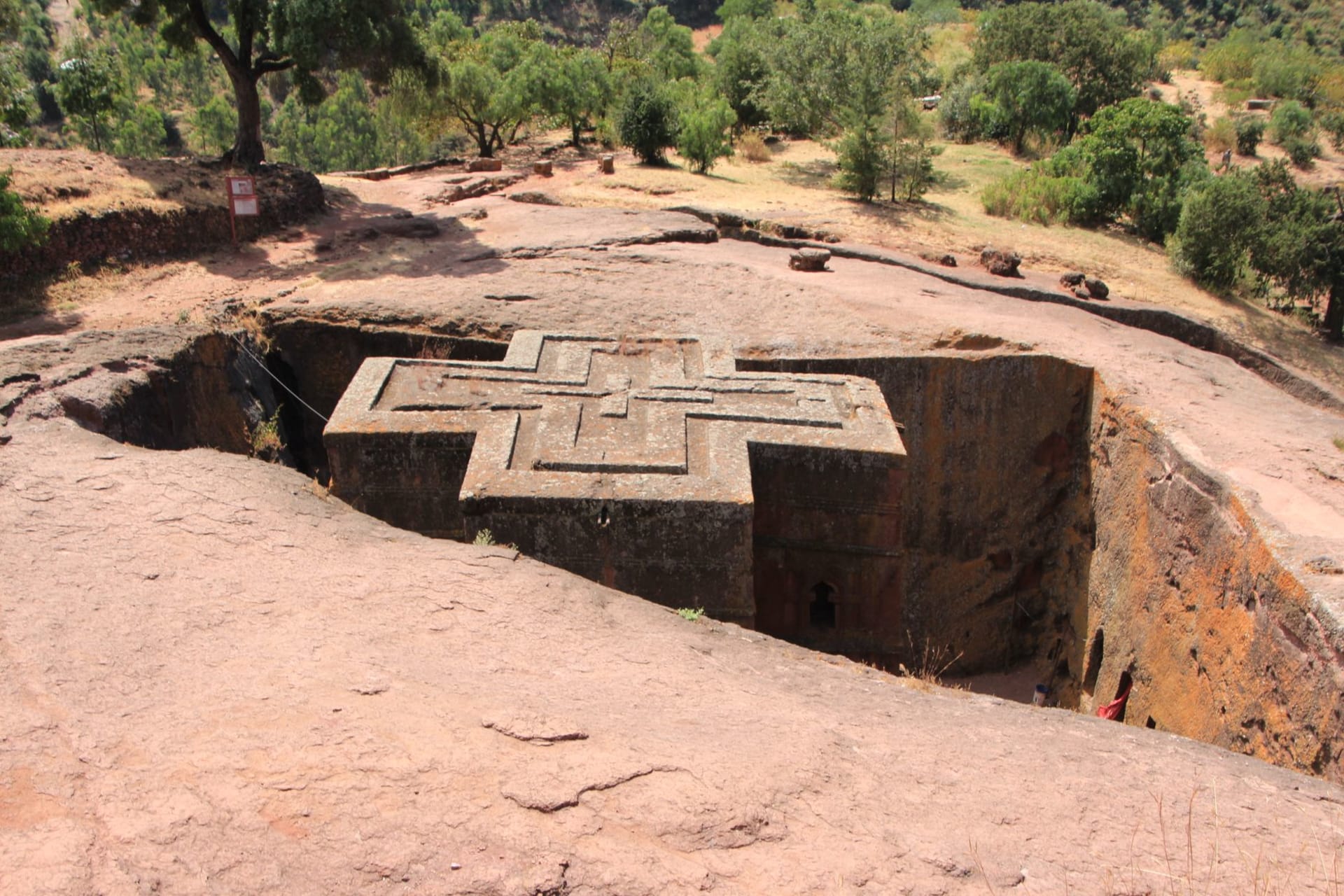
Lalibela stopped me cold. I’d seen the photographs of the rock-hewn churches — everyone has — but photographs lie by omission. They don’t tell you that you descend down into the churches, that they sit below ground level, excavated from the earth rather than built upon it. They don’t tell you that white-robed worshippers fill the courtyards at five in the morning while priests chant in Ge’ez, a language so old it no longer exists outside liturgy. They don’t tell you the smell: frankincense and earth and damp stone. I spent three days there and felt, for the first time in years of travel, genuinely outside the reach of the modern world.
When to go: October through February is the dry season in the highlands — clear skies, comfortable temperatures between 15 and 25°C, and the best light for Lalibela. January brings Timkat, the Ethiopian Orthodox Epiphany, which is extraordinary but draws crowds. April and May see some rain and dramatic clouds that make the landscape look almost theatrical. Avoid the heavy rains of July–August if you’re doing overland travel; the roads in the north turn difficult.
What most guides get wrong: The constant poverty framing. Ethiopia has real economic hardship, yes, but that’s not the story of the place — and treating it as such reduces 120 million people to a single narrative. Ethiopia is ancient, proud, architecturally staggering, gastronomically complex, and historically richer than most of the countries we reflexively call “civilized.” The guides that lead with struggle lead you to feel like a charity tourist. Come instead as someone trying to understand one of the world’s oldest continuous civilizations, and the country opens up completely differently.
Explore
Places in Ethiopia
 ethiopia
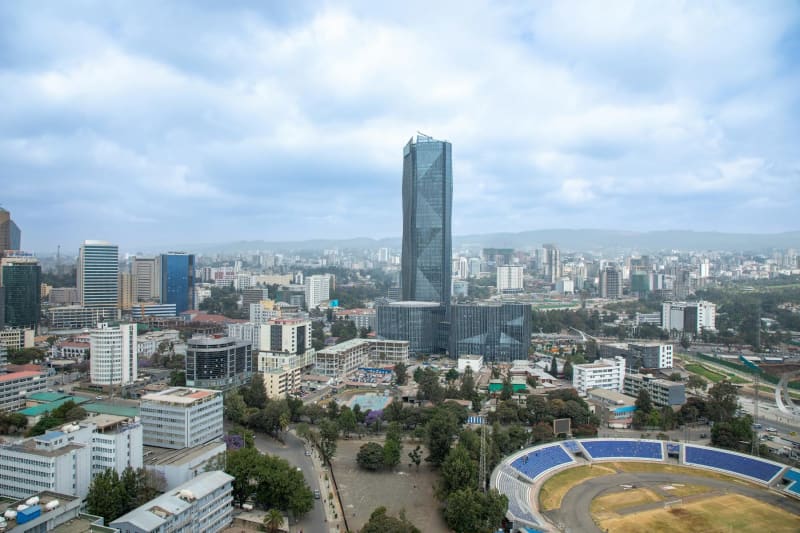
 Addis Ababa
Africa's diplomatic capital — Lucy's bones, the finest coffee ceremony, and a city permanently under reinvention.
Explore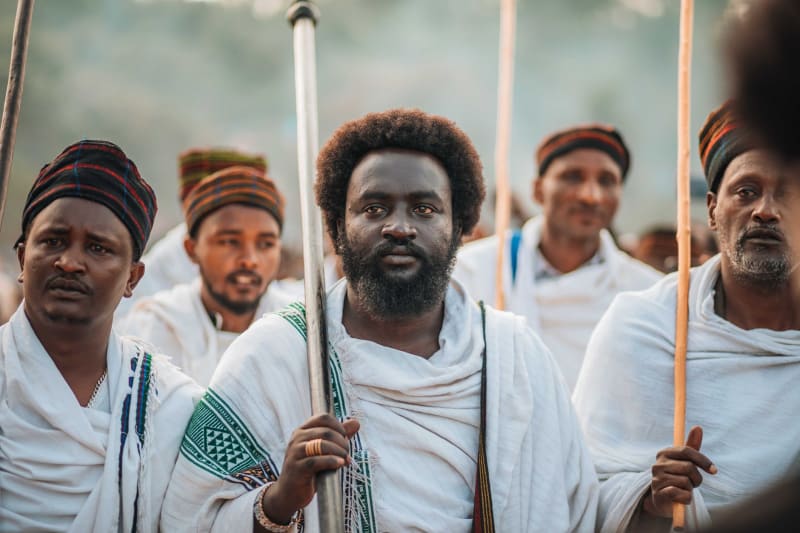 ethiopia
 Axum
An ancient city in northern Ethiopia where obelisks older than Notre-Dame stand in a field beside a church that claims to hold the Ark of the Covenant.
Explore ethiopia
 Bale Mountains
A high Afroalpine plateau in southern Ethiopia where Ethiopian wolves hunt giant mole rats across a landscape that looks like the moon with grass.
Explore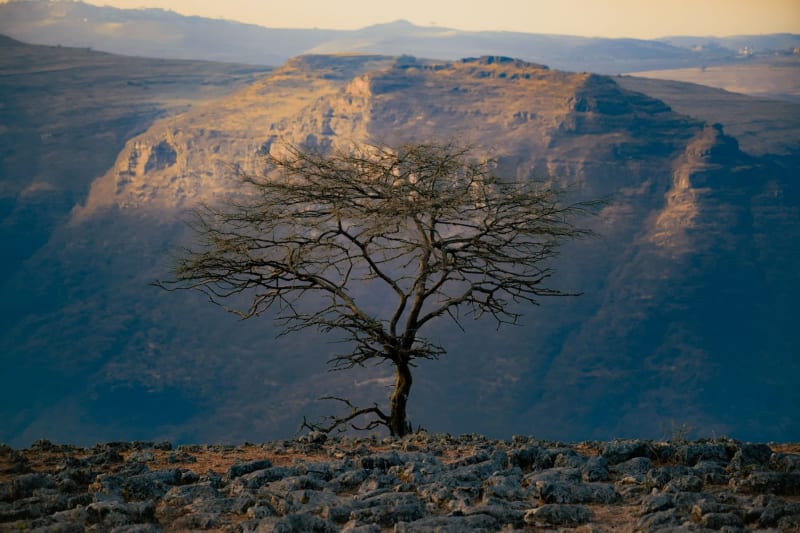 ethiopia
 Danakil Depression
The hottest place on Earth — acid lakes, sulfur chimneys, and a lava lake shimmering at the planet's floor.
Explore ethiopia
 Gondar
A highland city of crumbling castles and incense smoke where Ethiopia's imperial past sits surprisingly intact behind mossy stone walls.
Explore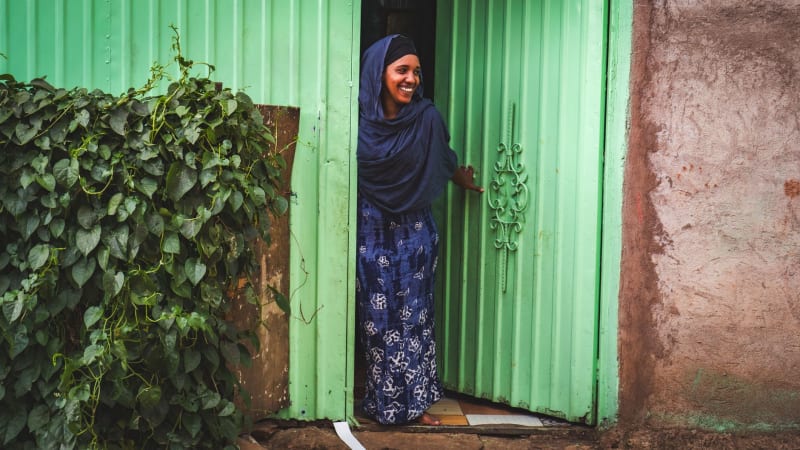 ethiopia
 Harar
A walled Islamic city in eastern Ethiopia where hyenas are fed by hand each night and 82 mosques crowd into a labyrinth that smells of coffee and khat.
Explore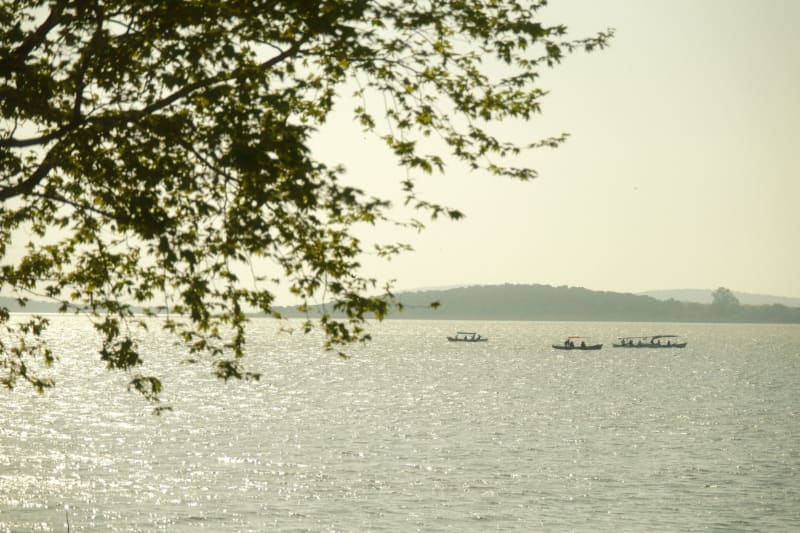 ethiopia
 Lake Tana
The vast highland lake that gives birth to the Blue Nile, its forested islands hiding centuries-old monasteries reached by motorboat and the occasional papyrus canoe.
Explore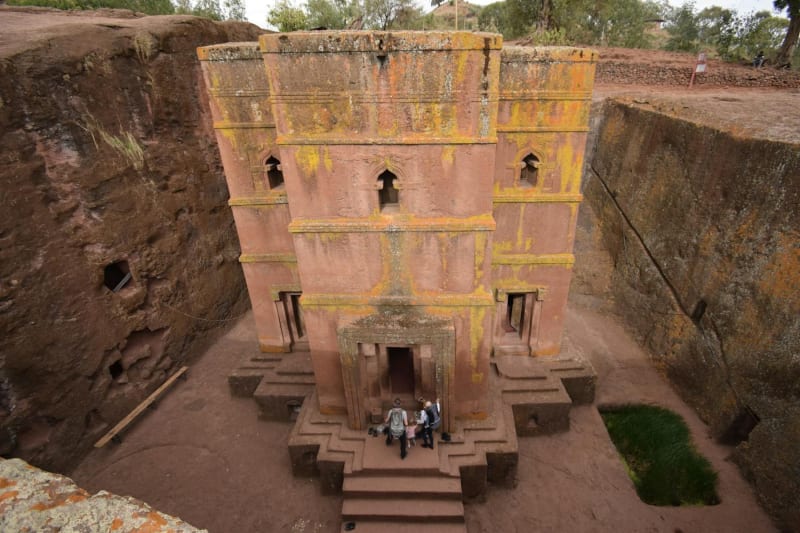 ethiopia
 Lalibela
Eleven rock-hewn medieval churches carved below ground — Ethiopia's Jerusalem, still alive with Orthodox pilgrimage.
Explore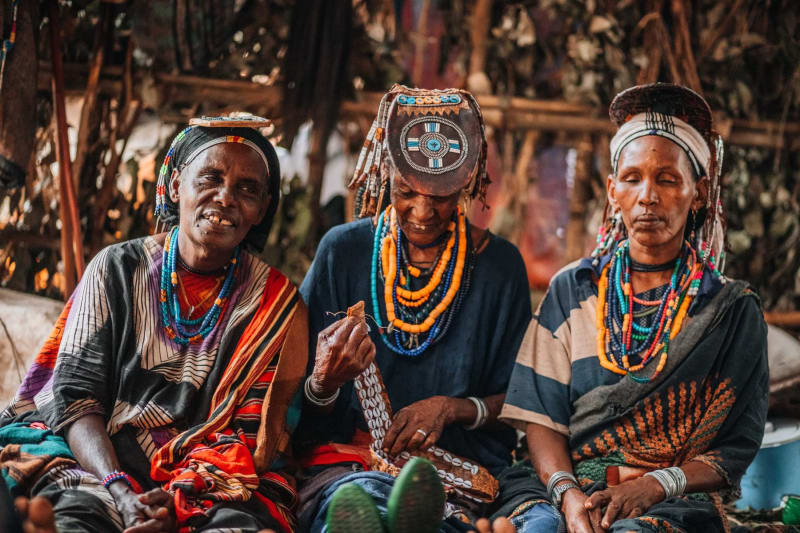 ethiopia
 Omo Valley
Home to dozens of indigenous tribes who have preserved ancient traditions of body decoration and cattle culture.
Explore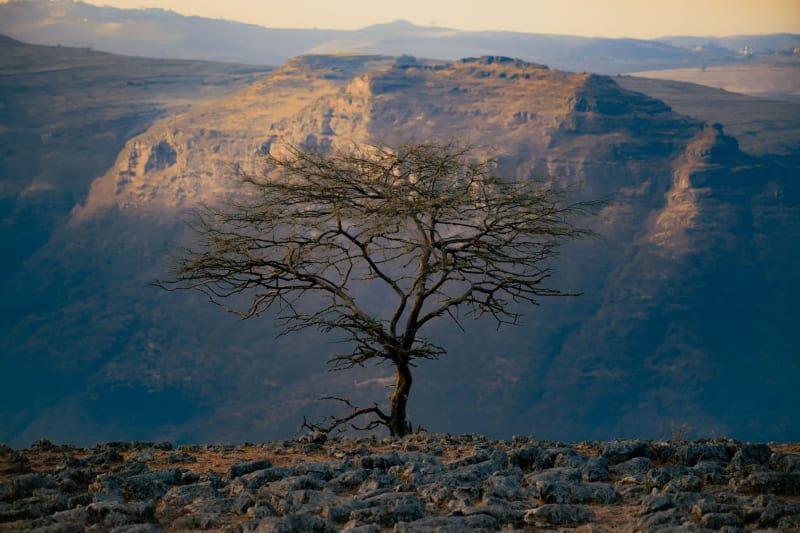 ethiopia
 Simien Mountains
UNESCO highlands trekked by gelada baboons and lammergeiers, with escarpment views that steal all language.
Explore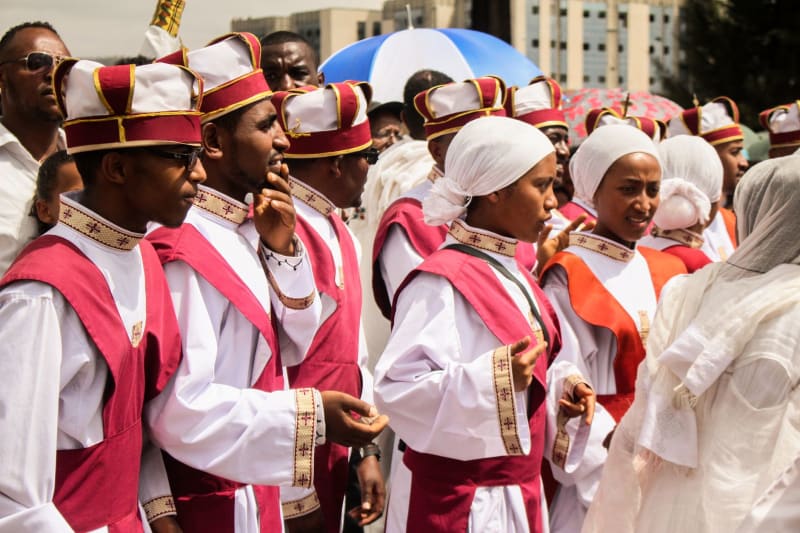 ethiopia
 Tigray
A northern Ethiopian region of sandstone escarpments and cliff-face churches where priests guard ancient manuscripts in rooms that took ropes to reach.
Explore