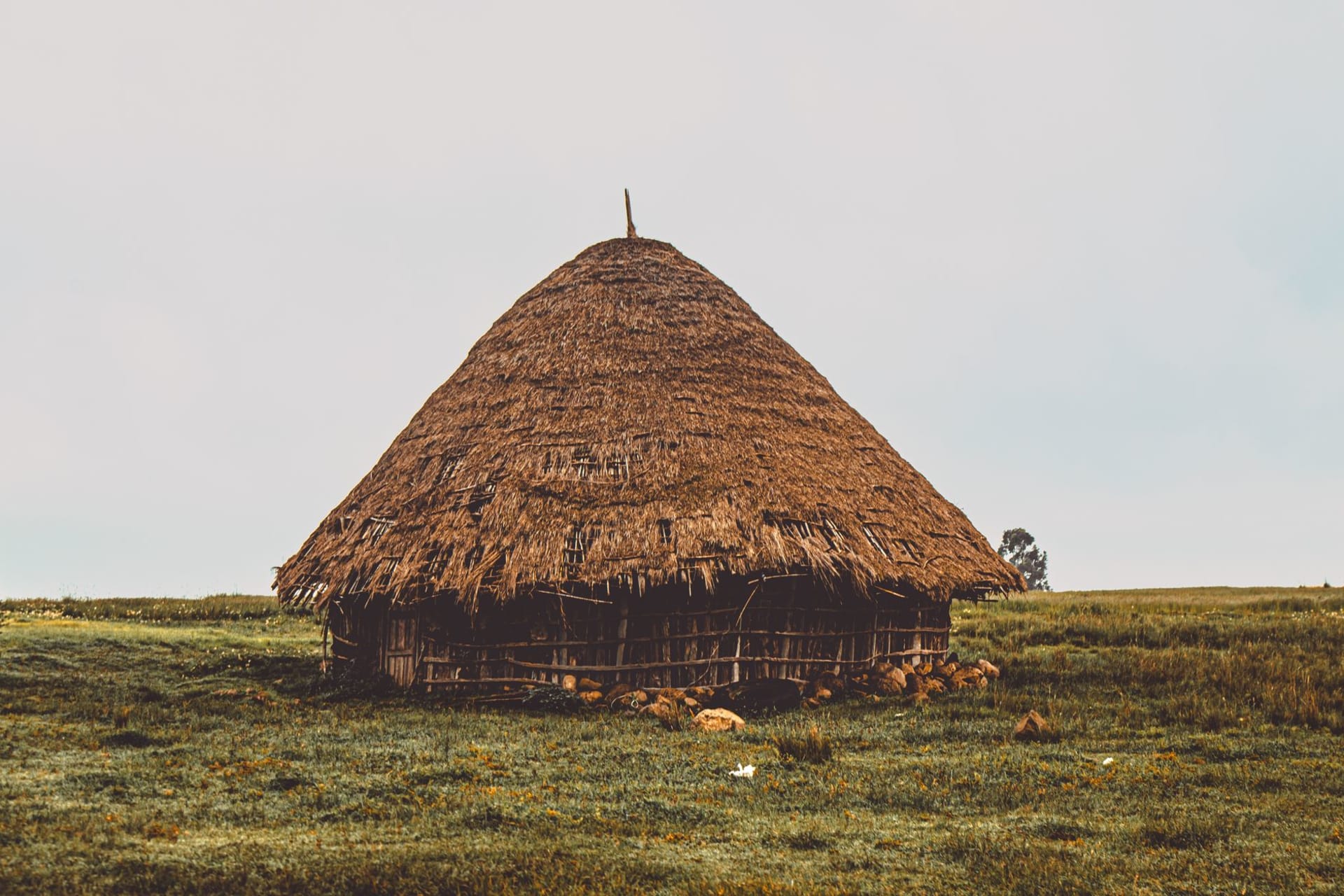
Bale Mountains
"The wolf stopped ten meters away, assessed us, and went back to hunting. We were not the interesting thing on this plateau."
The Sanetti Plateau
The road up to the Sanetti Plateau climbs through dense hagenia forest and then, somewhere around 3,600 meters, the trees stop and a landscape begins that I don’t have a clean reference for. The plateau sits at 4,000 meters — higher than anywhere in Europe outside the Caucasus — and it’s covered in Afroalpine moorland: giant lobelias that look like Dr. Seuss invented them, red-stemmed heather, tussock grasses, and an atmosphere of thin cold air that makes everything slightly surreal. The sky is enormous. The ground is rust-colored where the volcanic soil shows through.
We drove up in the early morning in the national park’s Land Cruiser, Lia wrapped in a blanket she’d taken from the lodge. At that altitude in the morning the cold is serious. But the light was extraordinary — low and gold across the plateau, catching the frost on the heather stems.
Ethiopian Wolves
The Ethiopian wolf is the rarest canid on earth. Maybe 500 exist, and a significant portion live on the Bale Mountains’ Sanetti Plateau, where the giant mole rat — their primary prey — lives in dense colonies beneath the heather. The wolves hunt alone in daylight, which makes them unusually visible for large predators.
I had been briefed not to expect much. Wildlife viewing in Africa involves a lot of staring at empty landscape. We found three wolves within the first ninety minutes. The first was on the road, sitting, apparently thinking about something. The second was mid-hunt — freezing, stalking, pouncing into a hole, coming up with nothing, moving on. The third crossed in front of us at close range with total indifference. They’re rust-red and lean and move with a fluid, unhurried purpose that made me understand why people become obsessed with particular species.
The park runs a community conservation program and village scouts accompany most wildlife drives. Our scout could spot wolf movement at distances where I saw only moorland. I asked how. He said you learn to read the heather.
Harenna Forest
Below the plateau, the southern slope of the Bale Mountains descends into Harenna Forest — the largest continuous Afromontane forest in Africa and a drastic change in atmosphere. From open moorland you drop into dense canopy, bamboo thickets, fig trees trailing moss, the sound of birds replacing the plateau’s wind. Black-and-white colobus monkeys move through the upper canopy. Beehives are hung in the high branches by honey collectors who’ve worked this forest for generations.
We drove through on the way to the Somali border lowlands and I kept wanting to stop the car to listen. The forest has its own air — humid, green, heavy with the smell of decomposing wood and flowering things I couldn’t name.
The Dinsho Headquarters and Mountain Nyala
The park headquarters at Dinsho, near the northern entrance, is where most people spend their first night. The surrounding meadows are extraordinarily good for wildlife at dusk: warthogs graze around the staff houses, and mountain nyala — a large endemic antelope with spiral horns and a shaggy neck mane — come out to the open ground as the light fades. I stood in the parking area with a ranger at 5pm watching six mountain nyala move through the meadow thirty meters away like they owned the place. They do, more or less.
When to go: The dry season from October to January is best for the plateau — clearer skies and firm roads. The short rains in March-April make some tracks impassable. Ethiopian wolves are present year-round but most active in the early morning, especially from October to December when mole rat activity peaks. Bring warm layers regardless of season; the plateau is cold every night.