Hato Caves
"Our guide pointed his flashlight at the ceiling and said watch the bats, not the rocks, and for a second I forgot to breathe."
A limestone cave system near the airport where fossilized coral walls, bats, and centuries-old petroglyphs sit just beneath the island's dry surface.

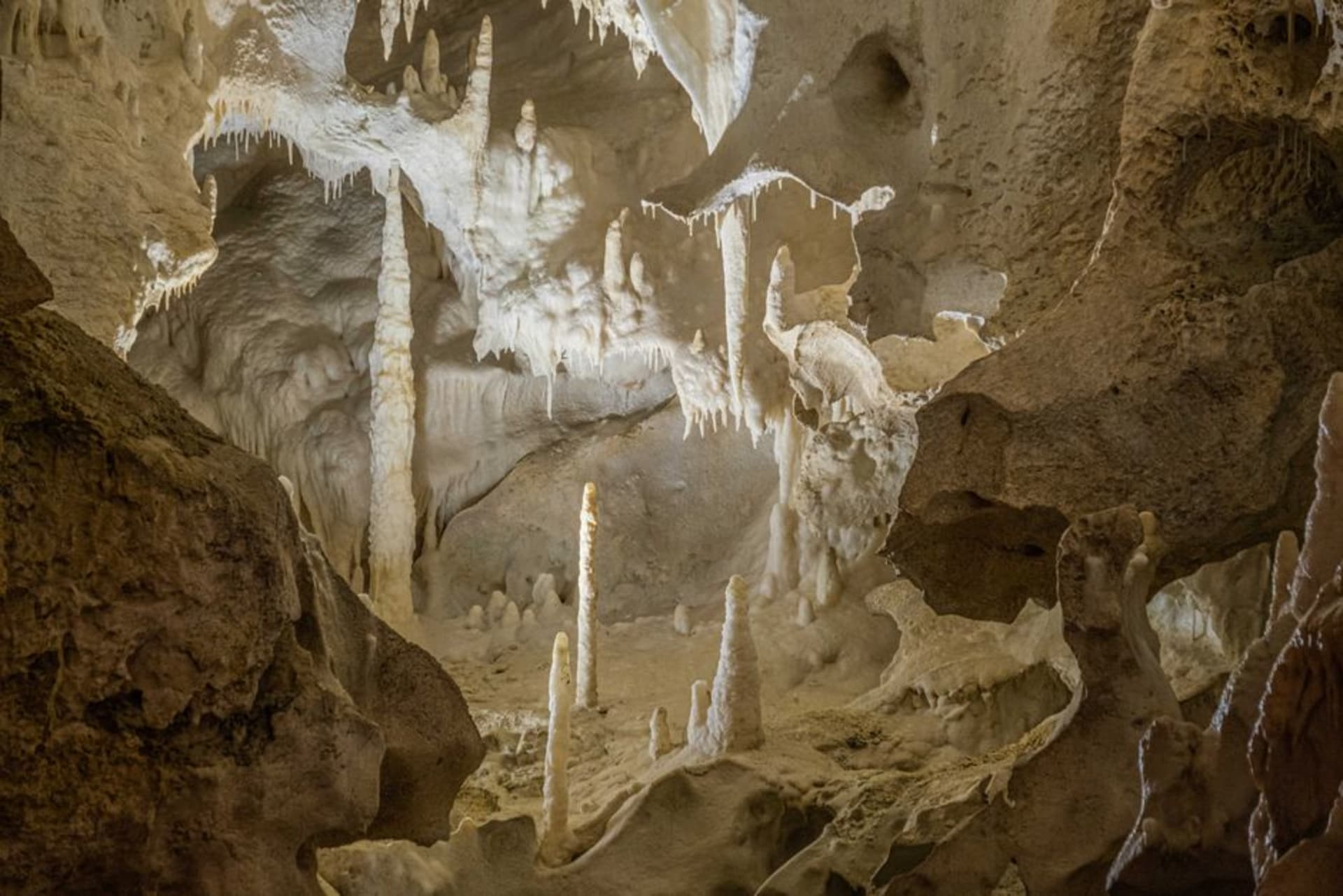
I went into Hato Caves expecting a quick, slightly touristy detour before a flight, and came out thinking about it for days. The caves sit only ten minutes from the airport, carved into what used to be an ancient coral reef, and the limestone walls still show the texture of coral formations from when this whole area was underwater — millions of years before anyone thought to build an island runway a few hundred meters away. Walking through, you’re literally inside a fossilized reef, and the guide made a point of running his hand along one wall to show us the coral pattern still visible in the rock.
The petroglyphs are the part that stayed with me longest. Small, reddish-brown markings on a chamber wall, made by the Caquetío people who lived in these caves long before Curaçao had a Dutch name. Nobody fully agrees on what the symbols mean, and our guide didn’t pretend otherwise — he gave us two competing theories and let us sit with the uncertainty, which I appreciated more than a confident false answer.

There’s also a chamber they call the Cathedral, tall enough that your flashlight beam disappears into the dark above you, and a formation locals nicknamed the Madonna because of how the dripstone shaped itself over centuries into something vaguely like a robed figure. I’m not usually one for pareidolia tourism, but standing under it with the temperature dropping and water dripping somewhere unseen, I got it. Lia, who normally hates enclosed spaces, made it through fine because the ceilings stay high most of the route — only a couple of stretches require ducking.

Then there are the bats — small fruit bats living in one of the deeper chambers, and the guides are strict about flash photography there for good reason. We stood quietly for a minute listening to them shift and click in the dark, which did more to make the place feel alive than any of the lit-up formations. Near the exit, a short trail leads out to a viewpoint over the surrounding limestone hills and, on a clear day, out toward the sea — a nice, sun-blasted contrast after twenty minutes underground.
When to go: Mornings are cooler and less crowded; visits run on guided tours only, so check the schedule if you’re squeezing this in before a flight.
Keep exploring
More from Curaçao
 curacao
Jan Kok
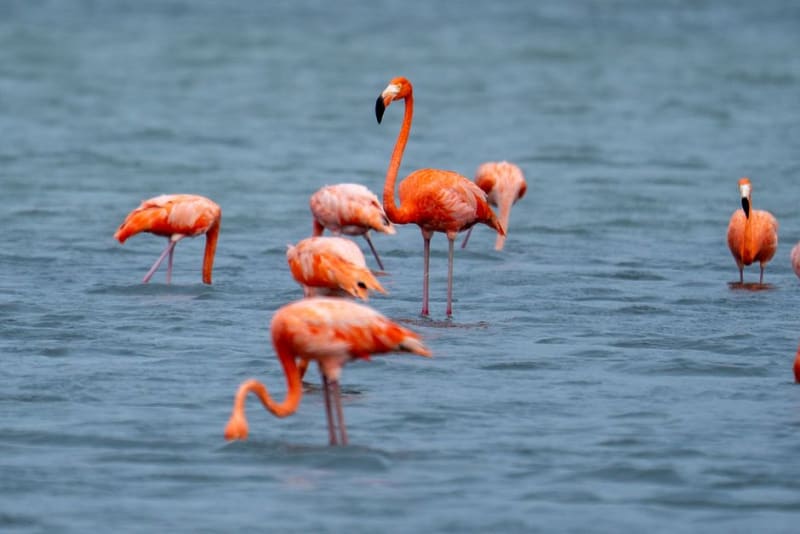
A quiet salt-flat wetland on Curaçao's calm western shore where flocks of pink flamingos wade in shallow, mineral-streaked water at sunset.
Explore curacao
Jan Thiel
A sheltered southeastern bay where local families and expats share a stretch of calm water without anyone making a fuss about it.
Explore curacao
Klein Curaçao
An uninhabited speck of sand and coral two hours offshore, with a ruined lighthouse, a rusting shipwreck, and absolutely nothing else.
Explore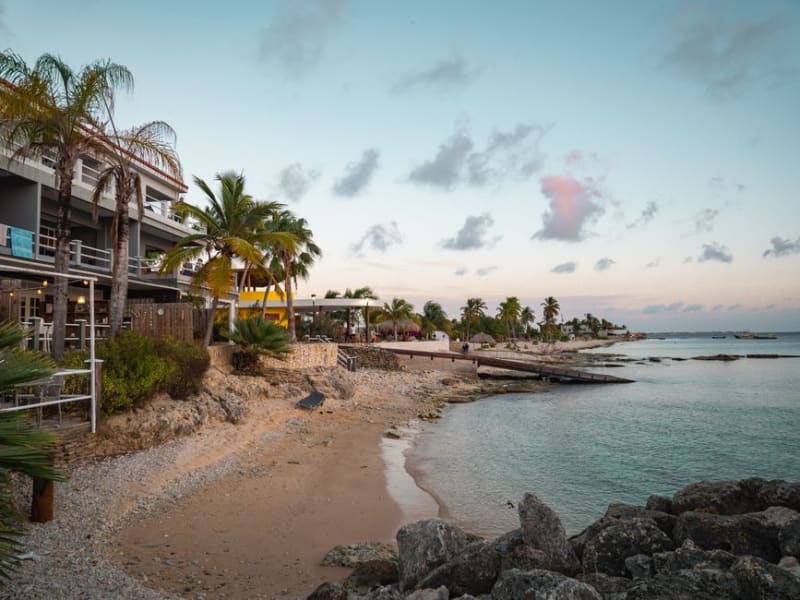 curacao
Mambo Beach
A man-made stretch of white sand near Willemstad where beach clubs, bars, and a boardwalk turn into a proper party after sunset.
Explore curacao
Otrobanda
Willemstad's rougher, more soulful side — where Afro-Caribbean culture runs deep and the keshi yena is extraordinary.
Explore curacao
Pietermaai
Willemstad's most alive neighborhood — restored plantation-era townhouses turned bars, studios, and small hotels on one electric strip.
Explore