Jan Kok
"Lia whispered like the flamingos could hear her, then immediately forgot and gasped when one took off."
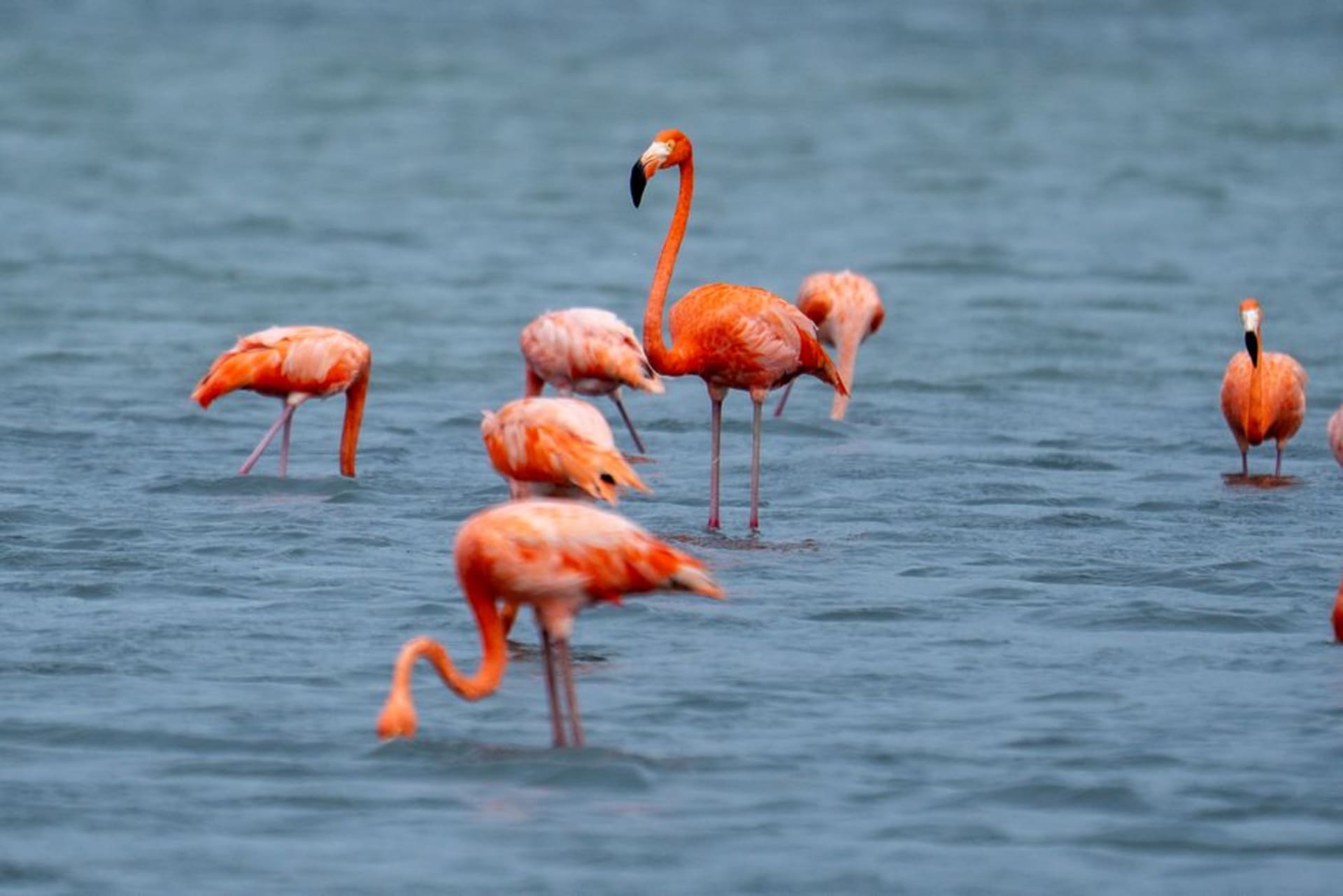
A quiet salt-flat wetland on Curaçao's calm western shore where flocks of pink flamingos wade in shallow, mineral-streaked water at sunset.

Nobody told us Jan Kok would end up being one of the quietest, most unexpectedly moving stops of the whole Curaçao trip. It’s a salt-flat area on the island’s calm western side, part of a network of saliñas — natural salt pans — that used to be worked commercially and now mostly exist as a haven for wading birds. We drove out along a dirt road with almost no other cars, windows down, half expecting to find nothing, and then the road curved and there they were: a loose scatter of flamingos, pink against the flat silver-white water, going about their business like we weren’t even there.
The birds here are Caribbean flamingos, and what struck me is how unglamorous their food source is — they filter tiny brine shrimp and algae out of the hypersaline water, which is also exactly what gives them that pink color in the first place, along with the salt itself giving the flats their strange, almost lunar look in certain light. Lia had read that Bonaire gets more flamingo hype, and it’s true, but Jan Kok felt more intimate precisely because it wasn’t built up for tourism — no boardwalk, no ticket booth, just a low viewing area and a lot of quiet.

We went back a second evening specifically for sunset, and it was the right call — the low light turns the water rose and copper, and the flamingos catch it in a way that makes the whole scene look slightly unreal, like a filter that isn’t actually a filter. A local guy fishing nearby told us the flock size shifts a lot depending on rainfall and salinity levels; some visits you’ll see a couple dozen birds, other times barely any, since flamingos move between Jan Kok, the Dutch Antilles, and Venezuela depending on conditions. We got lucky with a decent-sized group both evenings.

What I appreciated most is that nobody tried to sell us anything the whole time we were there — no vendors, no forced photo spots, just a dirt pull-off, a low stone wall to lean against, and birds that mostly ignored us unless we got closer than they liked, at which point a few would lift off in that slow, almost lazy way flamingos fly, legs trailing behind like an afterthought.
When to go: Late afternoon into sunset gives the best light and the calmest birds; bring binoculars since the viewing area keeps a respectful distance from the flats.
Keep exploring
More from Curaçao
 curacao
Jan Thiel
A sheltered southeastern bay where local families and expats share a stretch of calm water without anyone making a fuss about it.
Explore curacao
Klein Curaçao
An uninhabited speck of sand and coral two hours offshore, with a ruined lighthouse, a rusting shipwreck, and absolutely nothing else.
Explore curacao
Mambo Beach
A man-made stretch of white sand near Willemstad where beach clubs, bars, and a boardwalk turn into a proper party after sunset.
Explore curacao
Otrobanda
Willemstad's rougher, more soulful side — where Afro-Caribbean culture runs deep and the keshi yena is extraordinary.
Explore curacao
Pietermaai
Willemstad's most alive neighborhood — restored plantation-era townhouses turned bars, studios, and small hotels on one electric strip.
Explore curacao
Playa Kenepa
Curaçao's most beautiful beach — a steep-sided cove of white sand and water the color of a swimming pool that actually means it.
Explore