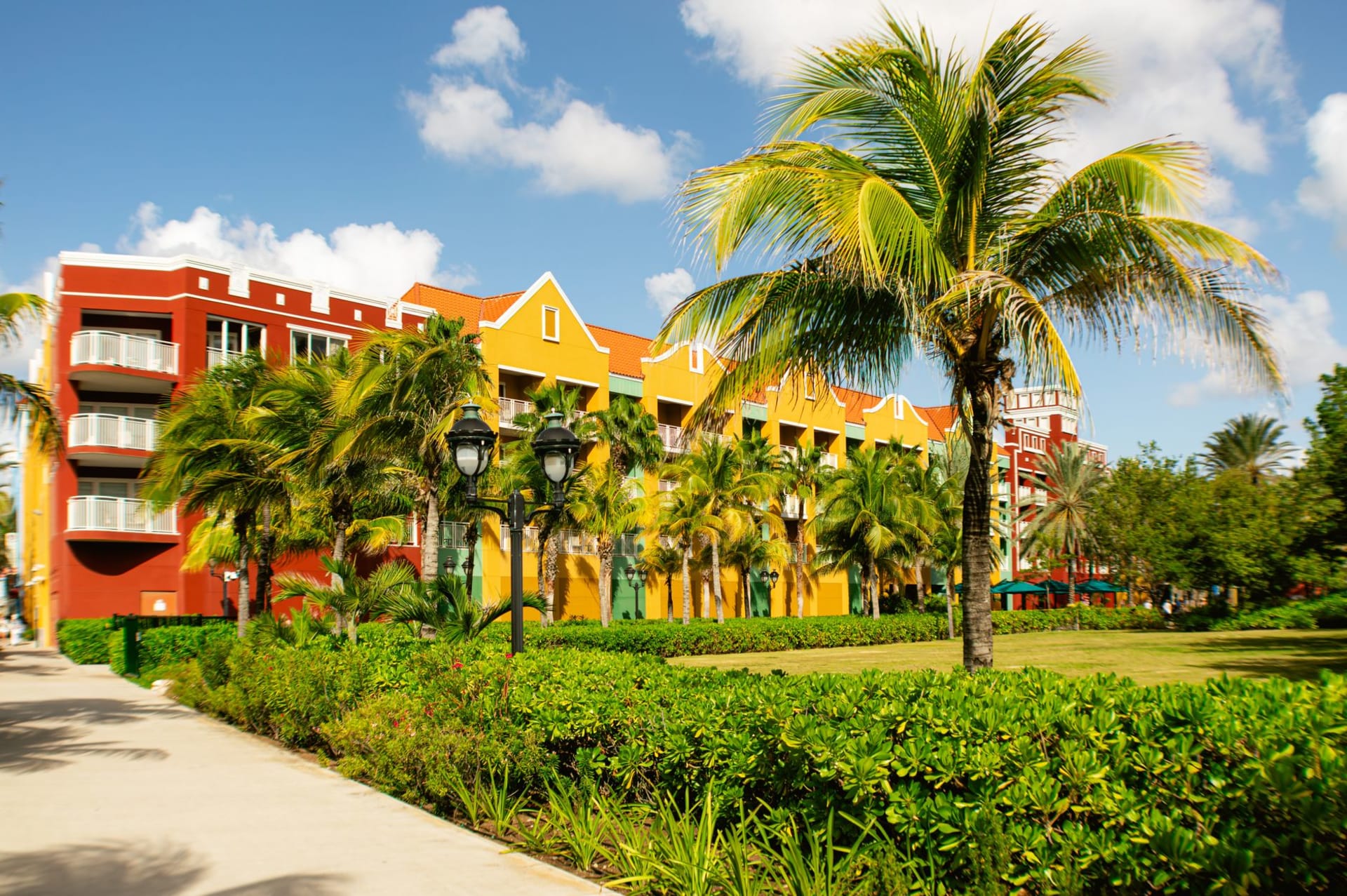
A sheltered southeastern bay where local families and expats share a stretch of calm water without anyone making a fuss about it.

Jan Thiel is not the beach you come to Curaçao for. It is the beach you find yourself coming back to. The first time I drove out to the southeastern tip of the island and turned down the road toward the bay, I was looking for somewhere to swim that wasn’t forty-five minutes of highway. What I found was a curved beach on a sheltered bay where the water was so calm it barely qualified as waves, where children were playing in the shallows with the unselfconscious seriousness of children who have been coming here since they could walk, and where the food at the beach bar was the kind of fried fish and rice situation that I would have driven forty-five minutes for if I’d known.
The bay sits on the southeastern coast, fifteen minutes from Willemstad, in a neighborhood that is partly expat residential and partly working Curaçaoan suburb. The beach is used equally by local families, foreign retirees who’ve built their lives here, and the occasional tourist who found it in a travel blog or simply turned down the right road. It does not have the dramatic limestone cliffs of Westpunt or the white-sand perfection of Kenepa. What it has is calm water, reliable snorkeling around the rocks at either end of the bay, and an atmosphere that suggests nobody here is trying particularly hard to have a good time — they are simply having one.

The snorkeling at the rocky eastern end of the bay is better than you’d expect from the beach’s low-key reputation. I went in late afternoon when the light was coming through the water at an angle that made everything glow, and found a small reef with healthy brain coral, a turtle that let me follow it for a while at a respectful distance, and a cluster of fish I couldn’t identify — small, translucent, catching the late light. The water temperature was something close to perfect: cool enough to be refreshing, warm enough that you didn’t feel the urgency of getting out.
There is a cluster of restaurants and a sailing club at the far end of the bay. The sailing club hosts races on Sunday mornings, small boats tacking across the bay in the trade wind while the rest of the beach settles into its weekend rhythm. I watched one Sunday race from a table at the beach bar, eating an early lunch of fresh catch with a cold Amstel, and a local couple next to me was explaining the tactics to their daughter, who was maybe ten, who was nodding with the patient expression of someone hearing this for the fifth time and loving the tenth telling.

The Caracasbaai salt pans lie a few kilometers east of Jan Thiel and are worth the short drive: flat pink-white geometric pools where flamingos feed in the shallows in the late afternoon, their color so specific against the pale landscape that they look like they were placed there by a designer with a very particular aesthetic. I parked on the shoulder of the road and watched them for twenty minutes while the trade wind moved through the dry grass and a lizard did push-ups on the nearby fence post with the urgency of someone making a point.
When to go: Jan Thiel is pleasant year-round. The sailing club races happen Sunday mornings — worth timing a visit around if you happen to be on the island. Weekday mornings are quietest; weekend afternoons fill up with local families. The flamingos at the nearby salt pans are most reliably visible in the late afternoon, particularly November through April during the dry season.
Keep exploring
More from Curaçao
 curacao
Klein Curaçao
An uninhabited speck of sand and coral two hours offshore, with a ruined lighthouse, a rusting shipwreck, and absolutely nothing else.
Explore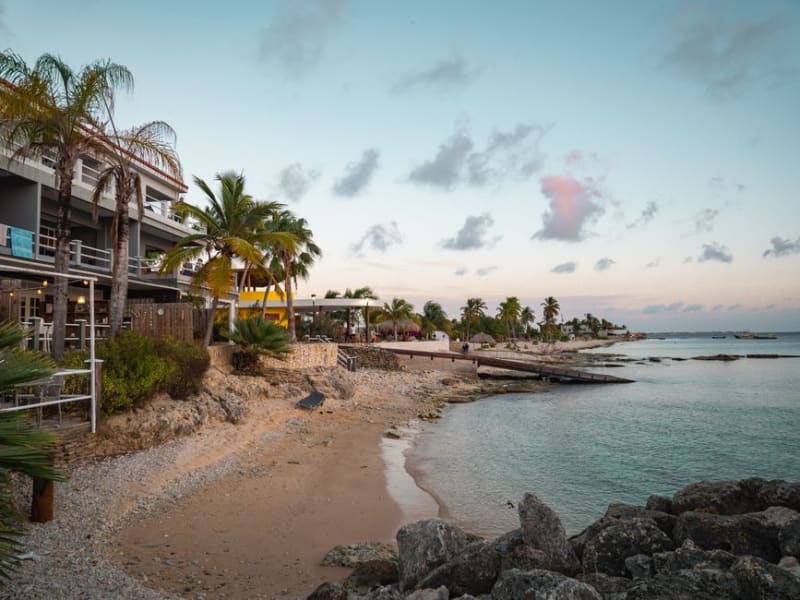 curacao
Mambo Beach
A man-made stretch of white sand near Willemstad where beach clubs, bars, and a boardwalk turn into a proper party after sunset.
Explore curacao
Otrobanda
Willemstad's rougher, more soulful side — where Afro-Caribbean culture runs deep and the keshi yena is extraordinary.
Explore curacao
Pietermaai
Willemstad's most alive neighborhood — restored plantation-era townhouses turned bars, studios, and small hotels on one electric strip.
Explore curacao
Playa Kenepa
Curaçao's most beautiful beach — a steep-sided cove of white sand and water the color of a swimming pool that actually means it.
Explore curacao
Punda
Willemstad's colonial heart, where pastel merchant houses and a 300-year-old synagogue share the same block.
Explore