
Algeria's second city pulses with raï music, Spanish-Ottoman architecture, and the unapologetic confidence of a port town that owes nothing to Algiers.

Oran announces itself at midnight. I had taken the train from Algiers — six hours through coastal hills that gave way to more parched, open terrain — and arrived at the station past eleven to a city that was not in any way preparing for sleep. The boulevard was lit, the cafés were full, a group of men were arguing with great animation about something involving extended gestures toward a parked car. Someone was playing darbouka somewhere nearby, and under it all a sub-bass frequency that took me a moment to identify as raï music leaking from a wedding behind a wall. I stood outside the station for five minutes just listening to the city calibrate itself, and I thought: this is going to be entirely different from Algiers.
This is Oran’s register — louder, faster, and considerably less concerned with the formal than the capital. The city was shaped by centuries of Spanish occupation (the Fort of Santa Cruz on its cliff still looks Castilian), Ottoman presence, French colonialism, and the mass emigration of Jewish and Spanish communities after 1962 that left the architecture but emptied the demographic mix. Most importantly, it was shaped by the raï scene that developed in the Sidi El-Houari quarter starting in the 1970s. Cheikh Hasni was from here. Khaled was from here. The music that Oran gave the world still sounds like the city it came from: unguarded, rhythmically insistent, and slightly rough at the edges in exactly the right way.
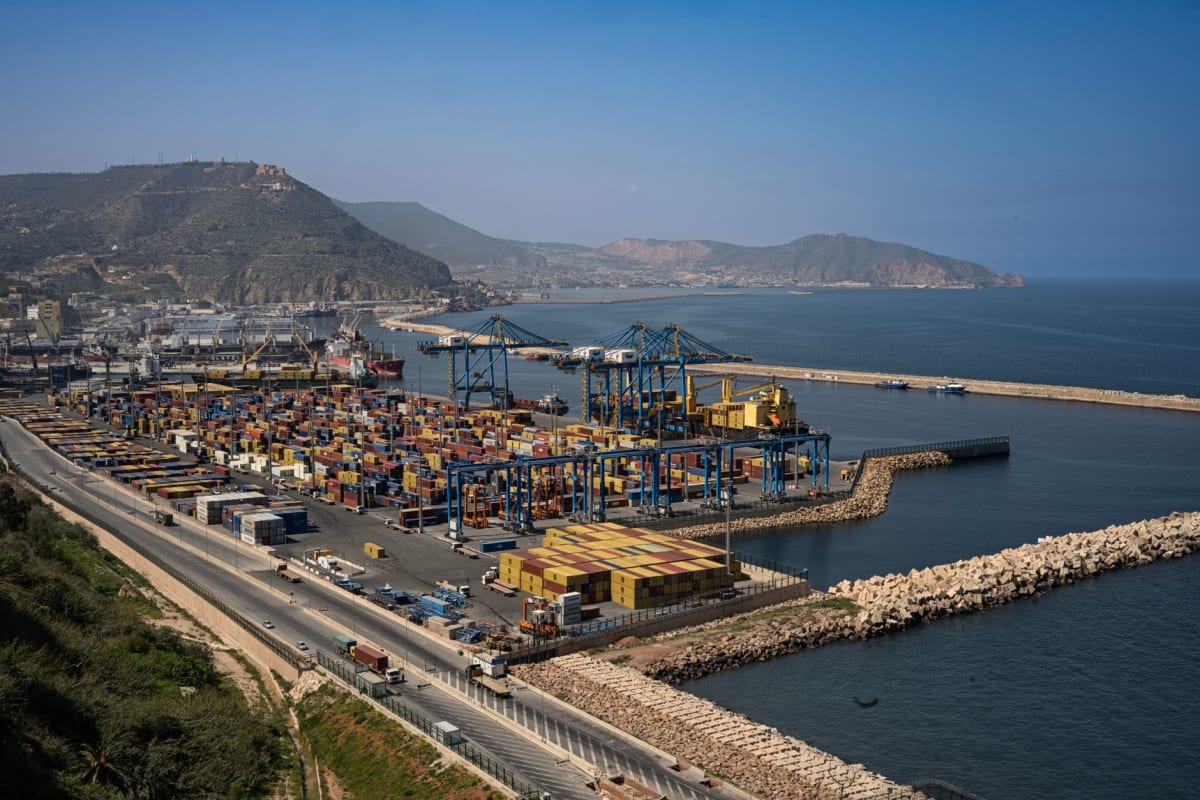
I spent a morning in Sidi El-Houari, the old Ottoman quarter that once held the city’s diverse communities and now exists in various states of beauty and functional disrepair. There’s a Spanish church being used as a cultural space, its frescoes fading but still legible. Streets of carved stone buildings whose ironwork balconies have begun to lean, photogenically. An old synagogue that a man let me look at through an unlocked gate with the quiet acknowledgment that most of its former congregation left fifty years ago and the building simply remains. History in Oran is not presented as heritage — it’s just there, lying around in the architecture, waiting for you to notice it.
The merguez I ate at midnight, standing at a grill set up on the pavement near the covered market, had been on coals since early evening and were slightly charred on the outside and phenomenally spiced within. The vendor put them in a piece of bread with harissa and raw onion and handed it to me without ceremony. I ate standing up, watching the street, and ordered a second. The city runs on this kind of transaction — efficient, unsentimental, and good enough that you don’t need any more decoration around it.

When to go: September through November is ideal — the summer heat has broken, the city’s cultural season is in full swing, and the sea is still warm enough for a swim at the beaches west of town near Ain Turck. Spring is also excellent. Avoid July and August if you’re not prepared for aggressive Mediterranean heat amplified by the city’s density.
Keep exploring
More from Algeria
 algeria
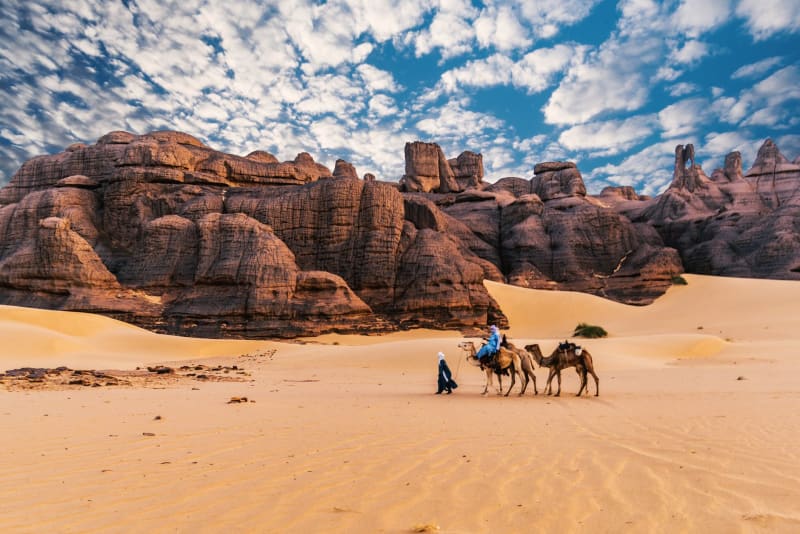
 Tamanrasset
Deep Saharan gateway at 1,400 metres where Tuareg culture, volcanic mountains, and trans-Saharan silence converge.
Explore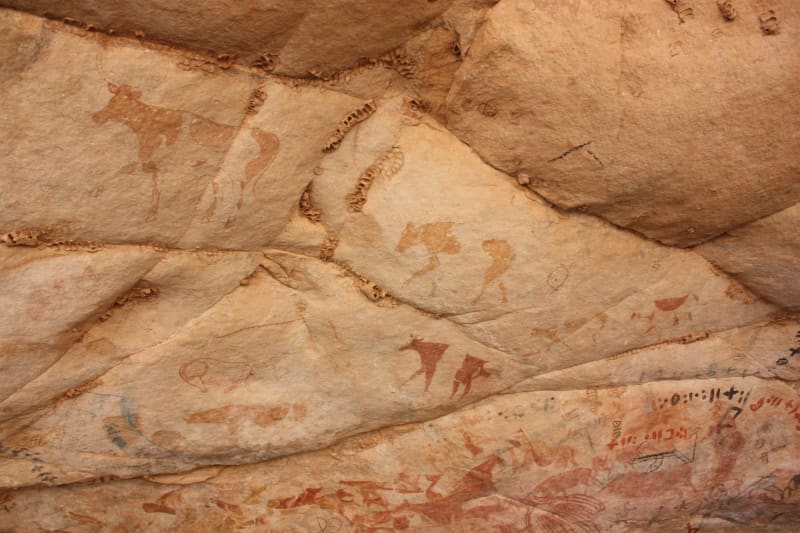 algeria
 Tassili n'Ajjer
A vast Saharan plateau holding 15,000 prehistoric rock paintings — one of the oldest and most remote open-air galleries on earth.
Explore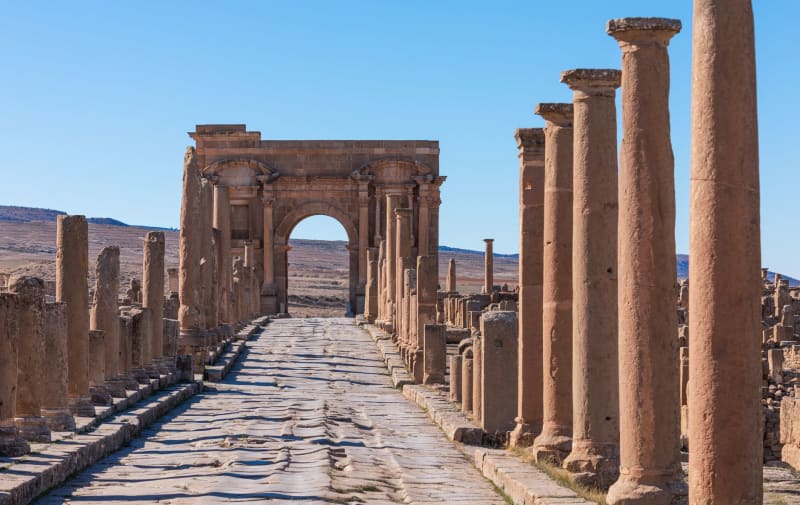 algeria
 Timgad
A Roman garrison city buried under sand for a millennium, now emerging from the Aurès mountains in extraordinary, disorienting completeness.
Explore algeria
 Timimoun
The red oasis of the Gourara, where ochre Sudanese walls glow above date palms and an ancient web of underground channels keeps the desert alive.
Explore algeria
 Tipaza
A Roman ruin field tumbling into the Mediterranean, where wildflowers grow through broken columns and Camus once found his happiness.
Explore algeria
 Algiers Casbah
A UNESCO-listed Ottoman labyrinth of whitewashed alleys cascading down to the Mediterranean, almost impossibly alive.
Explore