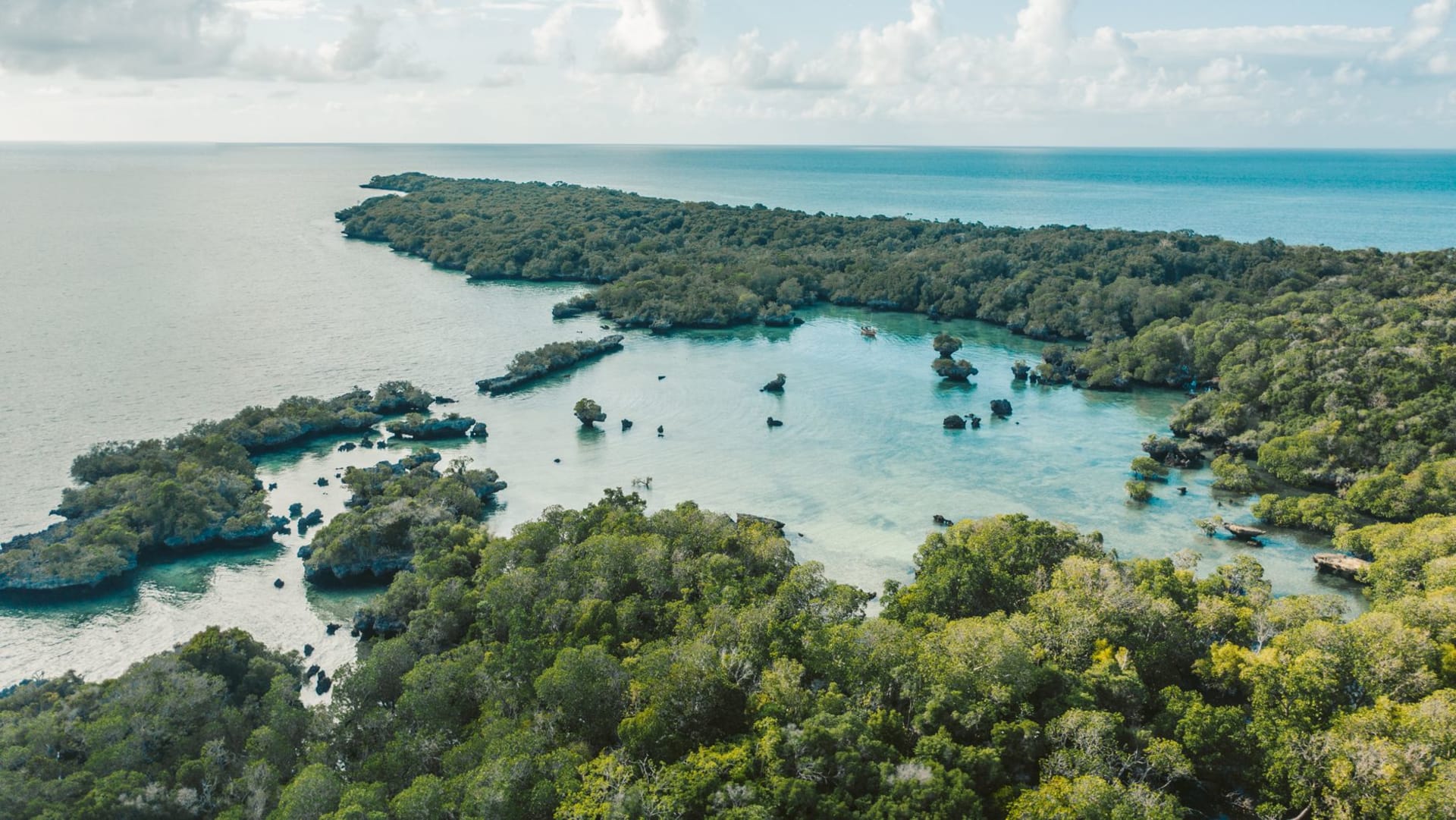
The quiet southwestern tip of the island where spinner and bottlenose dolphins feed in the channel every morning and a twelfth-century mosque stands in a fishing village that time treats gently.

The road to Kizimkazi is long and mostly unpaved by the end, and the village you arrive at looks like it would prefer you hadn’t made quite so much effort to reach it. Not unwelcoming — just self-contained. Fishing boats pulled up on the beach, nets drying on stakes, children going to school along a road where the occasional tourist vehicle passes with the slightly guilty air of having wandered into someone’s private life.
But Kizimkazi has two things that justify the distance: a pod of resident dolphins that feed in the channel between the island and the mainland, and one of the oldest extant mosque structures in East Africa. Both reward the trip.
Swimming with Dolphins
I want to address the ethics first, because they’re real. Kizimkazi’s dolphins — a mix of spinner and bottlenose — are wild animals, not a managed experience. The boat operators here range from responsible to catastrophically otherwise. The best ones read the dolphins’ behavior and give them space; the worst ones chase them into exhaustion. Ask your guesthouse for a recommendation, go out early before the day’s tourist traffic peaks, and if your driver is aggressive, say something.
When it works, it works entirely. We went out at six in the morning in a small outboard, the channel still flat, the sun barely up, and found the pod maybe a kilometer offshore — maybe forty animals, spinning as they broke the surface, the distinctive aerial corkscrew that gives spinner dolphins their name. We slipped into the water slowly, no splashing, and they came to look at us.
This is the thing that undoes you: they come to look. Not because they’re trained or habituated to performance but because they’re intelligent, curious animals and we were a novel thing in their water. They circled, dove, came up again. One passed close enough that I felt the pressure wave from its fin. Then they moved on, because they had places to be, and we floated there in the warm channel looking at each other.
The Mosque of Kizimkazi
On the shore at Dimbani, a short distance from the dolphin landing, stands a mosque that dates to 1107 AD — the oldest known mosque in sub-Saharan Africa, and one of the oldest buildings I have ever been inside. The structure visible today is mostly eighteenth century, but the original prayer niche survives, its Kufic inscription in the coral plaster still legible.
The mosque is modest, cool, built of the same coral stone everything in this part of the world is built from. There’s a caretaker who will show you in, explain the inscriptions, describe what the building has survived. He spoke with the even tone of someone who has told this story a thousand times and still finds it accurate and worth telling.
I sat outside afterward for a long time, in the shade of the entrance wall, watching the channel glitter and a fishing boat move very slowly toward the horizon.
The Village Itself
Kizimkazi is split into two adjacent settlements — Dimbani and Mkunguni — that together form a village of perhaps a few thousand people. There’s a market, a school, the kind of daily commerce that unfolds without any attention to tourism. In the early morning the fish market operates at the landing, and the catch — marlin, tuna, barracuda — is laid out on the concrete and traded in a quick, efficient transaction before the heat sets in.
I ate lunch at a place that had three plastic tables and a woman who made one dish per day. The day I was there: rice, fish curry, coconut beans, a tomato salad with chili and lime. It cost almost nothing and was excellent. She seemed mildly baffled that I expressed enthusiasm about it.
The Evening Light
The southwest-facing coast means Kizimkazi gets the sunset directly — the channel turns gold then copper then a deep orange that makes the fishing boats look painted. I watched this from the beach on my last evening with a cold Tusker from a shop run by a man who saw me coming and already had one in his hand when I arrived. Some things are very simple.
When to go: Dolphins are present year-round, but calm seas make for easier spotting December to March and June to October. Avoid April and May (heavy rains, rough channel). Early morning departures give you the dolphins before the day’s tourism boats compete for the same water.
Keep exploring
More from Zanzibar
 zanzibar
 Mangapwani
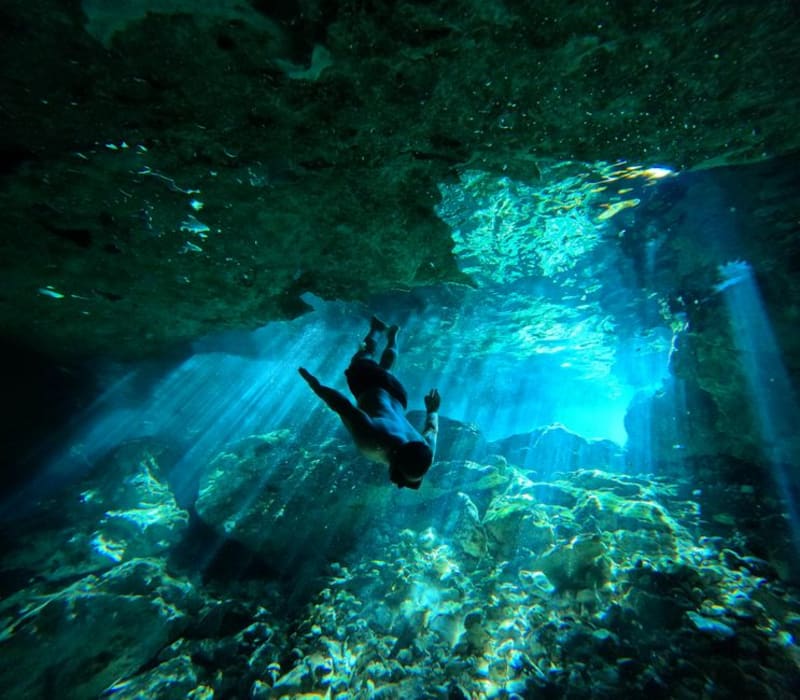
A stretch of coast north of Stone Town where somber slave-trade caves sit within walking distance of a natural coral swimming cave.
Explore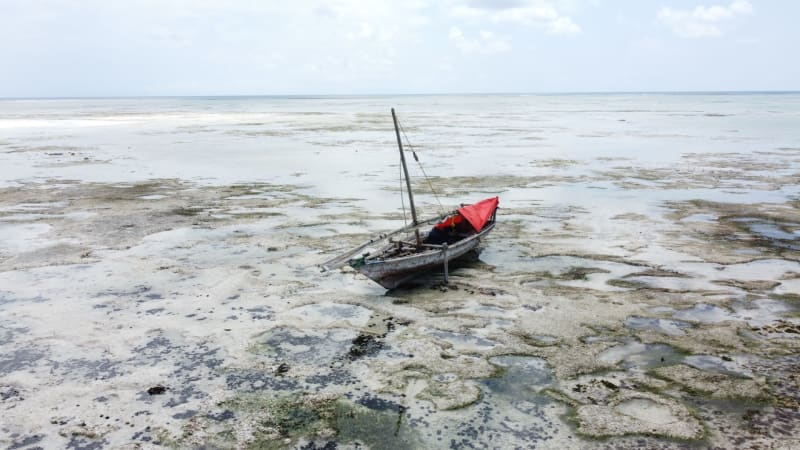 zanzibar
 Matemwe
A quiet northeast village backed by palms and fronted by a reef that drops into some of the clearest water on the island, where manta rays drift through in season.
Explore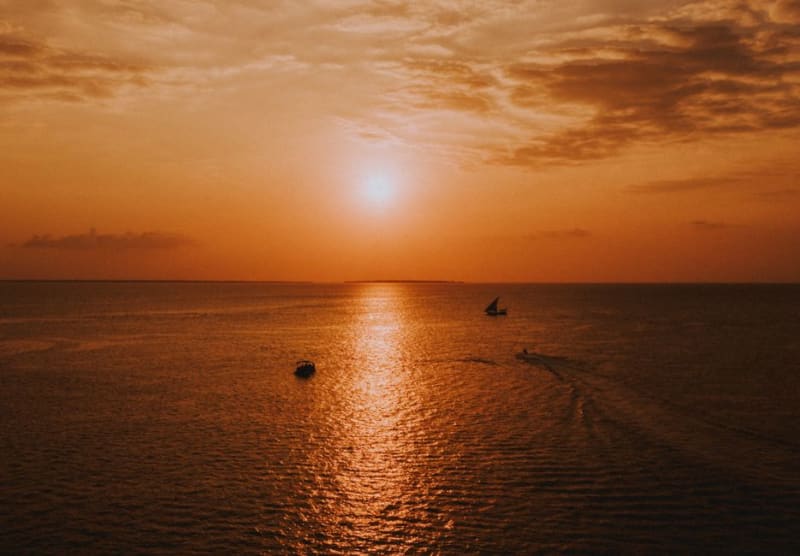 zanzibar
 Michamvi
A slender peninsula at Zanzibar's southeastern tip narrow enough that sunrise over the ocean and sunset over the channel happen from the same sandbar.
Explore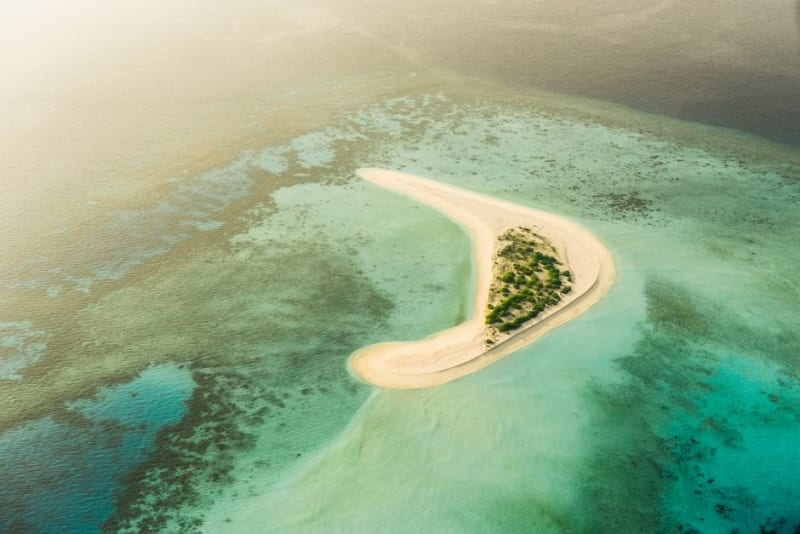 zanzibar
 Mnemba Island
A private coral atoll off Zanzibar's northeast tip where the sandbanks disappear at high tide and whale sharks pass close enough to touch.
Explore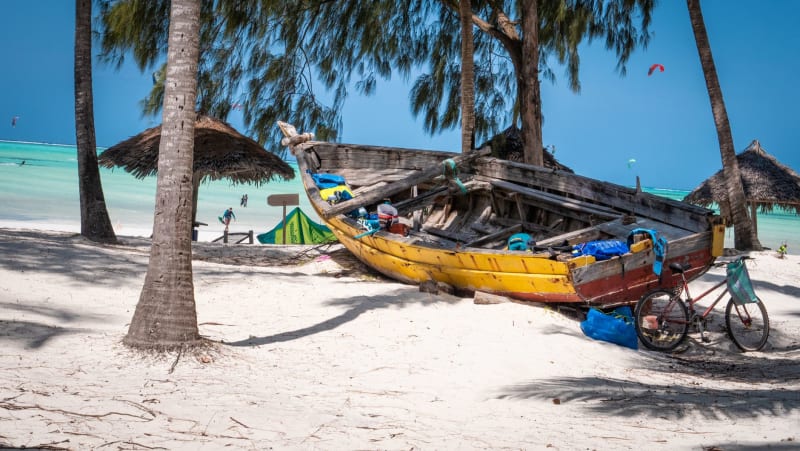 zanzibar
 Nungwi
The northernmost tip of the island where dhow builders still work by hand on the beach and the water stays deep enough to swim at any tide.
Explore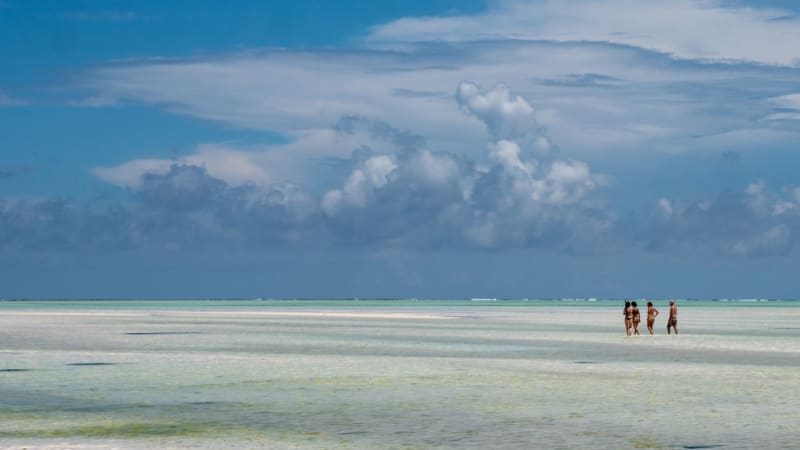 zanzibar
 Paje
An east-coast village of tidal flats and constant trade winds where kitesurfers rule the afternoons and the beach transforms into a mirror at low tide.
Explore