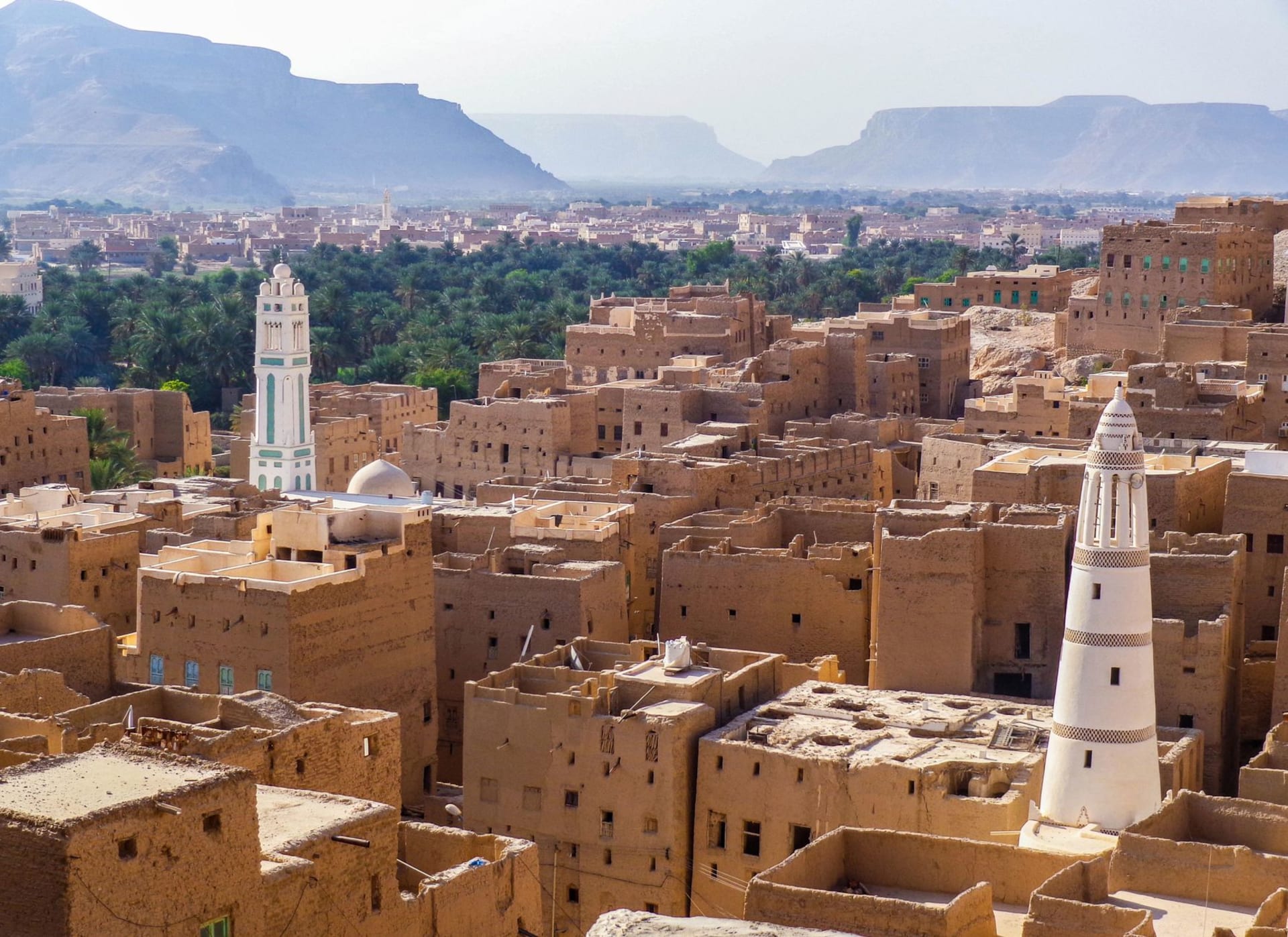
A vast canyon valley running through eastern Yemen's limestone plateau, threaded with date palms and ancient cities that have been trading frankincense since before Rome existed.

The Hadhramaut is not one thing—it is a valley system that runs for roughly 160 kilometers through the limestone plateau of eastern Yemen, wide enough in places that you can see both cliff walls only on very clear days. The floor of the valley is cultivated in a way that feels defiant given the surrounding desert: date palms in dense groves, patches of millet and sorghum, the occasional kitchen garden. The mud-brick towns that line the valley floor—Say’un, Tarim, Shibam, Al-Qatn—have been continuously inhabited for millennia, their architecture adapted over centuries to the specific logic of a place that has too much sun, too little rain, and an enormous amount of human ambition.
I entered the Hadhramaut from the coast road, which climbs the escarpment through switchbacks that reward the vertigo with views of the valley gradually revealing itself below. The plateau above is lunar—flat, pale, almost no vegetation—and then the ground opens and you descend into something that shouldn’t exist in this landscape: green, dense, smelling of irrigation and wood fires.
Say’un and Its Palace
Say’un is the Hadhramaut’s administrative center, which means it has a bus station, several banks, and a palace that belonged to the Kathiri sultans—a white-washed confection that looks slightly delirious in the middle of the mud-brick town, six stories of whitened plaster gleaming in the sun. The palace is now a museum of varying quality but the building itself is reason enough. The courtyard on a quiet morning, when the light comes in at an angle and the plaster walls go from white to cream to something almost pink, is the kind of thing you carry home without meaning to.
The Date Palm Economy
The Hadhramaut’s date palms are not decorative. They are the reason the valley has been populated for as long as it has. The palms provide shade that makes agricultural activity possible, fruit that can be stored and traded, fronds that become building material and fodder. In the groves between towns, the irrigation channels that feed them are maintained by systems that predate Islam. I walked through one such grove at midday—the air inside was ten degrees cooler than outside, the ground soft and dark with moisture—and understood immediately why early settlements chose exactly these spots.
Tarim’s Mosques
Tarim is the religious capital of the Hadhramaut and has more mosques per capita than almost anywhere in the Muslim world—a claim I cannot verify but have seen repeated often enough to believe approximately. The Al-Mihdhar mosque has a minaret of 53 meters built from mud brick in the 1910s, which is a remarkable thing to say out loud. It dominates the town from every angle. The interior is cool and smells of old wood and incense, and the tiling around the mihrab is fine enough to make you wonder what else was being made here in 1914 while other parts of the world were doing other things.
The Cliffs at Dusk
What I keep coming back to is the quality of the light when the sun drops below the plateau rim. The limestone cliffs go from white to cream to amber to rose in the space of about thirty minutes, and the valley floor falls into purple shadow while the cliffs are still blazing above. The date palms become silhouettes. The muezzin calls from three directions simultaneously. A man on a donkey moves along the road below me at a pace that suggests no particular urgency, and the dust behind him catches the last horizontal light and turns briefly gold.
When to go: November through February for comfortable daytime temperatures; the valley can be ferociously hot from April through October. The date harvest in late summer draws local activity but overlaps with the worst heat. A 4WD vehicle is recommended for the plateau roads; the valley floor roads are generally paved.
Keep exploring
More from Yemen
 yemen
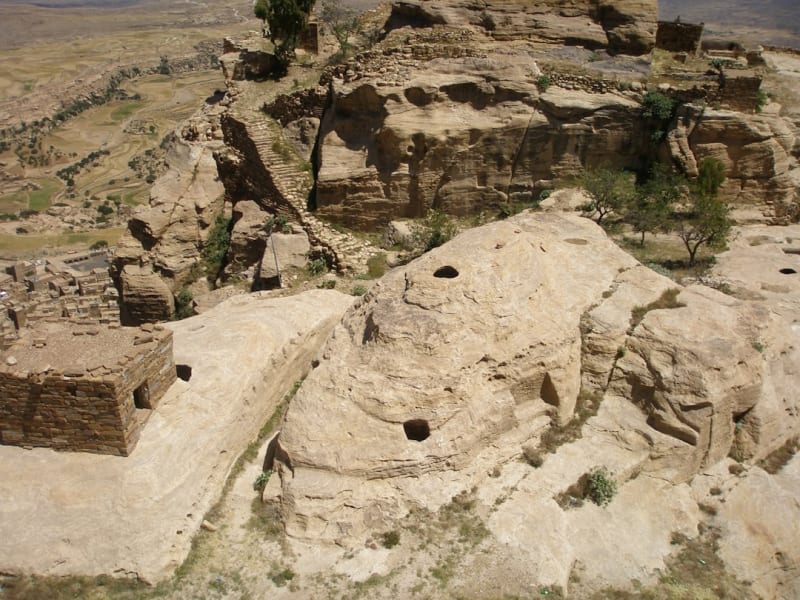
yemen Zabid
A sun-bleached maze of coral-brick houses where Yemen's oldest university once drew scholars from across the Islamic world.
Explore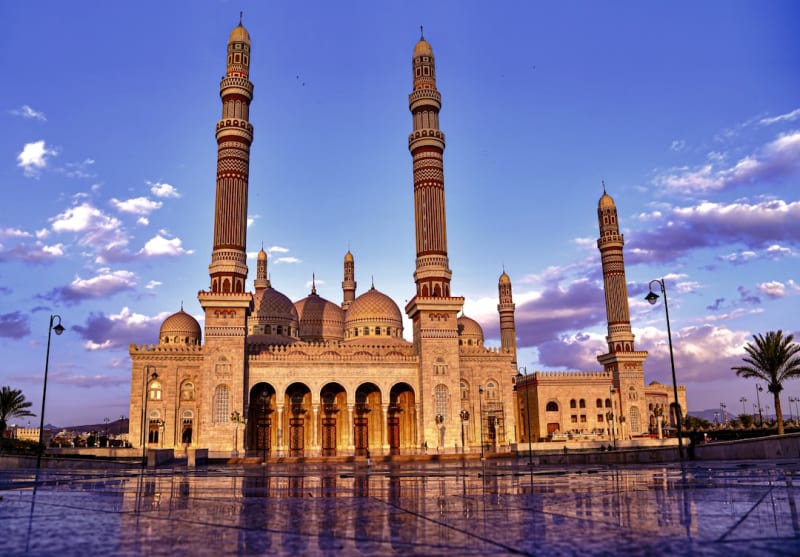 yemen
yemen Aden
A port city built inside the crater of an extinct volcano, where British colonial arcades and ancient cisterns coexist with the smell of the Indian Ocean on every street.
Explore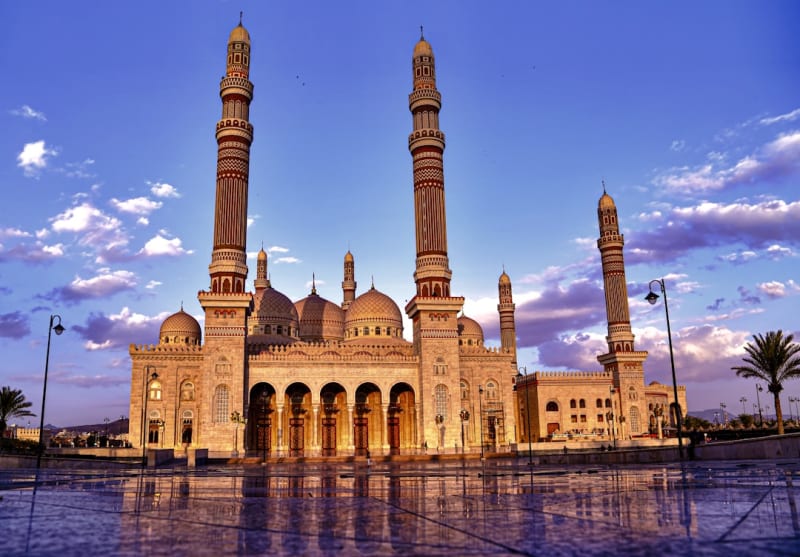 yemen
yemen Al-Hudaydah
A Red Sea port city where Ottoman coral-stone architecture lines a harbor famous for fishing, and the dawn fish market runs on a logic of controlled chaos that has not changed in two centuries.
Explore yemen
yemen Al-Mahwit
A highland market town at 2,200 meters where terraced mountainsides drop away in every direction and the Thursday market draws farmers from villages that have no other day to converge.
Explore yemen
yemen Dhamar
A working highland market city sitting quietly beside the buried capital of the ancient Himyarite kingdom.
Explore yemen
yemen Hajjah
A mountain fortress town clinging to a knife-edge ridge, its stone houses stacked so tightly they look carved from the cliff itself.
Explore