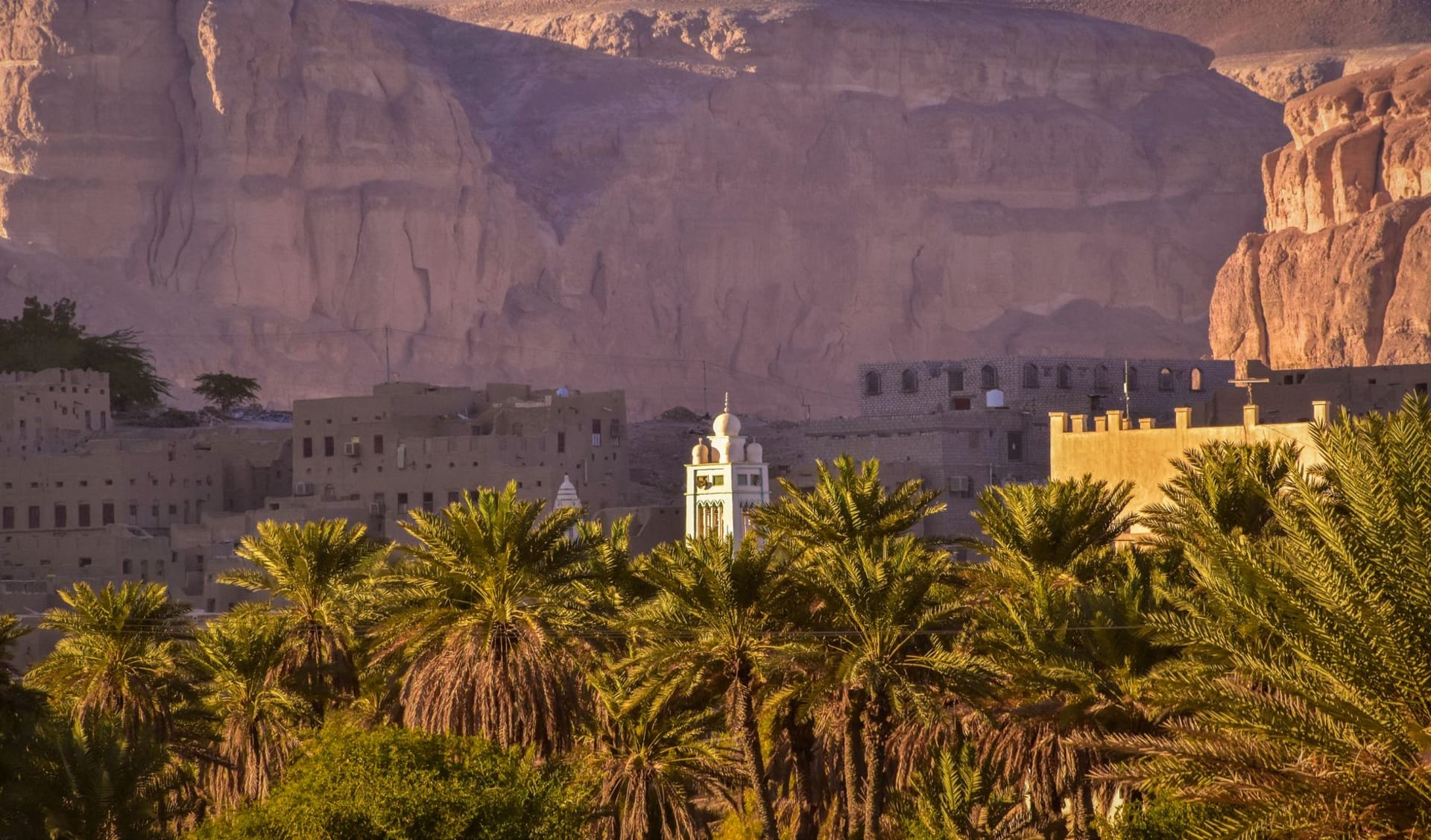
A sixteenth-century mud-brick Manhattan rising from the Hadhramaut valley floor, where tower houses of up to eleven stories have been continuously inhabited for five centuries.

The first view of Shibam arrives as a problem of scale. You are driving through the Hadhramaut valley, which is wide and flat and edged with pale cliffs, and then a city appears on the valley floor that has no business being as vertical as it is. The tower houses—some eleven stories, built entirely from mud brick—rise in a dense cluster that from a distance looks like a piece of downtown that was airlifted in from a different century and a different geological context. Closer up, it doesn’t get less strange. It gets more specific.
Shibam is often called the Manhattan of the desert, which is both accurate and slightly misleading. The Manhattan comparison captures the verticality—a city that builds upward because horizontal space is scarce and valuable—but misses the material reality. These buildings are made of mud. They have been standing since the sixteenth century. They are continuously inhabited, continuously maintained, replastered after each rain season, their wooden beams replaced when rot requires it. The people who live here are not museum curators. They are people who live in their houses.
The Logic of Height
The tower houses weren’t built tall for aesthetics—they were built tall for defense. Before the Hadhramaut valley was pacified by the British in the twentieth century, raiding was a regular feature of life, and height was security. A family on the eighth floor of a mud tower is considerably harder to rob than a family in a single-story house on the valley floor. The logic has become obsolete but the buildings remain, and the families who have always lived in them continue to do so with what appears to be complete normalcy.
I climbed to the roof of one tower—fifth story, steep wooden stairs, each step worn to a smooth valley in the middle—and looked out over the cityscape. The rooflines are irregular in a way that photographs never quite capture, each tower a slightly different height and width, the whole thing looking improvised by consensus over centuries. A man on a neighboring roof was talking on a mobile phone. The contrast didn’t feel incongruous. It felt like the correct summary of what Shibam is.
Walking the Lanes
Inside the walls, Shibam’s lanes are narrow and in permanent shadow between buildings. The smell is dust and something organic—livestock somewhere nearby, wood fires, the faint mineral smell of mud brick warming in the sun. Children appeared and disappeared from doorways. A woman carried a plastic basin of water up what looked like an impossibly steep alley without slowing down. The gates of the old city are original—massive wooden things with iron hardware—and they close at night as they have always closed.
The Valley at Dusk
What I wasn’t prepared for was how the light behaves at the end of the day. Around 5 p.m., the sun drops below the valley’s western rim and the cliffs go orange, and for about forty minutes every mud brick in Shibam turns the same warm amber as the rock it was quarried from. The tower houses stop being architectural curiosities and become geological features, as though the valley floor simply decided to stand up in one place. I watched this from the road outside the walls and didn’t take a single photograph. Some things are better held without the mediation of a camera.
When to go: October through March offers the most bearable temperatures in the Hadhramaut valley, where summer heat regularly exceeds 45°C. Early mornings are cool and photographic; late afternoons spectacular. The valley road from Say’un is straightforward; a local guide is worth arranging for Shibam’s interior lanes.
Keep exploring
More from Yemen
 yemen
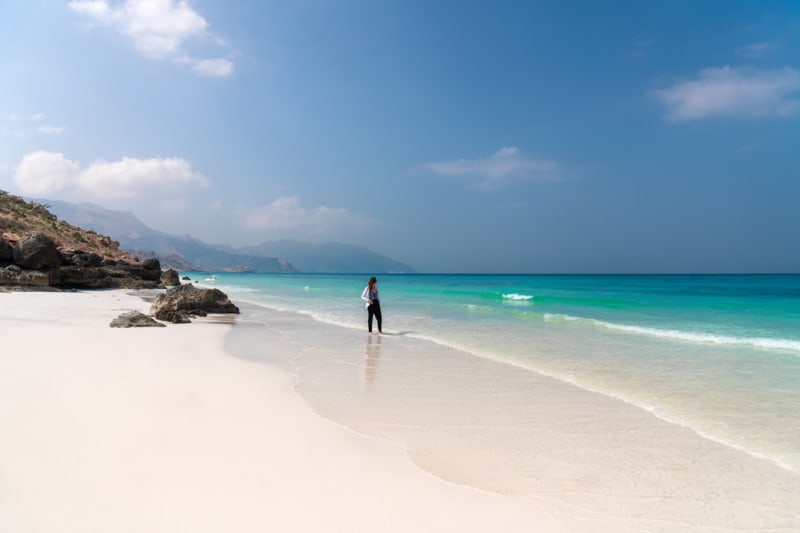
yemen Socotra
A Gondwanan island so biologically isolated that a third of its plant species exist nowhere else on earth, including a tree that bleeds crimson.
Explore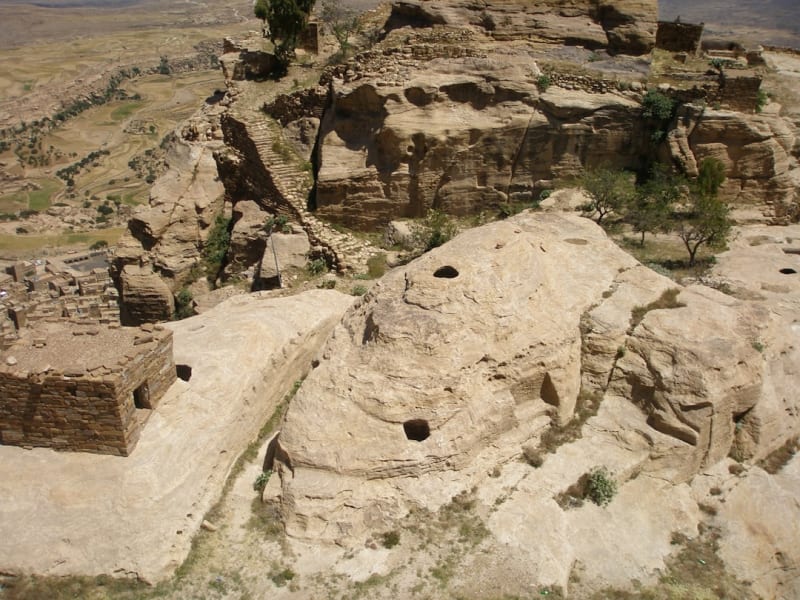 yemen
yemen Taiz
Yemen's most densely cultured city, pressed between mountain ridges at 1,400 meters, where Ottoman mosques, Jewish-era silverwork, and the most argumentative coffee in Arabia share the same cramped and magnificent downtown.
Explore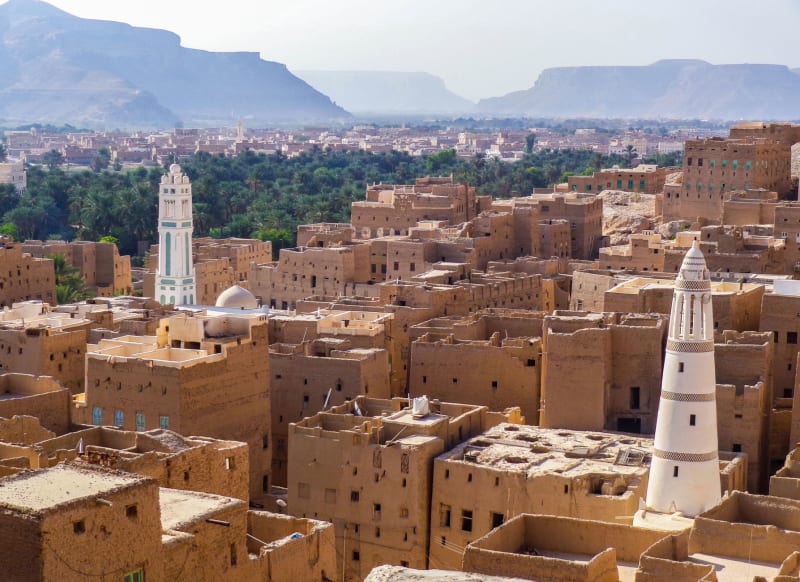 yemen
yemen Wadi Hadhramaut
A vast canyon valley running through eastern Yemen's limestone plateau, threaded with date palms and ancient cities that have been trading frankincense since before Rome existed.
Explore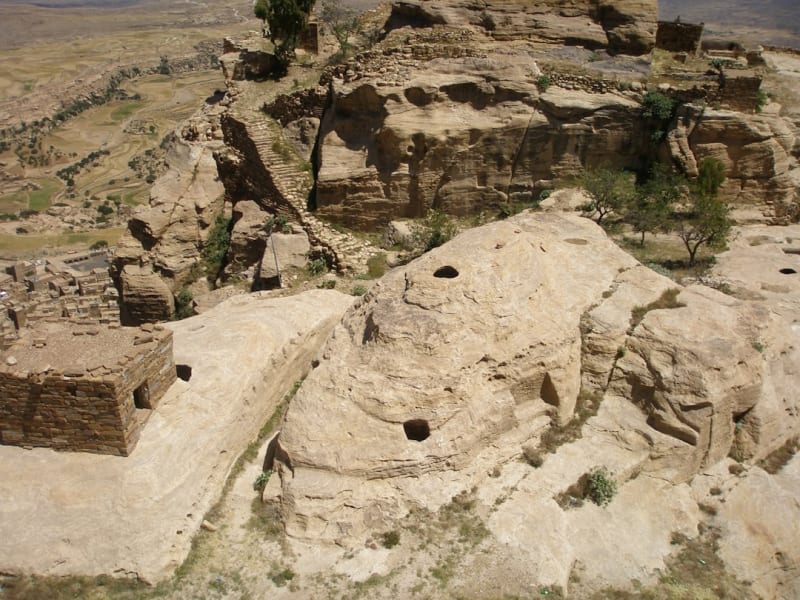 yemen
yemen Zabid
A sun-bleached maze of coral-brick houses where Yemen's oldest university once drew scholars from across the Islamic world.
Explore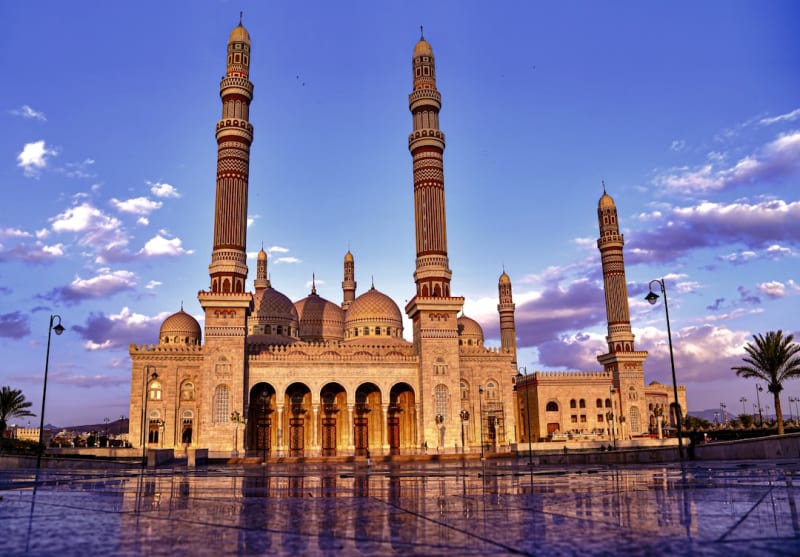 yemen
yemen Aden
A port city built inside the crater of an extinct volcano, where British colonial arcades and ancient cisterns coexist with the smell of the Indian Ocean on every street.
Explore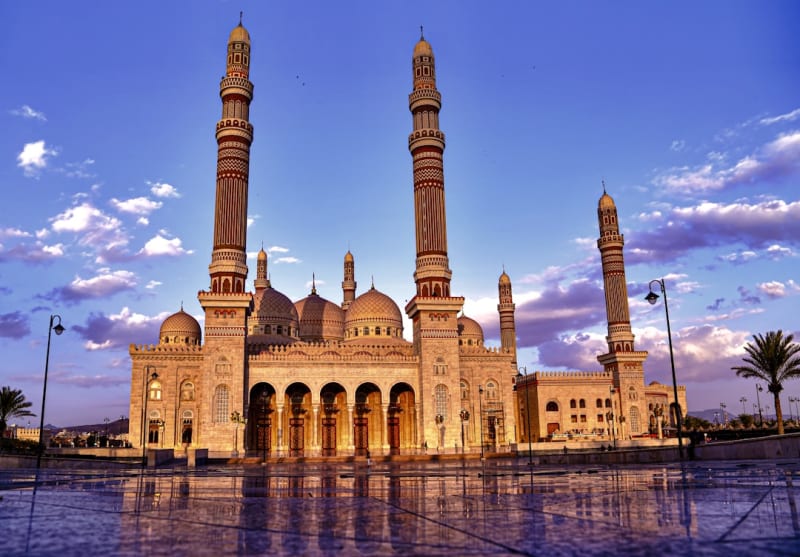 yemen
yemen Al-Hudaydah
A Red Sea port city where Ottoman coral-stone architecture lines a harbor famous for fishing, and the dawn fish market runs on a logic of controlled chaos that has not changed in two centuries.
Explore