Jibla
"Standing at Queen Arwa's mosque in Jibla, I kept thinking about how a thousand years hadn't managed to erase her from the town's memory."
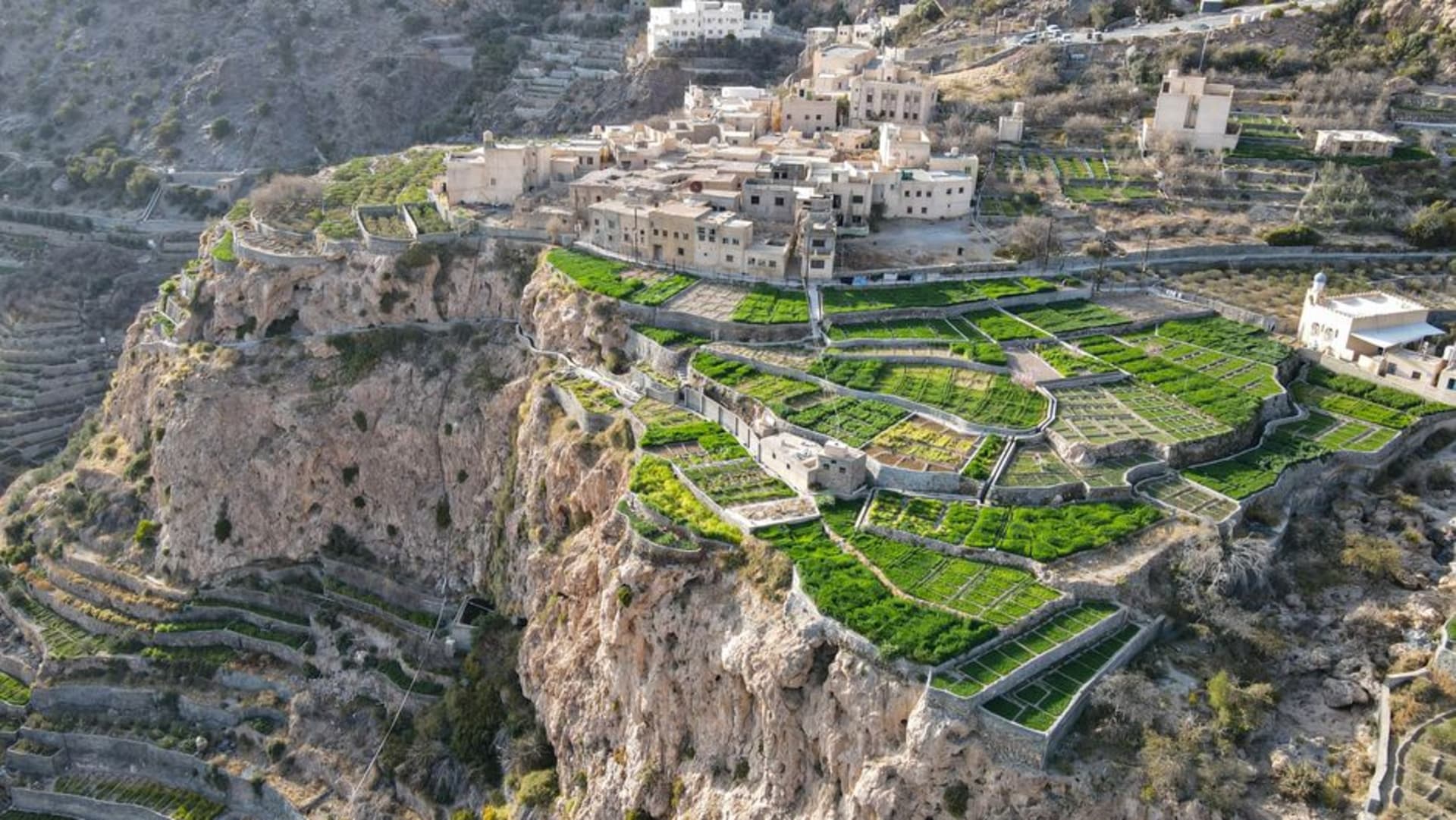
A terraced hillside town in Ibb province that once ruled as the capital of the 11th-century Sulayhid queen Arwa.

Ibb province is the greenest part of Yemen I saw, and Jibla sits right in the middle of that, terraced fields climbing every slope around it in a way that genuinely surprised me after so much dust and stone elsewhere. The town itself spills down a hillside in tiers of pale stone houses, and from a distance it almost blends into the landscape, like it grew out of the same terracing logic as the fields.
I went because of Queen Arwa, and I wasn’t disappointed. She ruled here in the 11th century, moved the Sulayhid capital to Jibla from Sana’a, and by every account I’d read governed with a shrewdness that outlasted most of her male contemporaries in the region’s memory. Her mosque still stands, plain from outside but with a quiet dignity inside, and locals will tell you — with real affection, not tourist-brochure enthusiasm — that she’s buried there. An old caretaker walked me through in a low voice, more reverent than rehearsed, and I got the sense this wasn’t a story performed for visitors so much as one that mattered to him personally.

Wandering the town afterward, I kept noticing how the domestic architecture echoed the mosque’s restraint — simple stone facades, the occasional carved wooden window, none of the elaborate gypsum trim I’d seen in Zabid days earlier. It felt like a town more interested in function than display, which suited the terraced fields surrounding it. Lia bought qat leaves from a roadside seller just to see what the fuss was about, and we sat on a low wall overlooking the valley while she decided, diplomatically, that it wasn’t for her.
What Jibla gave me, more than any single sight, was a sense of scale across time — a queen who governed a kingdom from this hillside a thousand years ago, and now farmers working the same terraces below her mosque, growing qat and sorghum, largely indifferent to the history stacked up above them. I don’t think that’s a criticism of the town. If anything it’s the most honest kind of continuity, history as backdrop to ordinary life rather than the point of it.

When to go: Visit after the spring rains, roughly March through May, when the terraces around Jibla are at their greenest.
Keep exploring
More from Yemen
 yemen
yemen Kawkaban
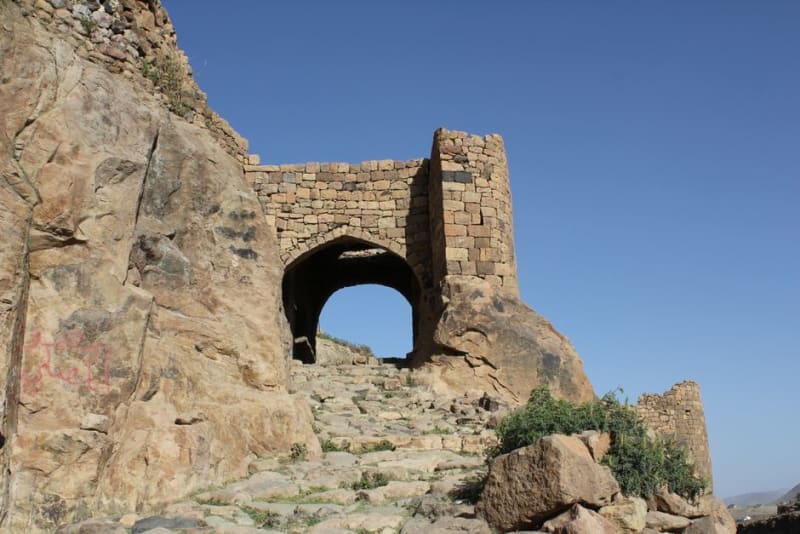
A clifftop fortress village reached by a centuries-old stone staircase climbing the mountainside above Shibam Kawkaban.
Explore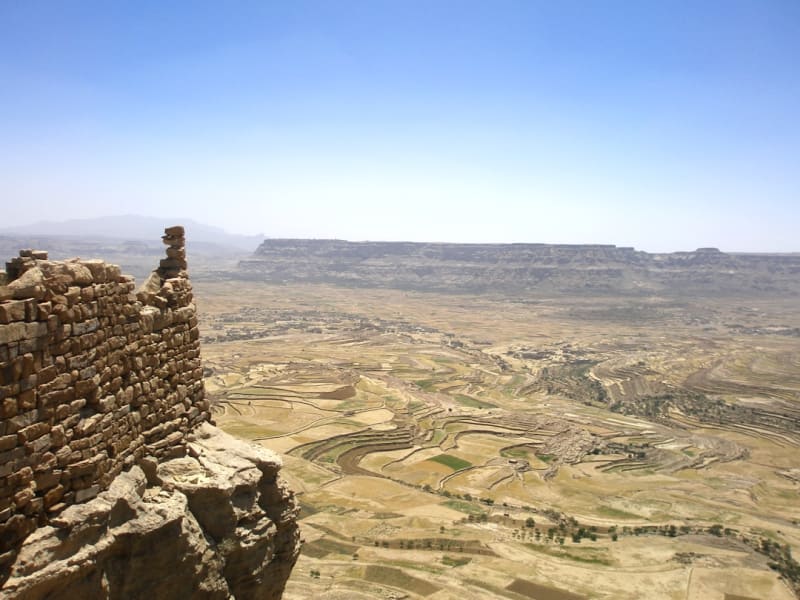 yemen
yemen Marib
The ancient capital of the Sabaean kingdom, where the ruins of the Great Dam and the Temple of the Moon god still carry the weight of a civilization that controlled Arabia's frankincense trade for a thousand years.
Explore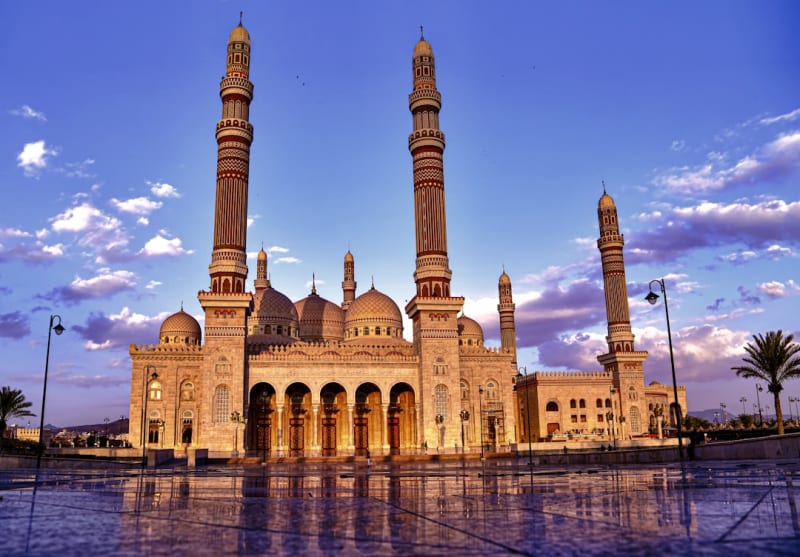 yemen
yemen Mukalla
A whitewashed port city on the Arabian Sea where the Hadhramaut valley meets the ocean, its seafront architecture a compressed history of Indian Ocean trade routes.
Explore yemen
yemen Sana'a
A walled medieval city of tower houses with alabaster windows that turns the afternoon light into something close to stained glass.
Explore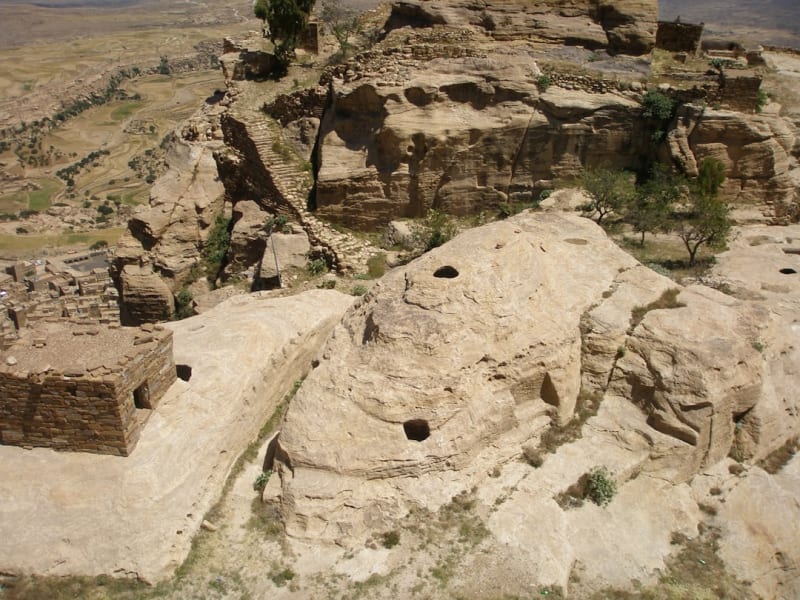 yemen
yemen Shahara
A fortified mountain village perched at 2,600 meters above sea level, connected to its sister settlement by a single arched stone bridge spanning a gorge deep enough to swallow clouds.
Explore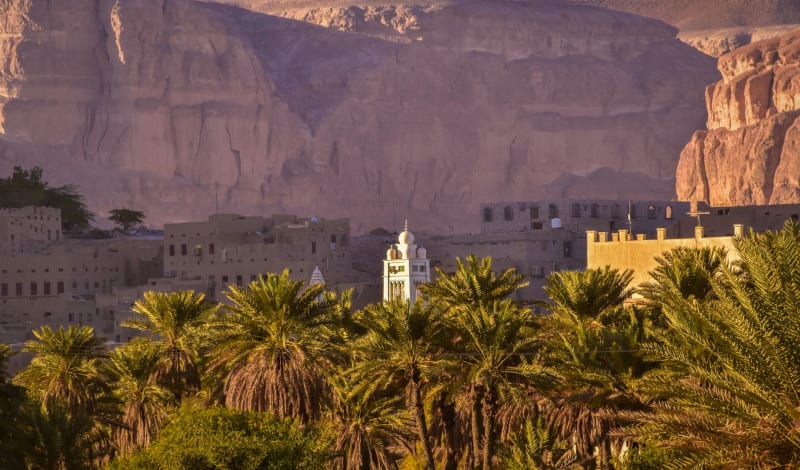 yemen
yemen Shibam
A sixteenth-century mud-brick Manhattan rising from the Hadhramaut valley floor, where tower houses of up to eleven stories have been continuously inhabited for five centuries.
Explore