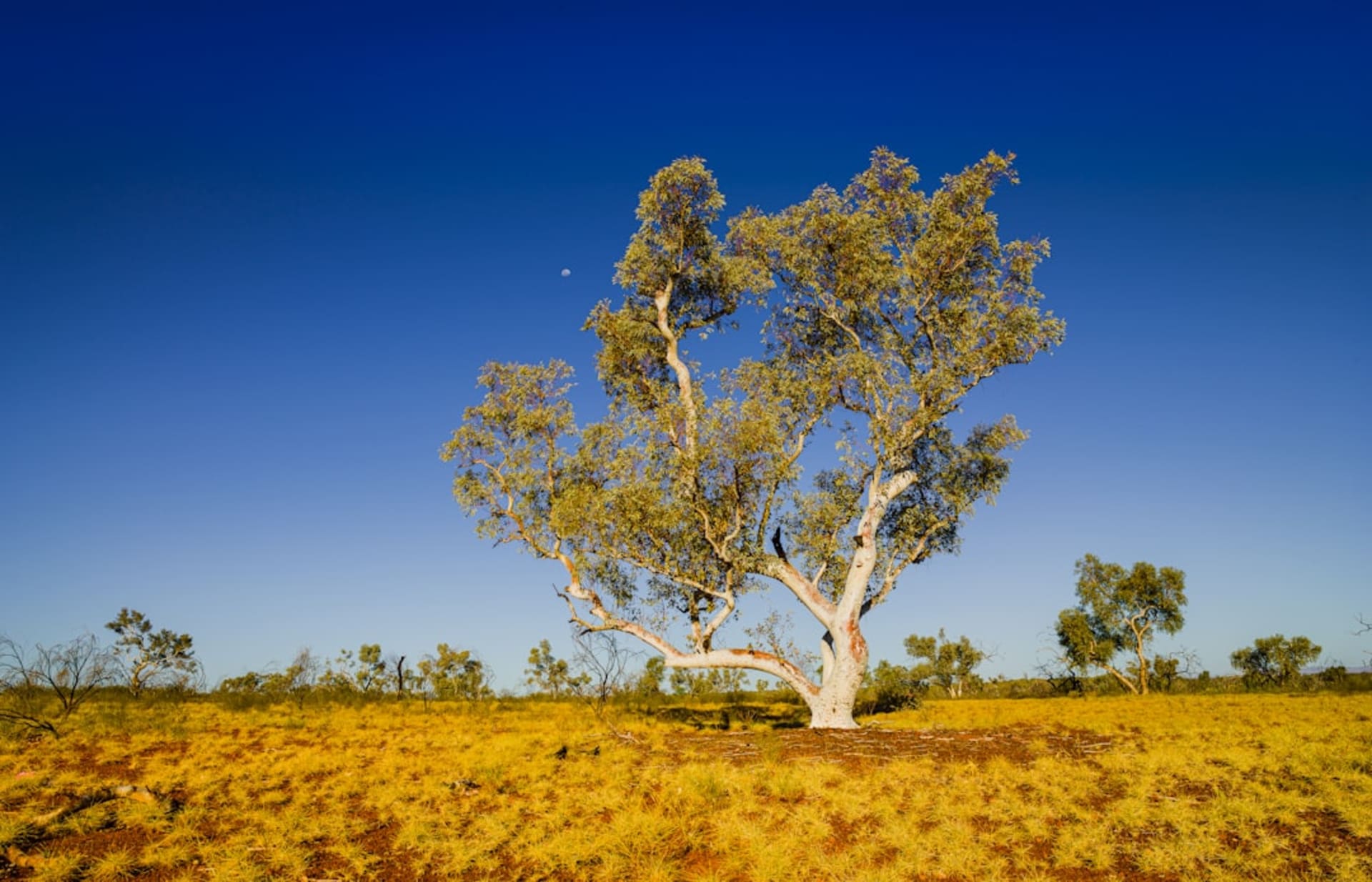
Broome
"The tide goes out and the road appears. In Broome, you learn to wait for the water."
A pearling town at the edge of the Kimberley where Japanese cemetery headstones, red pindan cliffs, and one of the world's most photographed tidal phenomena exist in an improbable and affecting equilibrium.

Broome is the kind of town that should be a cliché and somehow isn’t. Cable Beach. Camels at sunset. The red pindan dust on every white vehicle in town. You know these images before you arrive, and then you arrive and the place overrides the images with something that doesn’t fit neatly into any frame — a heat that is serious even in the shoulder months, a cultural density that no tourist brochure adequately describes, a sense of being at the edge of something rather than anywhere near the middle.
The Pearl Town’s Complicated History
Chinatown in Broome is not what Chinatown sounds like anywhere else. It’s a few streets of old corrugated-iron buildings and newer souvenir shops that marks the center of what was, in the late 19th and early 20th centuries, the world’s most significant pearl-diving industry. Japanese, Malay, Filipino, Aboriginal, and Chinese workers all came to dive for Pinctada maxima, the giant oyster that produced the largest natural pearls in the world. The Japanese cemetery on the edge of town holds around nine hundred graves, many of them divers killed by cyclones, the bends, or sharks. I walked it at dawn when the air was still cool, reading names on headstones in both Japanese and anglicized romaji, and came away with the specific heaviness of a place where work and death were the same sentence.
The pearl industry still operates. Paspaley and others run the modern version — boats, not divers, collecting oysters now farmed rather than wild-harvested. The showrooms on Dampier Terrace sell strands that cost as much as a car. I didn’t buy one. I thought about the cemetery instead.
Staircase to the Moon
Between March and October, on the three nights around each full moon, the tide retreats so far from Roebuck Bay that its exposed mudflats act as a mirror. The moon rises low over the bay and its reflection stretches toward you across the wet mud in a long staircase of orange and gold. It’s the kind of phenomenon that sounds over-described and then, standing in the warm evening with three hundred other people who’ve all been handed a glass of wine by the night market vendors, you realize it’s actually more impressive than advertised. It lasts perhaps forty minutes. Nobody talks much. Then the tide starts returning and everyone goes back to their dinners.
The Beach at Six AM
Cable Beach at sunrise, before the camel trains begin their professional photo-op runs, is something else. The sand is brilliant white against the red escarpment behind it, the Indian Ocean flat and warm, and the light is horizontal and precise and unlike any light I’ve encountered in a place this hot. I swam in water that was approximately the same temperature as a bath, alone except for a family of Brahminy kites working the shoreline a hundred meters south. The simplicity of it was almost aggressive.
Eating in the Heat
The best meal I ate in Broome was a plate of mud crabs at a corrugated-iron pub on the edge of town, split and served with cold butter and a lemon half, eaten at a plastic table with a wet towel around my neck because the ceiling fans weren’t keeping up. The crab was sweet and slightly briny and took thirty minutes to eat properly. Nobody at the bar was paying attention to how long it took.
When to go: May through September — the Dry season — is the only time most visitors should consider. Temperatures are 25–32°C, humidity is low, and the roads are passable. October to April is the Wet: extreme humidity, potential cyclones, and many roads closed. The Staircase to the Moon runs March to October, so late dry season is peak.
Keep exploring
More from Western Australia
 western-australia
 Coral Bay
A one-street settlement where the reef starts a few metres from the sand, so you can wade in from the beach and be snorkelling over coral within a minute.
Explore western-australia
 Denmark
A laid-back river town on the south coast where granite boulders shaped like elephants sit in a pool calm enough to swim safely inside the pounding Southern Ocean surf.
Explore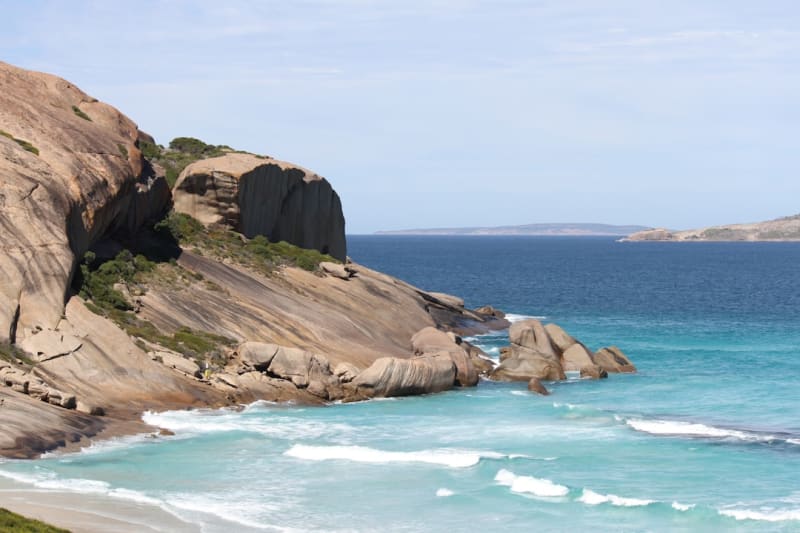 western-australia
 Esperance
A small fishing town at the edge of the Great Australian Bight where kangaroos lie on white sand beaches beside water that is genuinely, stubbornly, impossibly turquoise.
Explore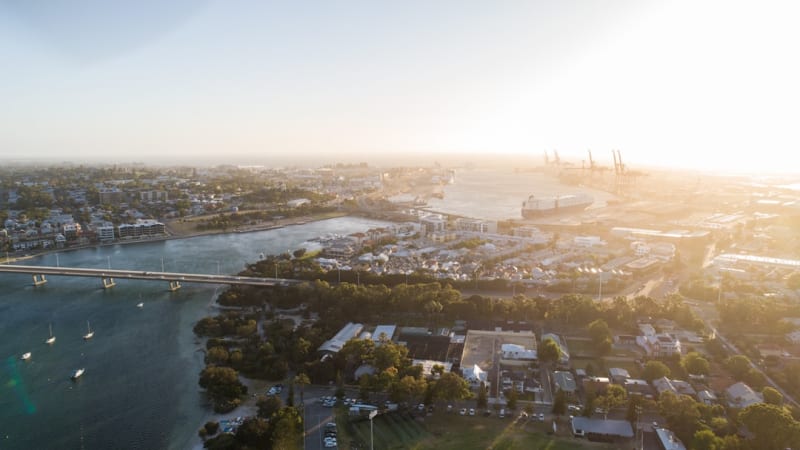 western-australia
 Fremantle
Perth's port town and its better-looking sibling: Victorian limestone architecture, a cappuccino strip that takes its Italian inheritance seriously, and a waterfront where the fishing boats and the craft beer coexist without pretending either one is the point.
Explore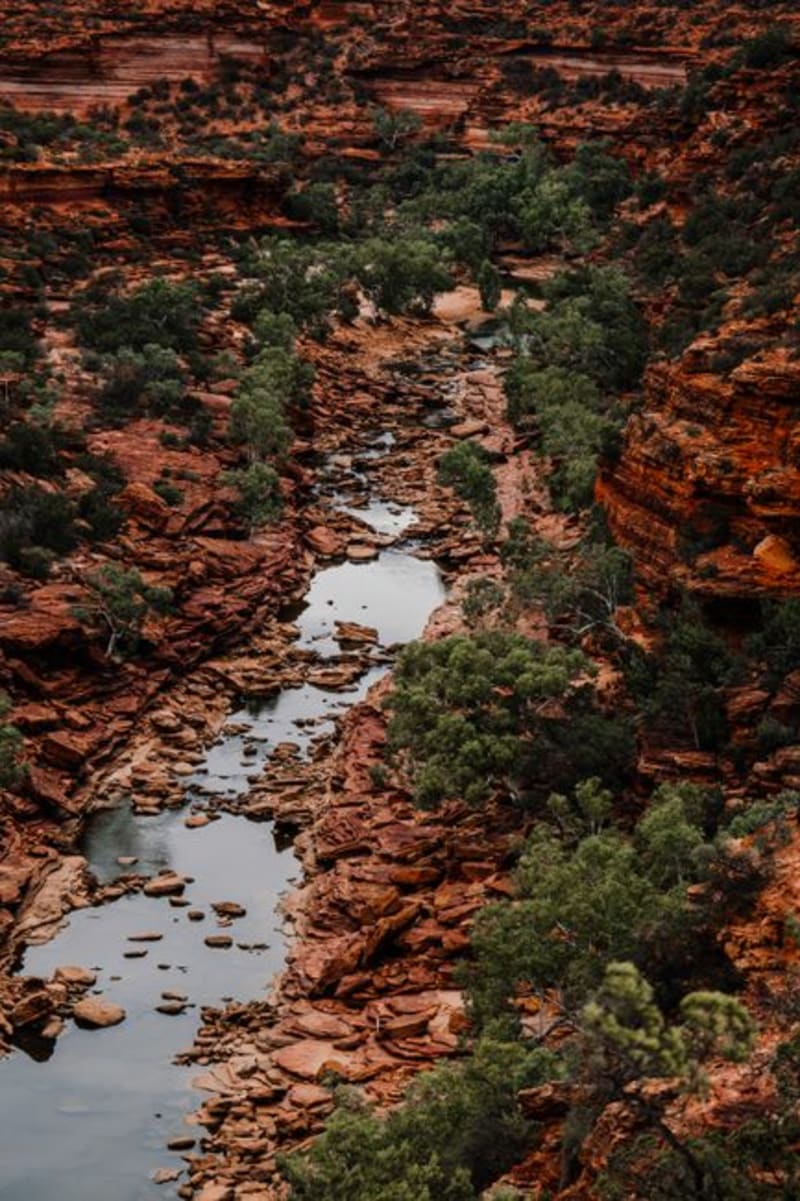 western-australia
 Kalbarri National Park
Red-and-white banded gorges carved by the Murchison River, a skywalk cantilevered 100 metres above the canyon floor, and a coastline of sea cliffs that takes the wind personally.
Explore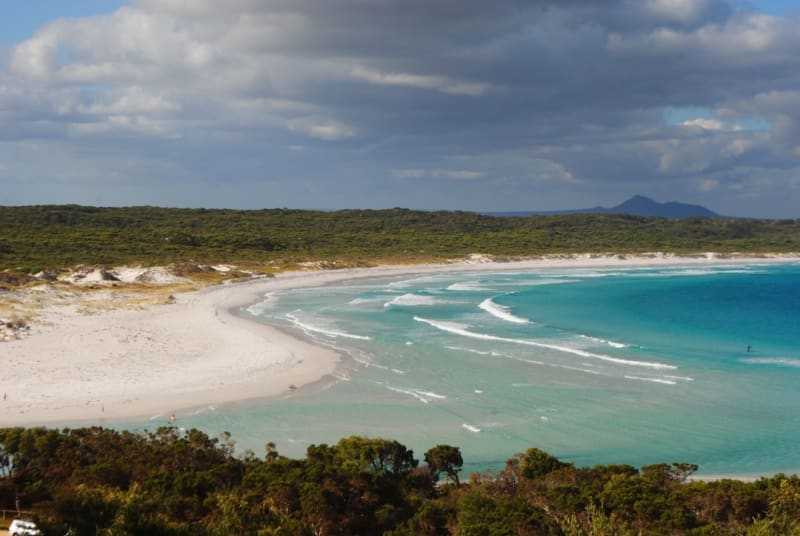 western-australia
 Karijini National Park
Ancient gorges slashing through the Pilbara's iron-red plateau, where swimming holes glow turquoise at the bottom of 100-meter walls and the rock beneath your feet is two-and-a-half billion years old.
Explore