Nui
"The language changed three hundred kilometers south of where it should have changed. Something happened here."
The most linguistically distinct atoll in Tuvalu speaks a dialect so heavily influenced by I-Kiribati that linguists classify it separately — an island that was colonized by outsiders, absorbed them, and became something new.

Nui is Tuvalu’s cultural outlier. While the other eight atolls speak Tuvaluan, a Polynesian language, the community of Nui speaks a dialect so strongly influenced by Gilbertese (I-Kiribati) that linguists debate whether it constitutes a separate language or a creole, and have been having this debate productively for decades. The origin story involves migration, colonization, cultural merger, and the particular way isolated islands absorb outsiders across generations until the distinction between them and us becomes archaeologically interesting rather than socially meaningful.
The Language Question
Somewhere between four and eight hundred years ago — the oral histories give ranges rather than dates — settlers from what is now Kiribati arrived at Nui in sufficient numbers to transform the local language. Today’s Nui dialect contains so many Gilbertese elements that a Tuvaluan from Funafuti and a I-Kiribati speaker can both partially follow a conversation in Nui, which satisfies neither and pleases linguists enormously.
A schoolteacher named Ioelu walked me through some of the vocabulary divergences, switching between languages with the ease of someone who has explained this to every interested visitor — all twelve of them. The differences weren’t just vocabulary; they were structural, phonological, syntactic. This was not borrowing. This was a merger.
The Village of Tanrake
Nui’s approximately 450 residents live in two villages, Tanrake in the south and Meang in the north. Tanrake is the more substantial of the two, with the main jetty, the maneapa, and a church whose congregation sings in four-part harmony every Sunday morning with a precision that implies either extraordinary innate talent or many decades of practice. I sat outside on a wall and listened for an hour. It was the best concert I attended all year, and I didn’t mention this to the people at the concert in Mexico City I went to in October.
The lagoon at Nui is calm and extensive, with a sandy floor visible for thirty meters in most directions. Small community fishing boats are moored along the lagoon shore, and in the mornings the fishermen sort their catch on the jetty while cats conduct their own sorting operation on the margins.
Fatele on a Different Frequency
The fatele — Tuvalu’s traditional dance form, performed seated, featuring rapid hand gestures and coordinated group movement — exists on Nui in a version subtly inflected by the island’s mixed heritage. The movements are recognizably Tuvaluan in structure but contain borrowings and variations that dancers from other atolls notice and that audience members from outside Tuvalu entirely miss. I was told about these differences by a young woman named Bwerenin, who had performed fatele at the national festival in Funafuti and come back with opinions.
The Nui style, she explained, was faster in the hands and slower in the torso. Whether this reflected the I-Kiribati influence or simply the Nui aesthetic, she was not prepared to say. “We just do it how we do it,” she added, which ended the conversation effectively.
Taro and Lagoon
Like all the outer atolls, Nui’s community sustains itself on taro, fish, coconut, and breadfruit, with imported goods arriving on the ship. The taro pits here are among the better-maintained I saw on the outer islands — deep, irrigated by freshwater lens, producing large, starchy tubers that are roasted, boiled, and turned into a grey paste that requires social commitment to enjoy. I enjoyed it, eventually, on the third day, when I stopped expecting it to be something else.
The lagoon provides most of the protein. Fishing is daily, communal in the sense that equipment is shared and knowledge is exchanged, individual in the sense that each family feeds itself. It is a system that works until something disrupts the reef.
When to go: May through September. Nui sits in the center of the archipelago chain and receives less extreme weather than the northern or southern atolls, but the inter-island shipping schedule governs access absolutely. Plan for the circuit and not the individual island.
Keep exploring
More from Tuvalu
 tuvalu
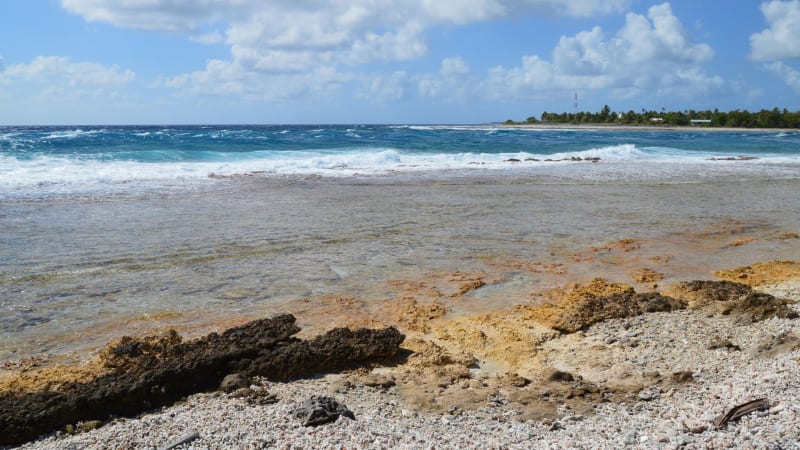
 Nukufetau
An atoll of exceptional lagoon geometry — nearly circular, fringed with thirty-three motu — where the light off the water turns everything the color of old brass at certain hours.
Explore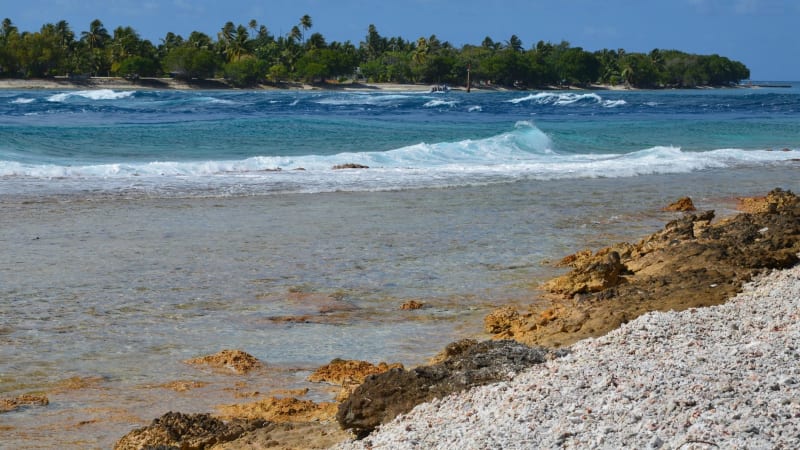 tuvalu
 Nukulaelae
The southernmost atoll in Tuvalu is a community of 400 people living on the edge of the ocean's largest empty quarter, known for producing the country's finest woven goods and its most accomplished navigators.
Explore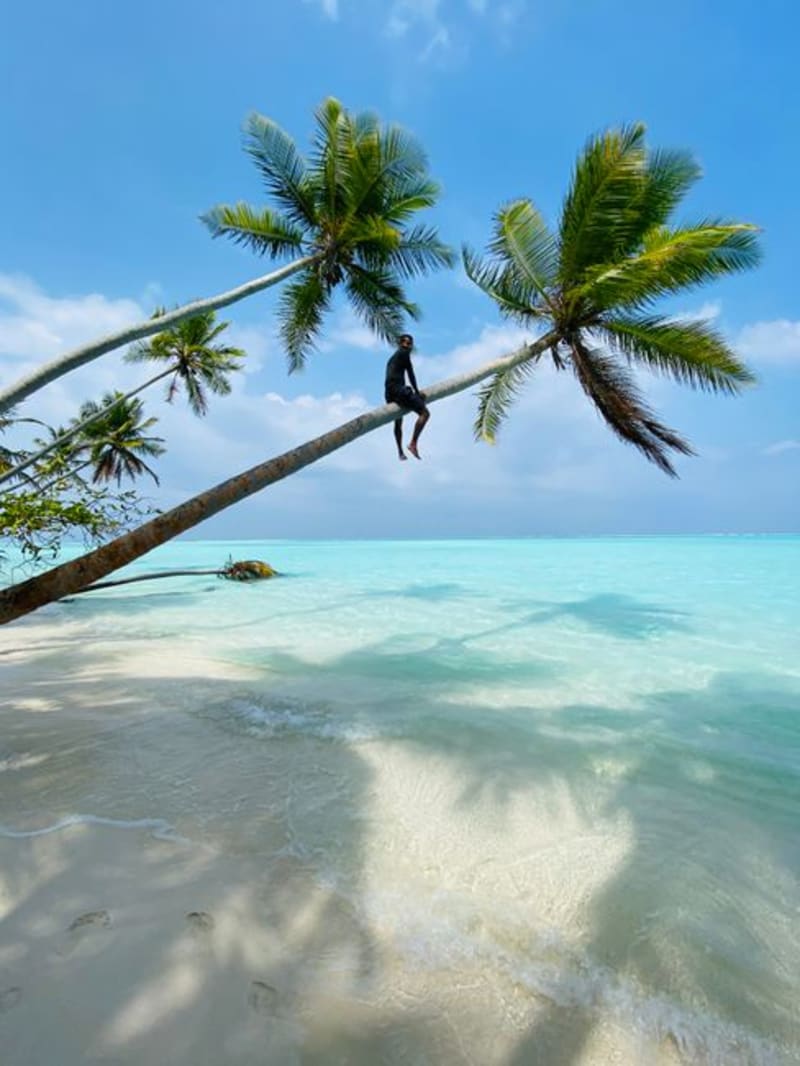 tuvalu
 Tepuka Islet
An uninhabited sand cay of coconut palms and coral inside Funafuti's lagoon, reachable only by open boat and pure quiet.
Explore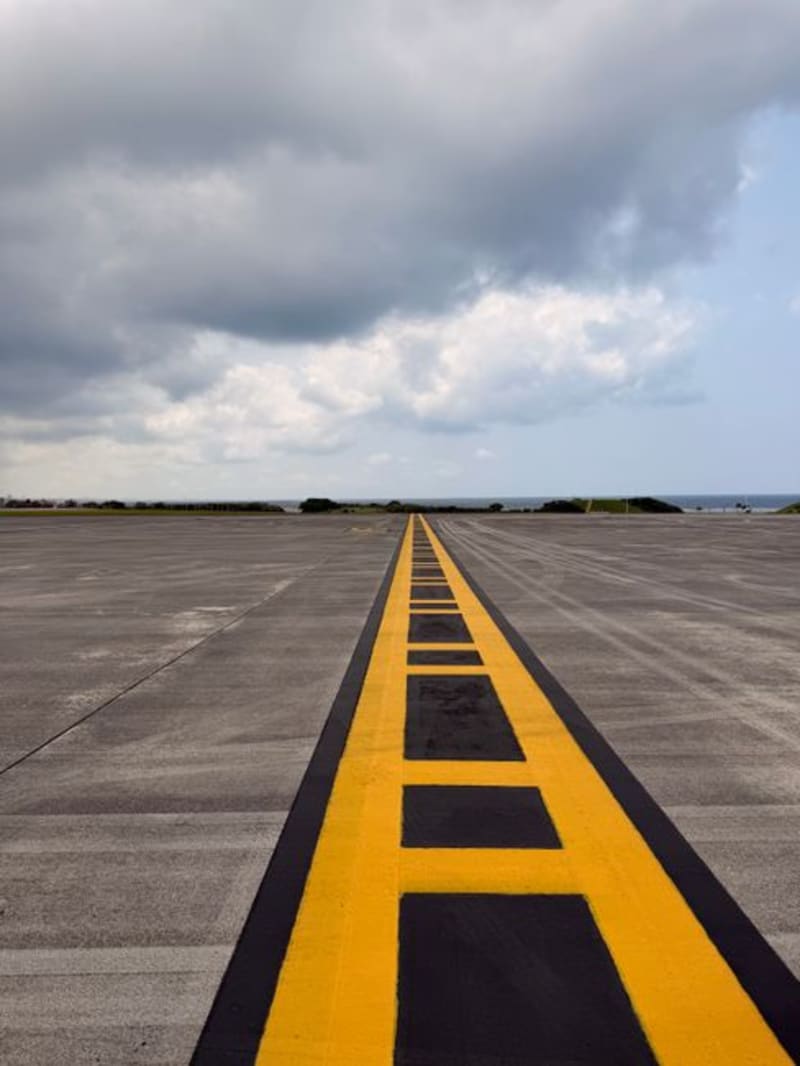 tuvalu
 Vaiaku
A village where the runway becomes a football pitch at dusk and the whole country's capital fits around one lagoon-facing hotel.
Explore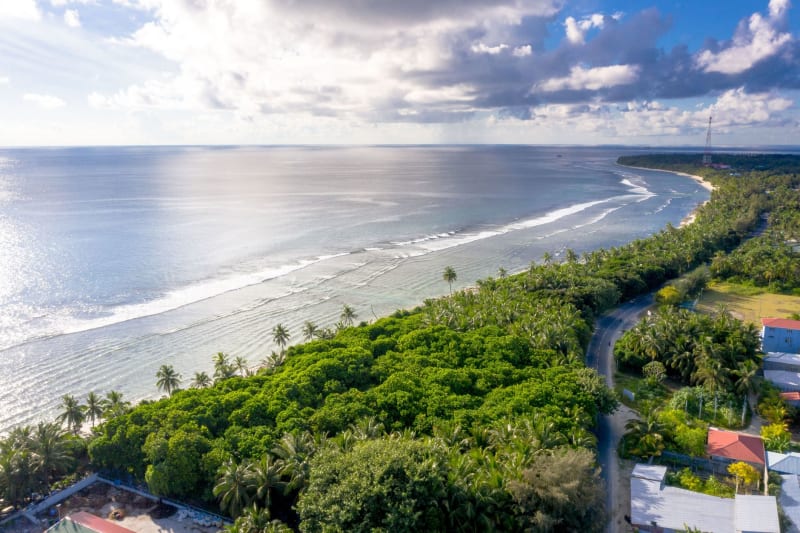 tuvalu
 Vaitupu
Tuvalu's largest island by land area holds a secondary school that draws students from across the archipelago — making it, unexpectedly, the country's most cosmopolitan place after the capital.
Explore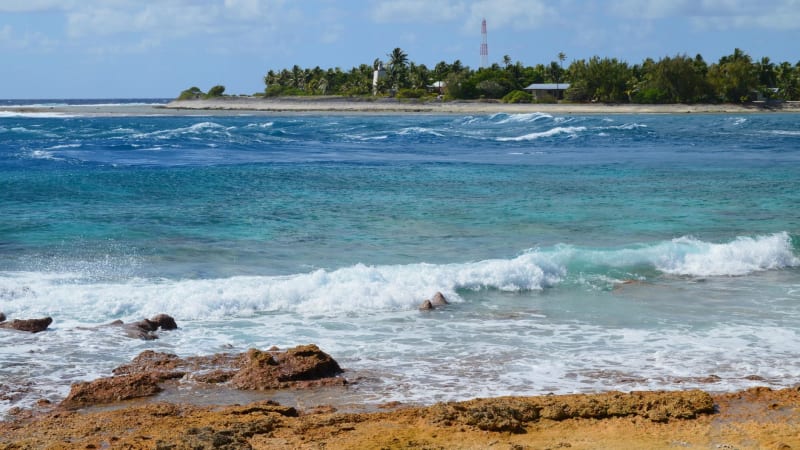 tuvalu
 Fongafale
The narrow islet that holds Tuvalu's capital is a study in how a nation fits itself onto a strip of land twenty meters wide — government offices, markets, embassies, and the airport runway all sharing the same few hundred meters of coral.
Explore