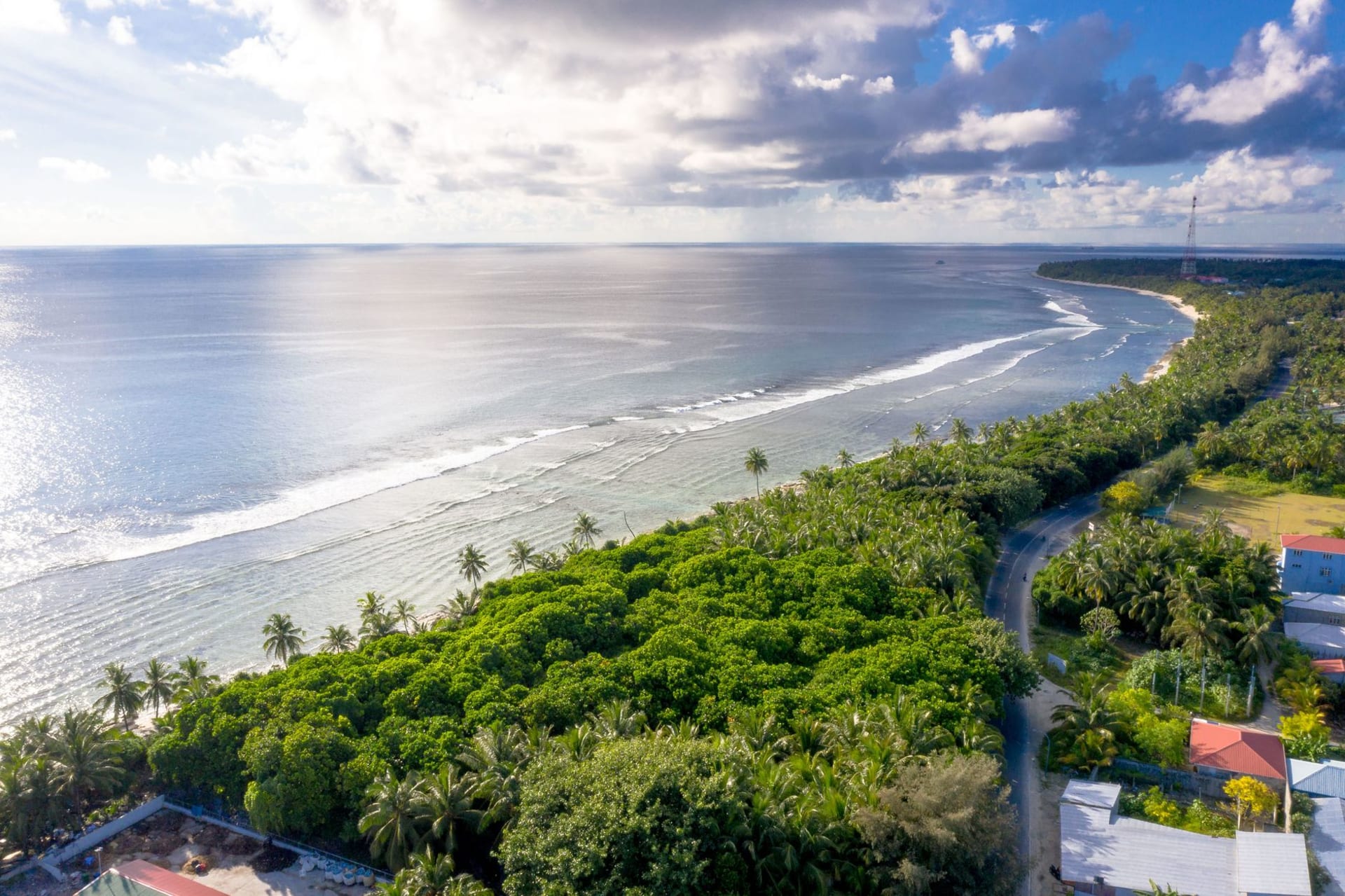
Vaitupu
"The school bell rang and two hundred teenagers materialized from the trees, all of them from different islands, all of them from the same country."
Tuvalu's largest island by land area holds a secondary school that draws students from across the archipelago — making it, unexpectedly, the country's most cosmopolitan place after the capital.

Vaitupu is Tuvalu’s largest atoll by land area — which sounds more impressive than it is, given that “largest” here means roughly 5.6 square kilometers — but size is relative in this archipelago. What Vaitupu has that other outer atolls lack is Motufoua Secondary School, which draws students from all nine atolls for their high school years. Walking the village, you hear accents from Nukulaelae alongside those from Nanumea, teenagers from the far ends of the country coexisting in close quarters under coconut palms.
The School at the Center of Things
Motufoua Secondary was founded by the London Missionary Society in the 1950s and has functioned, through various administrations and a devastating fire in 2000, as the educational anchor of Tuvaluan national identity. Students here meet peers from atolls they’d otherwise never visit. Friendships form across island boundaries in ways that become the connective tissue of Tuvaluan adult life — in government offices in Funafuti, on cargo ships, in the Tuvaluan diaspora communities in Auckland and Suva.
The school sits on the lagoon side of the main island, and on weekend afternoons the students play volleyball on a court where the foul line is the beach itself, with the lagoon for a backdrop. I watched a game from under a pandanus tree and was eventually waved into it, put at the back of a team that clearly did not expect much from me. They were right.
Village Life at a Different Pace
Away from the school, Vaitupu’s village of Asau runs at the particular pace of an outer Tuvaluan atoll: unhurried, communal, organized around fishing, taro cultivation, and the rhythms of the weekly church service. The maneapa — the open-sided community meeting hall — functions as town square, courtroom, dance floor, and public space for everything in between.
Lia and I spent a morning watching women weave pandanus mats inside the maneapa, their fingers moving with the speed and assurance of people who learned this young. The mats will eventually be traded, gifted at ceremonies, or used daily until they wear through. The weaving is practical and social simultaneously; conversation ran continuously while hands never stopped. We were offered tea that tasted of coconut and tinned condensed milk and it was exactly right.
The Fishing Tradition
Vaitupu’s outer reef is a working reef, fished with methods that predate European contact and have been refined across generations. Flying fish are traditionally attracted at night using torches over the lagoon — a technique that requires knowledge of tides, seasons, and the behavior of the fish that most young Tuvaluans still receive from their fathers and uncles. I was taken out at dusk on a wooden canoe, low in the water, moving silently. The flying fish launched themselves at the torchlight in silver arcs and were caught in hand-held nets with a fluency that looked casual and was anything but.
What Gets Talked About
The conversation on Vaitupu, like everywhere in Tuvalu, keeps circling back to migration. Many Tuvaluans have resettled in New Zealand under a labor agreement. Others are in Fiji or Australia. The question of whether to stay — given rising seas, limited economic opportunity, and the full weight of a nation’s future pressing on each individual decision — is not abstract here. It is something families discuss at dinner.
This did not make Vaitupu feel hopeless. It made it feel deliberate in the way places feel when their inhabitants have chosen to remain.
When to go: May to October for calmer inter-island seas and reliable wind to cool the heat. If you time it right, inter-island fatele dance competitions bring an electric energy to the maneapa — ask in Funafuti about the schedule before you commit to the outer island leg of your trip.
Keep exploring
More from Tuvalu
 tuvalu
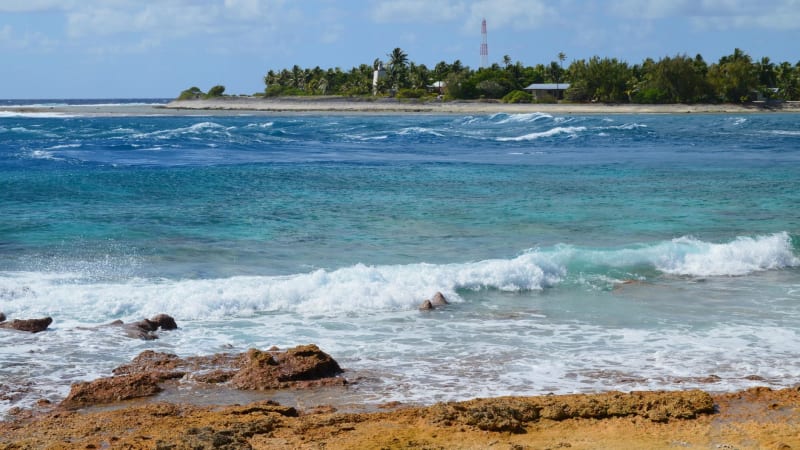
 Fongafale
The narrow islet that holds Tuvalu's capital is a study in how a nation fits itself onto a strip of land twenty meters wide — government offices, markets, embassies, and the airport runway all sharing the same few hundred meters of coral.
Explore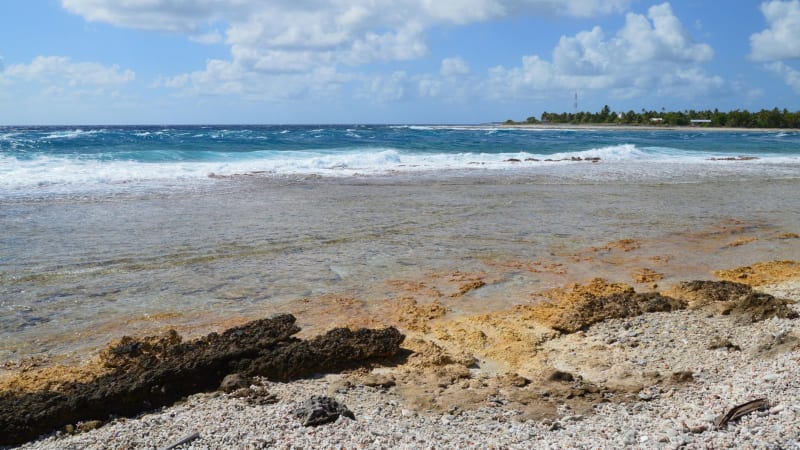 tuvalu
 Funafuti
The world's least-visited capital sits on a thread of coral so narrow you can hear both oceans at once.
Explore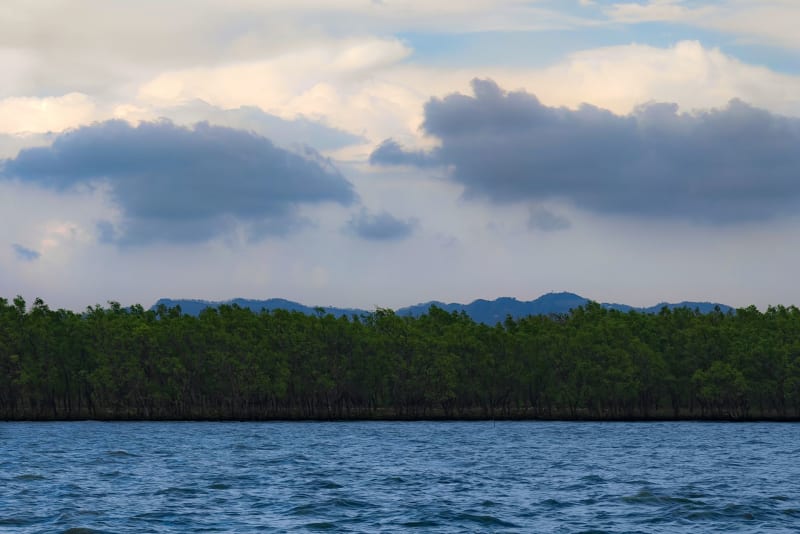 tuvalu
 Funafuti Conservation Area
A protected arc of uninhabited motu enclosing some of the Pacific's most intact reef, accessible only by boat and entirely worth the effort.
Explore tuvalu
 Nanumanga
A raised atoll with no lagoon — just one solid island of coral limestone surrounded by open sea — which makes it structurally unlike anything else in Tuvalu and about thirty percent more vertigo-inducing.
Explore tuvalu
 Nanumea
The northernmost atoll in Tuvalu guards a lagoon the color of hammered copper at dusk and a community that receives fewer visitors per year than most towns see in an hour.
Explore tuvalu
 Niulakita
The smallest and least populated island in Tuvalu — home to fewer than 40 people — is also the southernmost, requiring the longest journey to reach and offering the most complete silence in return.
Explore