Chalk Sound
"The people who drive past Chalk Sound to get to the beach are missing the point of being on this island."
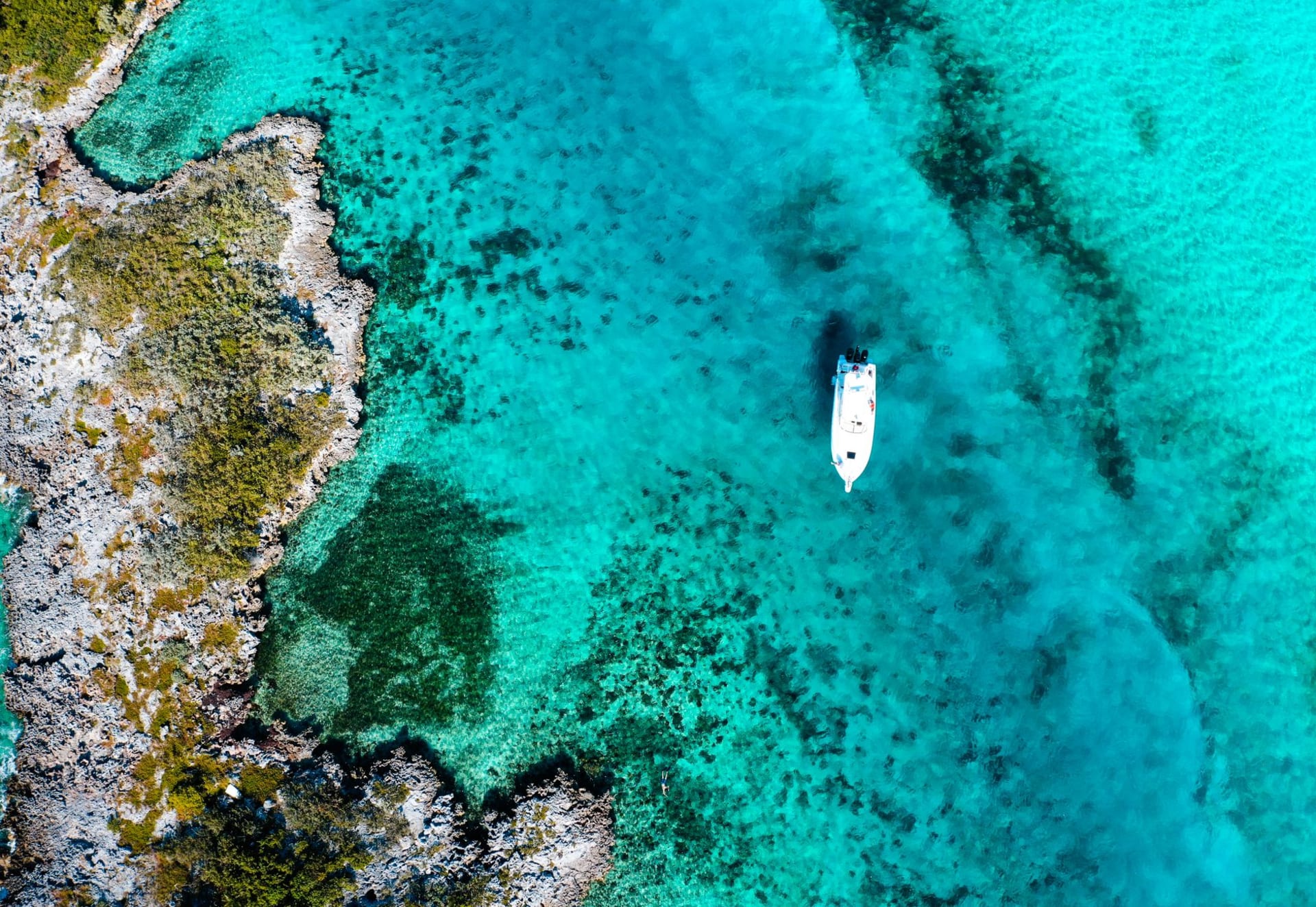
A landlocked national park lagoon on Providenciales where water the color of lit jade is studded with forty small rocky islands and almost no people.

Chalk Sound sits on the southwest corner of Providenciales, about fifteen minutes by road from Grace Bay, and almost everyone on the island drives past it to get somewhere else. This seems to me like a significant navigational error. The lagoon is a landlocked national park — a roughly three-kilometer-long body of water cut off from the ocean by a narrow ridge of land — and its color is not something you stop being surprised by after you’ve seen it a few times. It’s the kind of turquoise that you look at sideways because looking directly at it seems too simple.
The Color Explained, Sort Of
Chalk Sound’s water is extremely shallow — averaging under two meters, with large areas considerably less than that — and sits over a white marl bottom that reflects light upward through the water column. The result is a color that shifts between green and blue and something that doesn’t quite have a name depending on the angle of the sun and the cloud cover. On an overcast morning it goes a deep jade. In direct afternoon sun it turns almost luminous. At dusk it goes the color of old glass.
The forty-odd small cays scattered across the lagoon are made of the same limestone as the rest of the island — low, scrubby, inhospitable — and their reflections in the still water on calm mornings double them. I kayaked out to the middle of the lagoon early one morning when the surface was flat and the sky was still pale and the whole thing was so quiet that the sound of my paddle was the loudest thing within earshot. A great blue heron lifted off a cay ahead of me and flew in that slow, enormous way they have.
Kayaking and Paddleboarding
The lagoon is protected from wind and swell by the surrounding land, which makes it ideal for paddling in almost any conditions. Several operators on Provo rent kayaks and paddleboards for use on Chalk Sound, and some offer guided morning tours that include a stop on one of the cays and a swim in the shallow warm water.
Swimming in the lagoon is unusual — the water is warm, the bottom is visible everywhere, and the absence of surf or current means you can float for as long as you like without going anywhere. The water clarity is exceptional even by TCI standards because there’s no boat traffic to disturb the bottom and no swell to churn the sand.
The View from Above
The ridge road that runs along the southern edge of Chalk Sound has several pullouts where the view down into the lagoon is the one that ends up in every TCI travel magazine. The angle from above makes the cays look like dark spots floating in a luminous liquid. I parked at one of these pullouts with a coffee in the early morning and spent longer than I’d intended watching the light change across the water.
From the road, the contrast between the colors is even more striking than from the water: the scrub vegetation on the ridge, dry and grey-green, then the white limestone road, then the impossible color of the water below.
Timing and Practicalities
Chalk Sound is free to visit. There are no entrance fees, no facilities, and no staff — it’s a national park in the sense that development is restricted, not in the sense that anyone is managing your experience of it. Kayak rentals from the Grace Bay area operators include transport to the lagoon’s edge. The best light is in the morning; by midday the sun is too high overhead to produce the dramatic turquoise depth that makes the lagoon famous.
When to go: Year-round — the lagoon is sheltered enough that even in rougher seasons the water stays calm. The best light for photography is November through April when the sun angle is lower. Mornings in any season beat afternoons for color and for the absence of other people doing the same thing you are.
Keep exploring
More from Turks and Caicos
 turks-and-caicos
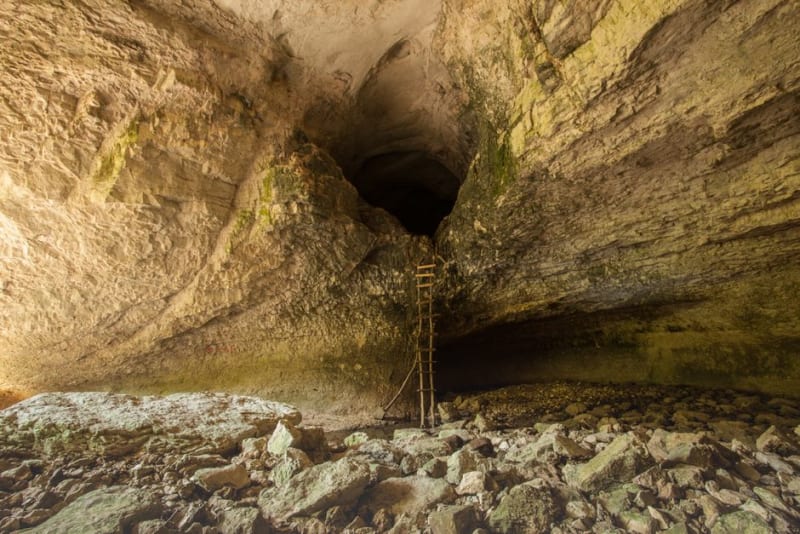
 Conch Bar Caves
A limestone cave system threading beneath Middle Caicos, with underground pools, bat colonies, and a silence that swallows your flashlight beam.
Explore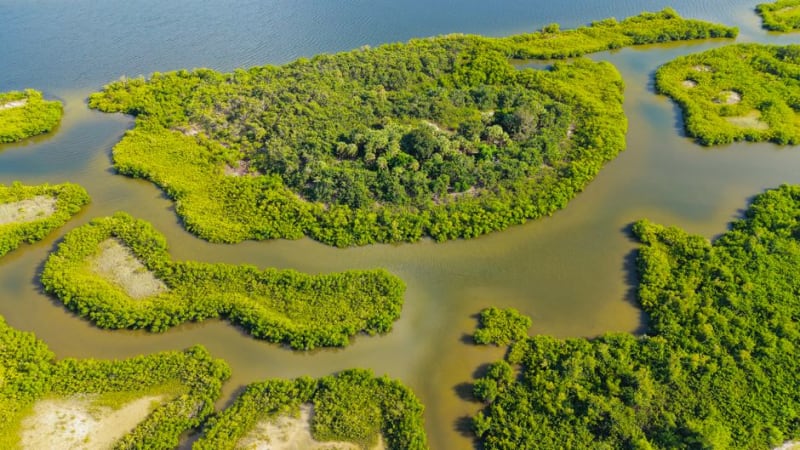 turks-and-caicos
 East Caicos
An uninhabited island of tangled mangrove wetlands and crumbling 19th-century sisal plantations that nobody has lived on for over a century.
Explore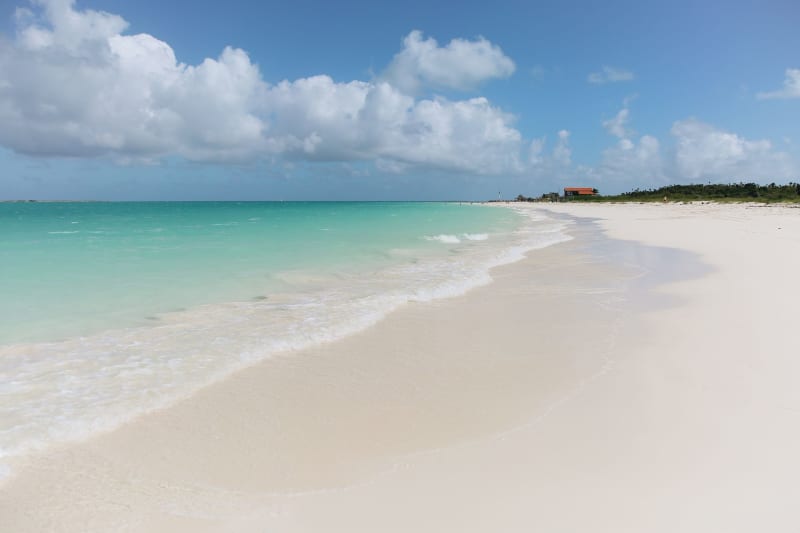 turks-and-caicos
 Grace Bay
Twelve miles of powder-fine sand on Providenciales where the water runs every shade of blue the Caribbean can manage.
Explore turks-and-caicos
 Grand Turk
The quiet capital of a glamorous archipelago — a one-street town of salt-bleached Bermudian houses where the real Caribbean still operates at its own pace.
Explore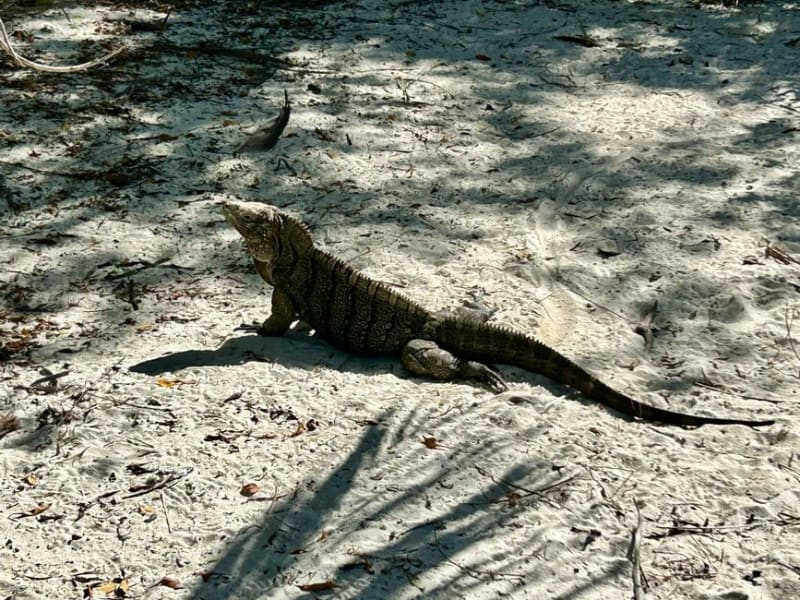 turks-and-caicos
 Little Water Cay
A small uninhabited cay off Providenciales, nicknamed Iguana Island for the protected rock iguanas that outnumber every visitor who steps ashore.
Explore turks-and-caicos
 Middle Caicos
The largest and loneliest island in the archipelago — dramatic limestone cliffs, cathedral-scale caves, and beaches so empty they feel like a mistake.
Explore