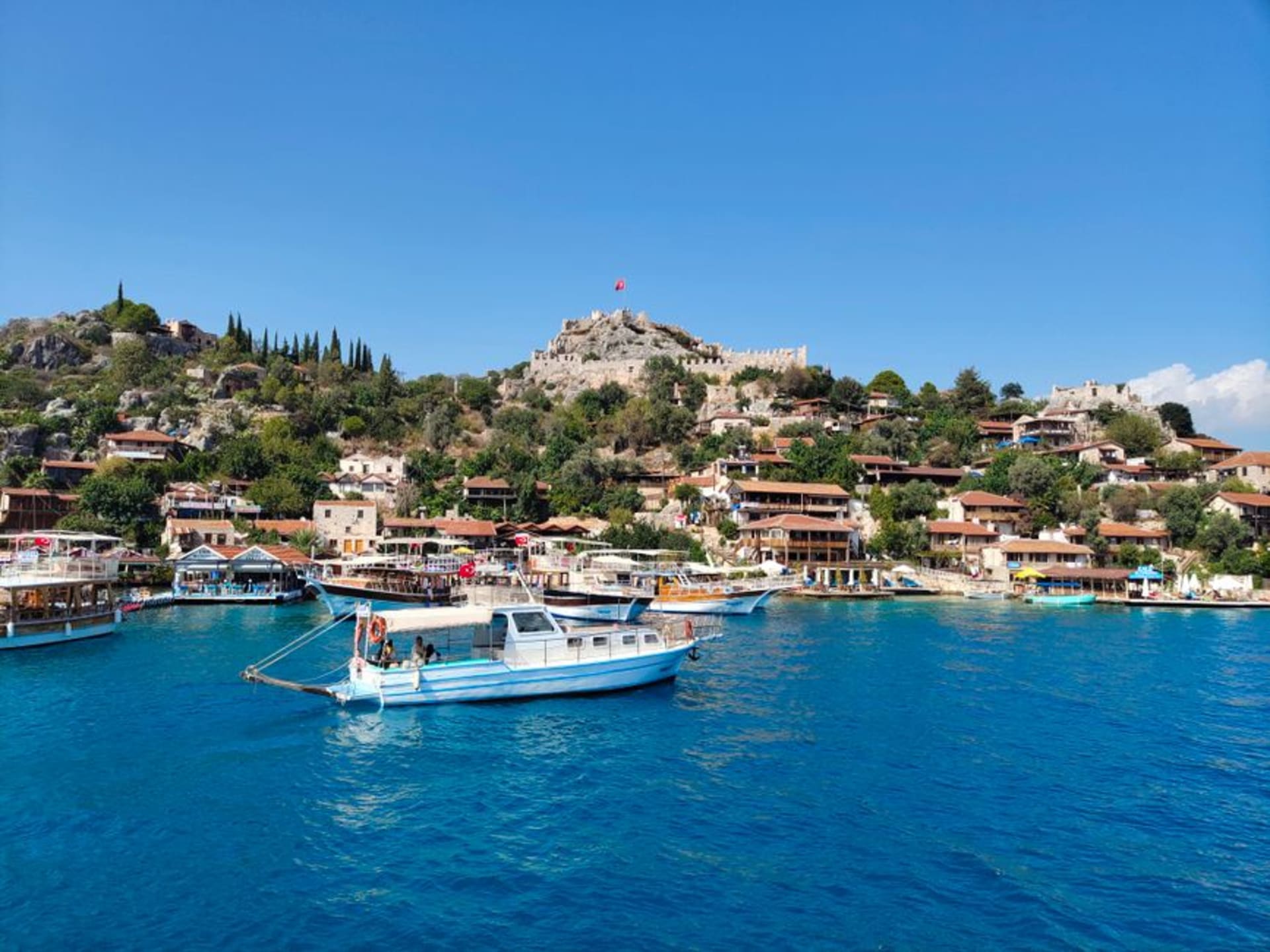
Kekova and Simena
"We cut the engine and just drifted over a city that stopped existing two thousand years ago."
A sunken Lycian city glimpsed through turquoise water, a castle village reachable only by boat, and a coastline that refuses to hurry.
Lia found the boat trip almost by accident, a handwritten sign taped to a fisherman’s stall in Kas advertising a day out to “the sunken city.” I’ll admit I pictured something closer to a snorkeling brochure than what we actually got: a slow wooden gulet easing along the shoreline of Kekova island while our captain pointed out shapes under the water that took my eyes a moment to resolve into what they were — stone walls, a stairway descending into nothing, the corner of a house that an earthquake had dragged into the sea sometime in the 2nd century BC. You’re not allowed to swim or anchor over the ruins, which at first felt like a frustrating rule until I understood it as the reason any of it was still there to see. We just leaned over the rail instead, the boat barely moving, and watched Simena’s old street plan dissolve into turquoise.
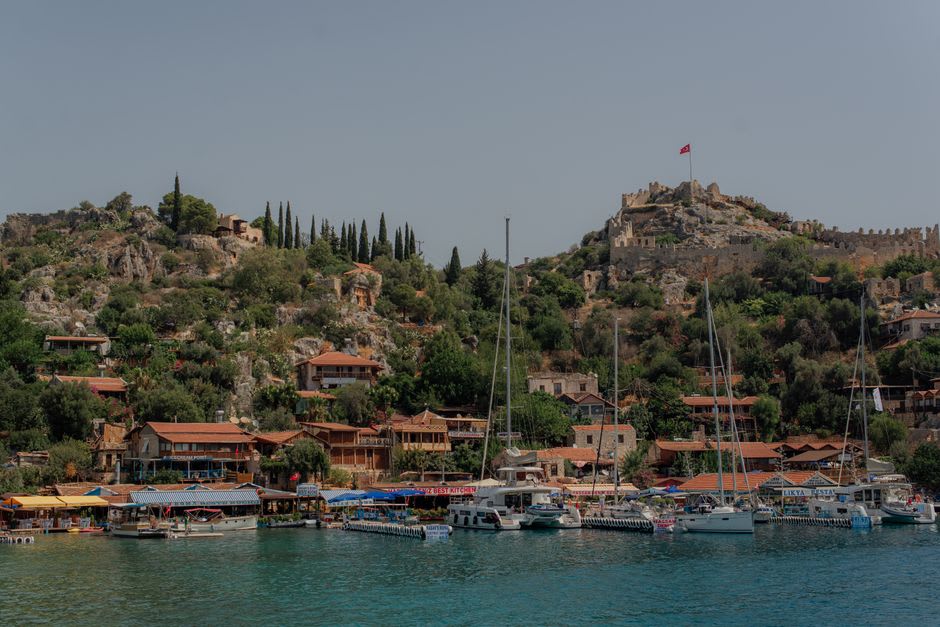
The mainland side is where the trip actually got under my skin, though. Kalekoy — modern name for what was once Simena proper — is a cluster of maybe a dozen houses climbing a hill toward a small medieval castle, and there’s no road in. You arrive by boat or you don’t arrive. We tied up below the village and walked up past a garden where someone had built a fence around a Lycian sarcophagus sitting in their tomato patch like it was nothing, which in a way, after a few days on this coast, it had stopped being anything unusual. Lia crouched to read the carved lid while a cat watched us from the shade.
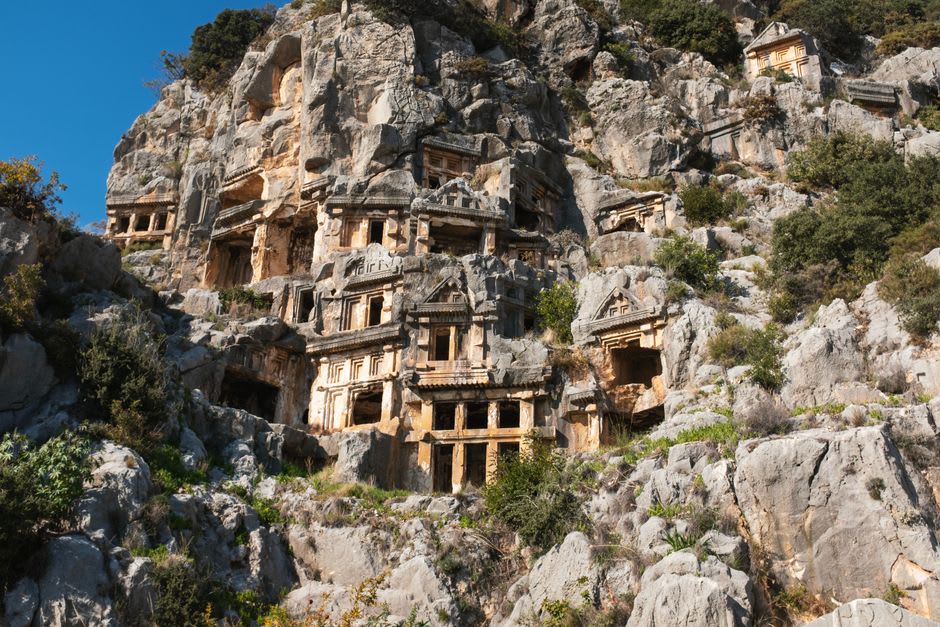
At the top, the castle is small enough to walk the whole thing in twenty minutes, but the reason to climb is the view down through the rock-cut necropolis toward the bay — tombs stacked into the hillside, the water below striped in every shade of blue I have a name for and a few I don’t. We ate grilled sea bream at a terrace restaurant that had maybe six tables, all facing the water, and the owner told us her grandmother had grown up in that same house. No cars, no crowds pushing past, just the occasional gulet rounding the point below. It’s the quietest few hours I’ve spent anywhere on this coast, Kas and Kalkan included, and I think that’s precisely because getting there requires a boat and a little patience.
When to go: Aim for May through October — the sea stays calm enough during those months for a comfortable, unhurried boat ride out to the sunken ruins, which is really the whole point of coming.
Keep exploring
More from Turkish Riviera
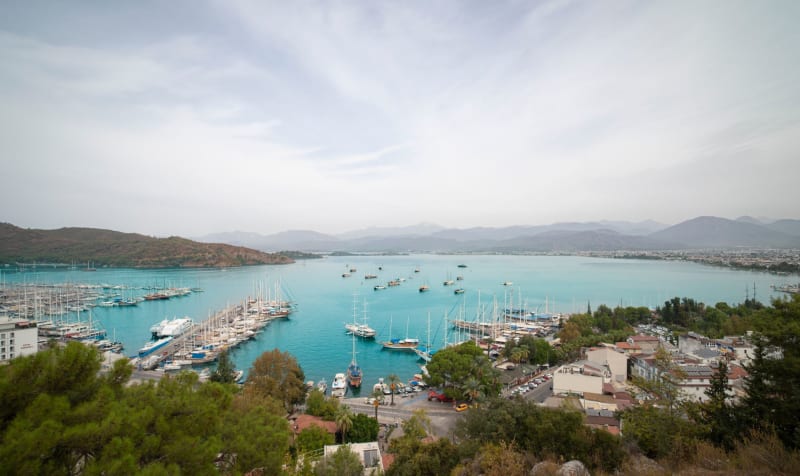 turkish-riviera
 Marmaris
A deep-water bay ringed by pine-forested hills where one of the world's finest natural harbors has been hosting fleets since Suleiman the Magnificent, now occupied by superyachts and party boats in roughly equal measure.
Explore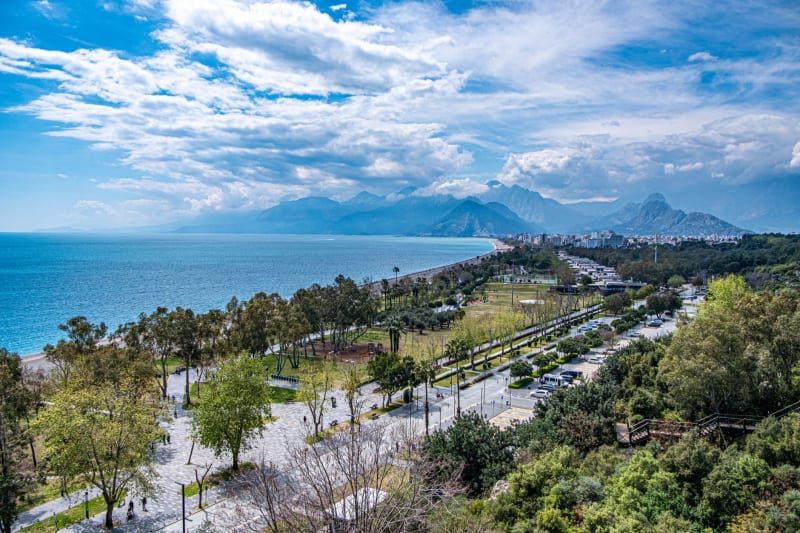 turkish-riviera
 Olimpos
An ancient Lycian city swallowed by forest at the edge of a pebble beach, where treehouse hostels hide among the ruins and the eternal flame of the Chimaera burns in the mountain above after dark.
Explore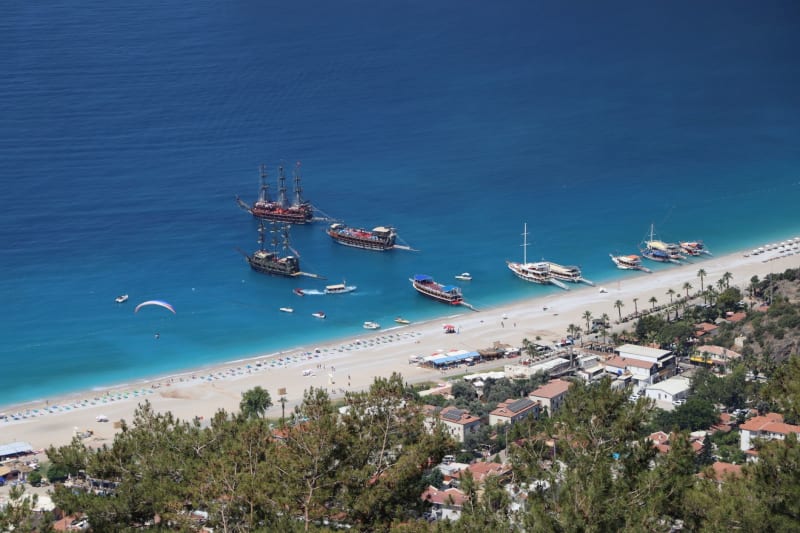 turkish-riviera
 Ölüdeniz
A lagoon so still and so improbably blue that you spend your first few minutes there simply checking whether it's real, before the paragliders start dropping out of the sky above Babadağ.
Explore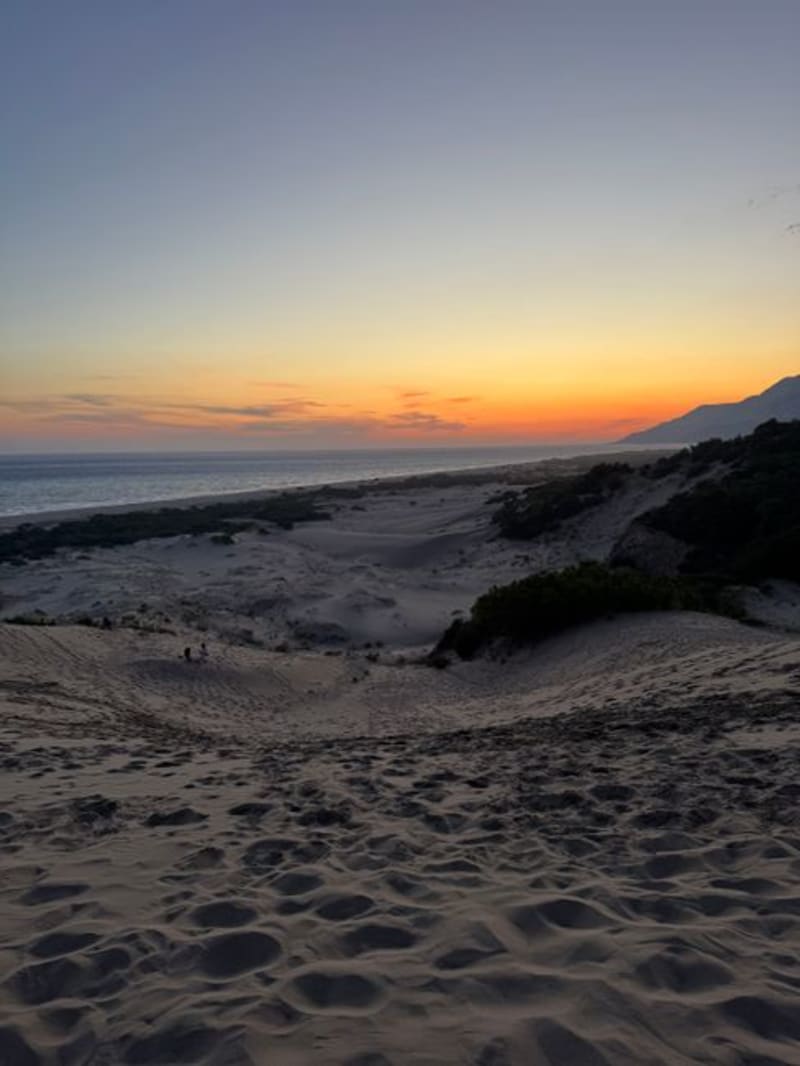 turkish-riviera
 Patara
An 18-kilometer beach guarding a buried Lycian capital, where turtle nests and half-excavated colonnades share the same sand.
Explore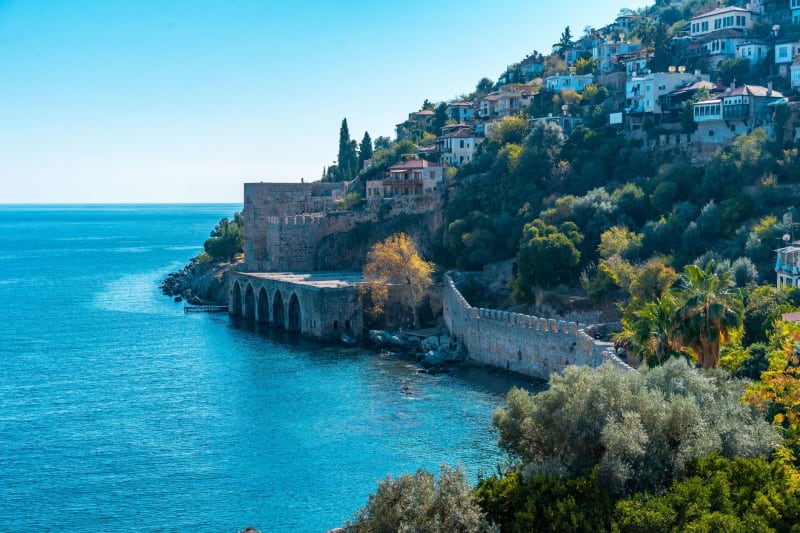 turkish-riviera
 Side
An ancient Greek and Roman port city still occupied, where Apollo's temple stands at the sea's edge and the ruins run between ice cream carts and jewelry shops without any apparent embarrassment.
Explore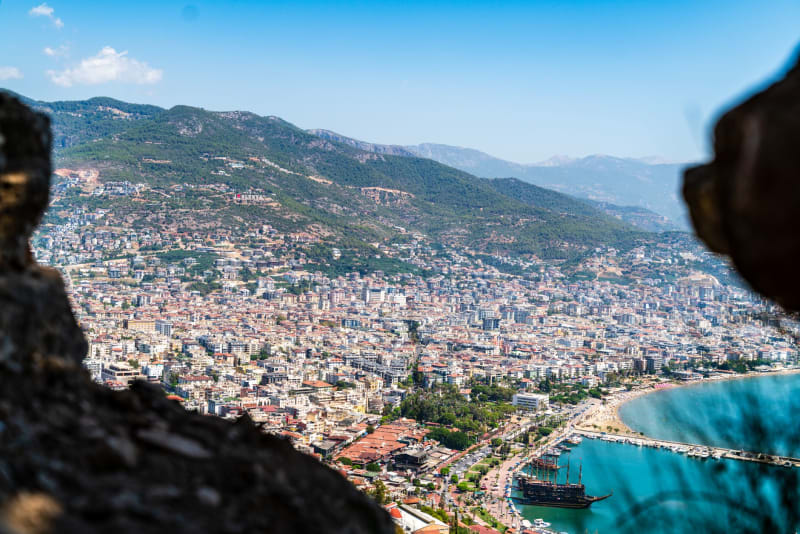 turkish-riviera
 Alanya
A Seljuk fortress town on a rocky promontory between two long beaches, where the medieval citadel walls still ring the clifftop and the view from inside them is worth every step of the climb.
Explore