Middle East
Turkish Riviera
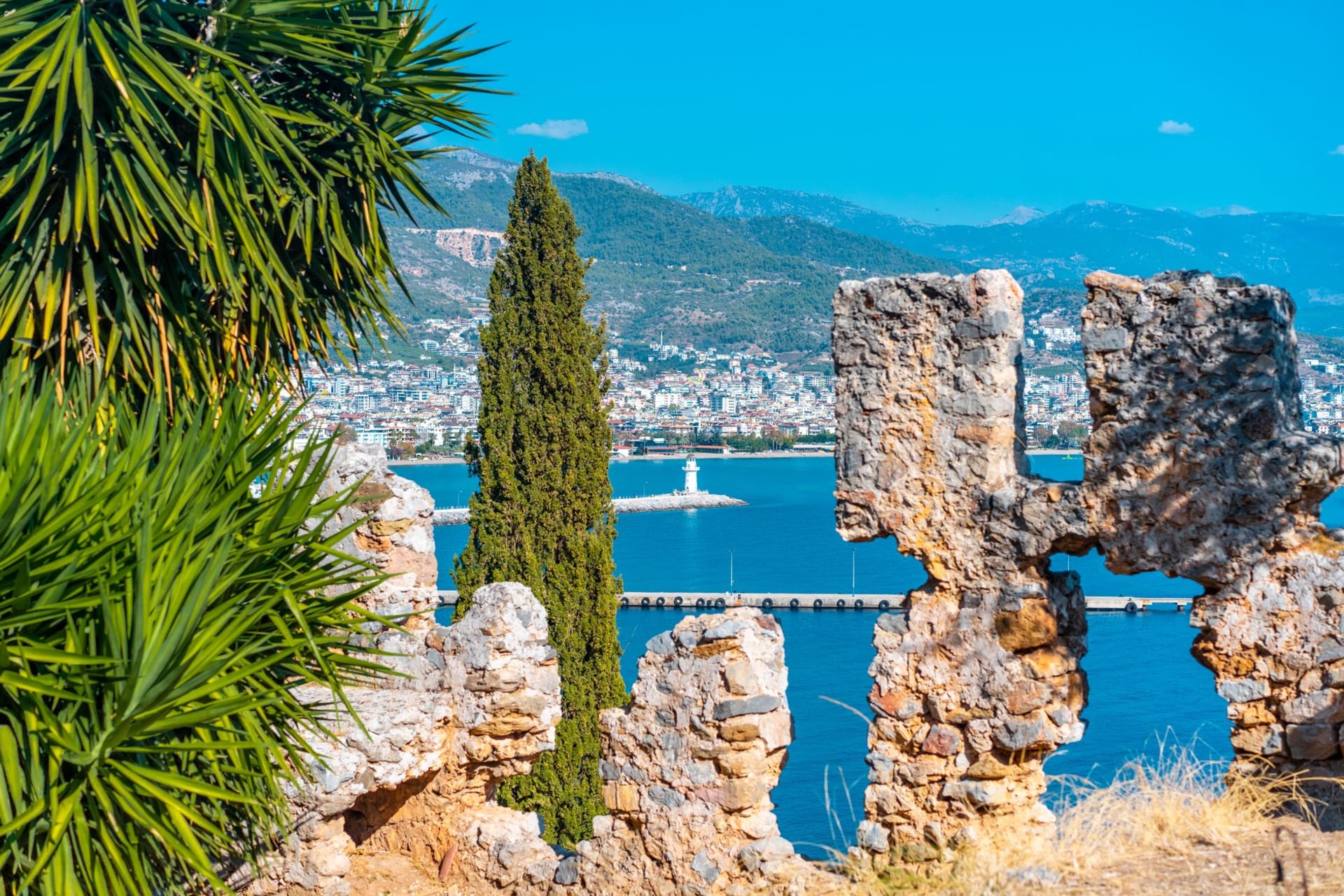
"Where ancient walls hold back nothing but the view of the sea."
A coastline where Lycian tombs rise from turquoise coves and ancient ruins share the hillside with cedar forests and salt-scented sea air.

The bus drops you in Kaş at seven in the morning, before the heat has settled, and the town is still quiet enough that you can hear the water. The harbor sits below streets of bougainvillea and Ottoman houses, the kind of place where the coffee is brought to you without asking and the bread is still warm. I had arrived from Antalya the night before, intending to spend two days. I stayed nine. The Turkish Riviera — the stretch from Antalya west to Fethiye that Turks call the Turquoise Coast — operates like that. It has a way of dismantling your schedule.
What distinguishes this coast from the rest of the Mediterranean is not the sea, which is beautiful but not uniquely so. It is the density of history packed into the shoreline. Lycian ruins appear around every bend: the half-submerged city of Kekova, visible only from a kayak, its streets and doorways blurring beneath two meters of clear water. The rock-cut tombs above Myra, where you can walk among carved facades and sarcophagi while a modern fishing village carries on below. The theater at Aspendos, so well preserved it still hosts opera performances on summer evenings, the acoustics unchanged since the second century. Between ruins, there are cedar forests that run to the cliff edge, small family-run pansiyons where dinner is a fixed spread of meze you did not choose and do not need to, and coves accessible only by boat where the water is the precise shade of blue that does not appear in photographs the way it does in life.
Antalya, the regional capital, is worth two or three days before you head west. The old town — Kaleiçi — is a tangle of Roman walls, Byzantine churches, and Seljuk minarets, all compressed into a few walkable blocks above the harbor. The Archaeological Museum holds one of the best collections of Roman statuary in Turkey, and the covered bazaar is genuinely functional rather than touristic. Eat the piyaz here, a white bean salad dressed with tahini and vinegar that is specific to Antalya and unlike anything you will find elsewhere.
When to go: April to June is the ideal window — the water is warm enough to swim, the light is extraordinary, and the ruins are not yet crowded. September and October work nearly as well. July and August bring fierce heat and the full weight of European package tourism, particularly around Ölüdeniz and Alanya.
What most guides get wrong: They frame the Riviera as a beach holiday with ancient ruins as a bonus. It is the other way around. The coast is a landscape of extraordinary historical depth that happens to have excellent swimming. Go to Kekova before ten in the morning, when the tour boats haven’t arrived yet. Rent a kayak and paddle over the submerged city alone. That is the Turkish Riviera at its truest — not the infinity pools at Ölüdeniz, but a moment of silence above a drowned civilization.
Explore
Places in Turkish Riviera
 turkish-riviera
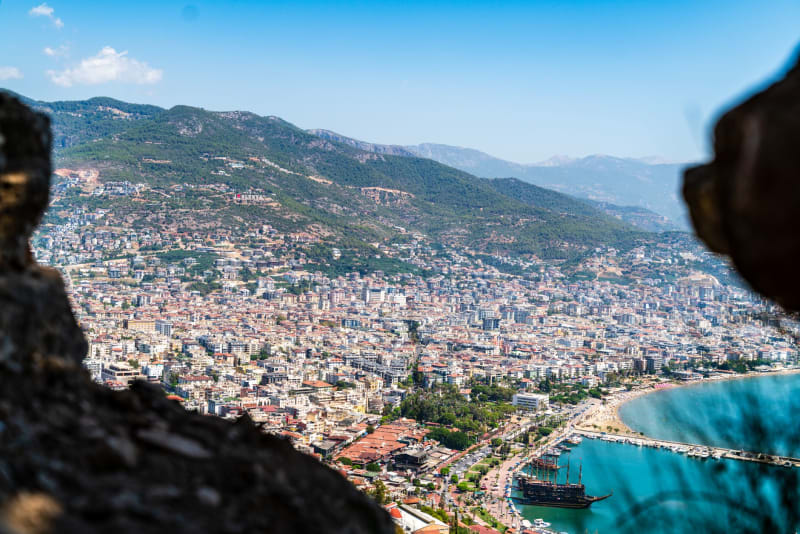
 Alanya
A Seljuk fortress town on a rocky promontory between two long beaches, where the medieval citadel walls still ring the clifftop and the view from inside them is worth every step of the climb.
Explore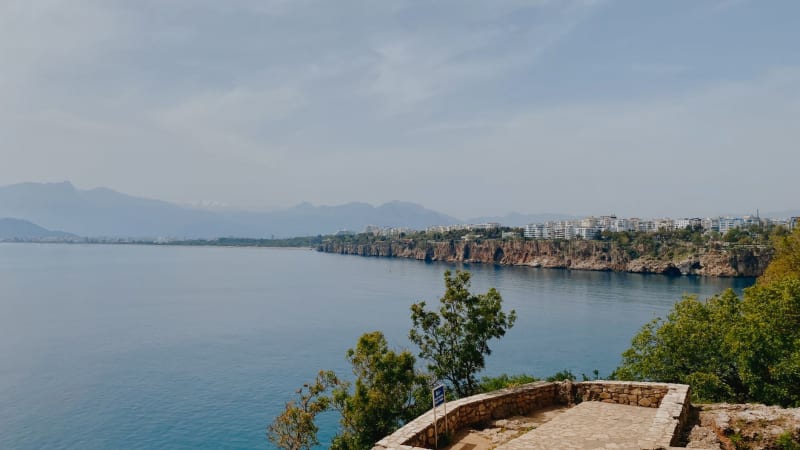 turkish-riviera
 Antalya
A Roman harbor town that refuses to become a mere airport layover, with a walled old quarter where laundry hangs between columns two millennia old.
Explore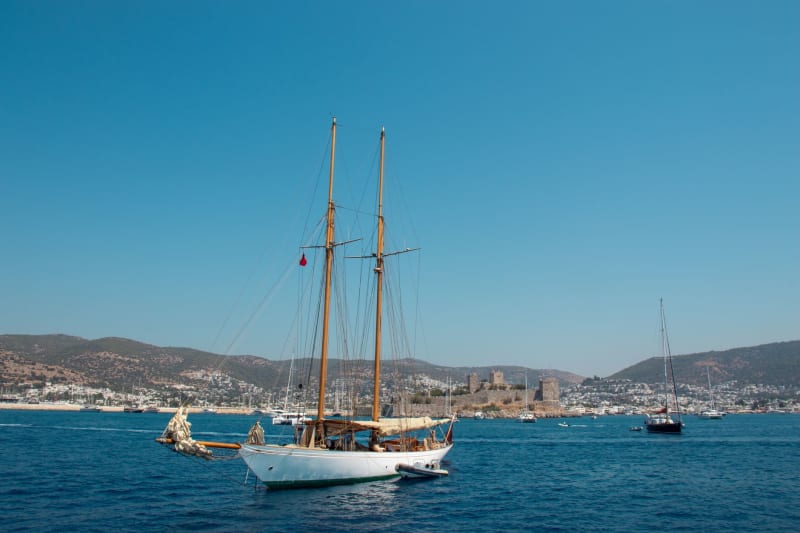 turkish-riviera
 Bodrum
A Aegean peninsula town of whitewashed houses and a Crusader castle where the marina holds superyachts and the backstreets hold pomegranate juice stalls, and somehow both feel native to the same place.
Explore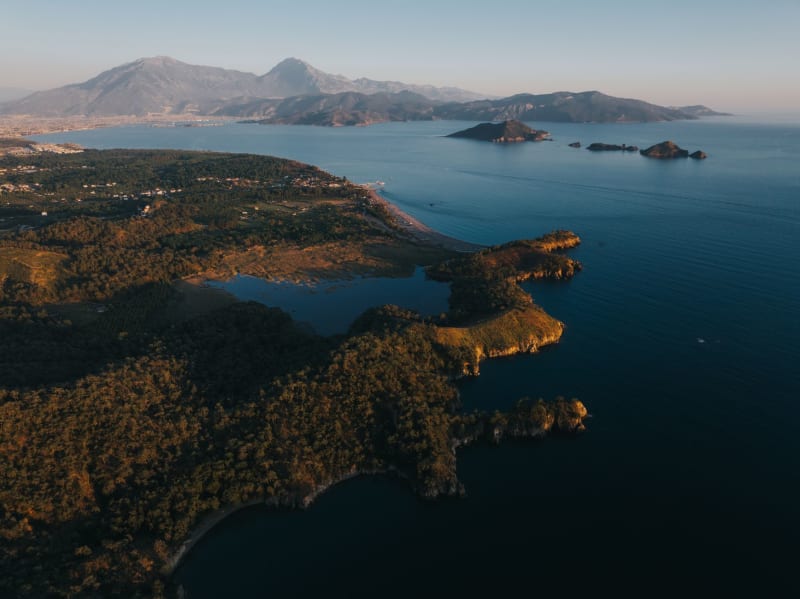 turkish-riviera
 Fethiye
A working harbor town built over Lycian Telmessos, where ancient rock tombs glow orange in the cliffs above the fish market and gulets line the waterfront like a fleet waiting for something to happen.
Explore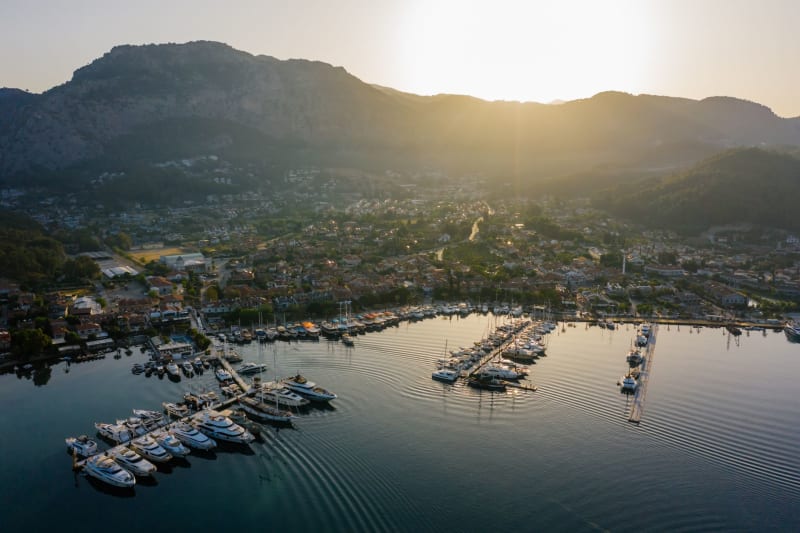 turkish-riviera
 Göcek
A small pine-backed sailing town of almost no beach and extraordinary anchorages, where the real geography is water rather than land and the twelve islands offshore are a private world for anyone with a boat.
Explore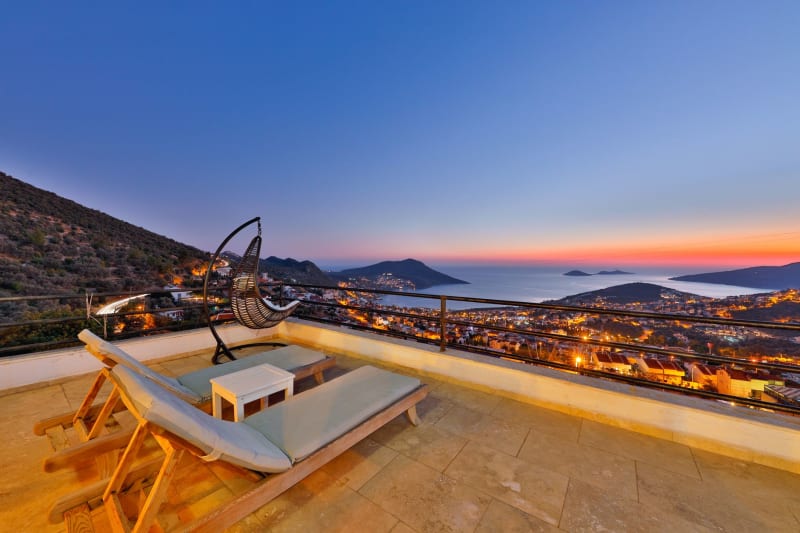 turkish-riviera
 Kalkan
A white-washed hillside village above a tiny harbor where the Ottoman architecture is intact, the rooftop restaurants are genuinely excellent, and the sea below changes color with the hour.
Explore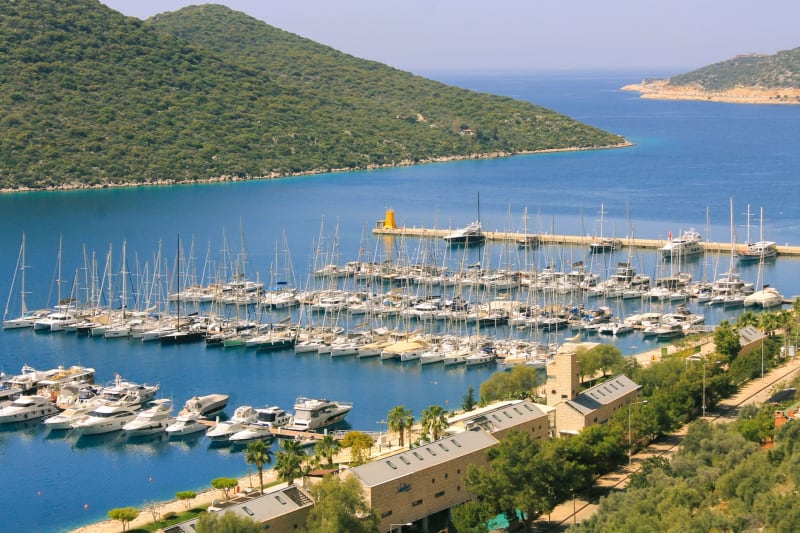 turkish-riviera
 Kaş
A small Lycian port town so unhurried it feels like the Mediterranean decided to keep one place for itself, where sarcophagi sit in front gardens and the sea is unreasonably clear.
Explore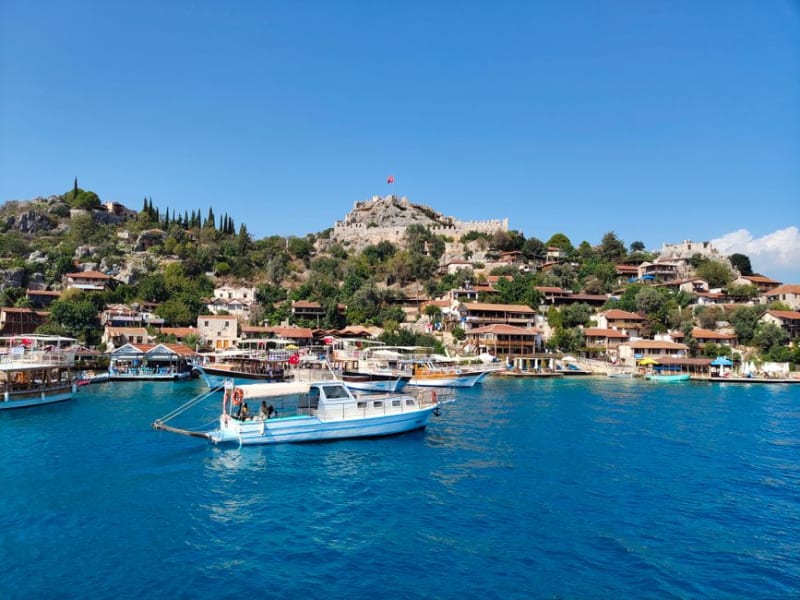 turkish-riviera
 Kekova and Simena
A sunken Lycian city glimpsed through turquoise water, a castle village reachable only by boat, and a coastline that refuses to hurry.
Explore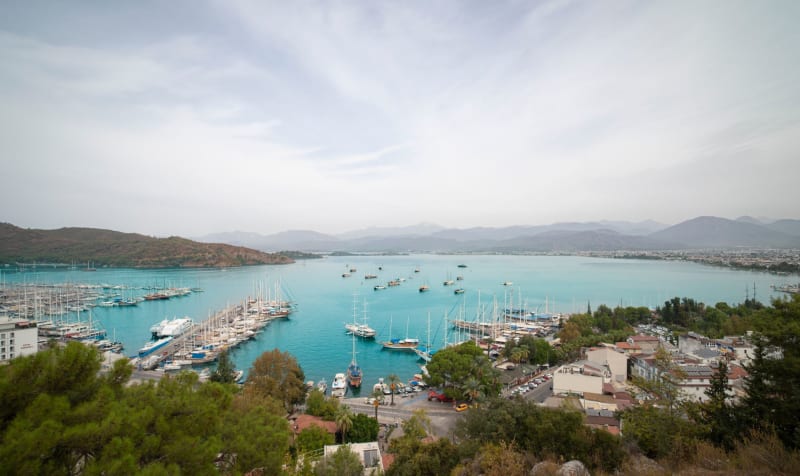 turkish-riviera
 Marmaris
A deep-water bay ringed by pine-forested hills where one of the world's finest natural harbors has been hosting fleets since Suleiman the Magnificent, now occupied by superyachts and party boats in roughly equal measure.
Explore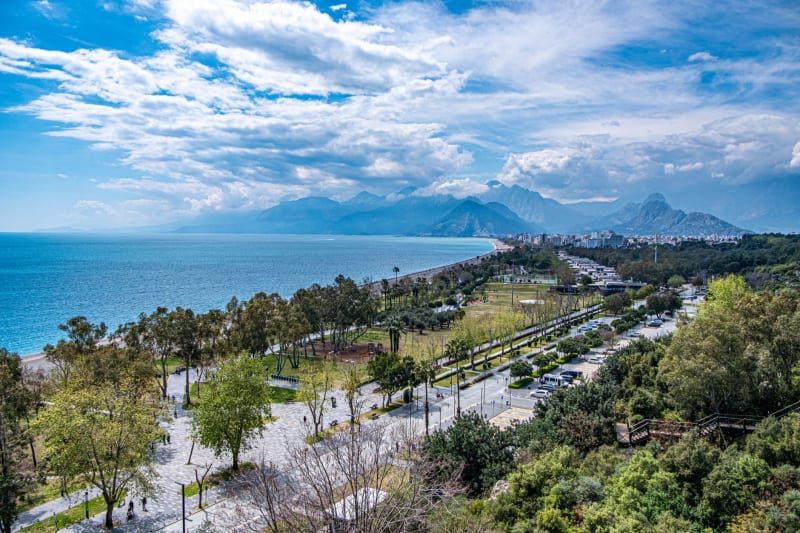 turkish-riviera
 Olimpos
An ancient Lycian city swallowed by forest at the edge of a pebble beach, where treehouse hostels hide among the ruins and the eternal flame of the Chimaera burns in the mountain above after dark.
Explore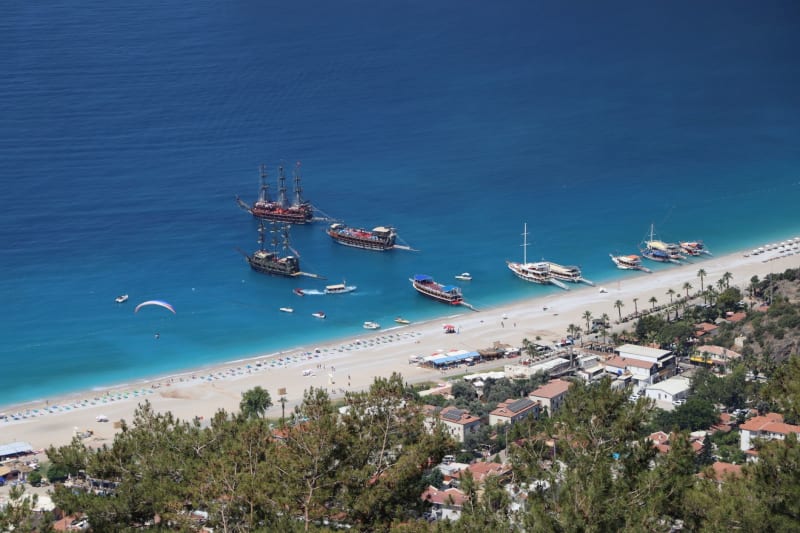 turkish-riviera
 Ölüdeniz
A lagoon so still and so improbably blue that you spend your first few minutes there simply checking whether it's real, before the paragliders start dropping out of the sky above Babadağ.
Explore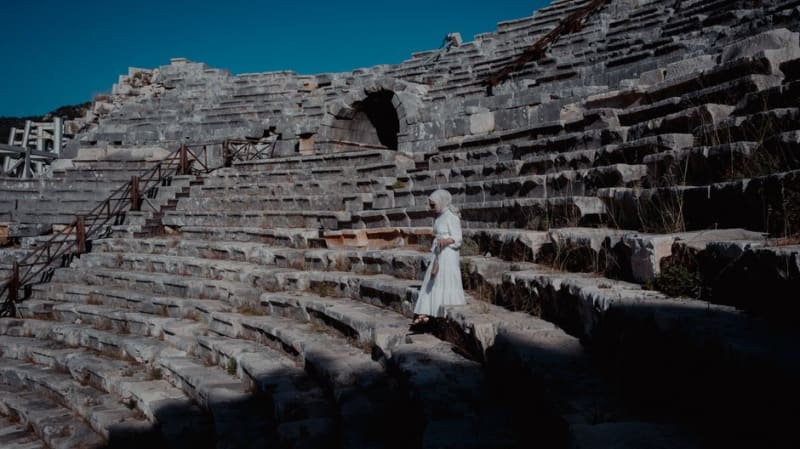 turkish-riviera
 Patara
An 18-kilometer beach guarding a buried Lycian capital, where turtle nests and half-excavated colonnades share the same sand.
Explore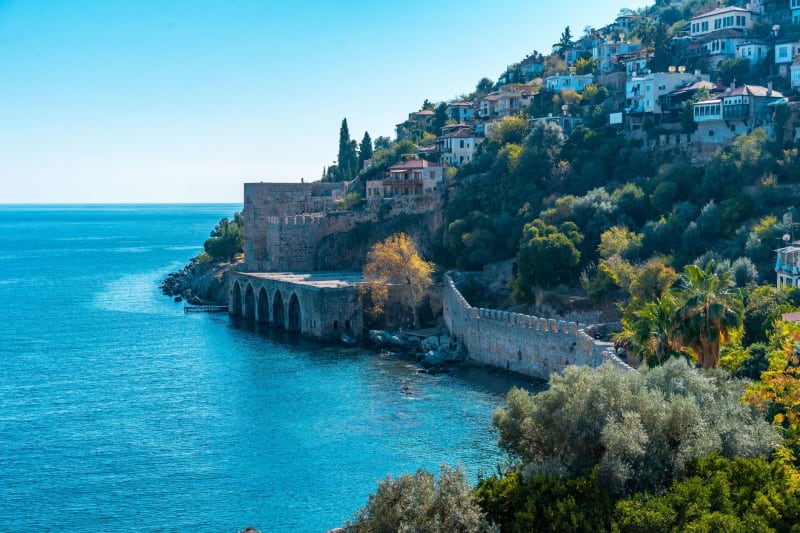 turkish-riviera
 Side
An ancient Greek and Roman port city still occupied, where Apollo's temple stands at the sea's edge and the ruins run between ice cream carts and jewelry shops without any apparent embarrassment.
Explore