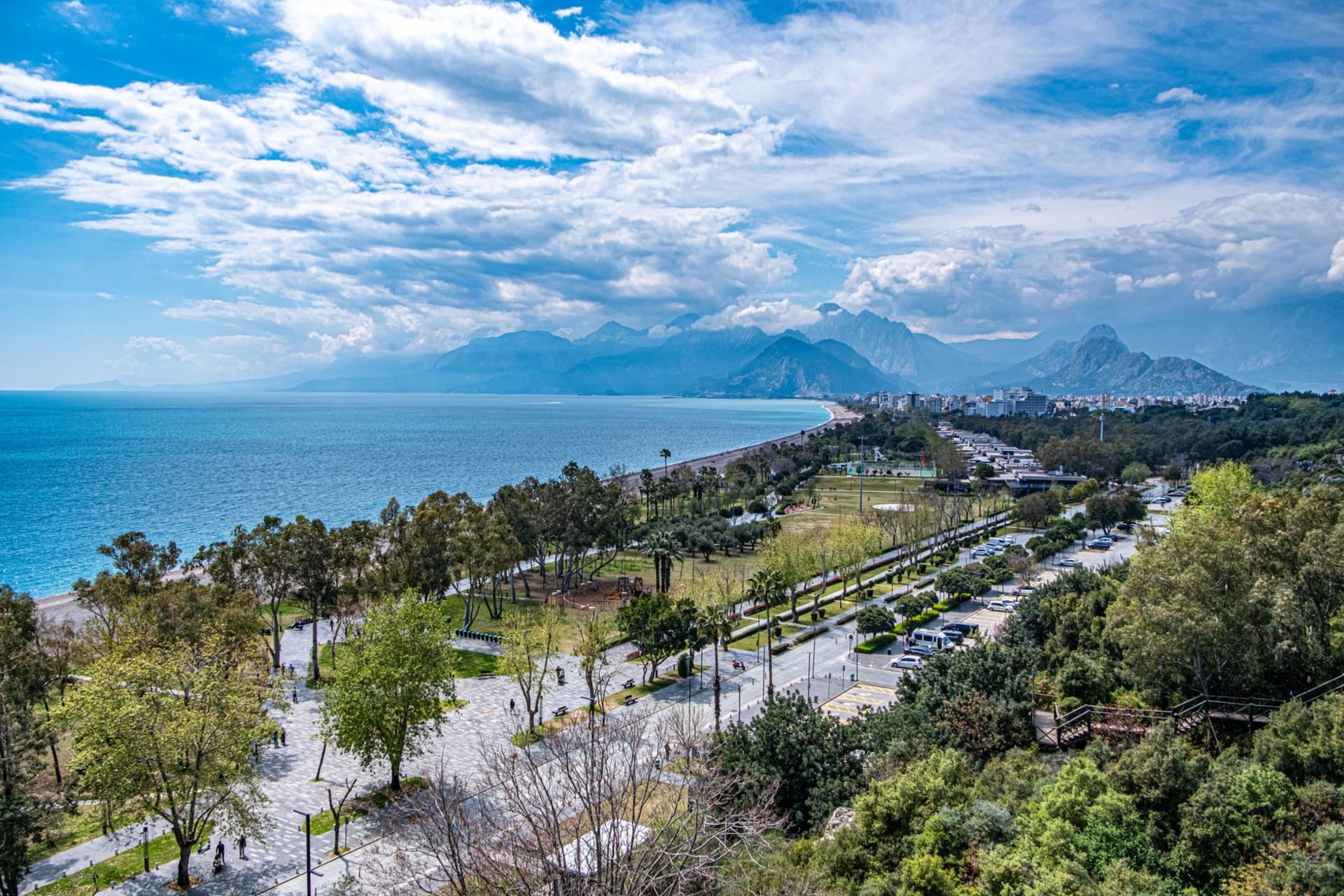
Olimpos
"There's a fire that has been burning in this hillside for at least two thousand years. We climbed up to it in the dark and sat around it like it was a campfire, which I suppose it is."
An ancient Lycian city swallowed by forest at the edge of a pebble beach, where treehouse hostels hide among the ruins and the eternal flame of the Chimaera burns in the mountain above after dark.

Olimpos operates on different logic from the rest of this coast. It has no hotels in the conventional sense — the accommodation here is wooden bungalows and treehouses built into and around the ruins of a Lycian city, run as pensiyons by families who have been at it since backpackers discovered the valley in the 1980s. There are no cars inside the site. The ancient walls and the modern breakfast tables coexist without irony and without an admission fee, which feels like a small act of civic grace.
The Ruins and the Canyon
The Olimpos valley runs narrow between limestone cliffs for about two kilometers before opening onto the beach, and the ruins occupy both sides: Lycian walls, a Byzantine church, sarcophagi half-buried in silt, a Roman baths complex whose arched ceiling still stands. Everything is blanketed in oleander, fig trees, and the kind of vegetation that moves into abandoned space with steady confidence. The path through the site follows a stream that runs year-round even in summer, which keeps things cooler and greener than the surrounding hillsides.
I arrived in late afternoon when the canyon was in shadow and the ruins were the color of ash, and I walked the full length of the site alone — the tourists who come on day buses from Antalya had already left — with the sound of the stream and whatever birds were in the oleander above me and nothing else. It was the best two hours I spent on the entire coast.
The Beach
The Olimpos beach is a long, wide crescent of smooth grey pebbles backed by the canyon walls. There are no sun lounger operations, no beach bars, no infrastructure beyond a few trees that have grown over the waterline and provide shade free of charge. The sea is the same deep clear blue of the rest of the Turquoise Coast, and the swimming is good — the pebble bottom stays clean where the sand bottom further west sometimes doesn’t.
In high summer the beach fills significantly by midday. Before nine in the morning and after five in the afternoon you have it mostly to yourself. I swam at seven AM once with the canyon in full shadow behind me and the sun just hitting the water offshore, and it felt like the coast’s best version of itself.
The Chimaera
Two kilometers uphill from the main site, a forty-five-minute walk through pine forest on a path that gets steeper near the top, is the Chimaera: a hillside of natural gas vents that have been burning since at least the first century BC. The Greeks named this place for their fire-breathing monster. The Byzantines called it the Gates of Hell. Whatever you call it, the sight of flames rising from bare rock in the dark, blue-orange and wavering in the wind, with nothing to explain them except the methane seeping through limestone, produces an effect that no amount of rational knowledge entirely neutralizes.
Lia and I walked up at nine in the evening with headlamps and a bottle of water, following a chain of other visitors on the same mission, and sat on the rocks near the largest cluster of flames for a long time without talking much. A man near us boiled water for tea on a flame that has been burning for two thousand years. It seemed exactly right.
The Treehouse Accommodation
The pensiyons in Olimpos — a dozen or more, clustered along the main path through the ruins — offer wooden bungalows and platforms at prices that are astonishingly low by Turkish coast standards. The trade is comfort for atmosphere: the bathrooms are outdoor, the walls are thin, the roosters are punctual. The communal dinners at most pensiyons are served family-style at long tables and are far better than they need to be. I stayed three nights expecting one.
When to go: May and June for the ruins and the Chimaera without the summer heat. The valley traps warmth in July and August and becomes genuinely hot by midday. October is excellent: the pensiyons thin out, the ruins go quiet, and the Chimaera is best seen in the long autumn evenings. The site stays open year-round but most accommodation closes from November through March.
Keep exploring
More from Turkish Riviera
 turkish-riviera
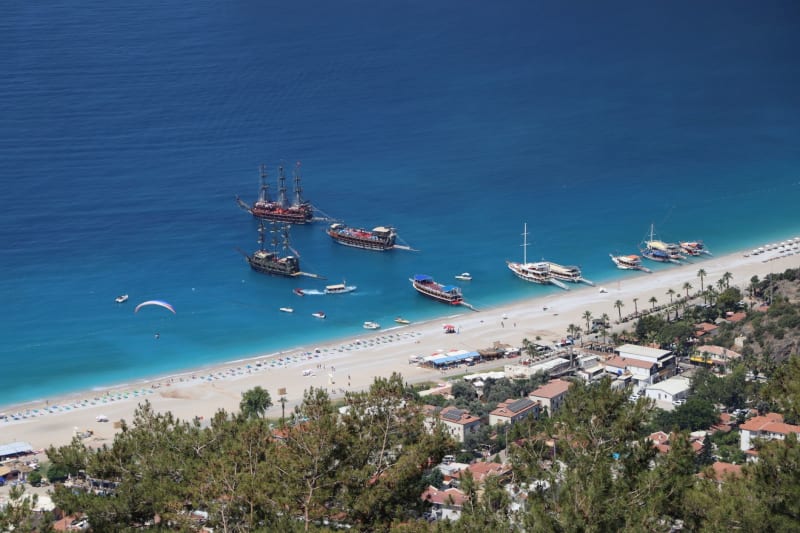
 Ölüdeniz
A lagoon so still and so improbably blue that you spend your first few minutes there simply checking whether it's real, before the paragliders start dropping out of the sky above Babadağ.
Explore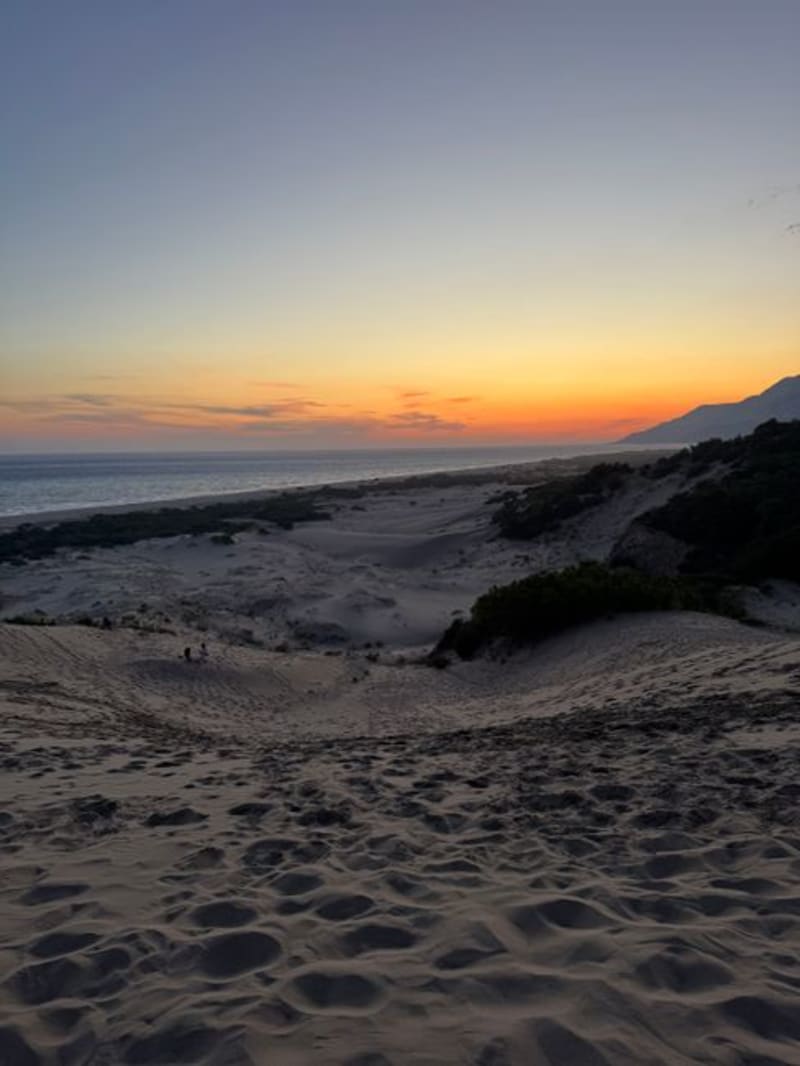 turkish-riviera
 Patara
An 18-kilometer beach guarding a buried Lycian capital, where turtle nests and half-excavated colonnades share the same sand.
Explore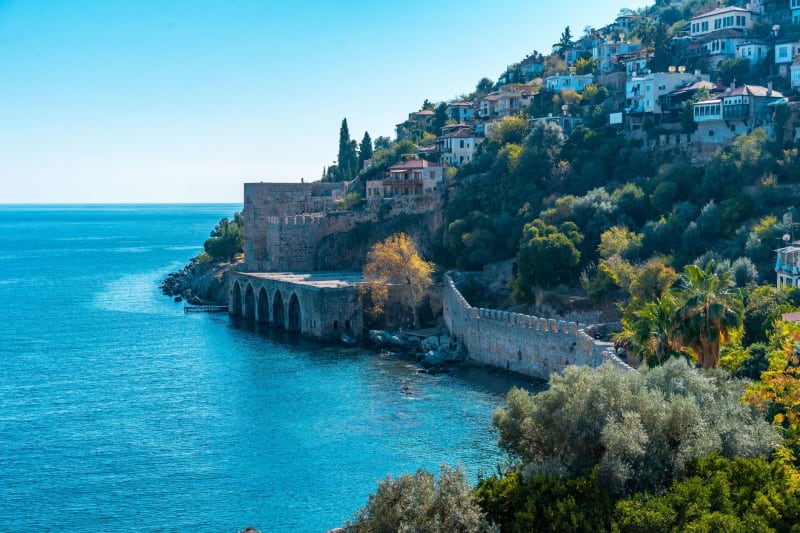 turkish-riviera
 Side
An ancient Greek and Roman port city still occupied, where Apollo's temple stands at the sea's edge and the ruins run between ice cream carts and jewelry shops without any apparent embarrassment.
Explore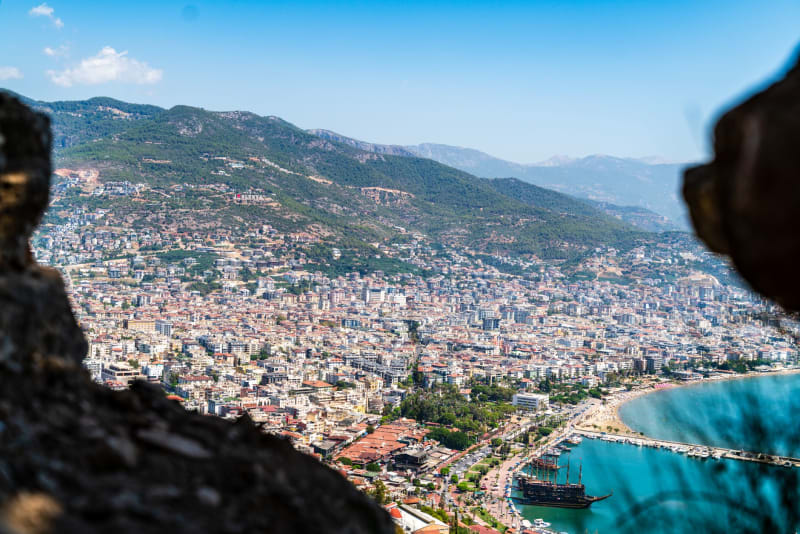 turkish-riviera
 Alanya
A Seljuk fortress town on a rocky promontory between two long beaches, where the medieval citadel walls still ring the clifftop and the view from inside them is worth every step of the climb.
Explore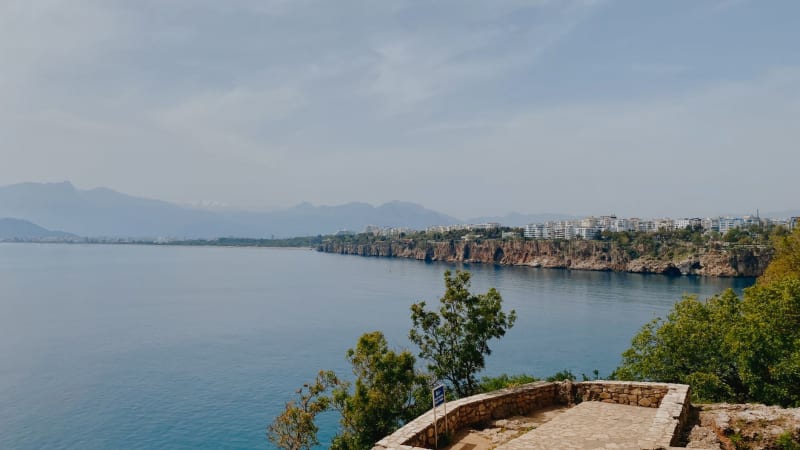 turkish-riviera
 Antalya
A Roman harbor town that refuses to become a mere airport layover, with a walled old quarter where laundry hangs between columns two millennia old.
Explore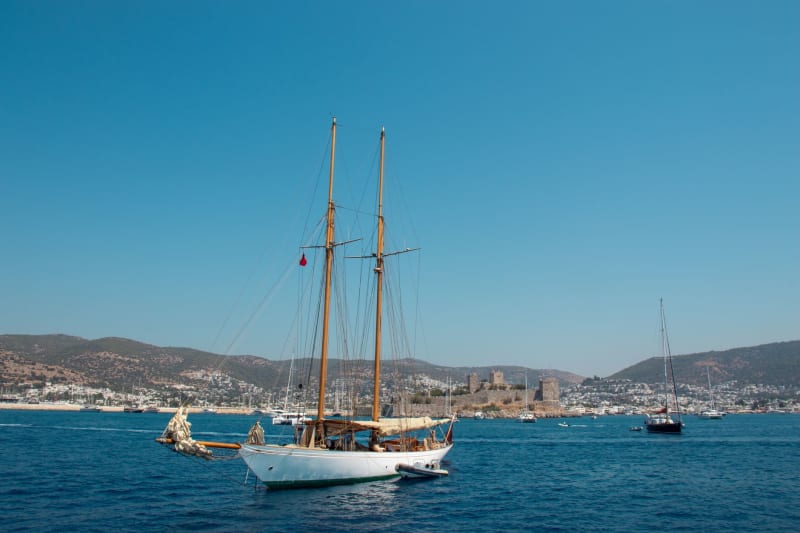 turkish-riviera
 Bodrum
A Aegean peninsula town of whitewashed houses and a Crusader castle where the marina holds superyachts and the backstreets hold pomegranate juice stalls, and somehow both feel native to the same place.
Explore