Marmaris
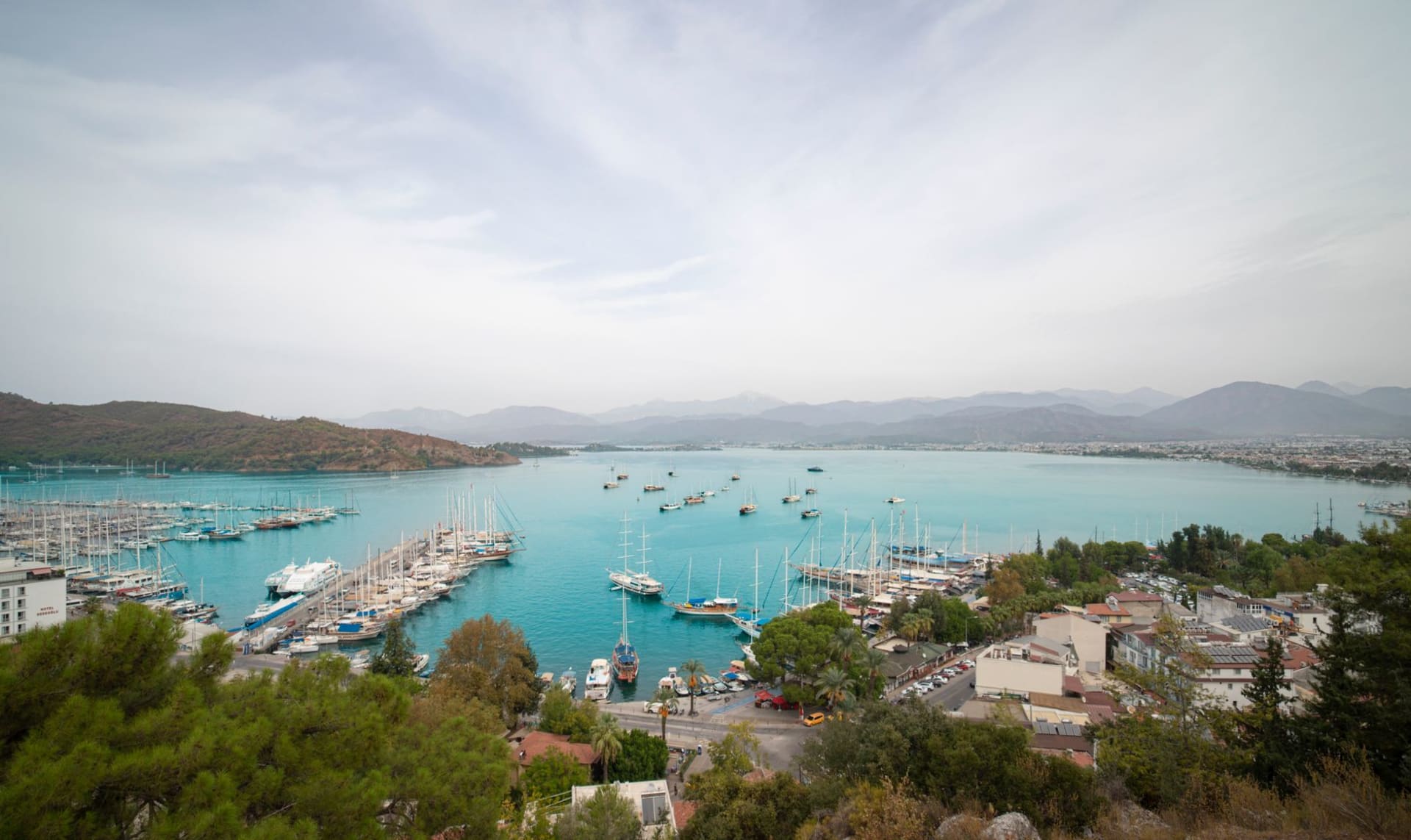
"Marmaris Bay is so naturally sheltered that Suleiman assembled his entire fleet here in 1522. I arrived on a Friday night and found it equally busy."
A deep-water bay ringed by pine-forested hills where one of the world's finest natural harbors has been hosting fleets since Suleiman the Magnificent, now occupied by superyachts and party boats in roughly equal measure.

There is a version of Marmaris I didn’t expect to find and found anyway: a genuinely magnificent harbor. The bay is a deep fjord-like inlet ringed by mountains and dense Scots pine forest, and when you see it from the castle above the old town — the full extent of it, the width of the water, the hills on every side — you understand immediately why every naval commander in Mediterranean history used this place. The geography is extraordinary.
Everything built on top of that geography is more complicated.
The Castle and the Old Town
The castle is small and manageable, a Seljuk fortress rebuilt by Suleiman in the sixteenth century that now holds a modest archaeological museum. The view from the top is the reason to go. Below the castle, the old town is a maze of narrow lanes — the bazaar quarter — that manages to retain something of its Ottoman character despite the souvenir pressure. I found a coppersmith working in a shop the size of a large closet, hammering patterns into trays with a focus that suggested complete indifference to the bar crawl beginning three streets away.
The main harbor promenade, Kordon Caddesi, runs several kilometers along the waterfront and in the evening becomes a continuous stream of people moving in both directions without apparent destination. There’s something genuinely pleasant about this if you’re in the mood: the smell of the sea, vendors selling grilled corn and mussels, the lights of the boats.
Netsel Marina and the Gulets
Marmaris Marina is one of the largest on the Turkish coast, and the gulet-building industry has historically centered in the town — the wooden boats that define the Blue Voyage experience were largely designed and constructed here. Walking the marina in the morning, before the charter parties board and the day’s logistics begin, is oddly peaceful: hulls of weathered wood, ropes coiled with the precision of long habit, the smell of paint and salt and something faintly resinous from the forest above.
Day charters into the bay are the obvious activity, and they’re genuinely rewarding: the coves north and east of town, accessible only by boat, are quiet and clean. The one called Kumlubük is particularly good — a half-circle of sand backed by forest with a single beach restaurant serving fresh catch.
Bar Street and What Surrounds It
Bar Street — a paved alley of clubs and bars that operates approximately between nine PM and five AM — is the axis around which Marmaris’s summer reputation rotates. I have nothing particularly interesting to say about it; it does what it does at high volume, and if you want that, you’ve come to the right place, and if you don’t, you stay at the other end of the promenade and go to bed at a reasonable hour.
What’s less discussed is that Marmaris has a functioning domestic Turkish economy running parallel to the resort one: market days, lokanta lunches, hammams that serve local residents rather than tourists, a fish auction at the harbor that happens before most tourists are awake.
Excursions Outward
Marmaris functions well as a base for the Datça Peninsula to the west — a long narrow finger of land that juts sixty-five kilometers into the sea between the Aegean and the Mediterranean, ending at Knidos, an ancient city with a harbor on each side. The drive is spectacular; the peninsula grows drier and more austere as you move west, the road dropping to the water and climbing back again through scrub oak and mastic trees. Datça town itself is a quieter, smaller version of the coastal resort, and Knidos at the tip rewards the distance with ruins that sit directly on two seas.
When to go: May and October for the harbor without the peak-season density. June is excellent. July and August transform Marmaris into something genuinely overwhelming — the bay fills with charter traffic and the town runs at full commercial volume. If you go in summer, arrive by boat if possible; the harbor seen from water is better than the harbor seen from land.
Keep exploring
More from Turkish Riviera
 turkish-riviera
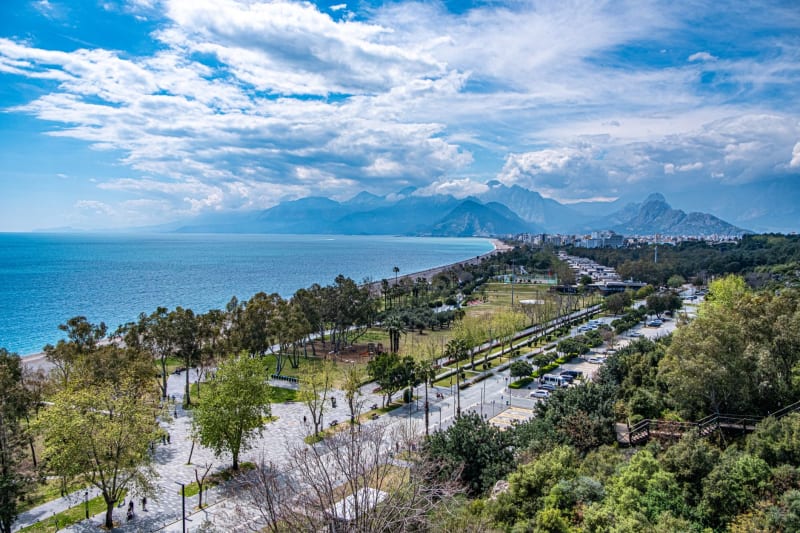
Olimpos
An ancient Lycian city swallowed by forest at the edge of a pebble beach, where treehouse hostels hide among the ruins and the eternal flame of the Chimaera burns in the mountain above after dark.
Explore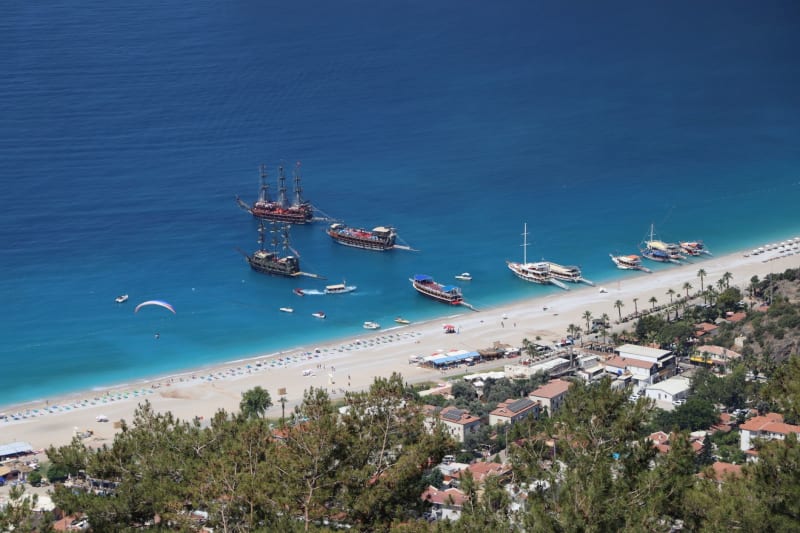 turkish-riviera
Ölüdeniz
A lagoon so still and so improbably blue that you spend your first few minutes there simply checking whether it's real, before the paragliders start dropping out of the sky above Babadağ.
Explore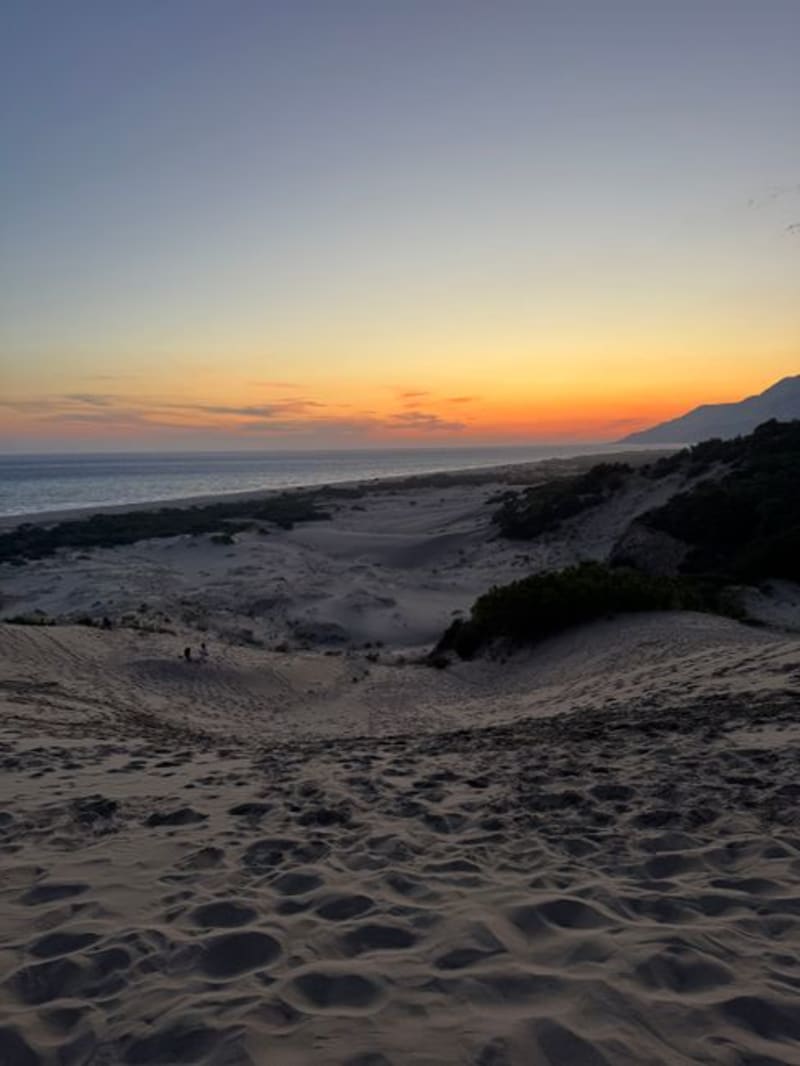 turkish-riviera
Patara
An 18-kilometer beach guarding a buried Lycian capital, where turtle nests and half-excavated colonnades share the same sand.
Explore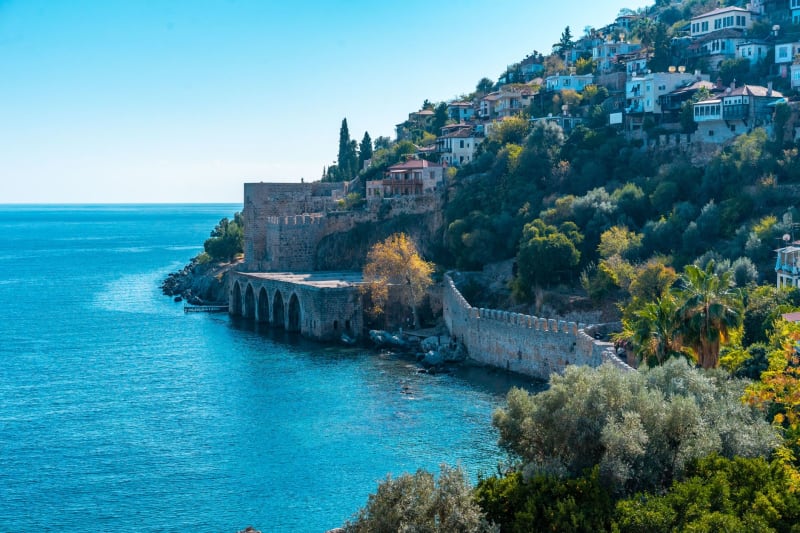 turkish-riviera
Side
An ancient Greek and Roman port city still occupied, where Apollo's temple stands at the sea's edge and the ruins run between ice cream carts and jewelry shops without any apparent embarrassment.
Explore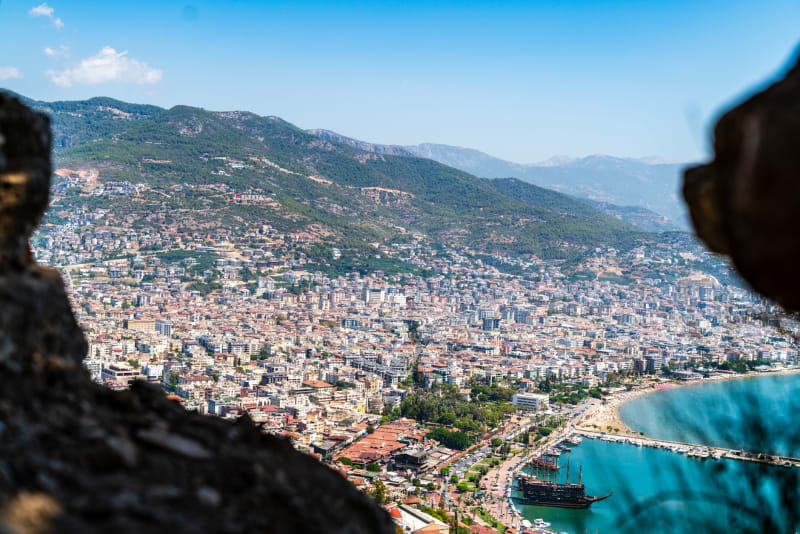 turkish-riviera
Alanya
A Seljuk fortress town on a rocky promontory between two long beaches, where the medieval citadel walls still ring the clifftop and the view from inside them is worth every step of the climb.
Explore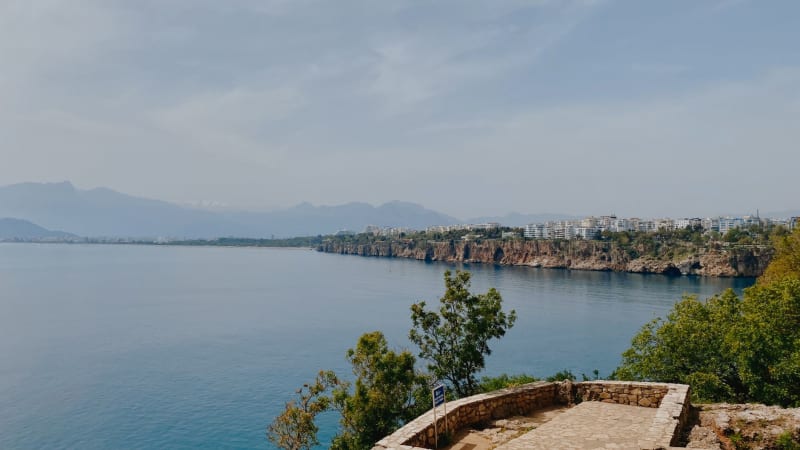 turkish-riviera
Antalya
A Roman harbor town that refuses to become a mere airport layover, with a walled old quarter where laundry hangs between columns two millennia old.
Explore