
The Chola capital that gave South India its defining aesthetic — a city where a thousand-year-old granite temple still sets the visual standard for everything around it.

The Big Temple
The Brihadeeswarar Temple — called locally the “big temple,” which is accurate but insufficient — was completed in 1010 CE by the Chola emperor Rajaraja I and has not been significantly modified since. At 66 meters tall, the vimana (the tower above the inner sanctum) was the tallest in the world when built. It remains visually dominant in a way that’s difficult to account for given its age, as if the proportions were calculated to make everything around them look provisional.
The most discussed fact about it is the shadow: the capstone at the top supposedly does not cast a shadow on the ground at noon. I tested this on a clear December day and could not definitively confirm it, partly because the sun angle wasn’t quite right and partly because I was distracted by the Nandi — the largest monolithic Nandi sculpture in India, a single piece of granite, sitting in the outer courtyard facing the sanctum with the patient attention of something that has been sitting there for a thousand years.
The outer walls of the temple are covered in sculpture: dancing figures, celestial beings, erotic panels, guardian deities. The quality is consistently high in a way that suggests the Chola empire at its peak was genuinely deploying its best craftsmen on this project, not just meeting a quota of decoration.
Chola Bronze and the Museum
Thanjavur is where Chola bronze sculpture was invented and perfected, and the Thanjavur Art Gallery inside the old palace complex holds one of the best collections of Chola bronze in existence. The bronzes — cast by the lost-wax process — are not static objects. The dancing Natarajas, the standing Vishnus, the Parvatis with their precise, anatomically impossible elegance, are figures in arrested motion. They were made to be carried in procession, which is why they have rings for poles. The museum context strips that out, but the objects survive it.
The Saraswathi Mahal Library, also inside the palace, contains some 30,000 manuscripts in multiple languages, including an illustrated edition of a 17th-century Tamil text on elephant care that is one of the more specific things I’ve seen inside a library.
The Kaveri Delta and Rice Country
Thanjavur sits in the Kaveri Delta, the rice bowl of Tamil Nadu — flat, intensely cultivated, green at almost every season because the Kaveri irrigation network here dates back to the Chola period and has been more or less continuously maintained. I rented a bicycle one morning and rode out through the fields before the heat built. The light was horizontal and gold, herons stood in the flooded paddies, and the air smelled of wet earth and cattle.
The delta towns are also where Tanjore painting — a classical South Indian style using gold leaf, semi-precious stones, and mineral pigments on wooden panels — is still practiced. Workshops around the palace area will show you the work in progress if you’re interested. The gold leaf application, done with a fine brush while the gum beneath is still tacky, requires a steadiness I clearly do not have.
Where to Eat
South Indian meals in Thanjavur lean heavily on rice preparations — the Kaveri Delta produces prodigious quantities of the finest rice in the state. The hotel restaurants near the old city serve thali with an array of rice dishes that would have been familiar to the Chola court: tamarind rice, lemon rice, curd rice, sambar. Simple and correct.
When to go: November through February. The December–January window is ideal: temperatures around 25–28°C, clear skies, and the Kaveri Delta is fully green from the northeast monsoon rains. Avoid April through June when the heat is serious and the flat landscape offers no shade.
Keep exploring
More from Tamil Nadu
 tamil-nadu
Yercaud
A quiet coffee-scented hill station where a jade-green lake and mist-wrapped viewpoints outshine the crowds of Tamil Nadu's bigger hills.
Explore tamil-nadu
Chennai
A city that swallows you whole — diesel fumes and jasmine garlands, Carnatic music bleeding from doorways, the Bay of Bengal glinting at the end of every eastward street.
Explore tamil-nadu
Chettinad
A cluster of villages in the arid heart of Tamil Nadu where a merchant dynasty built improbable mansions, developed the most complex cuisine in South India, and then mostly left.
Explore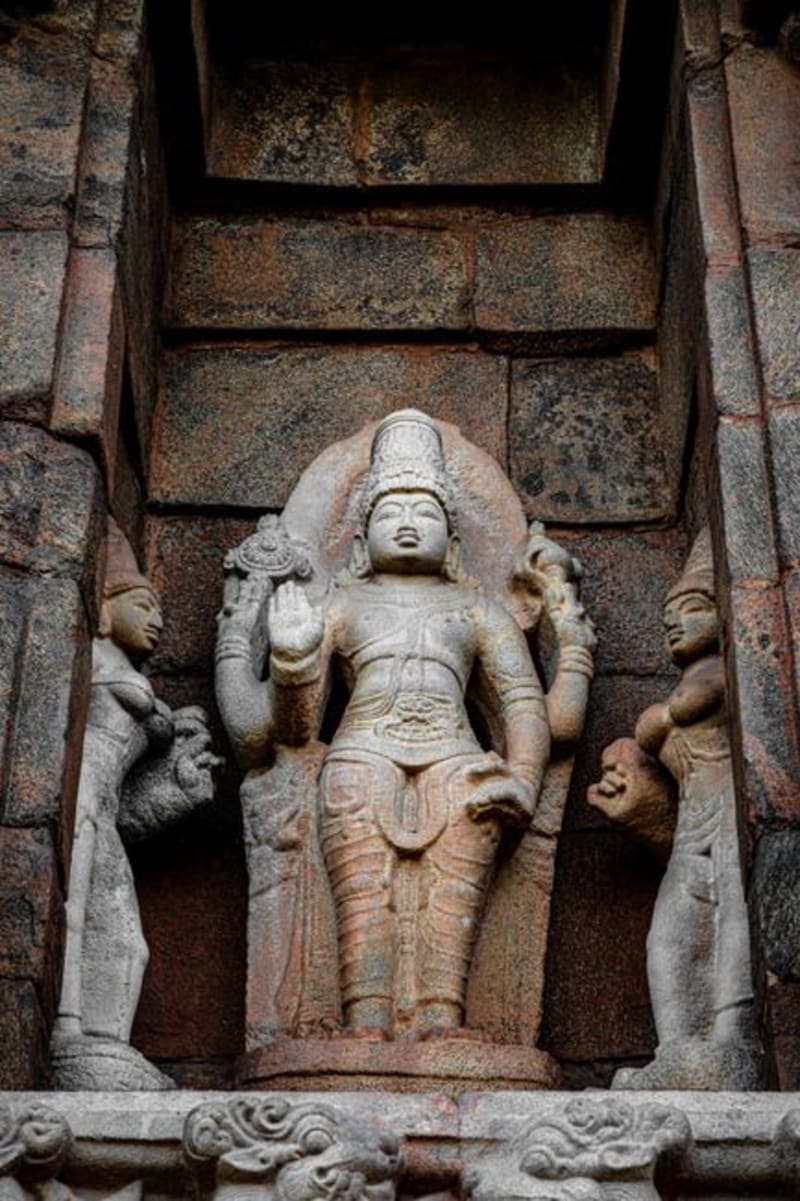 tamil-nadu
Gangaikonda Cholapuram
A forgotten Chola capital in the Ariyalur countryside, where a 1,000-year-old temple stands nearly alone in the fields.
Explore tamil-nadu
Kanchipuram
A city of a thousand temples and ten thousand silk looms, where ancient Dravidian architecture and the most technically demanding weaving tradition in India exist in the same grid of streets.
Explore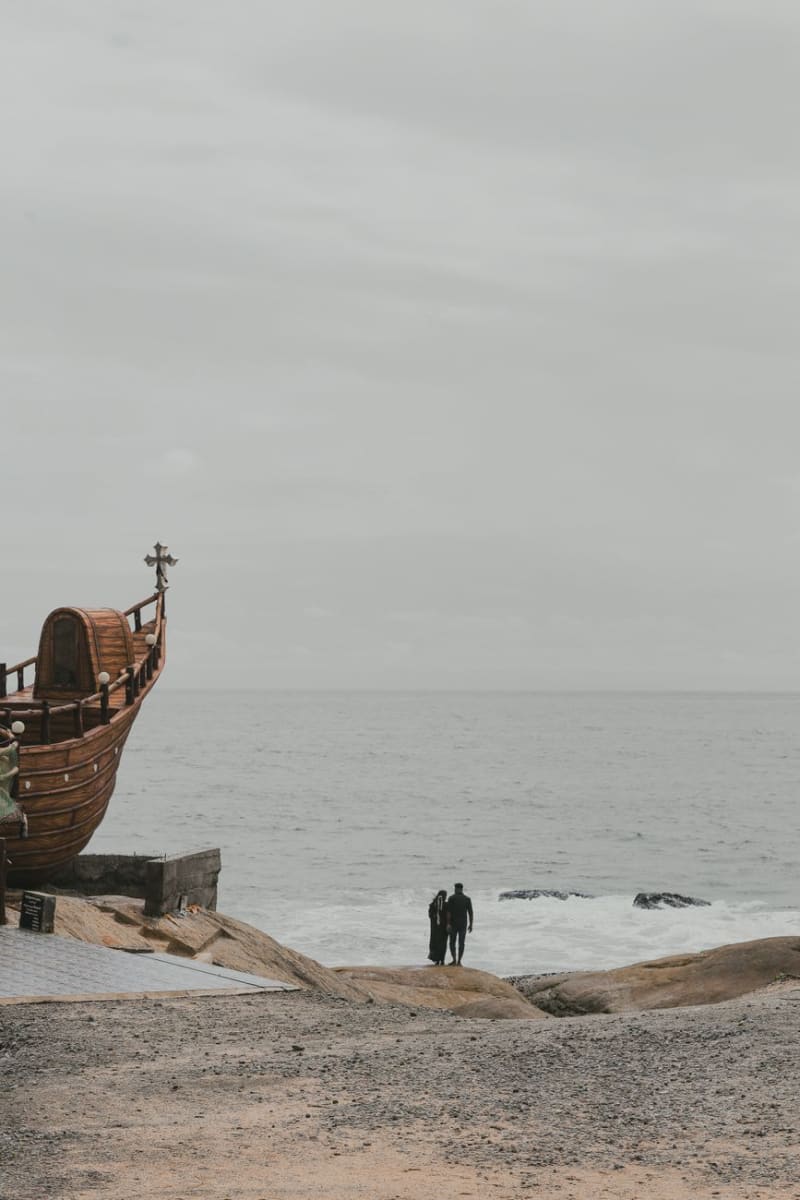 tamil-nadu
Kanyakumari
The southernmost tip of mainland India, where the Bay of Bengal, the Arabian Sea and the Indian Ocean meet in one restless line of water and the sun appears to both rise and set over the same horizon.
Explore