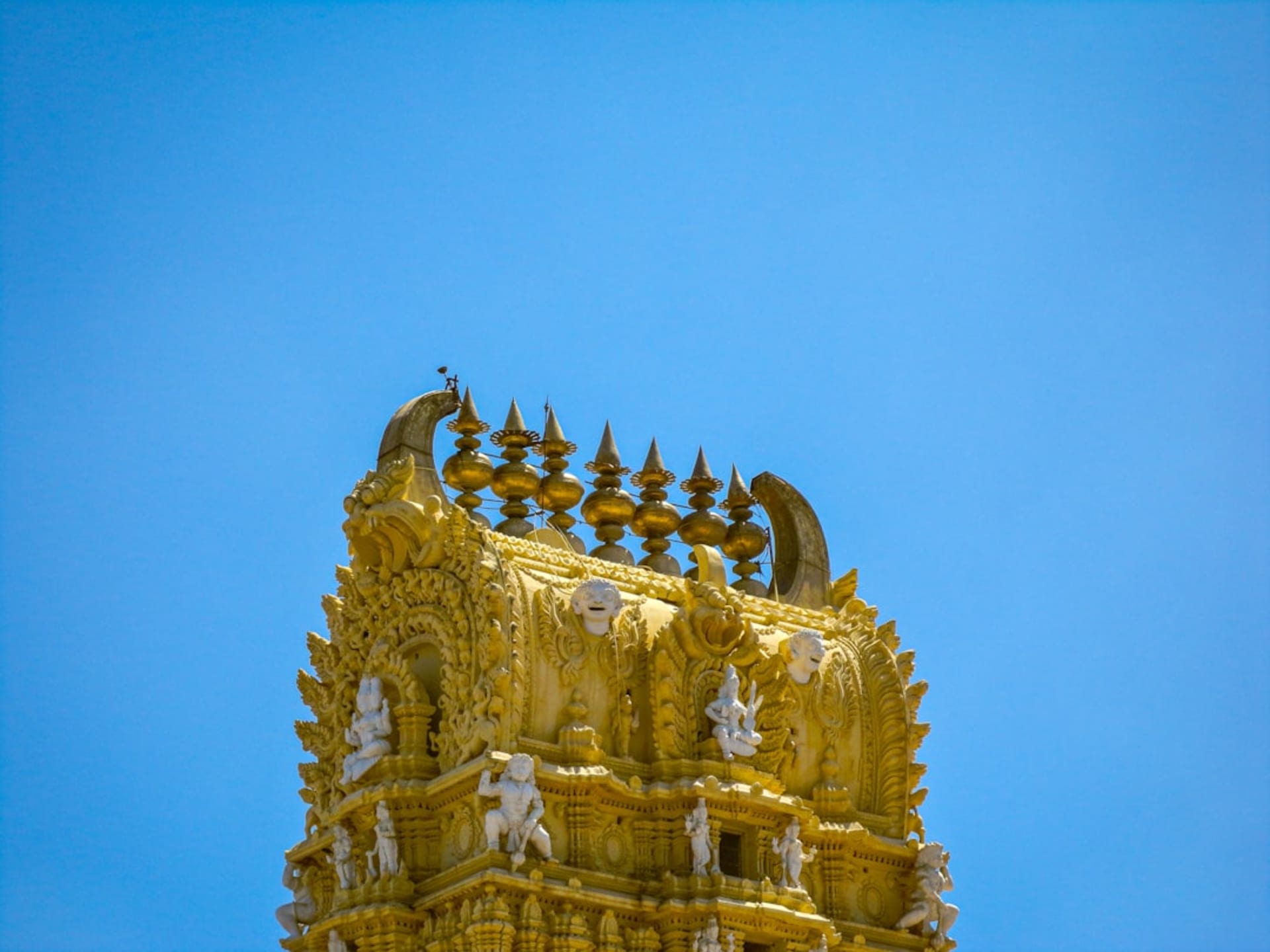
A forgotten Chola capital in the Ariyalur countryside, where a 1,000-year-old temple stands nearly alone in the fields.

Lia and I drove out to Gangaikonda Cholapuram almost as an afterthought, tacked onto the end of a longer loop through Ariyalur district, and it ended up being one of the quietest, most affecting mornings of our whole Tamil Nadu trip. There’s no town to speak of anymore, just rice fields and a single road leading to a temple complex that once sat at the center of an empire. It’s strange to stand there and realize this was the capital for roughly 250 years, founded around 1025 CE by the Chola emperor Rajendra I, and now it’s just us, a few goats, and a very patient temple caretaker who seemed pleased anyone had bothered to come.
The Brihadisvara Temple itself is the reason to make the detour. Completed in 1035 CE, its tower rises 55 meters over the plain, and inside the sanctum sits a 13-foot Shiva lingam that the priest let us approach in near silence — no crowds, no jostling, just the smell of oil lamps and stone that’s absorbed a millennium of monsoons. I kept thinking about the temple in Thanjavur we’d visited two days earlier, 70 kilometers south, because the resemblance is unmistakable. Same architectural language, same confidence of scale, but here it felt like visiting the quieter, more private sibling.
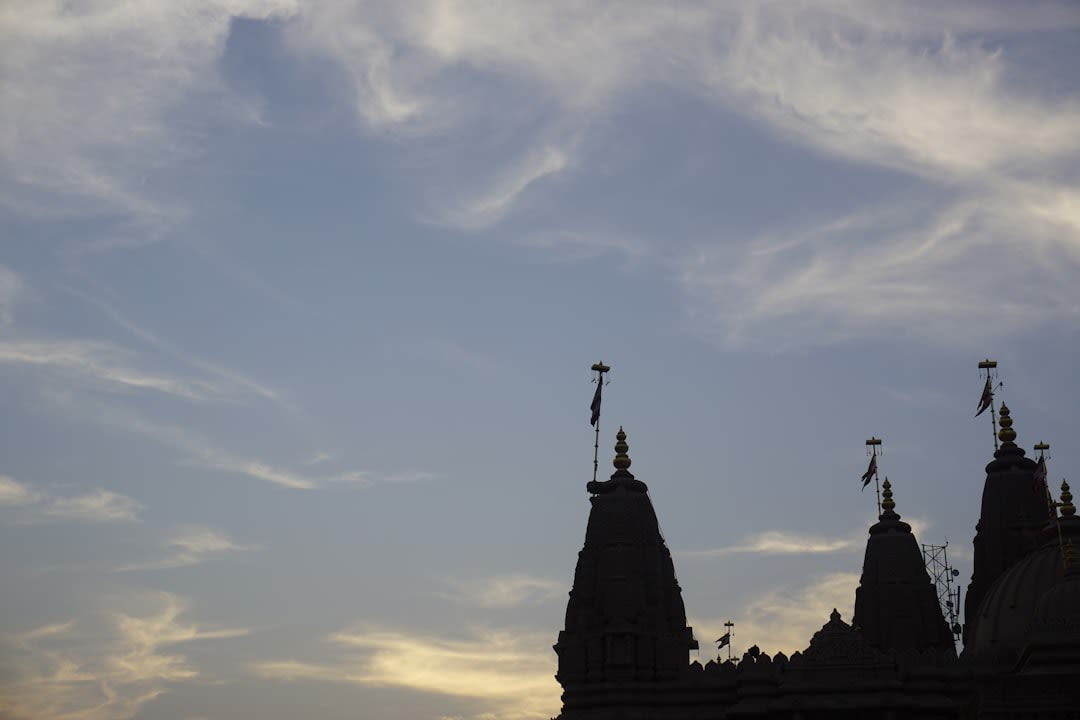
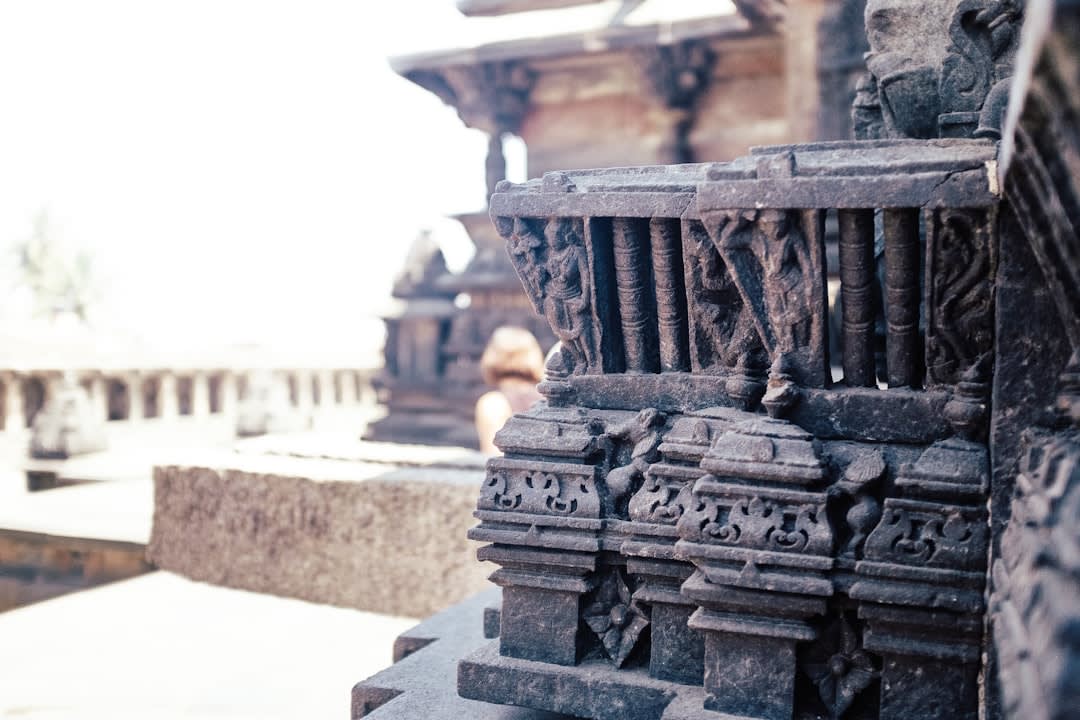
What got me most was the name itself. Gangaikonda Cholapuram translates roughly to “the city of the Chola who took the Ganges,” commemorating Rajendra I’s military campaign all the way north to the river — a wild thought when you’re standing in the middle of Tamil Nadu farmland, this far from the Ganges in every possible sense. Lia spent a long time photographing the carved panels near the base of the tower while I just sat on the warm stone steps, drinking chai from a thermos a vendor had set up near the entrance, watching the light change on the granite.
It’s part of UNESCO’s “Great Living Chola Temples” listing along with Thanjavur and Airavatesvara, but unlike its more famous relative, almost nobody stops here. That emptiness is the whole point. We ended up staying nearly two hours longer than planned, just walking the perimeter wall and watching swallows dart in and out of the tower’s upper tiers.
When to go: We went in December and were grateful for it — between November and February, the cooler, drier air makes it comfortable to linger around the temple grounds, which is exactly what this place rewards.
Keep exploring
More from Tamil Nadu
 tamil-nadu
Kanchipuram
A city of a thousand temples and ten thousand silk looms, where ancient Dravidian architecture and the most technically demanding weaving tradition in India exist in the same grid of streets.
Explore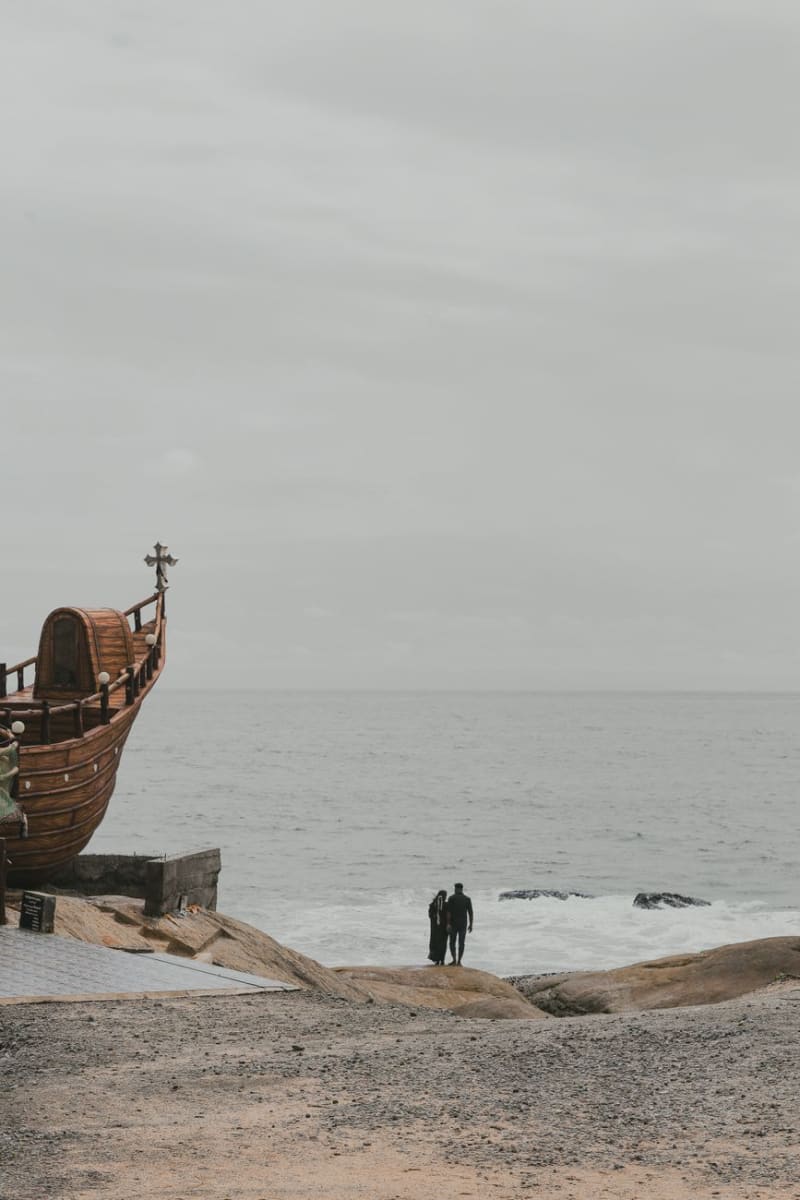 tamil-nadu
Kanyakumari
The southernmost tip of mainland India, where the Bay of Bengal, the Arabian Sea and the Indian Ocean meet in one restless line of water and the sun appears to both rise and set over the same horizon.
Explore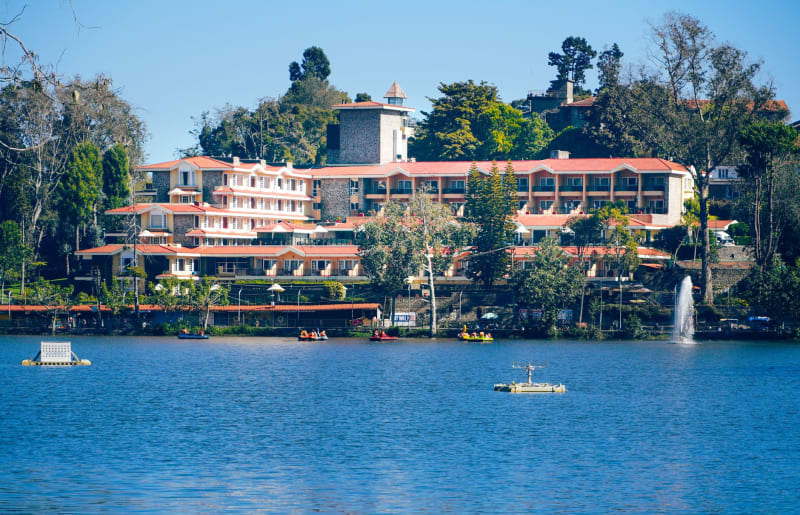 tamil-nadu
Kodaikanal
A hill station at 2,100 meters in the Palani Hills, built around a star-shaped lake and hidden inside a cloud forest that smells of eucalyptus and cold water.
Explore tamil-nadu
Madurai
One of the oldest continuously inhabited cities on earth, and the Meenakshi temple at its center makes that fact feel not like history but like something still in progress.
Explore tamil-nadu
Mahabalipuram
A seventh-century Pallava port city where the sea has been eating the stone monuments for thirteen hundred years, and they're still magnificent.
Explore tamil-nadu
Ooty
A British hill station marooned in the Nilgiris at 2,200 meters, where eucalyptus forest, tea estates, and a toy train conspire to make you forget you're in South India.
Explore